(587) 703-6048

When to Use a Concrete Pump on Your Jobsite

A concrete truck can only place concrete where its chute can reach. Once the pour extends beyond that reach, crosses finished ground, drops below grade, or needs steady placement across a large area, crews start losing time to wheelbarrows, skid steers, extra hands, and cleanup. Knowing when to use concrete pump service comes down to access, volume, placement accuracy, and the cost of slowing the pour down.
For many Alberta projects, a pump is not an extra. It is the practical way to get concrete from the truck to the formwork without turning placement into the bottleneck. The right pump and operator can keep the concrete moving, reduce crew strain, protect the site, and give finishers a more consistent pour to work with.
Use a Concrete Pump When Access Is Limited
Tight access is one of the clearest reasons to pump concrete. Residential lots in Calgary, Red Deer, and smaller Central Alberta communities often have narrow side yards, established landscaping, overhead lines, fences, neighbouring homes, or soft ground that prevents a ready-mix truck from backing close to the forms.
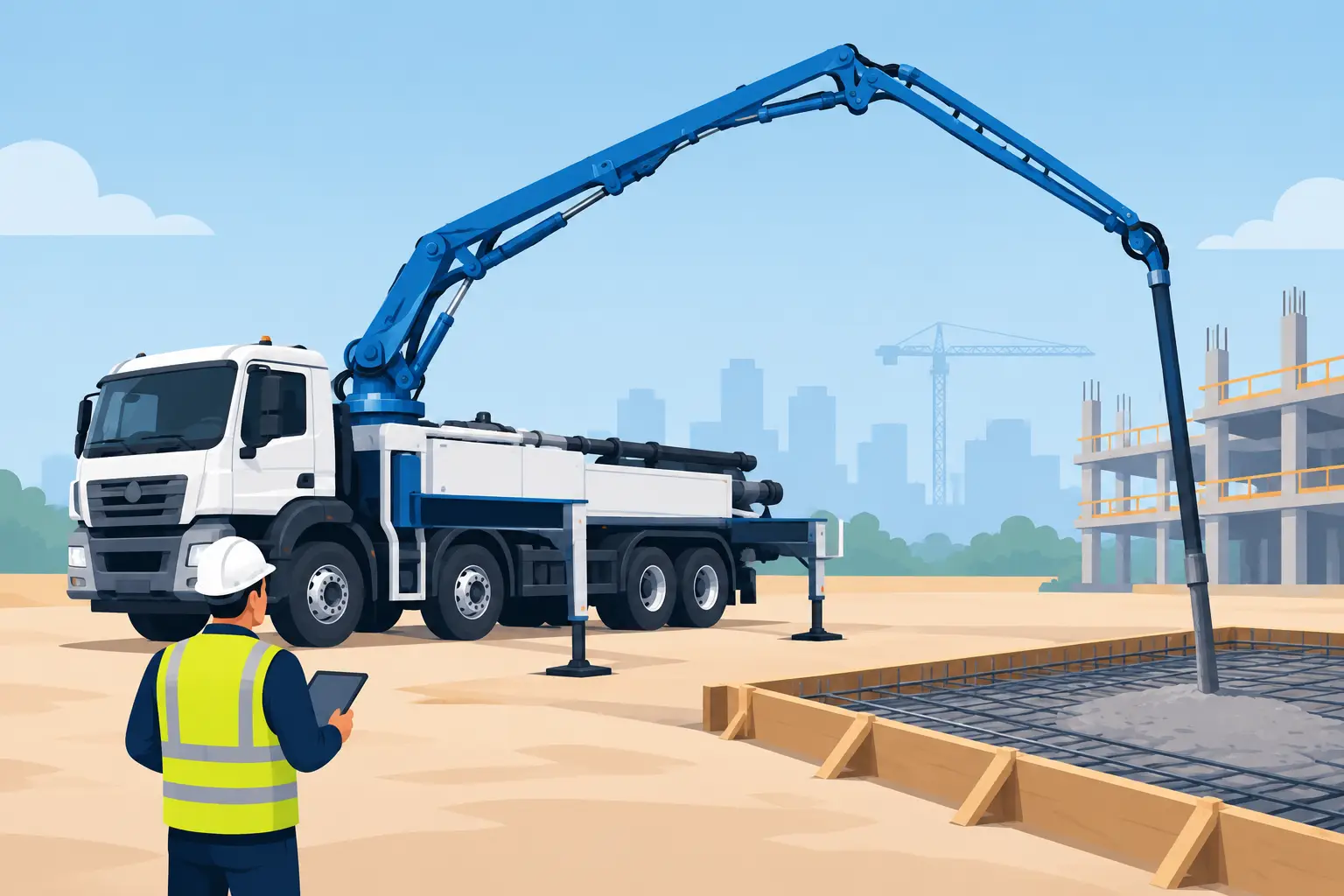
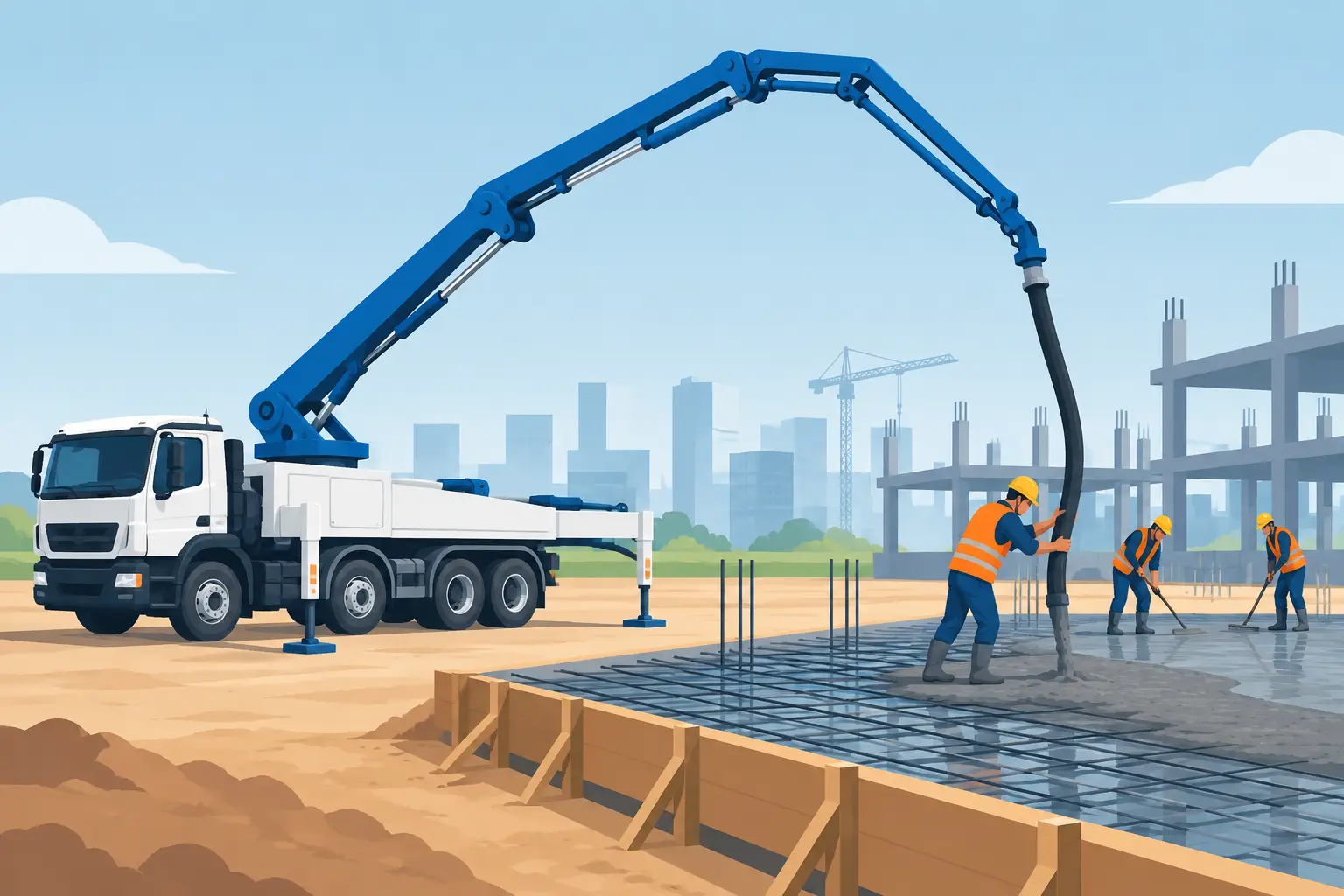
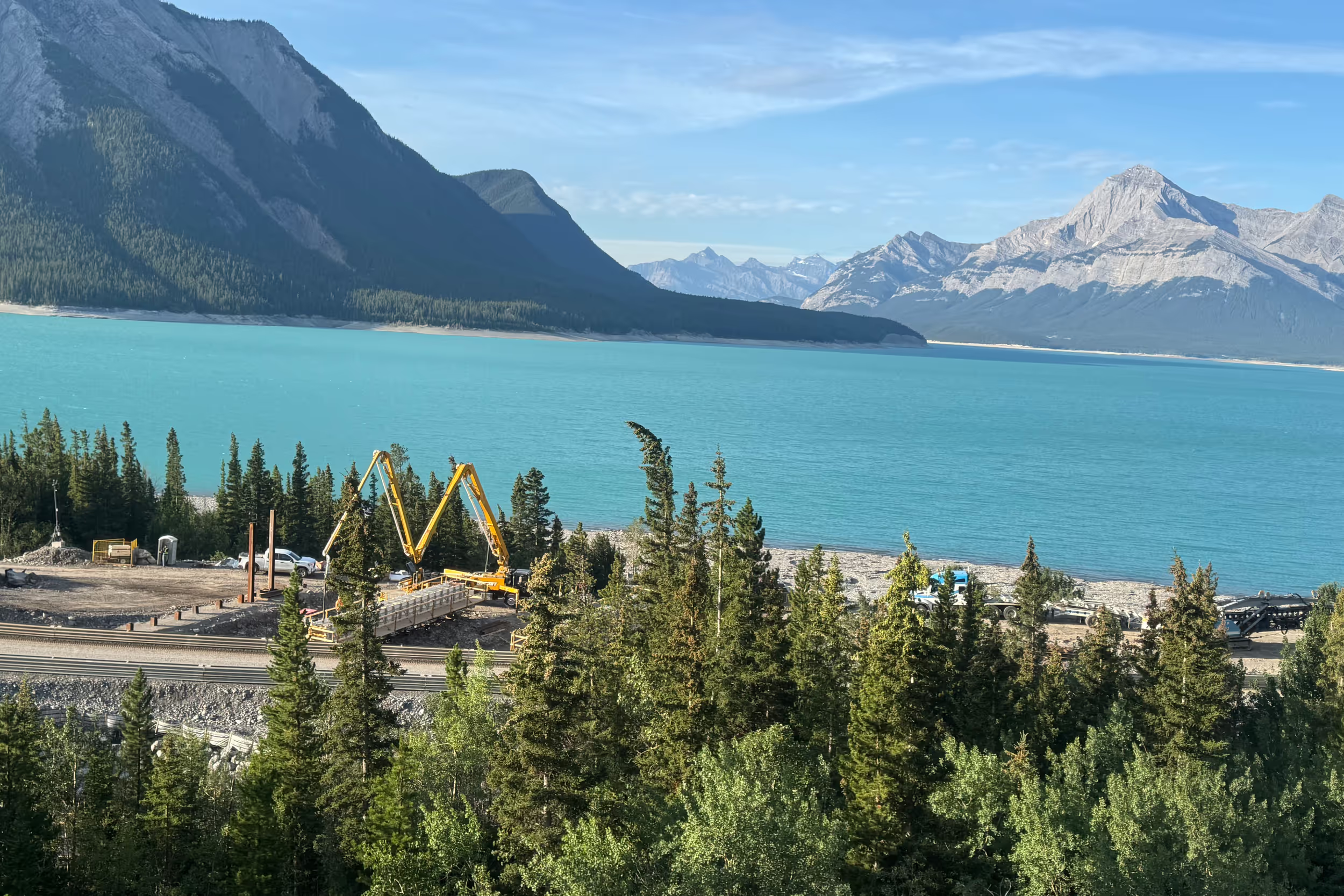
A boom pump can reach over a house, around obstacles, or across a yard from a suitable setup location. This avoids running loaded wheelbarrows through a side gate or trying to force a concrete truck into a space that was never built for one. It also keeps heavy truck traffic off areas that may not support it.
The same applies to commercial and industrial sites. On an active jobsite, material stacks, excavation, steel, cranes, and other trades can block the direct path between the truck and the pour. A pump provides reach without requiring every part of the site to be clear at the same time.
Below-grade and hard-to-reach pours
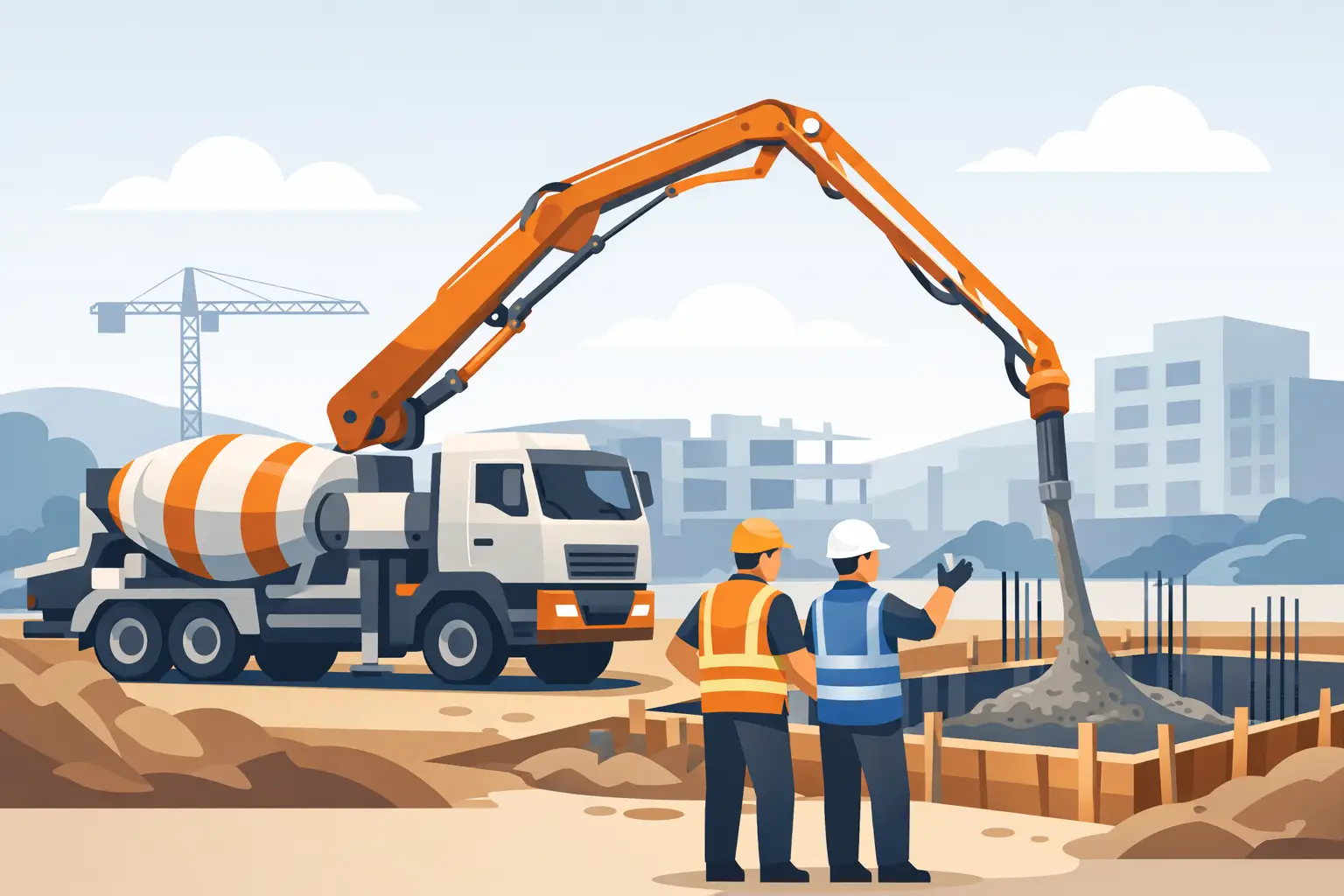
Foundation walls, footings, basement slabs, retaining walls, pile caps, and elevator pits are common pumping applications. Gravity and access work against a chute on these pours. A boom or line pump gives the operator controlled placement where the concrete needs to land, rather than where the truck happens to stop.
A truck-mounted line pump is often the better fit where a hose must run through a restricted route or where precise placement matters more than broad boom coverage. It can be a strong option for backyards, garages, additions, shops, small slabs, and locations with awkward approach conditions.
When to Use Concrete Pump Service for Bigger Pours
The larger the pour, the more expensive slow placement becomes. A crew may be able to handle a small pad with a chute and a few wheelbarrows. That approach becomes far less efficient when placing a large shop slab, commercial floor, long foundation wall, agricultural pad, or multi-truck concrete order.
Concrete has a working window. When placement falls behind, crews are forced to manage loads arriving while forms still need filling. Finishers may be waiting in one area while another is under-supplied. In warm weather, delayed placement can create even more pressure as the concrete begins to set.
A pump supports a steady delivery rate from truck to forms. That consistency helps the placing crew, finishers, and general contractor plan the work instead of reacting to gaps. It is especially valuable when several trucks are scheduled in sequence and the pour cannot afford long interruptions.
Pumping does not automatically make every project cheaper, but it can lower the total cost of placement. Fewer labourers may be needed to move material manually, the pour can finish sooner, and there is less risk of a delayed truck, extra site damage, or a rushed finishing crew. On bigger pours, those jobsite savings often outweigh the pump cost.
Choose a Pump When Placement Accuracy Matters
Concrete belongs in the forms, not scattered beside them. This sounds basic, but placement quality affects production, cleanup, and the finished result. Pump hose allows concrete to be directed close to its final location, reducing the amount of dragging, shovelling, and rehandling required after it lands.
That control matters for narrow footings, wall forms, grade beams, heavily reinforced sections, and areas around embeds or services. It also matters on slabs. Placing concrete in manageable sections lets crews maintain grade and avoid pulling material excessive distances with rakes.
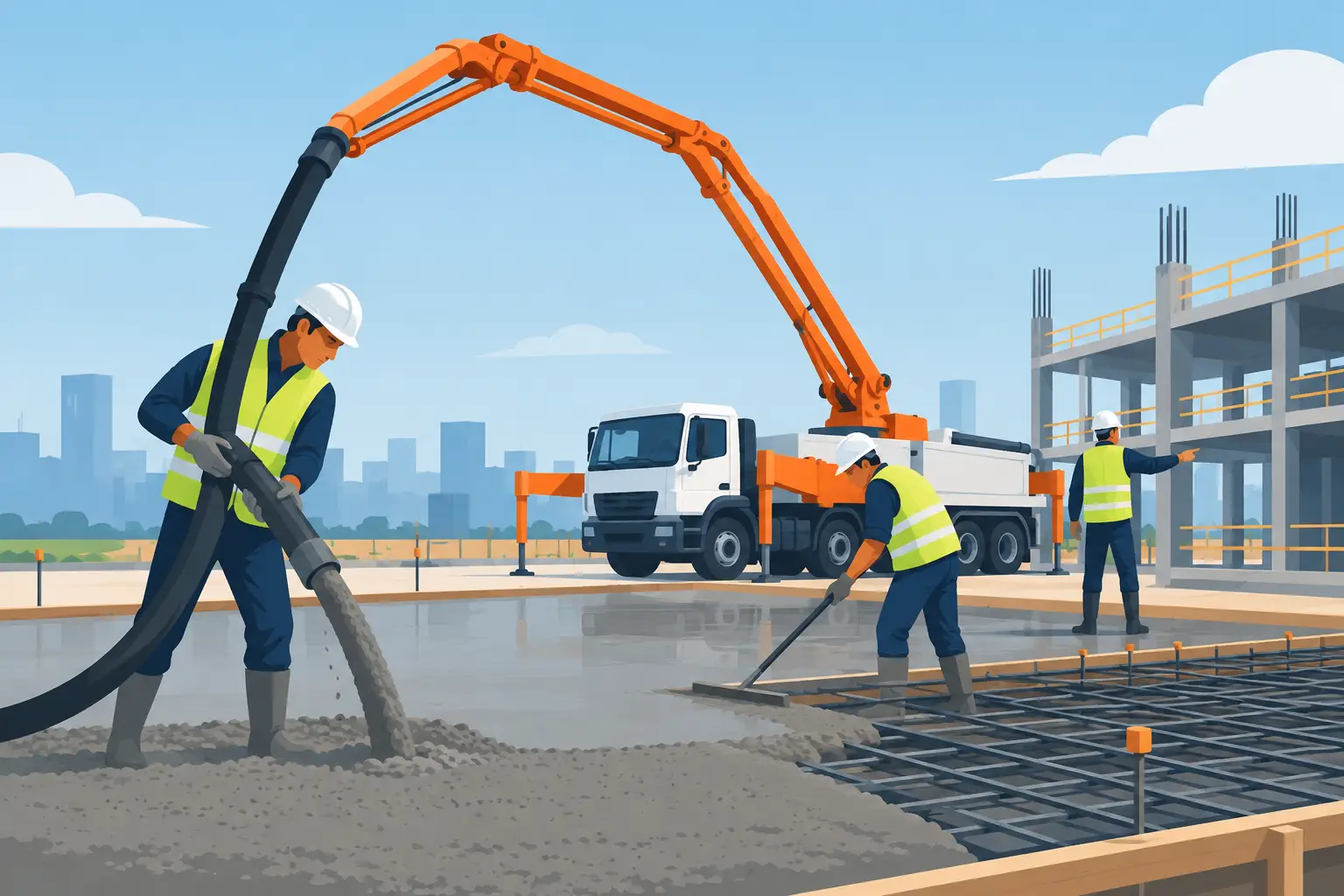
Good pumping is not simply about reaching farther. It is about controlling the pour rate and keeping the hose where the crew needs it. An experienced operator works with the concrete crew, adjusts placement as the forms fill, and helps maintain a pace that supports proper consolidation and finishing.
This is where equipment choice matters. A high-reach boom can cover broad areas efficiently. A compact roll-and-fold boom can work where setup and access are more restricted. A line pump can put concrete through routes that a boom cannot easily serve. There is no single best pump for every job - the best choice is the one that fits the site, the mix, and the placement plan.
Protect Finished Areas and Keep the Site Cleaner
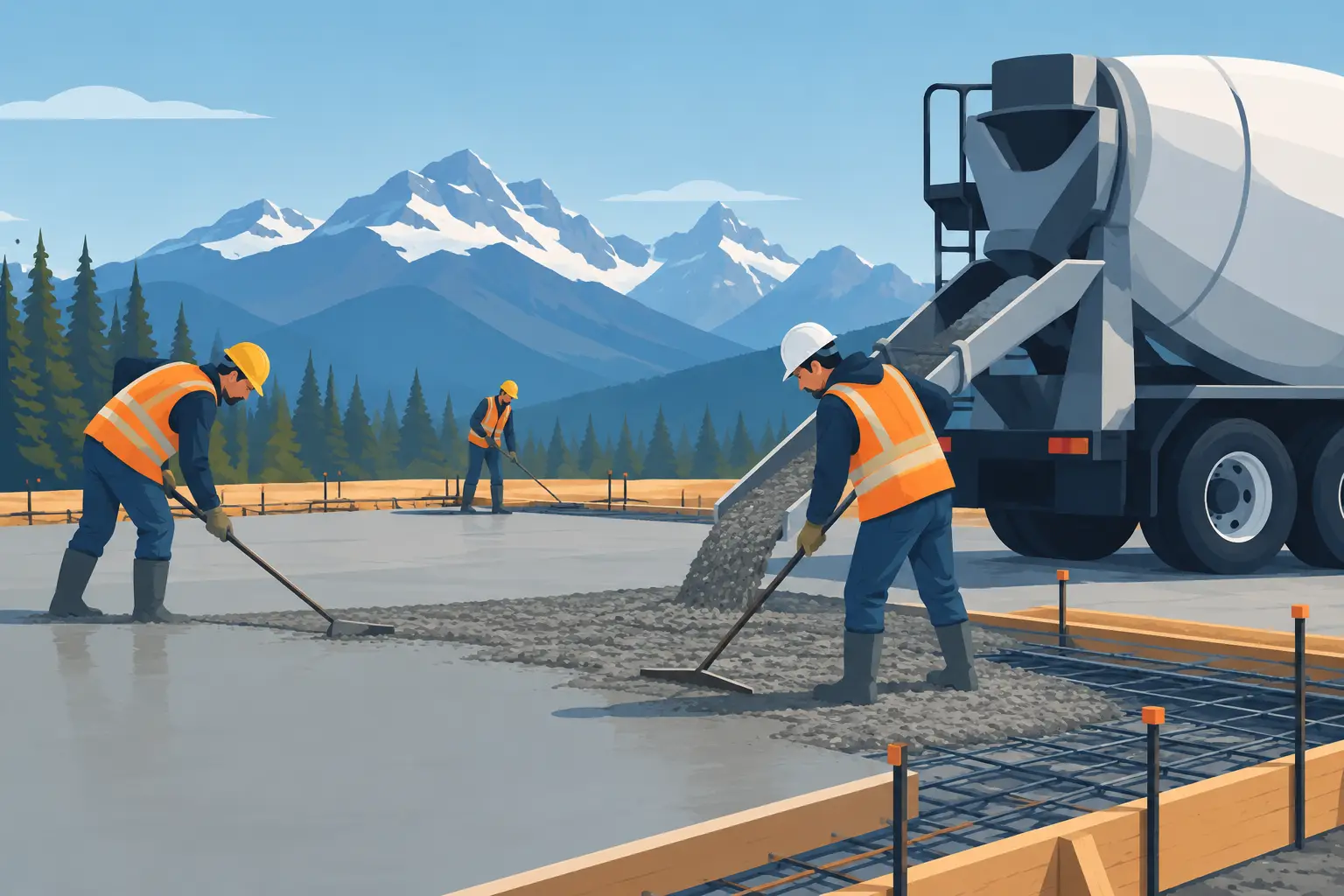
Wheelbarrow placement creates a trail. Even with a careful crew, concrete can end up on driveways, sidewalks, landscaping, framing, mudsills, and areas that should remain clear. Every extra trip also means more traffic over the site, more material tracked around, and more cleanup after the pour.
Pumping reduces those travel paths. The ready-mix truck remains in a planned location, while the concrete moves through the boom or hose to the work area. This is particularly useful on occupied properties, renovation sites, infill lots, and jobs where access needs to stay open for other trades.
Clean placement is not only about appearance. Less spilled material means less waste, less hardening concrete to remove, and fewer avoidable hazards underfoot. On a busy project, that is a practical advantage that carries through the rest of the day.
Situations Where a Pump May Not Be Necessary
A pump is not the answer to every pour. If a small, straightforward pad is directly beside a truck access point and the chute can place concrete efficiently into the forms, direct discharge may be the sensible choice. Adding a pump to a simple, low-volume job can add cost without delivering enough benefit.
The decision also depends on site conditions. A boom pump needs a safe, stable setup area with room for outriggers and attention to overhead hazards. Ground conditions, power lines, traffic control, and the location of other workers must be considered before the pump arrives. For line pumping, the route for the hose, the required line length, and the mix design all need to be planned.
Concrete mix is another factor. Pumpable concrete must be specified appropriately for the equipment and the placement. Aggregate size, slump, admixtures, fibre content, and the distance or height of the pump line can all affect performance. Confirm the plan before the concrete order is placed, not when the first truck is on the road.
Plan the Pump Before Pour Day
The best pumping jobs are decided early. Before booking, identify where the ready-mix trucks will enter, where the pump can safely set up, where the concrete needs to go, and what may block the route. Measure difficult access areas rather than estimating. If the job involves overhead power, soft ground, steep grades, or a long hose run, raise it during planning.
It also helps to coordinate the pump schedule with the batch plant, placing crew, finishing crew, and any inspection requirements. A pump keeps the job moving, but only if the site is ready to receive concrete when it arrives. Forms should be complete, reinforcement checked, access cleared, and washout handled according to the site plan.
Bandit Concrete Pumping matches boom and line-pump equipment to real Alberta jobsite conditions, with experienced operators focused on safe, controlled placement. The goal is not to put a pump on every job. It is to put the right equipment on the jobs where it saves time, labour, and trouble.
When the chute will not reach, the pour is too large to move by hand efficiently, or placement needs to be clean and controlled, plan for a pump early. A few minutes spent reviewing access and pour requirements before booking can prevent a long day of workarounds once the concrete starts rolling.