 (587) 703-6048


Operator Service Quality That Keeps Pours Moving

A concrete pump can have the reach, capacity, and horsepower to handle a major pour, but operator service quality is what determines whether that capability helps the job or holds it back. When trucks are arriving, finishers are waiting, and concrete is already on the clock, the operator needs to do more than run controls. They need to read the site, set up safely, communicate clearly, and place concrete where the crew needs it.
For contractors across Central Alberta, that level of service protects the schedule and the finished product. It also reduces the common headaches that come with poor access, unnecessary handling, rushed placement, and cleanup that lands on the rest of the crew.
What Operator Service Quality Looks Like on Site
Quality starts before the first truck backs in. An experienced pump operator reviews the access route, setup area, overhead hazards, ground conditions, pour sequence, and placement points. Those details decide whether the right pump is on site and positioned properly before concrete begins to arrive.
That preparation matters on every type of job. A residential foundation may need a compact boom that can work around tight side yards and neighbouring homes. A commercial slab may require broad boom coverage so the crew can keep a steady placing pattern. An agricultural shop or industrial project may need a line pump to reach behind buildings, through restricted access, or into an area where a truck cannot be positioned directly.
The operator also has to work with the concrete crew rather than independently from it. The best pours have a clear plan for truck order, hose movement, communication with the placing crew, and washout. If the pour is changing because of weather, traffic, site access, or a forming issue, a capable operator adjusts without turning a manageable problem into a lost day.
Skilled Setup Protects the Pour
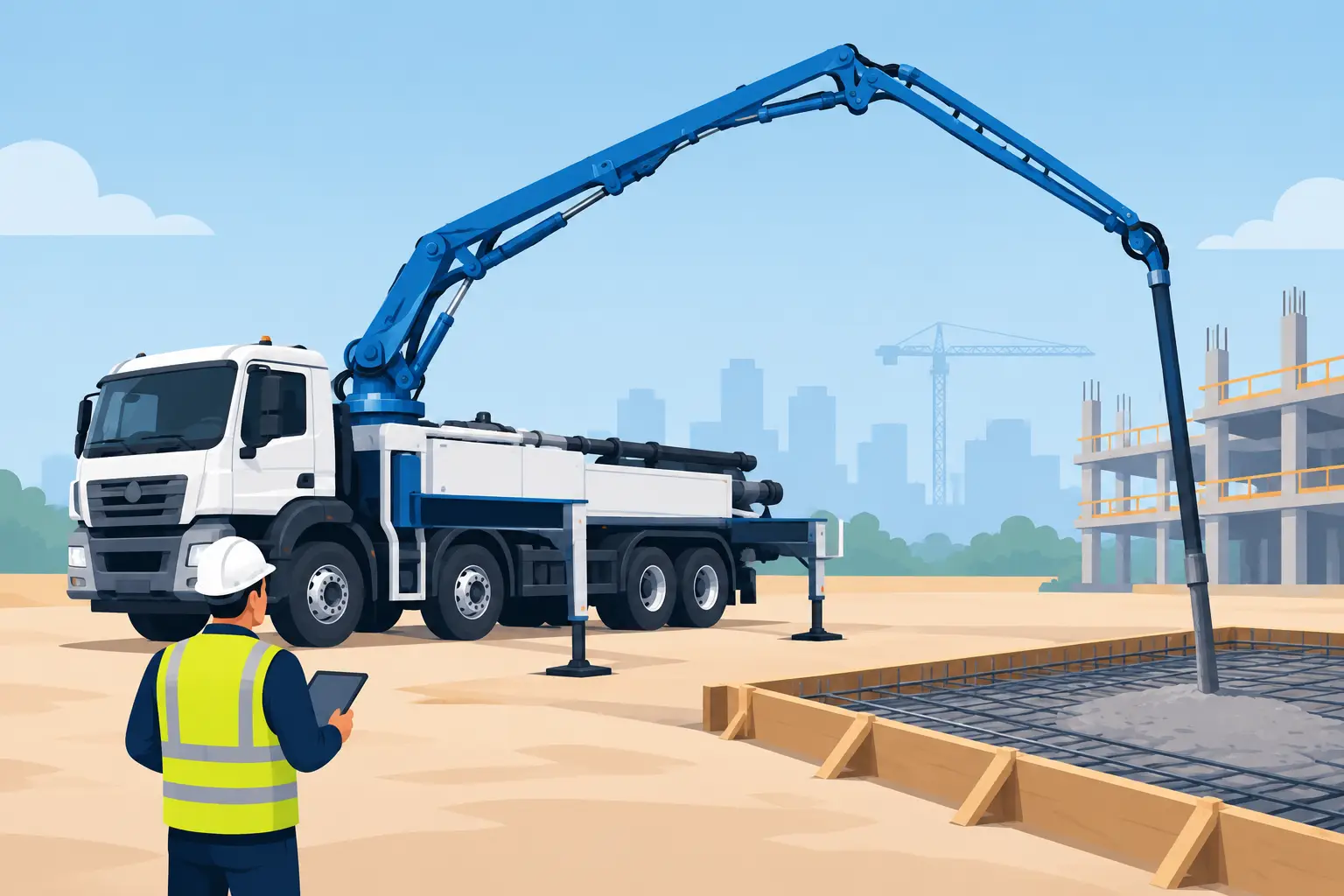
Pump setup is not a quick parking job. The operator must position the unit with enough room to work, establish proper outrigger support, assess slopes and bearing conditions, and maintain safe clearance from power lines, structures, workers, and equipment. On Alberta jobsites, ground conditions can change fast. A site that was firm in the morning can become soft after rain, thaw, or repeated truck traffic.
A professional operator will not force an unsafe setup simply because the crew wants to save a few minutes. That can be frustrating in the moment, but it is the right call. Repositioning a truck or improving the support area may take time, yet it is far less costly than dealing with a safety incident, damaged property, or a shutdown during the pour.
Proper setup also improves placement performance. A stable, well-positioned boom gives the crew better reach and control, reducing the need to drag hose, move forms of concrete by hand, or stop the pour to make up for poor initial planning. Less manual handling means less fatigue for the crew and more consistent progress from the first load to the last.
The Right Equipment Is Part of the Service
Operator quality and equipment selection go together. A large boom pump is not automatically the best answer, just as a smaller unit is not always the easiest option. The right choice depends on access, reach, volume, hose requirements, ground conditions, and the layout of the work.
A high-reach boom can cover a wide area efficiently and reduce repositioning on larger pours. Compact roll-and-fold boom equipment can be the better fit on crowded residential sites or locations with limited setup room. A truck-mounted 4x4 line pump gives crews a practical way to place concrete into difficult-to-reach areas while maintaining control over the flow and location of the material.
The trade-off is simple: selecting equipment only by maximum size can create access problems, while choosing too small a pump can slow production. An experienced operator and dispatch team help match the pump to the actual site conditions instead of treating every pour the same.
Accurate Placement Saves Labour and Material
Concrete is unforgiving once it is discharged. The more times it is moved, raked, or rehandled, the more labour the crew uses and the greater the chance of disrupting the mix, overworking the surface, or leaving uneven areas for finishers to correct.
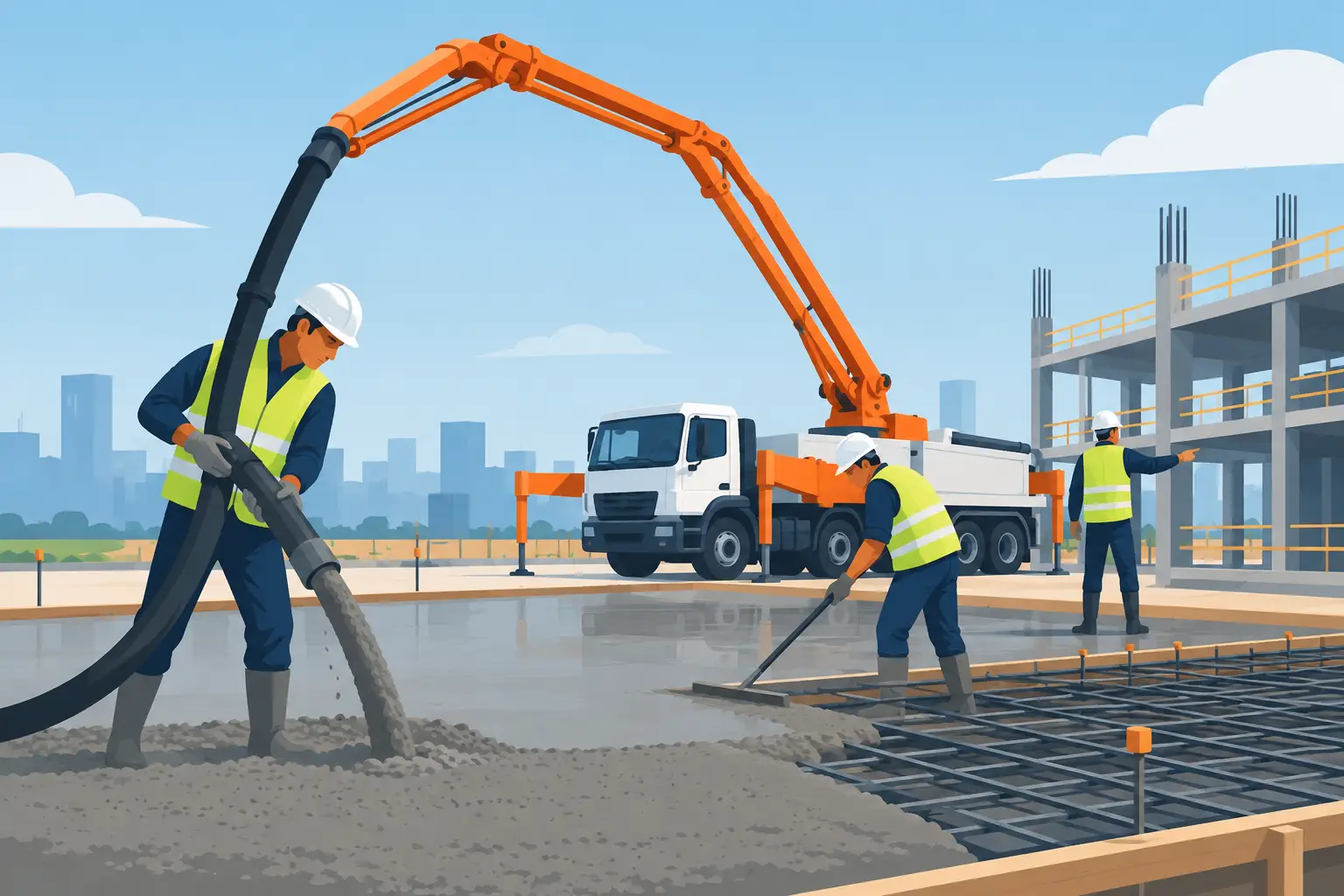
A skilled operator places concrete at a controlled rate and directs the boom or hose precisely where it is needed. That gives the placing crew the material in manageable amounts instead of dumping excess concrete into one area and asking labourers to spread it across the forms. On walls, footings, piers, slabs, and suspended work, controlled placement helps crews maintain a steadier pace and better consistency.
This does not mean every pour should run at maximum output. High-volume pumping is useful when the crew, forms, finishing capacity, and ready-mix supply can support it. On detailed work, narrow forms, steep access, or smaller residential projects, slower and more deliberate placement may be the better approach. Good service means matching the pumping pace to the work in front of the crew.
That control can reduce waste as well. Keeping concrete close to its final location means less spilled material, less over-placement, and less cleanup around forms, landscaping, and finished surfaces. It is a practical advantage, especially when a jobsite has limited room and no appetite for hauling hardened concrete out after the work is done.
Communication Keeps the Job Moving
Most pumping delays are not caused by the pump itself. They come from unclear responsibilities, late changes, blocked access, missing information, or poor coordination between the pump, ready-mix supplier, placing crew, and finishing crew.
A dependable operator communicates early and directly. Before the pour, that means confirming the setup location, site contact, access restrictions, concrete mix requirements, and expected start time. During the pour, it means staying in contact with the crew, monitoring the flow, and flagging issues before they become stoppages. Afterward, it means completing washout responsibly and leaving the work area in order.
Clear communication is especially valuable when conditions are less than ideal. A tight infill lot, a remote acreage, a busy commercial site, or a winter pour all bring variables that need to be addressed before the first load arrives. The goal is not to pretend those variables do not exist. The goal is to plan around them with the right equipment, enough time, and a crew that understands the sequence.
Clean Work Is Part of Professional Service
Cleanliness is not an extra on a concrete job. It affects safety, neighbour relations, site appearance, and the amount of labour required once pumping is complete. Concrete tracked across a street, spilled beside forms, or left around the setup area creates work for someone, and it can create problems with owners, site supervisors, or adjacent properties.
A quality pumping service takes washout and housekeeping seriously. The operator works to contain material, manage hose handling, avoid unnecessary mess, and leave the site in a condition that lets the next trade get to work. On residential projects, this is particularly important where driveways, landscaping, sidewalks, and nearby homes are close to the pour area.
There are limits, of course. Concrete pumping is active construction work, and a clean site does not mean zero splash or zero debris. It means the pump crew takes reasonable control of the work, prepares properly, and does not leave avoidable cleanup behind for the customer.
Why Reliable Operators Matter to the Schedule
The cost of a delayed pour is rarely limited to pump time. Ready-mix trucks may be waiting. Finishers may be standing by. Formwork, reinforcing, inspections, weather windows, and follow-on trades can all be affected. A missed start or a poorly managed setup can carry into the next day and beyond.
Reliable operator service helps prevent those losses by arriving prepared, working safely, and maintaining a steady pour. It also gives contractors confidence when they are planning jobs with narrow timelines or difficult access. That confidence is earned through repeat performance, not broad claims.
Bandit Concrete Pumping approaches each job with that practical standard: suitable equipment, experienced operators, and placement work that supports the crew on the ground. Whether the project is a garage slab, foundation, commercial floor, shop, or industrial placement, the goal is the same - get concrete where it needs to go without adding unnecessary labour, delays, or mess.
For the next pour, provide clear site details early, keep the setup area accessible, and choose a pumping crew that treats the operator as part of the placement team. That preparation gives everyone on site a better chance to finish strong while the concrete is still workable.