 (587) 703-6048
Long Reach Boom Pump for Alberta Concrete Pours

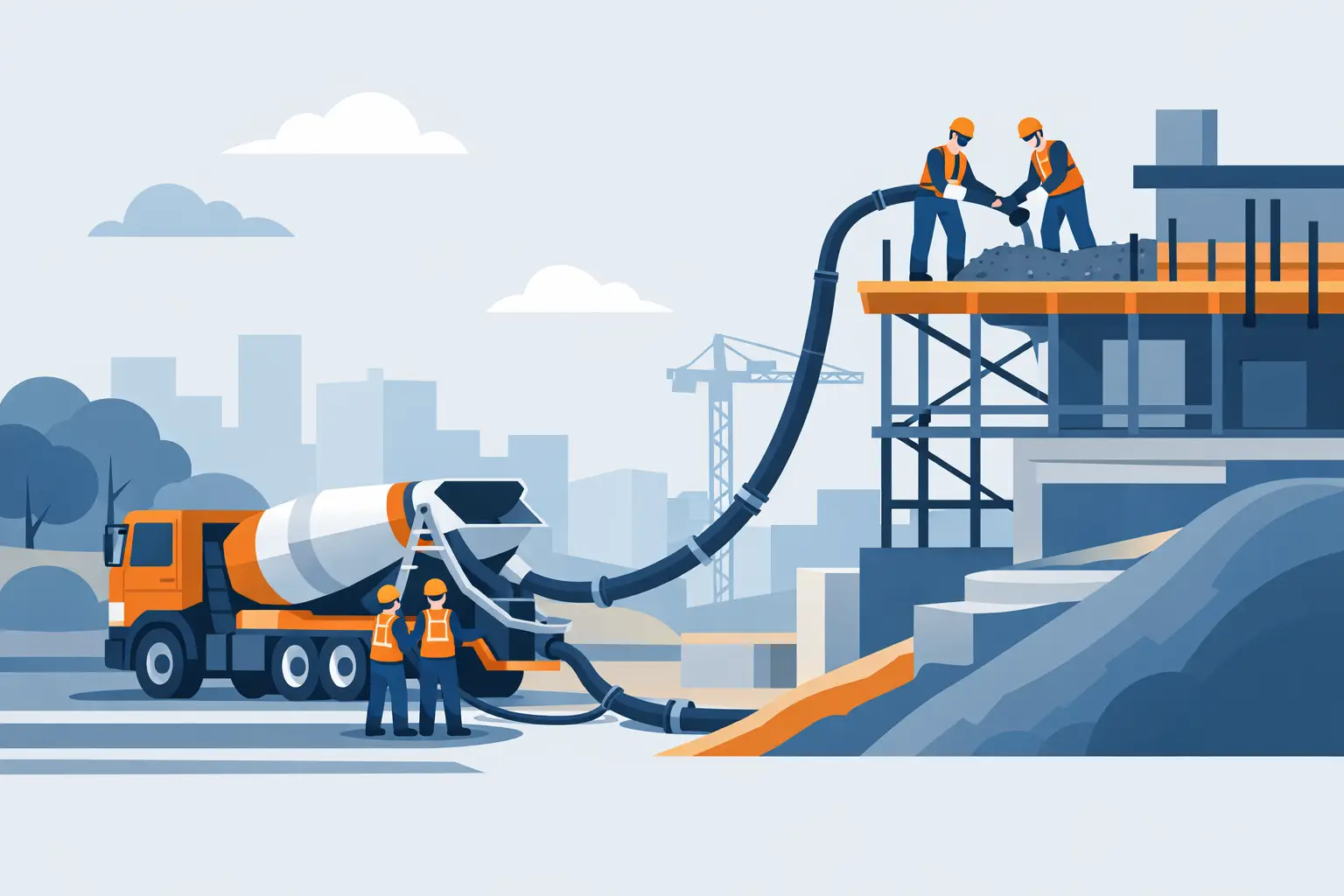
When the pour has to reach across a large footprint, over an obstacle, or into an area where ready-mix trucks cannot get close, a long reach boom pump changes the plan. Instead of building a job around truck access, wheelbarrows, and extra hands, concrete can be placed where the crew needs it, at a controlled rate.
For contractors across Central Alberta, that matters on more than large commercial builds. Acreage shops, agricultural slabs, multi-unit foundations, retaining walls, parkade work, and infill projects can all present access problems that slow a pour down. The right pump does not eliminate the need for planning, but it gives the crew a practical way to keep concrete moving and maintain placement quality.
What a Long Reach Boom Pump Does on Site
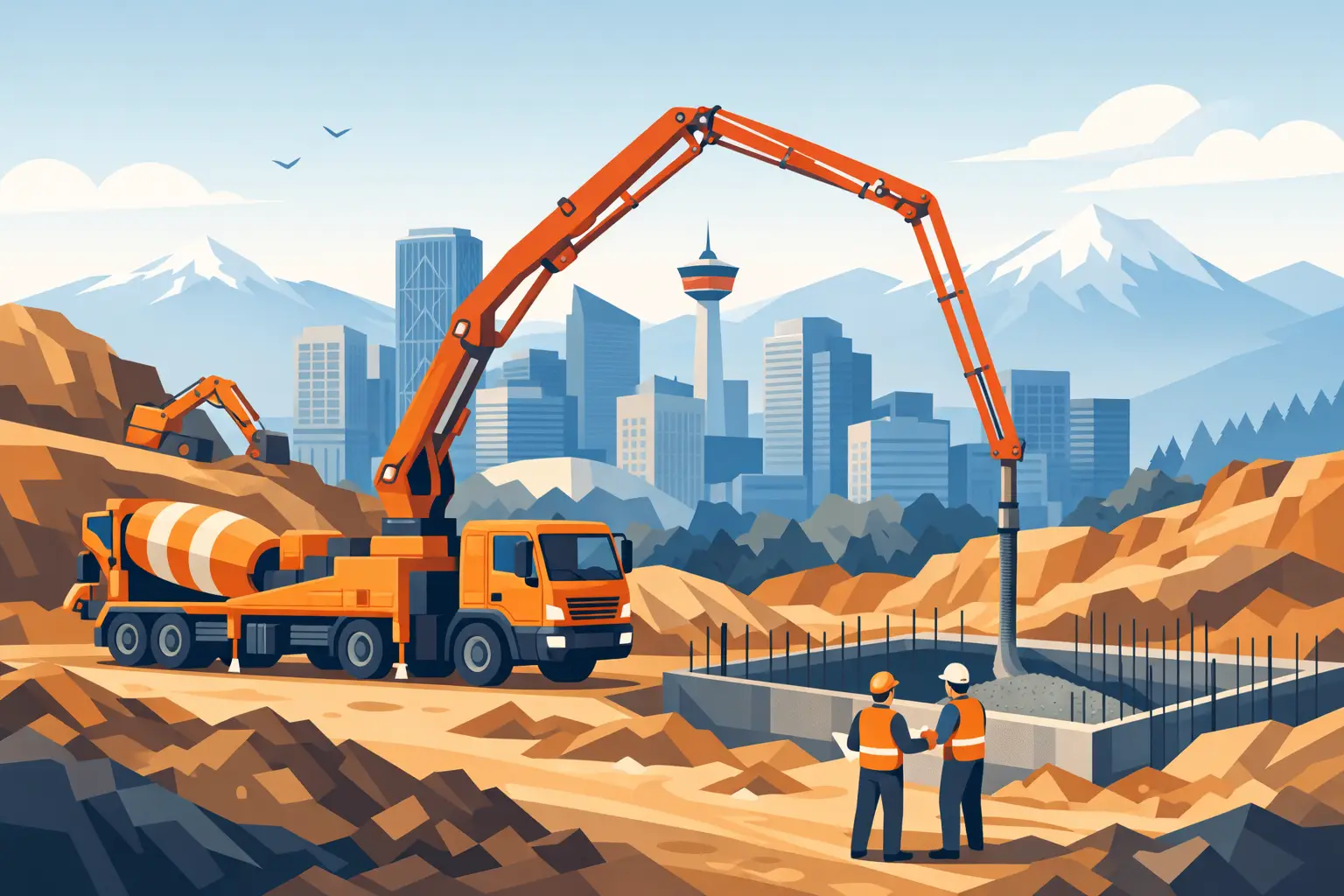
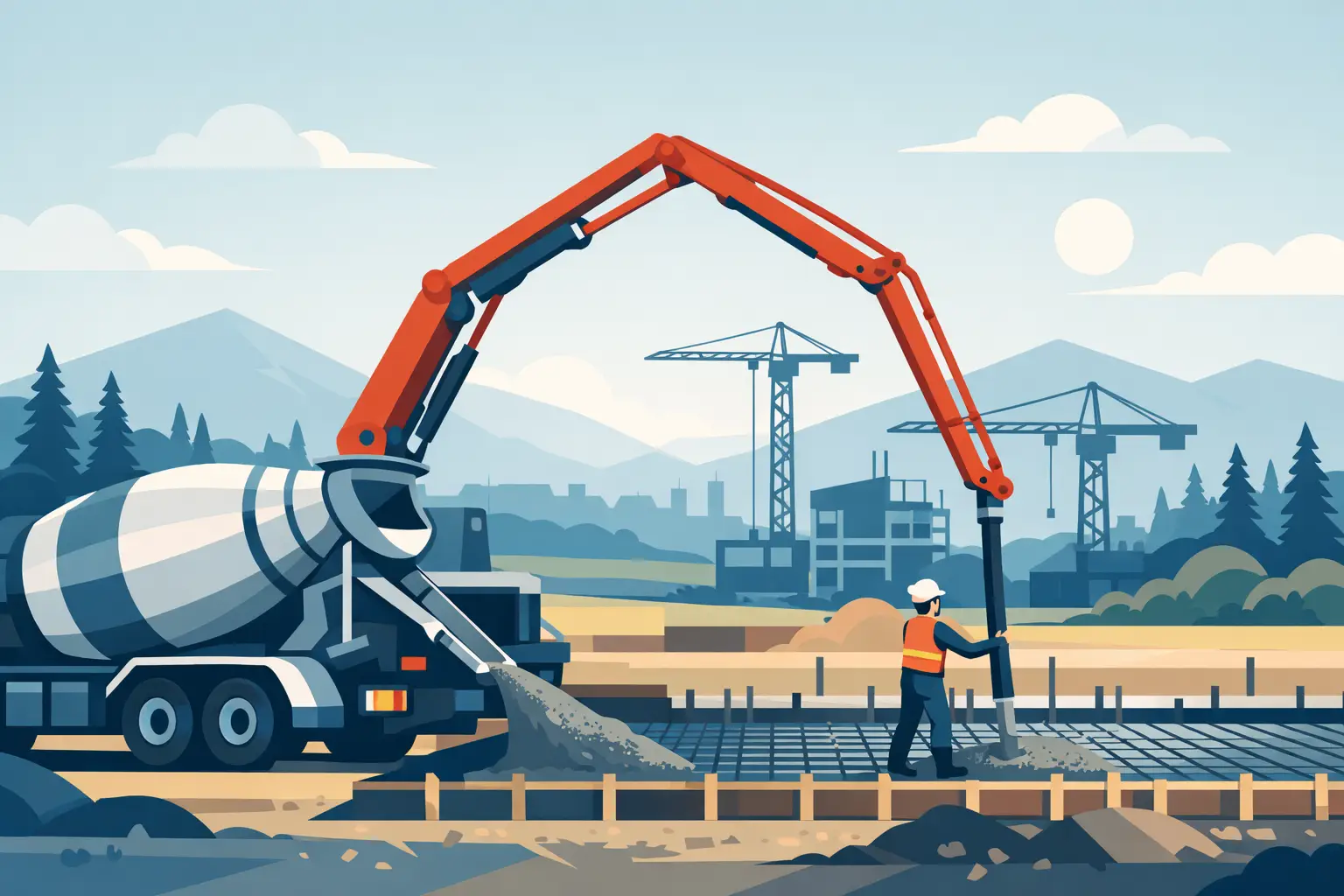
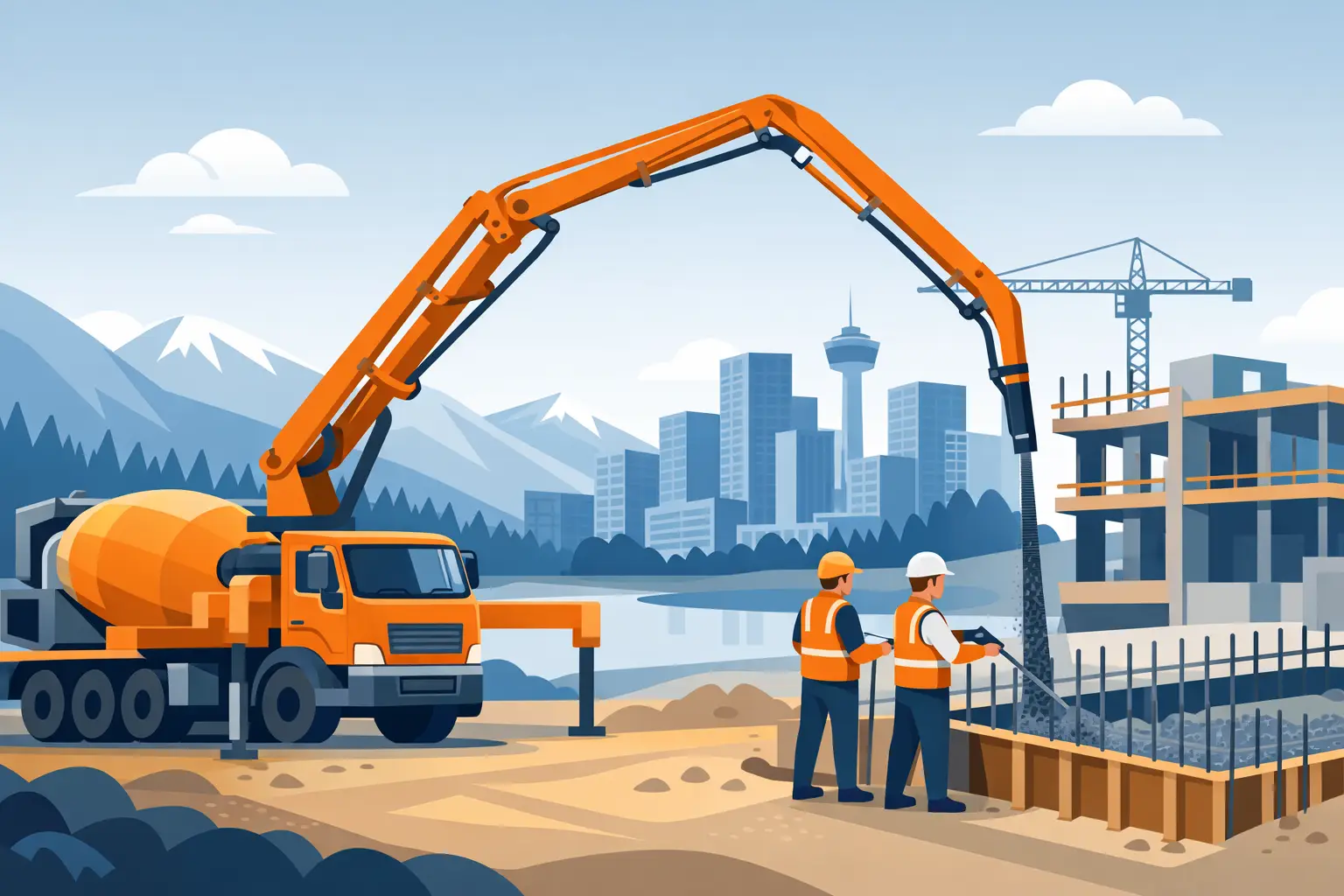
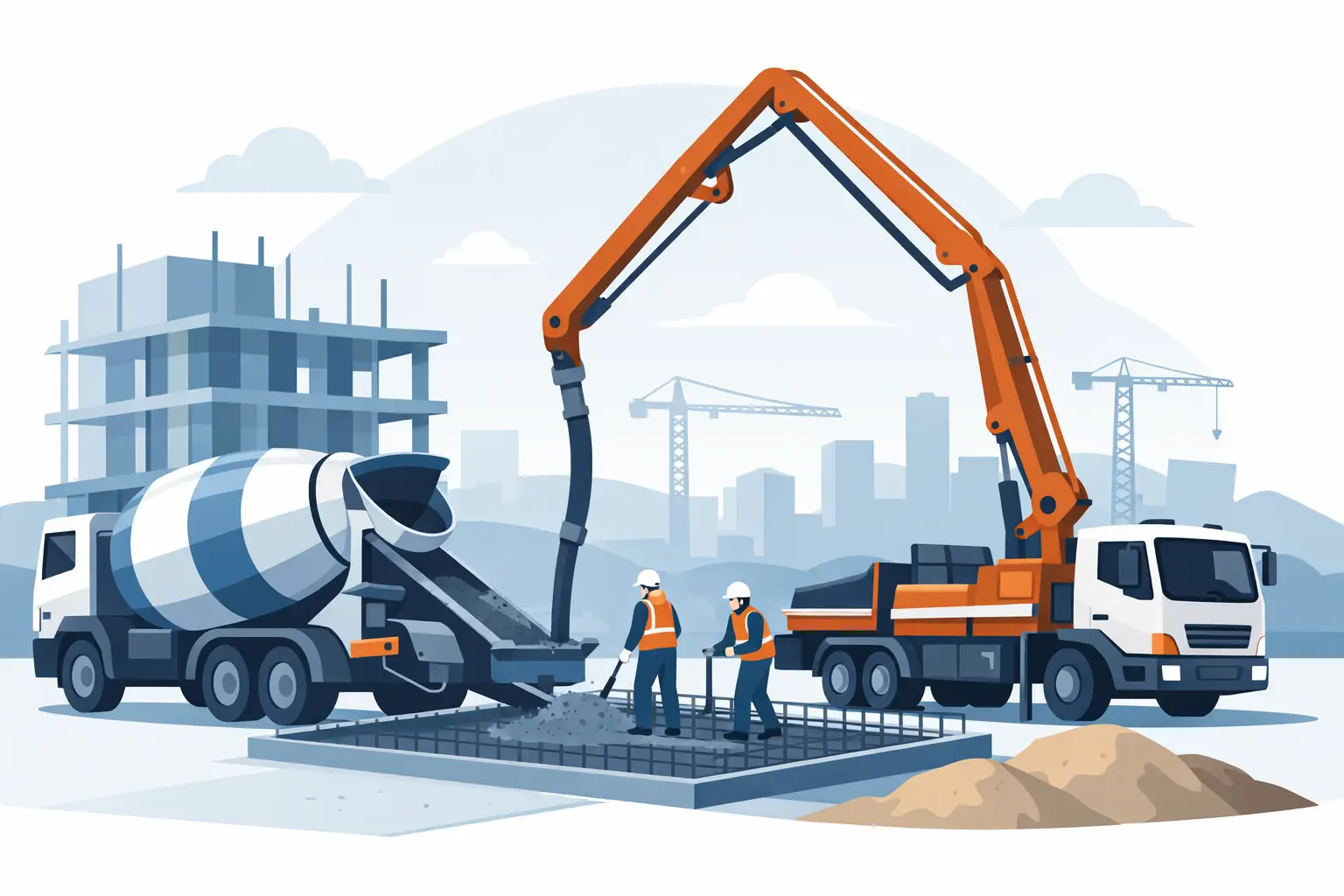
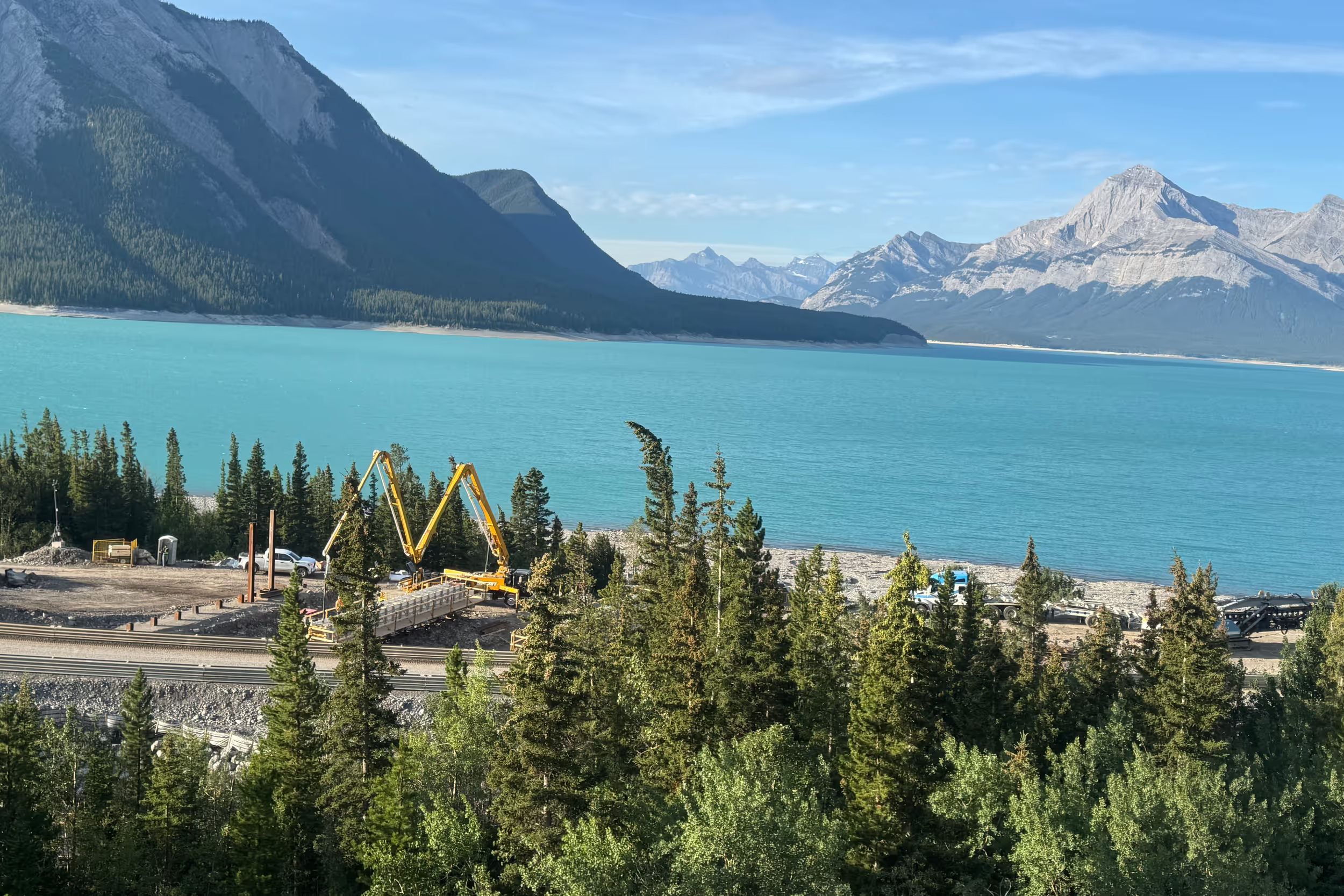
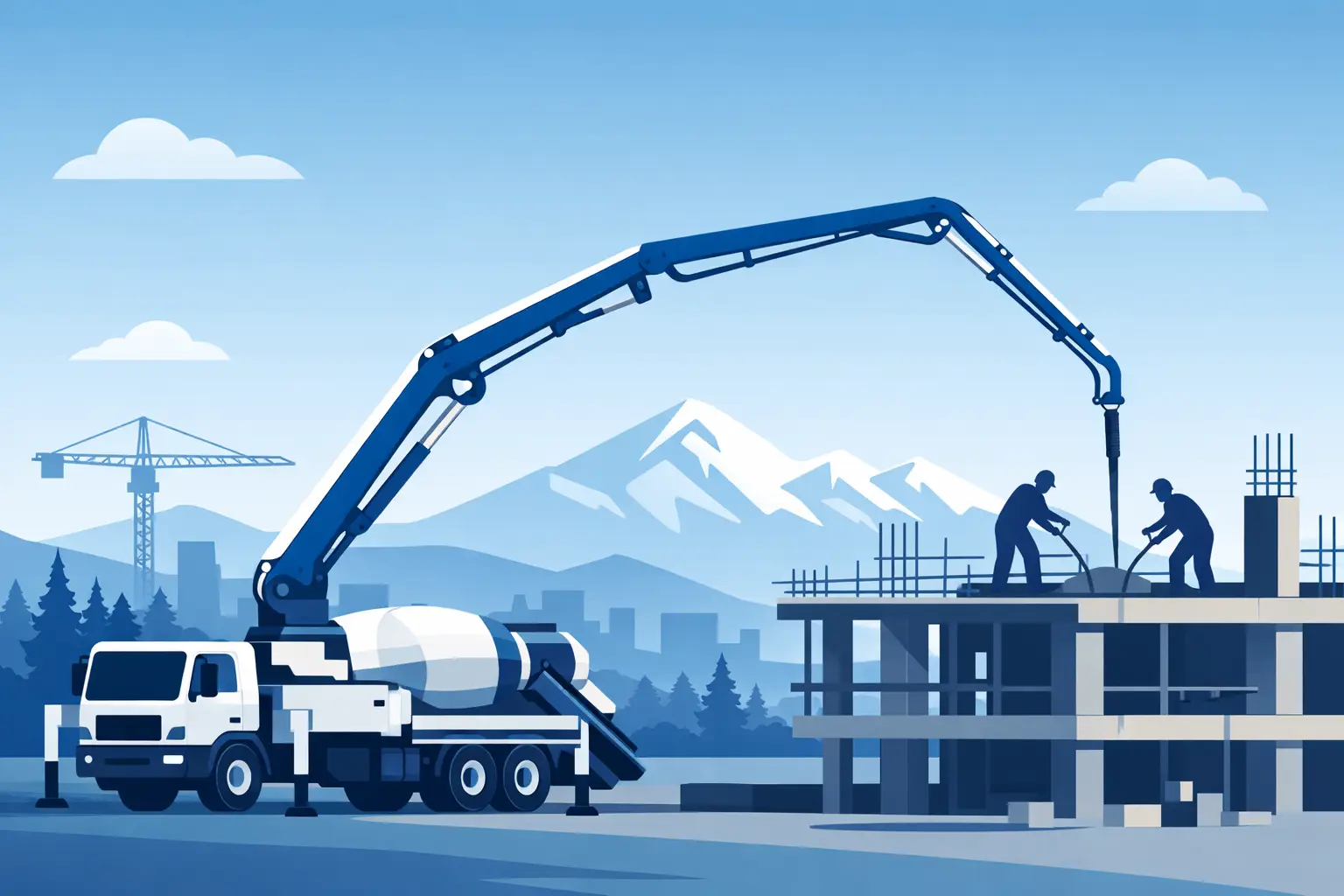
A long reach boom pump is a truck-mounted concrete pump with an articulated placing boom. The boom unfolds from the truck and carries concrete through pipeline to the placement point. Its range allows the operator to work well beyond the truck's immediate position, covering broad sections of a site without repeatedly moving hose, relocating equipment, or sending labourers back and forth with wheelbarrows.
The value is not reach for its own sake. It is controlled access. A boom can place concrete over a house, around an excavation, across a large slab footprint, or behind a building where a mixer truck has no safe route. The operator can move the end hose from one placement area to the next while staying in communication with the placing crew and the ready-mix driver.
That reduces the common bottlenecks of conventional placement. Fewer people are needed to move material. Concrete arrives closer to its final location. The finishing crew can work behind a consistent supply rather than waiting for loads to be hauled across the site.
Where Long Reach Boom Pumps Earn Their Keep
Large slabs are an obvious fit. Warehouse additions, commercial floors, shops, equipment pads, and agricultural buildings often need concrete distributed across a wide area before finishing can begin. A properly positioned boom can cover major portions of the slab from one setup, helping the crew maintain a steady pour sequence.
Foundation work is another strong application. On lots with narrow side yards, deep excavations, existing structures, or soft areas around the dig, getting a mixer truck close to the forms may not be possible. A boom pump can often work from a firmer, safer position and reach over the obstruction. That can be especially useful on Calgary-area infill sites, where space is tight and neighbouring property needs to be respected.
Long reach also helps on elevated or hard-to-access placements. Suspended slabs, upper-level decks, walls, and certain industrial repairs may require concrete to travel over or around structures. The pump boom gives the crew a direct placement route without relying on makeshift handling methods.
Still, a longer boom is not automatically the best answer for every pour. A compact boom may be a better fit where setup space is limited, overhead clearance is tight, or the required placement area is close to the street. For very restricted locations, a truck-mounted line pump can provide precise placement through a routed hose line. The best equipment choice comes from the actual site layout, not the size of the job alone.
Reach Starts With Proper Setup
A boom pump needs a safe setup area before concrete starts flowing. The truck's outriggers must be fully supported on stable ground, with enough room to deploy safely. Soft shoulders, unprotected trenches, steep grades, overhead power lines, buried services, and congested traffic routes all need to be considered before the truck arrives.
This is where early communication saves time. A contractor should identify where the pump can park, where ready-mix trucks will stage, and how they will enter and leave the site. The route must support the truck's weight and remain clear during the pour. On a rural property, that may mean confirming driveway conditions, turning space, and ground stability after rain. On an urban job, it can mean arranging lane access, protecting curbs, and keeping the work area clear of parked vehicles.
The boom's working envelope also matters. A pump may be able to reach the placement area in a straight-line measurement, but trees, rooflines, power lines, neighbouring buildings, and the boom's articulation can affect the real setup position. A site review with accurate details prevents the crew from arriving to find that the intended spot is not workable.
Placement Speed Depends on More Than Pump Size
A long reach boom pump can move a significant volume of concrete, but production is only as steady as the whole pour operation. Ready-mix supply, concrete mix design, crew size, form readiness, finishing capacity, and communication all affect the pace.
If trucks arrive too far apart, the pump and placing crew wait. If the pump moves concrete faster than the finishers can manage, the slab can become difficult to control. If forms, rebar, blockouts, or access paths are not ready, the pour loses momentum quickly. The objective is not to pump as fast as possible. It is to match the delivery rate to the work being done behind the hose.
A capable operator helps make that happen. The operator controls boom movement and pumping output, watches the setup area, and works with the placing crew to keep the hose where it needs to be. Experienced operation matters when placing into walls, around dense reinforcing steel, along narrow footings, or across a large slab that needs a deliberate pour pattern.
Bandit Concrete Pumping provides the equipment and operator together because the machine is only one part of a successful placement. The operator's job is to help the site crew use that reach safely, efficiently, and without creating unnecessary cleanup or delays.
Better Access Can Improve Finished Work
Concrete begins setting from the moment it is mixed. Every unnecessary transfer, delay, or long wheelbarrow run takes time away from placing, screeding, vibrating, and finishing. Pump placement puts material closer to its intended position, allowing the crew to focus on consolidation and finish quality rather than transport.
That is particularly valuable for walls and footings. Controlled delivery helps prevent the crew from dumping too much concrete in one spot, which can make moving it through the forms harder and may affect reinforcement or forms. For slabs, a consistent placement pattern helps the crew strike off and finish without chasing concrete across the entire floor.
There is also a cleanup benefit. Wheelbarrow traffic can track concrete through access routes, damage prepared grades, and leave material scattered around the job. A boom pump does not make a site mess-free, but it can reduce unnecessary movement and keep placement more contained. A clean washout plan is still required, and the pump crew needs a suitable location to clean equipment after the pour.
Plan for the Conditions That Can Change the Day
Alberta jobsites can change quickly. Rain can soften access roads. Cold weather can affect concrete timing. Wind can alter safe boom operation. A crowded schedule can leave less room for truck staging than expected. These are not reasons to avoid pumping. They are reasons to plan the pour with the site conditions in mind.
Before booking a long reach boom pump, have the core details ready: the pour type and estimated volume, the location and access route, the required reach, site restrictions, ready-mix supplier, and planned start time. Photos of the setup area can be useful when access is unusual. If there are overhead lines, narrow roads, fresh landscaping, unstable ground, or special traffic requirements, raise them early.
The pump should arrive to a site that is ready for placement, not still being cleared or formed. That means forms checked, reinforcing steel complete, access open, the placing crew on hand, and trucks scheduled. Good preparation protects the schedule and gets more value from the pump time.
A long reach boom pump is most useful when it solves a real placement problem: distance, elevation, limited truck access, a large footprint, or a need to keep labour focused on finishing instead of hauling. Set up the site properly, coordinate the concrete supply, and let the boom put concrete where the work needs to happen.