 (587) 703-6048
Concrete Pumping Services Central Alberta

A foundation crew is ready, the concrete trucks are booked, and the forms have passed inspection. That is not the time to find out a chute cannot reach the far wall or that a wheelbarrow crew will hold up the pour. Concrete pumping services Central Alberta builders rely on are about more than moving mud from truck to form. They keep placement controlled, reduce labour pressure, and help crews finish a pour while the concrete is still where it needs to be: workable, consistent, and on schedule.
Across Central Alberta, jobsites rarely offer perfect access. A residential infill may have narrow side-yard clearance. A shop slab may sit well behind an existing building. Commercial work can involve rebar congestion, elevated placements, traffic, or tight staging areas. The right concrete pump and an experienced operator turn those constraints into a workable pour plan.
Why Concrete Pumping Services Matter in Central Alberta
Concrete has a clock on it. Once the truck arrives, every unnecessary transfer, delay, and adjustment affects the crew, the finish, and the schedule behind it. Chute placement works when the truck can get close and the pour is small enough to manage easily. It becomes less practical when concrete needs to travel around a house, across a large footprint, over an obstacle, or into a location that is simply out of reach.
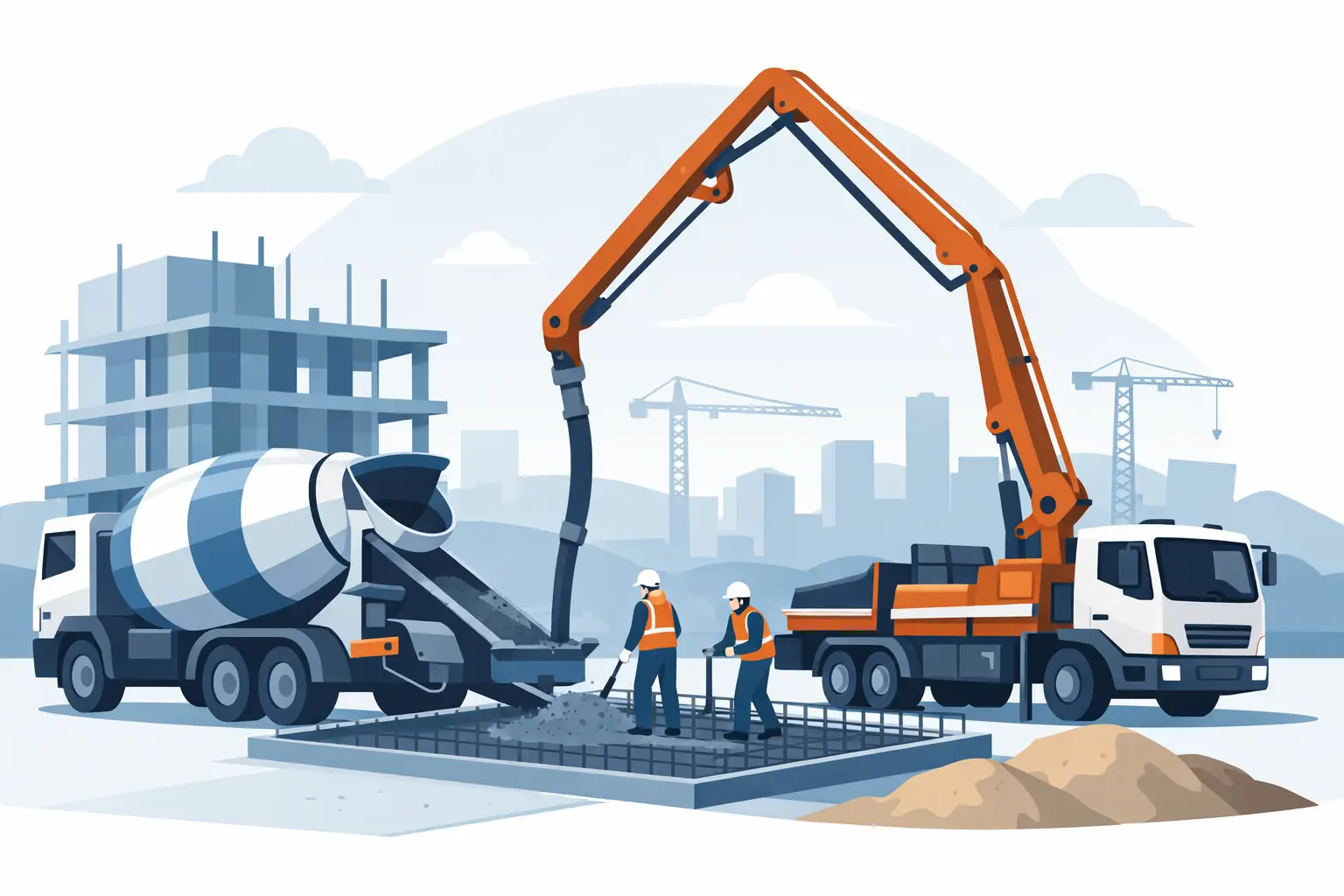
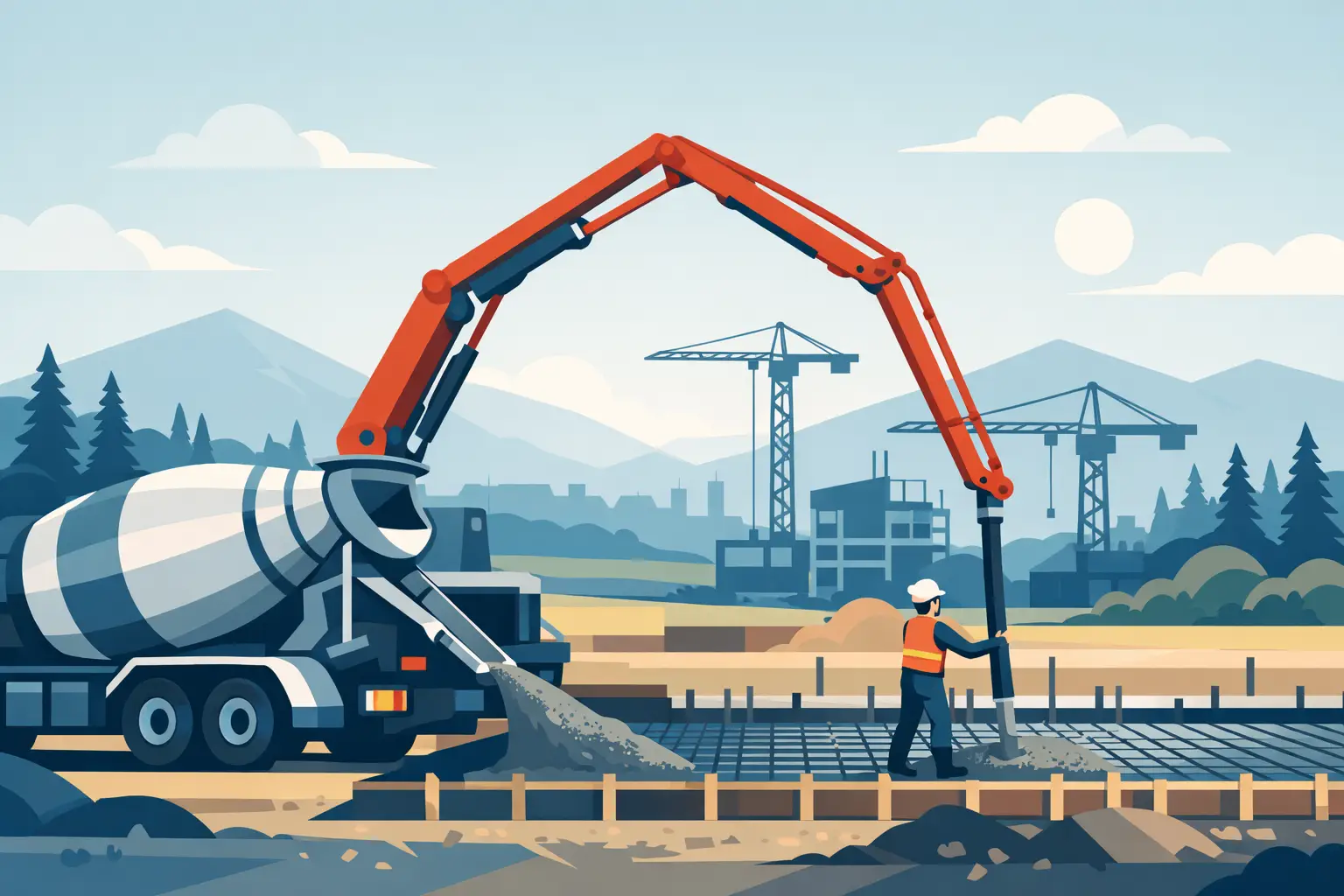
Pumping puts the material where the crew needs it with a controlled flow. Finishers can stay focused on placing, vibrating, screeding, and finishing rather than running wheelbarrows back and forth. For contractors, that can mean a smaller placement crew, less site traffic, and more consistent progress through the pour.
The benefit is not just speed. Accurate placement helps avoid overfilling forms, piling concrete where it cannot be worked properly, or leaving crews to drag material long distances by hand. Less handling also means less waste and a cleaner site when the work is done.
Alberta conditions add another layer. Pour windows can be tight, and weather can change quickly. When the concrete, crew, ready-mix supplier, and pump all arrive prepared, the job has a better chance of moving without costly downtime. Good pumping service is coordination as much as equipment.
Matching the Pump to the Jobsite
There is no single pump that suits every concrete job. Reach, access, volume, pour sequence, ground conditions, and required setup space all matter. Choosing equipment based only on the size of the pour can create problems before the first truck is unloaded.
Boom Pumps for Reach and Coverage
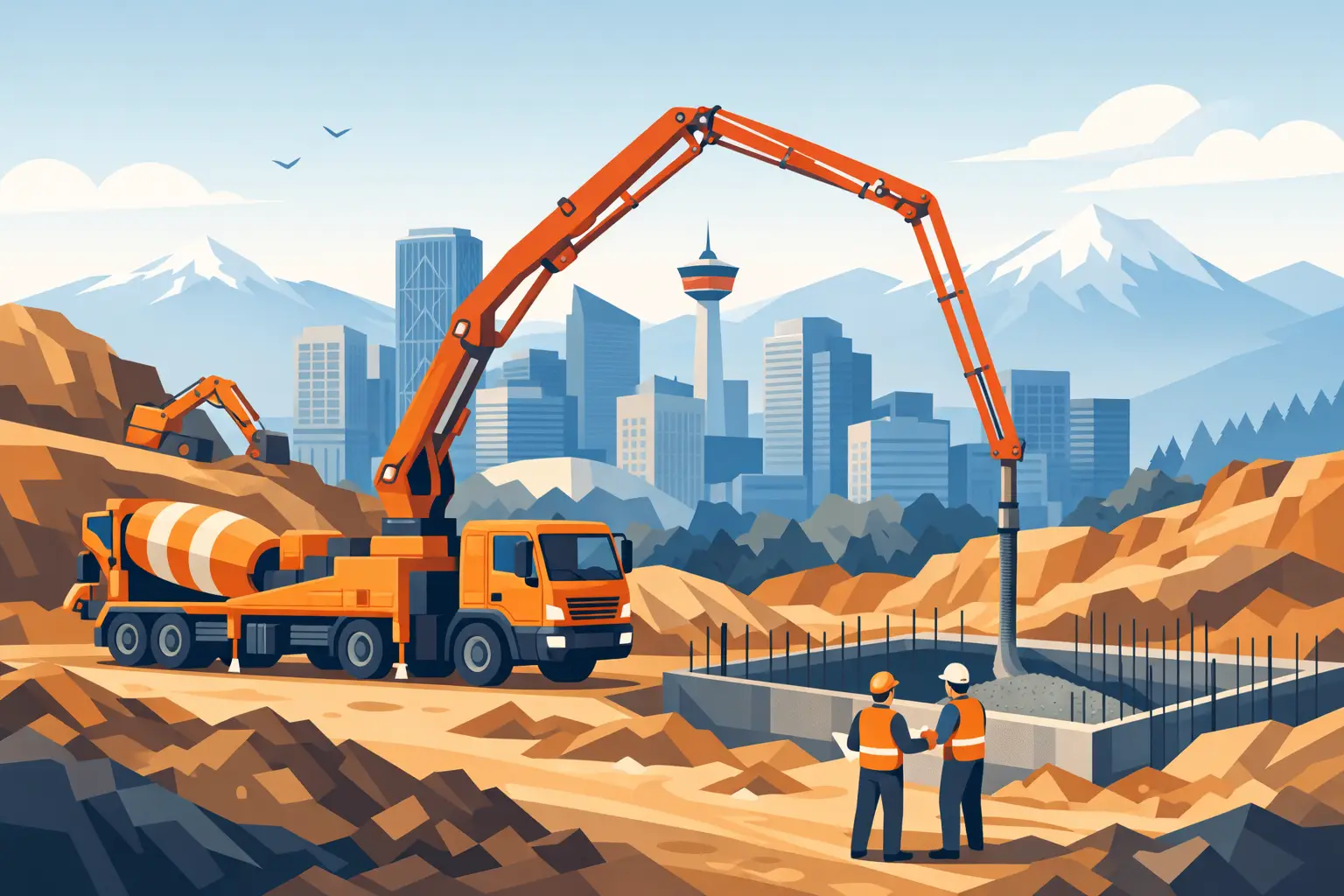
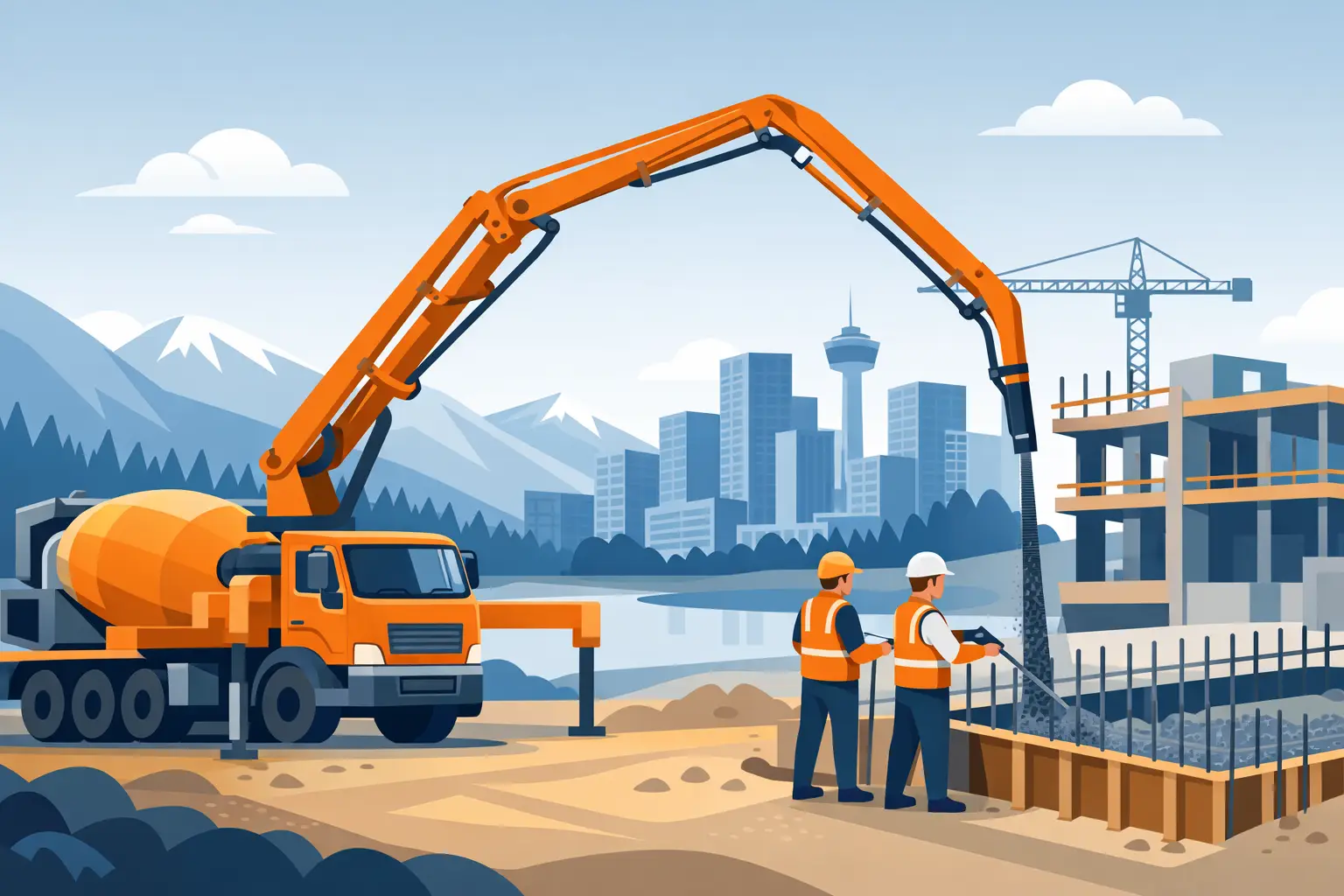
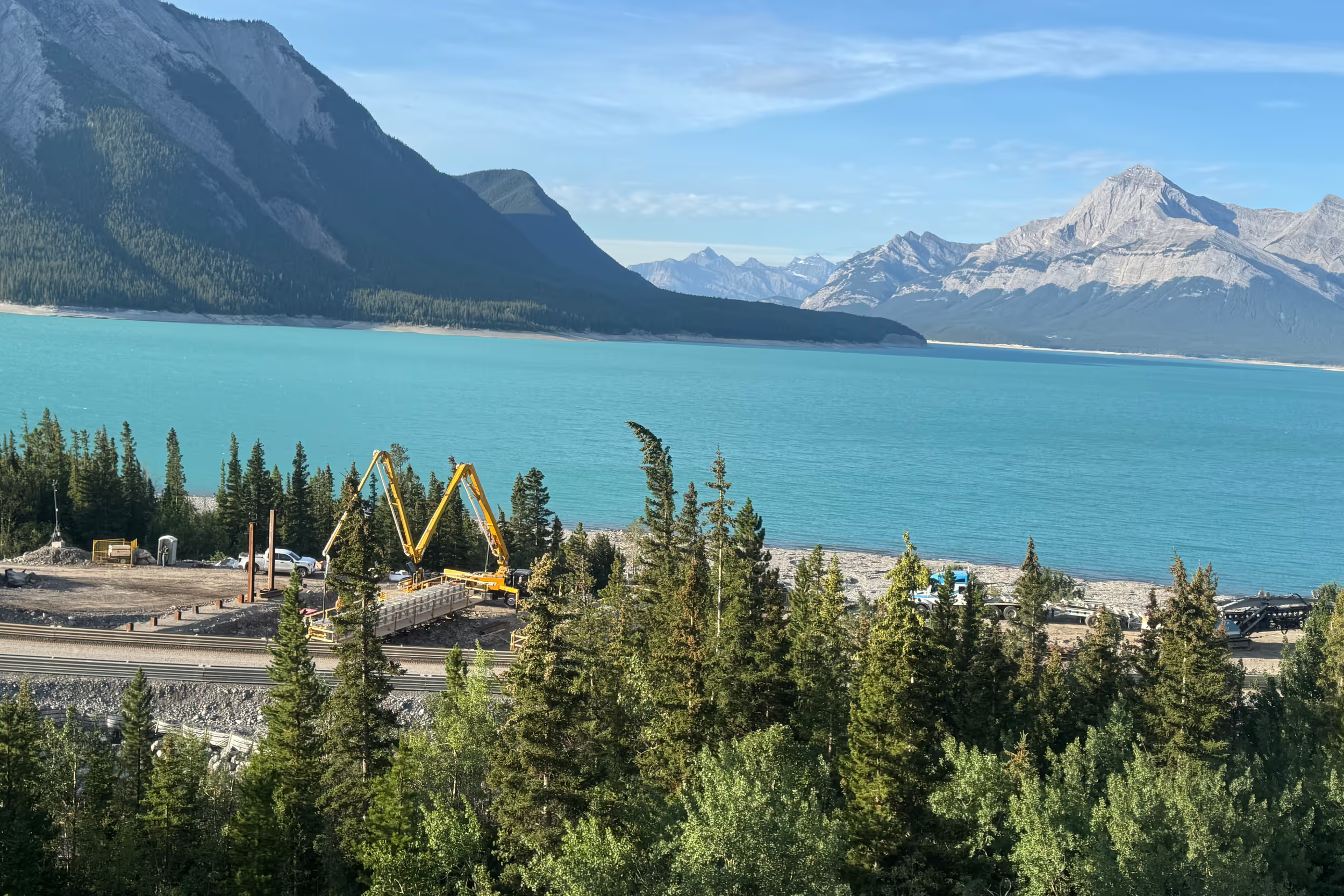
A boom pump is often the right choice where concrete must be placed over distance, around structures, or across a broad area. The articulated boom allows the operator to position the hose above the work zone and move placement as the crew progresses. This is a practical setup for foundations, large slabs, retaining walls, commercial footings, elevated work, and agricultural projects with wide placement areas.
Boom reach does not eliminate the need for planning. The truck needs safe access and stable setup space for outriggers. Overhead power lines, soft ground, excavation edges, traffic routes, and nearby structures all need to be considered before the pump arrives. A capable operator will review those conditions and position the equipment for useful coverage without creating a new site hazard.
Compact Equipment for Restricted Access
Tight residential and infill sites call for a different approach. A compact roll-and-fold boom can provide the flexibility needed where street space, neighbouring homes, trees, fences, or confined staging areas limit truck positioning. The goal is not simply to get a pump onto the site. It is to set up in a way that gives the placement crew room to work and keeps the hose moving efficiently through the pour.
This matters on garage pads, additions, house foundations, backyard slabs, and redevelopment work. A compact pump may offer the access advantage a larger unit cannot, but it still requires a clear setup plan. Measurements, access notes, and photos shared before booking can prevent surprises on pour day.
Line Pumps for Precise, Difficult-to-Reach Placement
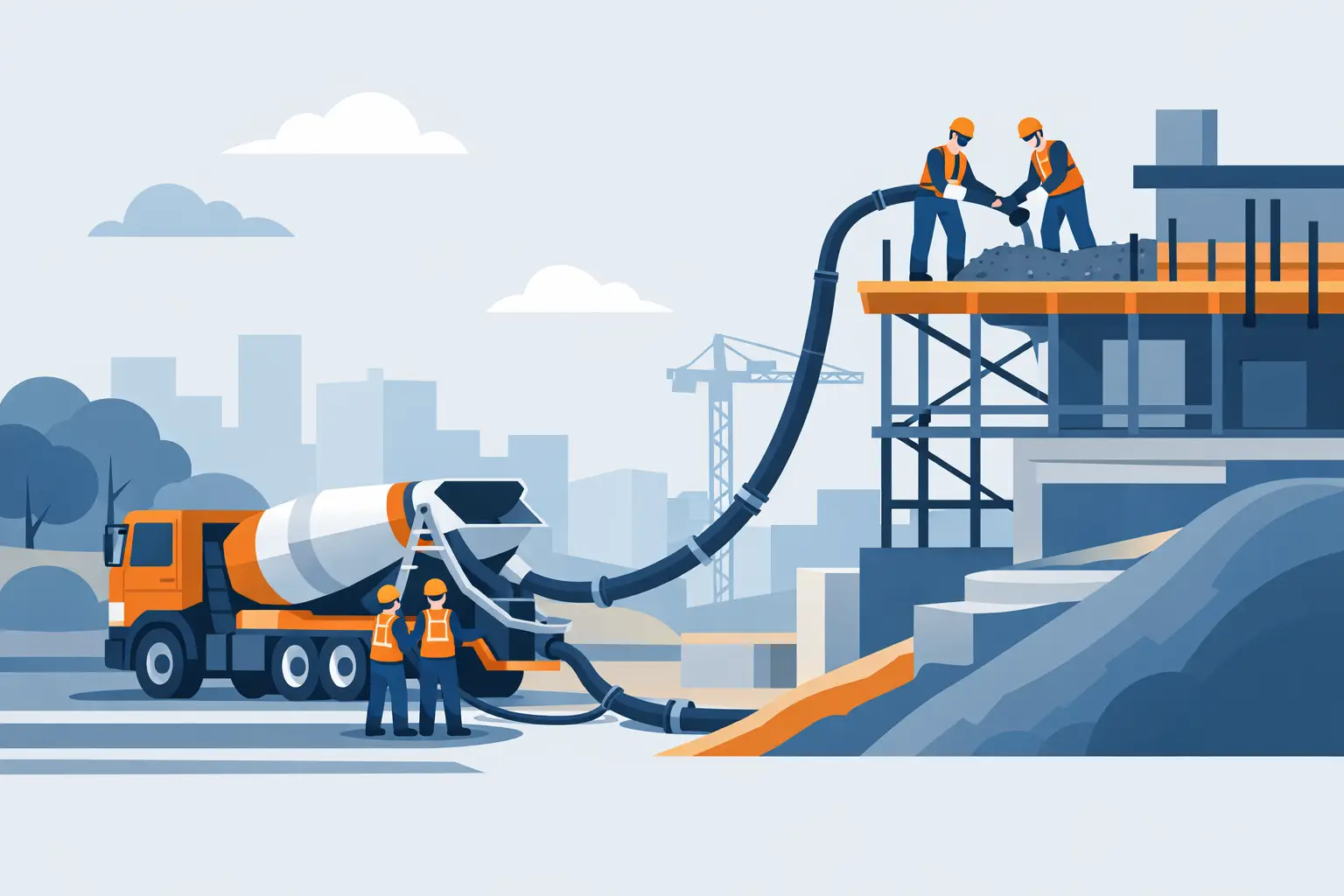
Some placements are better handled with a line pump. Truck-mounted line pumps use a hose line run from the unit to the point of placement, making them a strong option for backyards, basements, remote pads, narrow access routes, and locations where a boom truck cannot set up safely or effectively.
A 4x4 line pump is particularly useful on uneven or less-developed sites where traction and access matter. It can bring controlled placement to work that would otherwise require significant labour and repeated handling. The trade-off is that line placement requires a planned hose route and a crew ready to manage the line at the discharge point. It is not the fastest choice for every high-volume, wide-coverage pour, but it can be the most practical choice when access is the main challenge.
What a Well-Planned Pump Pour Looks Like
The best pump pours are decided before the concrete trucks arrive. The contractor, ready-mix supplier, and pumping crew should be working from the same basic plan: where the pump will set up, where trucks will stage, how they will enter and exit, where the pour starts, and how the placement will progress.
Before booking, provide the pour type, estimated volume, mix details, location, preferred date and time, site contact, and access information. Mention any slopes, narrow gates, power lines, overhead restrictions, soft ground, excavation, or special placement requirements. If the pump must cross a busy street or work within a constrained development, say so early. Those details affect equipment selection and setup, not just convenience.
On pour day, the site should be ready before the pump arrives. Forms need to be secure, reinforcement complete, access cleared, and the placement crew on hand. The pump operator is there to operate the equipment safely and place concrete where directed, but the finishing crew remains responsible for receiving, consolidating, and finishing the material.
Communication matters once pumping starts. The operator needs clear signals from the hose crew, especially around corners, at changing elevations, or when moving between sections. Steady placement is generally better than stopping and starting without reason. It helps maintain flow, keeps the line working properly, and gives the crew a more predictable pace.
The Cost Question: Pumping Versus Manual Placement
A pump is an added line item, so it is reasonable to ask whether it pays for itself. On a small, open-access pour with a truck parked beside the forms, chute placement may be enough. Pumping is not automatically the right answer simply because it is available.
But cost should be measured against the whole placement operation. If manual placement requires several extra labourers, slows down the finishing crew, causes more cleanup, or risks a delay while concrete is waiting in trucks, the apparent savings can disappear quickly. A pump can also reduce the physical strain and site congestion that come with moving concrete by wheelbarrow.
For larger pours, restricted access, elevated work, and long hose runs, pumping often delivers stronger value because it keeps the concrete moving directly to the work area. The real question is not just, “What does the pump cost?” It is, “What will it cost the job if placement is slow, inconsistent, or difficult to control?”
Clean, Safe Placement Is Part of the Service
Concrete pumping is high-output work, and it needs to be handled with discipline. Pressurized line systems, moving booms, truck traffic, and changing ground conditions all require experienced operation and a crew that respects the work zone. A safe setup protects people, property, forms, and the schedule.
Cleanliness also matters. Concrete left on driveways, roadways, landscaping, or finished surfaces creates avoidable cleanup and can damage client relationships. A professional pumping crew plans washout and works with the site team to leave the area in good order. That standard is especially important on residential projects and active commercial sites where the next trade may be waiting to move in.
Bandit Concrete Pumping brings modern boom and line pump options to projects across the Calgary-to-Red Deer corridor, with operators who understand that every site has its own access and placement challenges. The right equipment is only useful when the person running it knows how to make it work for the crew on the ground.
When you are planning a foundation, slab, shop, addition, retaining wall, or larger commercial pour, look at access first, not last. A quick conversation about reach, setup space, truck flow, and placement sequence can turn a difficult pour into a controlled workday.