 (587) 703-6048
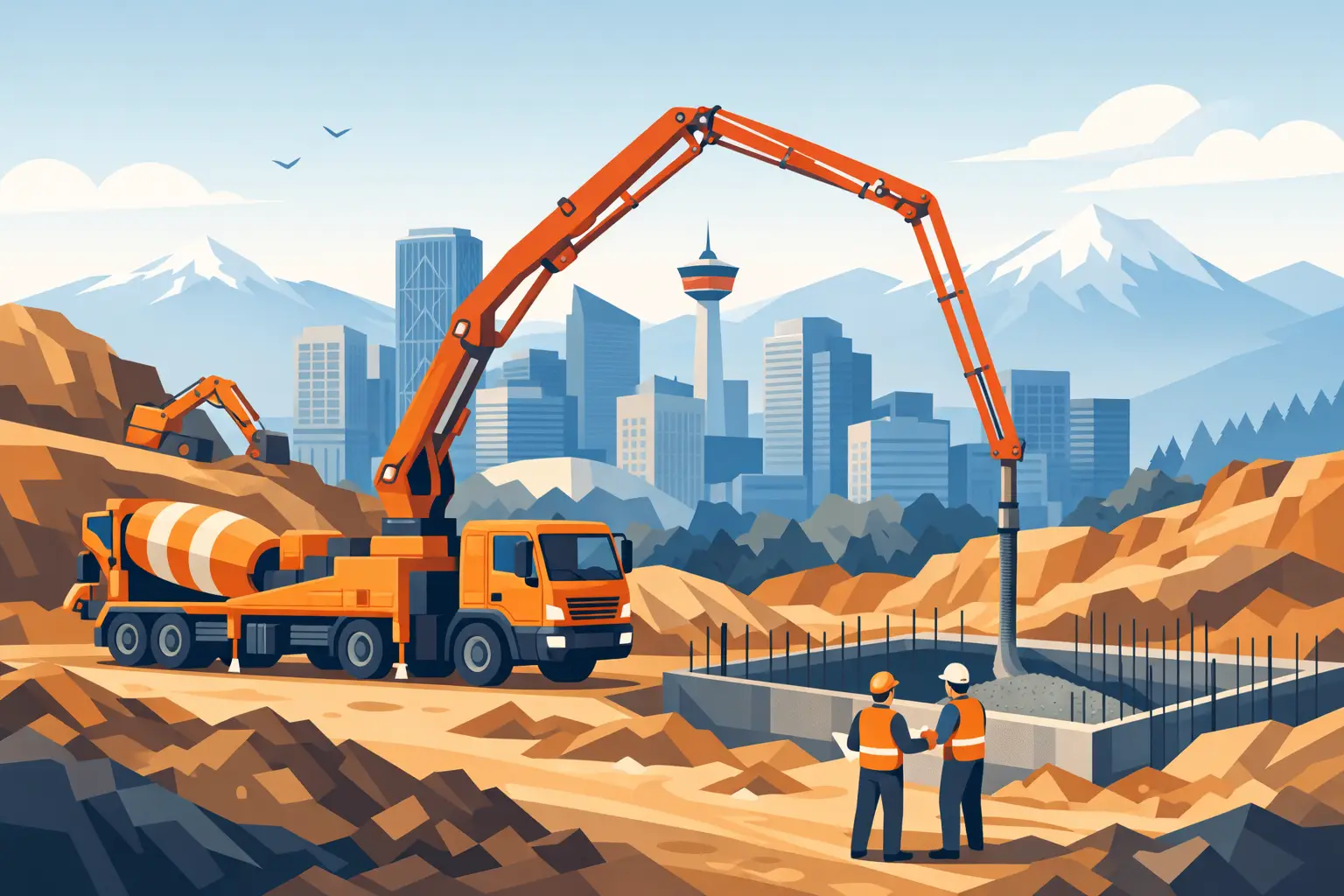
Concrete Pumping Calgary Alberta for Tough Sites

A Calgary pour can go sideways fast when access is tight, the crew is short, or the concrete needs to travel farther than a ready-mix chute can reach. Concrete pumping in Calgary, Alberta gives contractors and property owners a practical way to keep concrete moving from the truck to the forms without turning placement into a labour bottleneck.
For foundations, slabs, garages, shops, commercial pads and industrial work, the pump is not just another piece of equipment. It is the connection between a delivered load of concrete and a finished surface placed where it needs to be. The right pump, operator and pour plan can reduce handling, limit mess and help the finishing crew stay ahead of the material.
Concrete Pumping Calgary Alberta Jobs Can Depend On
Concrete placement is time-sensitive work. Once the trucks start arriving, there is no value in having concrete sit in the drum while workers fight with wheelbarrows, move chutes or try to reach around obstacles. A pump puts the concrete where the crew needs it, with controlled delivery that supports a steady pace through the pour.
That matters on Calgary jobsites where lot lines are tight, grades vary and weather can change by the hour. A residential infill foundation may have limited room between neighbouring homes. A commercial site may require concrete to cross an excavation, reach behind a building or cover a large slab without repeatedly moving the truck. On rural and industrial properties, long distances and uneven access can create the same problem on a bigger scale.
A pump does not replace good site preparation, proper mix design or a capable finishing crew. It does make those parts of the job easier to coordinate. Rather than building the pour around what a chute can reach, the contractor can plan placement around the forms, the sequence and the people doing the work.
Match the Pump to the Site, Not the Other Way Around
The best concrete pump for a job depends on access, volume, reach, setup room and the exact location of the pour. Bigger is not always better. A large boom pump can provide broad coverage and keep placement moving efficiently across expansive foundations, suspended slabs or commercial pads. But a compact boom may be the better answer on a restricted residential lot where turning radius and outrigger space are limited.
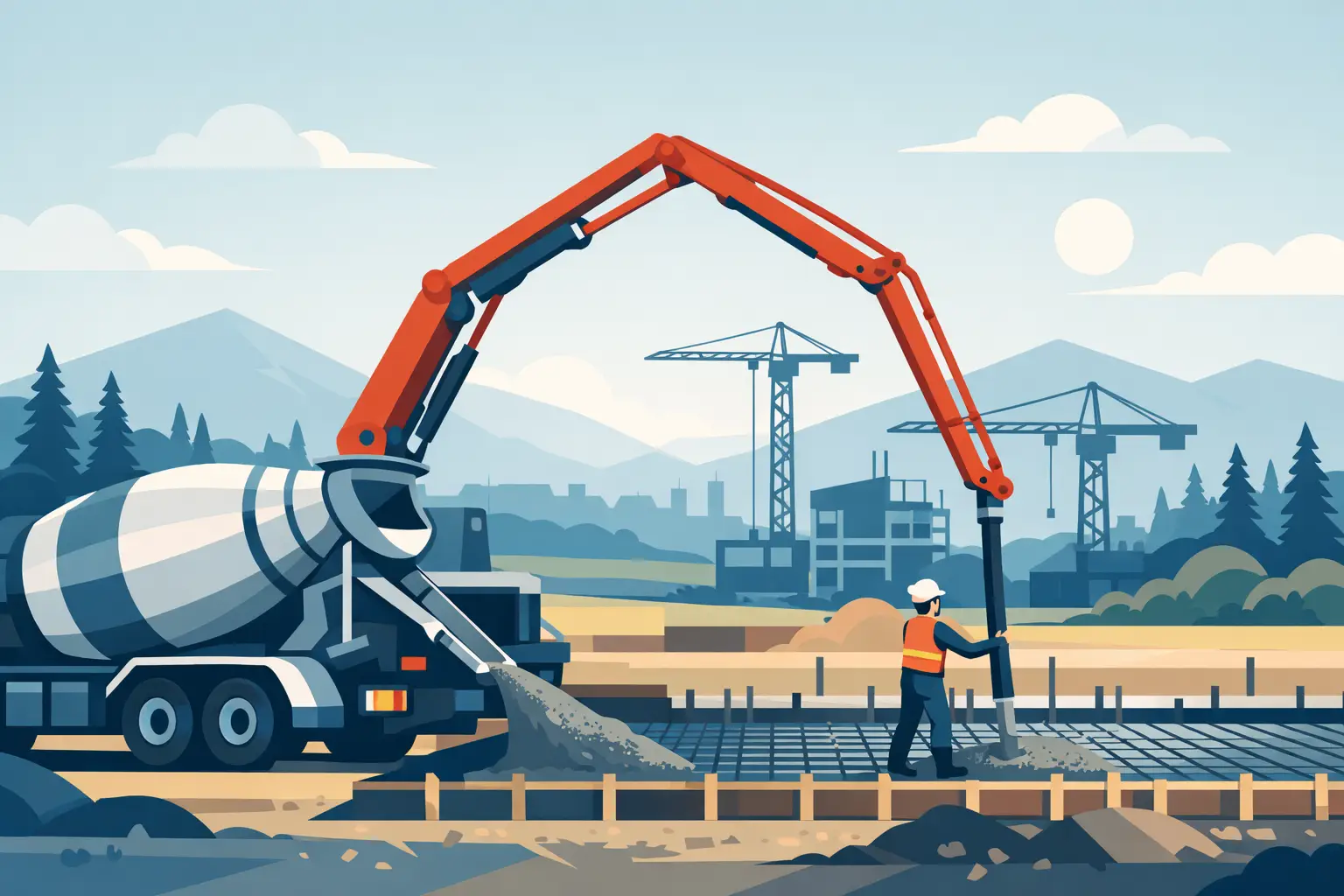
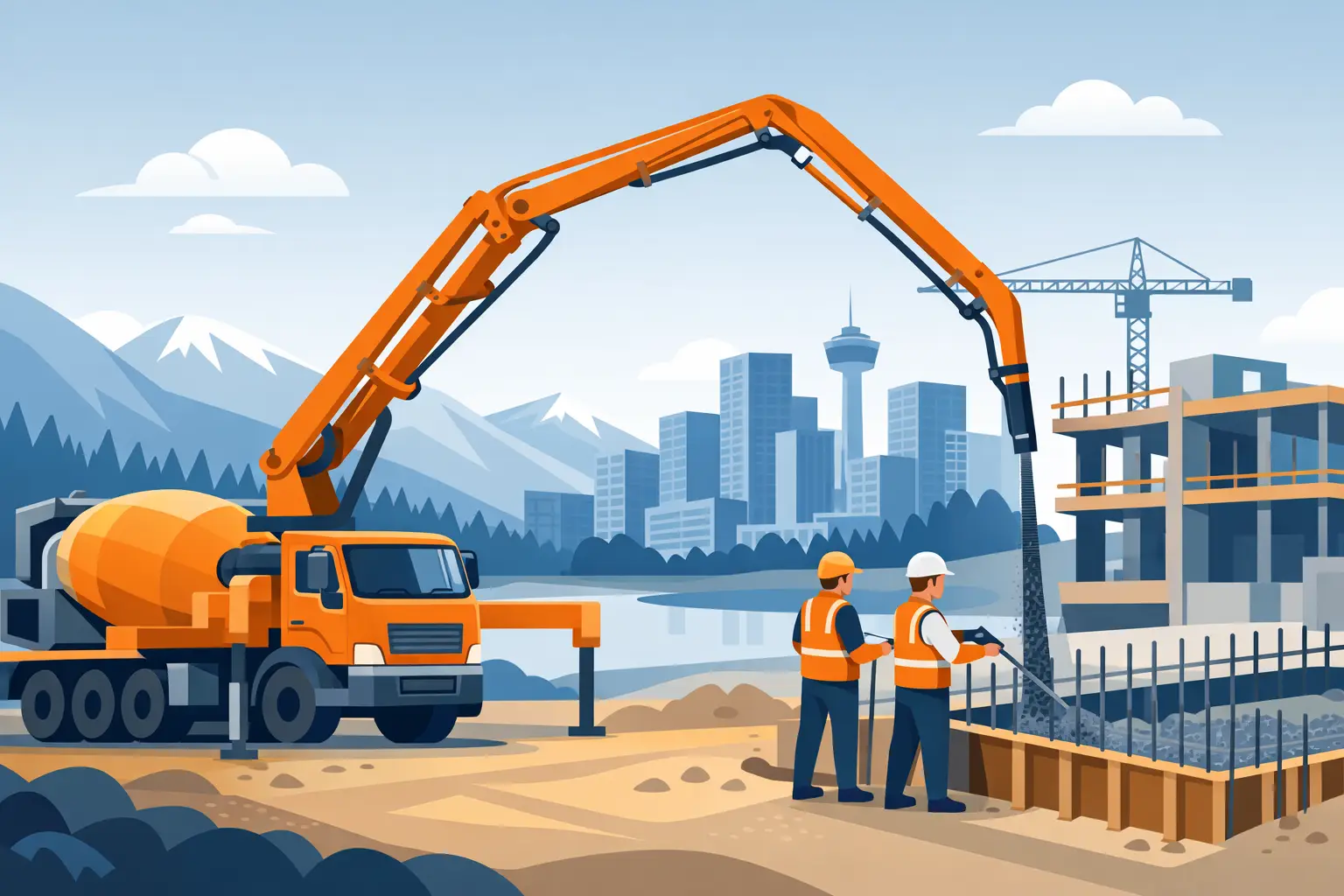
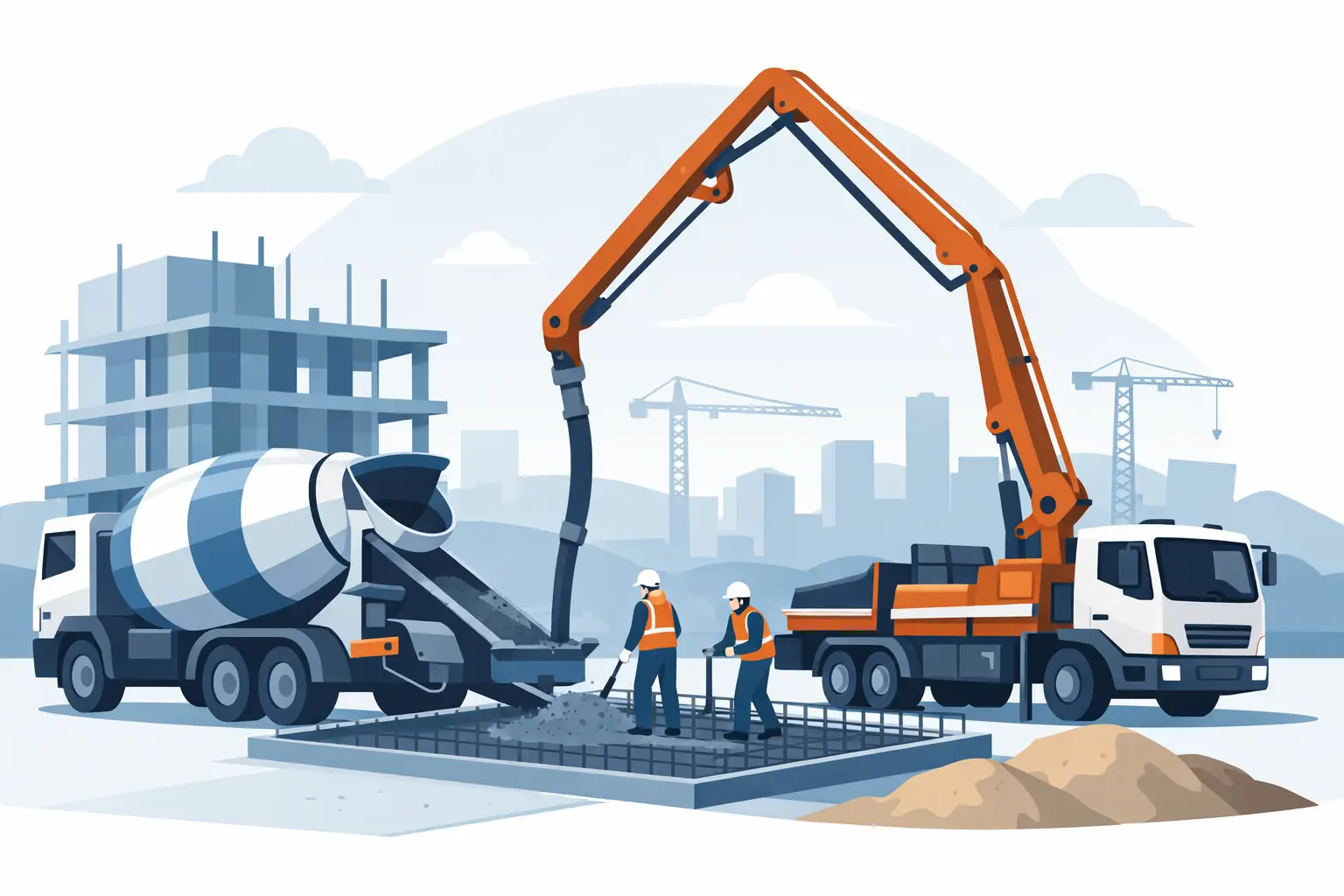
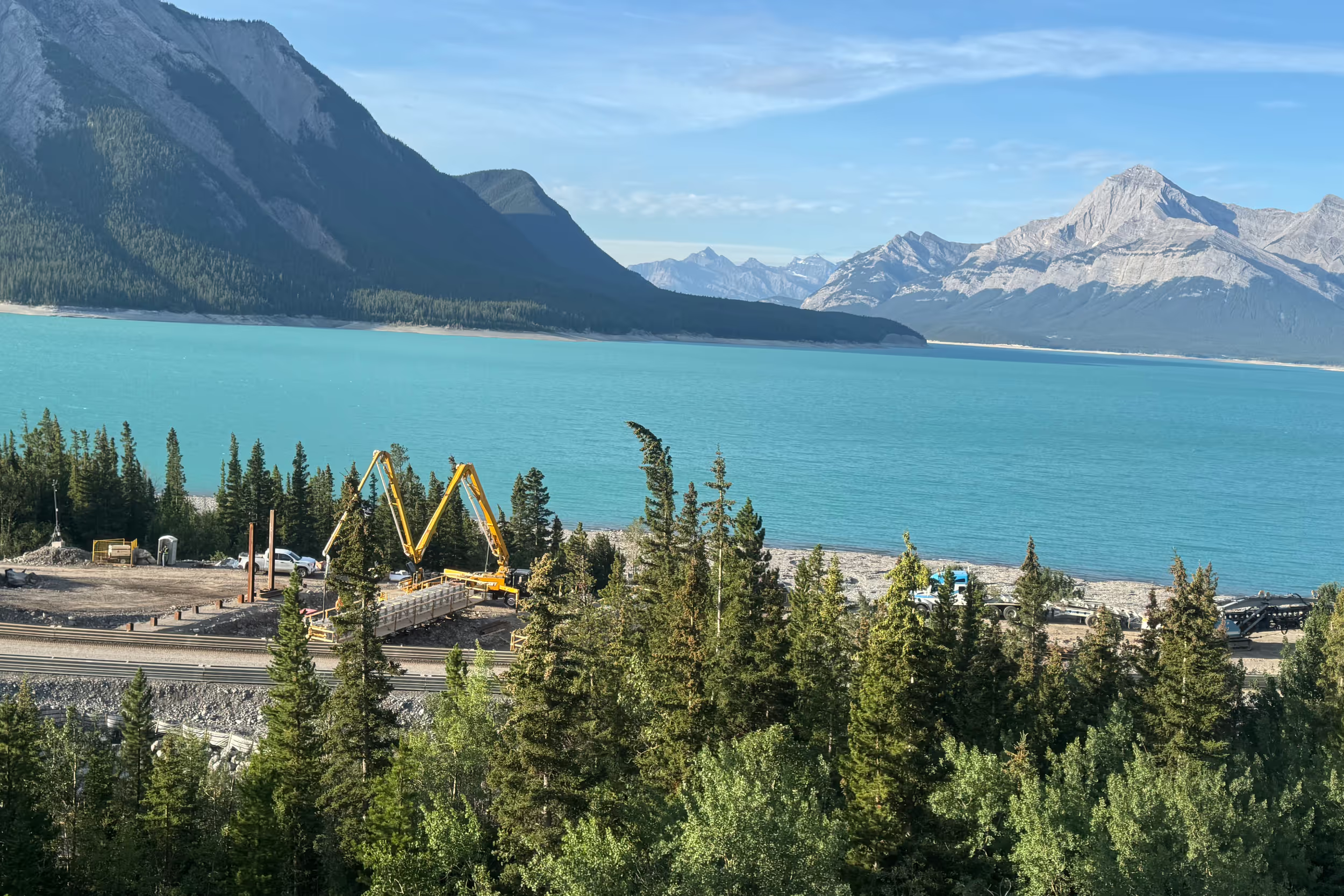
Boom pumps are built for reach and coverage. The boom can place concrete over fences, around existing structures, into excavations and across areas that would otherwise require extensive manual handling. On a well-planned pour, that coverage lets the truck remain in one position while the operator works through the placement sequence with the concrete crew.
A truck-mounted line pump is often the right tool when the concrete needs to travel through a hose route rather than over the top with a boom. It is useful for difficult-to-reach backyards, additions, basements, tight side yards and locations where a 4x4 unit can get closer to the work. Line pumping can also give the crew precise control at the hose end, which is especially useful around detailed forms, grade beams and smaller placements.
The trade-off is straightforward: every site has physical limits. A boom needs proper setup space and safe outrigger placement. A line pump needs a sensible hose route and a crew ready to manage the line safely. An experienced pumping contractor reviews those conditions before the pour instead of arriving with a one-size-fits-all solution.
Plan the Pour Before the First Truck Arrives
Concrete pumping works best when the pump operator, concrete supplier and placing crew are working from the same plan. That plan does not need to be complicated, but it needs to address the conditions that affect production and safety.
Before booking a pump, confirm the pour volume, the concrete mix, truck spacing and the expected start time. Let the pumping company know about the site entrance, overhead power lines, soft ground, slopes, fences, excavation edges and any traffic restrictions. These details determine where the pump can set up and how the concrete will be routed.
The placing sequence matters too. A foundation crew may need to work walls in a specific order to manage pressure and keep forms stable. A slab crew may want to begin at the far end and work back toward access points. On a large pad, the pump’s coverage and the finishing crew’s pace must be matched so no area gets too far ahead of the people striking off, vibrating and finishing the concrete.
A good pre-pour conversation should cover at least these five items:
- The pump location and the route ready-mix trucks will use to approach and leave the site.
- The placement order, including where the crew wants the first load and the final load placed.
- The mix details, especially aggregate size, additives and slump requirements for pumping.
- Safe clearance from overhead hazards, unstable ground and excavation edges.
- The crew members responsible for directing the hose, consolidating concrete and communicating with the operator.
This preparation prevents avoidable delays. It also helps protect the quality of the pour. Pumping concrete is fast, but there is still a right pace for the forms, the finish and the conditions on site.
Faster Placement Can Improve Cost Control
The hourly cost of a pump needs to be viewed against the whole job, not just against the cost of using a chute. If a pump shortens placement time, reduces the number of workers needed to move concrete and keeps ready-mix trucks turning efficiently, it can lower the cost of the pour overall.
The savings are often most noticeable where access is poor. Moving concrete by wheelbarrow across a long distance takes people away from forming, placing, vibrating and finishing. It also increases fatigue, leaves more opportunities for spills and makes it harder to maintain a consistent pour rate. On larger projects, those small delays compound quickly.
Pumping also helps reduce unnecessary material waste. Concrete can be directed into forms, around rebar and into hard-to-reach areas with less handling between the truck and the final placement point. That does not eliminate cleanup, but it can keep the jobsite cleaner and reduce the time spent dealing with dropped material and makeshift access routes.
There are cases where a pump may not be necessary. A small, open pad with direct truck access may be efficiently placed by chute. The value of pumping increases when reach, speed, restricted access or labour efficiency becomes the limiting factor.
Calgary Conditions Call for a Prepared Crew
Alberta construction crews know that weather and ground conditions can change the plan. Spring thaw can leave access routes soft. Summer heat can speed up set times. Cold conditions require careful coordination between the concrete supplier, placing crew and finishing crew. Wind can affect safe boom operation, particularly on exposed sites.
A reliable pump service looks at the conditions in front of it and makes practical decisions. That means using the right equipment, setting up on stable ground, maintaining safe clearances and communicating clearly when conditions require an adjustment. It also means arriving with equipment that is maintained and an operator who understands concrete placement, not just machine controls.
Clean work matters here as well. A pump crew should protect the site, manage washout responsibly and leave the setup area in good order. On residential work, that attention is especially valuable when the job is close to finished landscaping, driveways or neighbouring properties.
Choose Experience Along With Equipment
The pump truck gets attention, but the operator is just as important. A skilled operator works with the placing crew, follows the pace of the pour and responds quickly when the site conditions change. They understand how to position the boom or hose for safe, efficient placement without creating problems for the rest of the job.
When comparing concrete pumping providers, ask about the available fleet, the type of work they regularly handle and how they assess access before the pour. Look for a company that can provide a boom pump for broad coverage, compact equipment for confined sites and line pumping where hose placement makes more sense. Bandit Concrete Pumping brings that versatility to jobs across Calgary and Central Alberta, backed by operators focused on safe, accurate placement.
For the best result, walk the site before concrete day, clear the access route and make sure every crew lead understands the placement sequence. A well-prepared pump pour gives the concrete crew room to do skilled work where it counts: placing, consolidating and finishing the concrete properly.