 (587) 703-6048
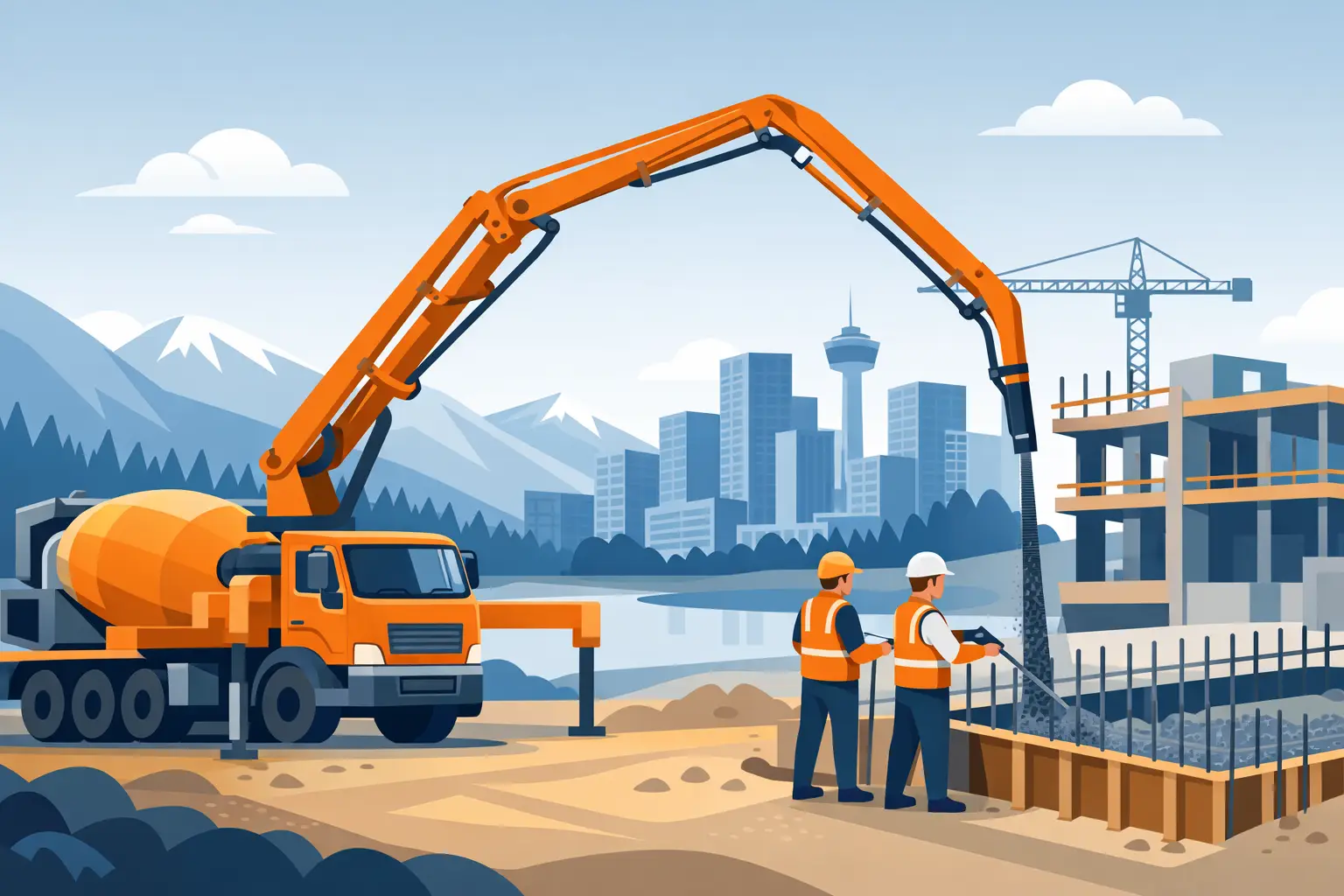
Concrete Pumping Benefits for Alberta Builds

A concrete crew can have the mix on site, forms inspected and finishers ready, then lose hours fighting access. Long wheelbarrow runs, tight side yards, soft ground and crowded sites turn a straightforward pour into a labour bottleneck. The concrete pumping benefits that matter most are practical: get material where it needs to go quickly, place it accurately and keep the crew focused on consolidation and finishing instead of moving concrete by hand.
For contractors and property owners across Central Alberta, pumping is often the difference between a controlled pour and a long day spent catching up. It is not the answer for every small job, but where access, volume, elevation or schedule is a factor, the right pump setup delivers measurable value.
Concrete Pumping Benefits That Show Up on Site
Faster placement protects the pour
Concrete has a working window. Once trucks arrive, the crew needs a steady, manageable flow that lets them place, vibrate, screed and finish without rushing one area while another waits. A pump moves concrete continuously from the ready-mix truck to the point of placement, reducing the stop-and-start delays common with wheelbarrows, skid steers or short chutes.
That speed is not just about getting off site earlier. It helps crews stay ahead of setting concrete, especially on larger slabs, walls, grade beams and foundations. A more consistent delivery rate also makes it easier to coordinate the finishing crew. Instead of scrambling to spread piles of concrete across a slab, they can work the surface in a planned sequence.
The gain is especially clear when a truck cannot back directly to the forms. Every extra metre between the truck and the pour becomes manual handling time. A pump replaces repeated trips across the site with a controlled hose or boom placement point.
Better reach solves access problems
Many Alberta projects are not wide-open commercial pads. Residential infills may have narrow side access. Shops and agricultural buildings can sit well back from the road. Commercial sites may have excavation, rebar, equipment and other trades blocking the direct route. On these jobs, the truck's chute is rarely enough.
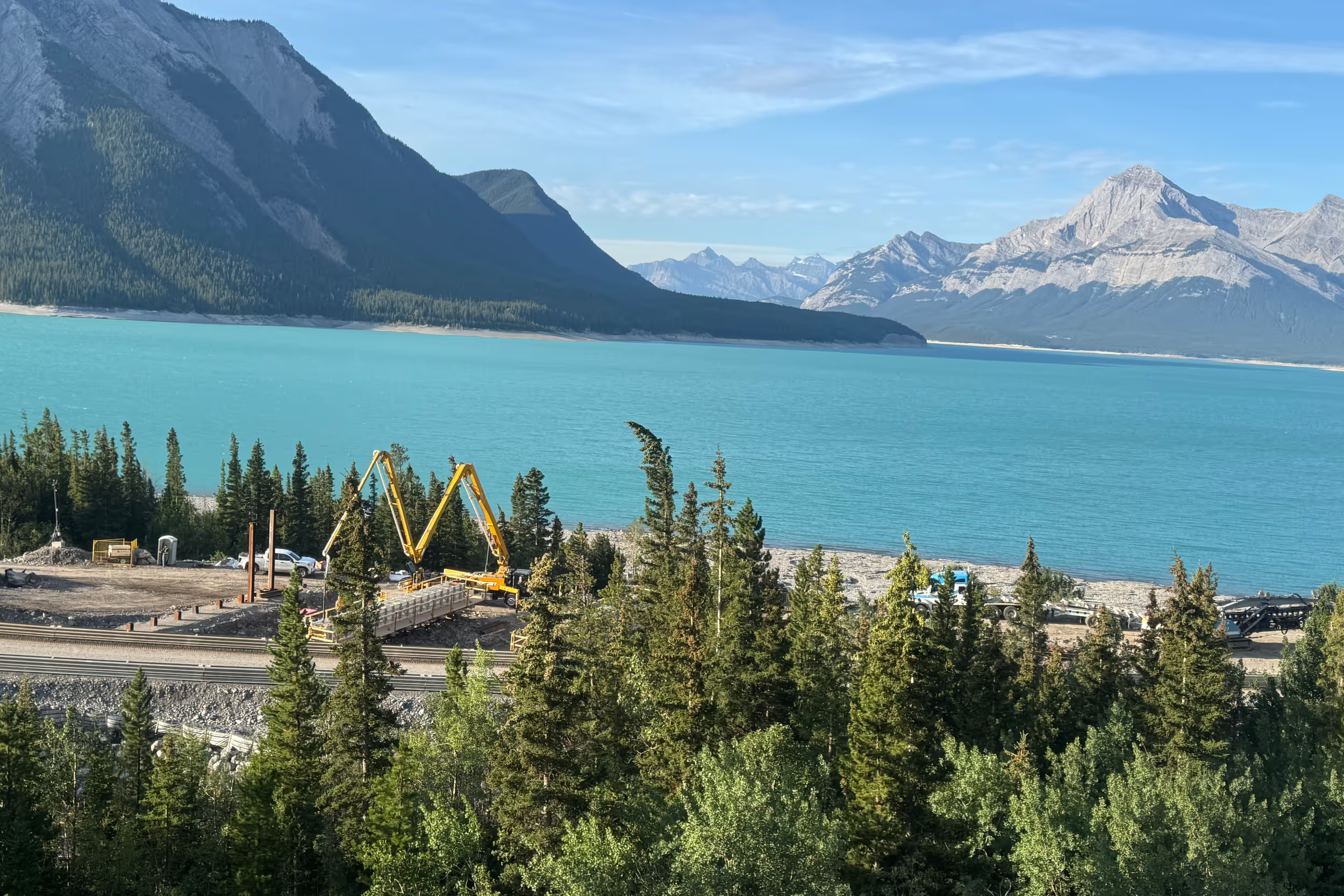
A boom pump can reach over obstacles and cover a broad work area without relocating the mixer truck every few minutes. For restricted sites, a compact roll-and-fold boom can provide useful reach while working within tighter setup space. A truck-mounted line pump is often the better fit where the concrete must travel along the ground, through a difficult route or into a location that a boom cannot safely access.
Reach should not be treated as a simple distance number. The route matters. Operators need room to set up safely, manage the hose, avoid overhead lines and maintain a stable working area. A site review before the pour helps match the pump configuration to actual conditions rather than making do with equipment that is too large, too small or poorly positioned.
Accurate placement reduces rehandling
Putting concrete close to its final position changes how the whole crew works. With a pump hose, the operator can place material along a wall form, into a footing, around reinforcing steel or across a slab area with far less rehandling. The crew still needs to spread and consolidate properly, but they are not dragging concrete across the site simply because it landed too far away.
This is one of the most useful concrete pumping benefits on detailed work. Foundation walls, retaining walls, suspended slabs, pile caps and heavily reinforced areas all demand controlled placement. Dropping concrete from the wrong height or forcing it through a congested form can contribute to segregation, voids and uneven consolidation. A skilled operator works with the placing crew to maintain a manageable flow and put the hose where the work needs it.
Accuracy also limits waste. Concrete that spills onto subgrade, landscaping, form bracing or finished surfaces costs time to clean up and may require extra material. Cleaner placement does not eliminate all site cleanup, but it substantially reduces the mess created by repeated wheelbarrow traffic and uncontrolled chute discharge.
Labour Savings Are More Than a Head Count
Traditional placement can tie up several workers before finishing even begins. Someone needs to receive the concrete, others need to wheel it, and more people may be needed to move material around forms. Those workers are often better used on vibration, grade control, screeding, edge work and finishing.
Pumping does not replace a competent concrete crew. It changes where that crew spends its effort. Fewer people are required to transport concrete manually, which can reduce fatigue and help the team maintain a better pace over a long pour. That matters on large garage slabs, shop floors, foundations and commercial work where a tired crew can quickly fall behind.
Labour savings depend on the job. A small pad beside the driveway may be quicker and cheaper with a short chute. But once access becomes awkward, the cost of extra labour, slower placement and site disruption can exceed the cost of bringing in a pump. The right comparison is not pump cost versus no pump cost. It is total placement cost, including crew hours, schedule risk, cleanup and the effect on finish quality.
Cleaner, Safer Work Areas
Wheelbarrows create traffic. On a busy site, that means ruts, spilled concrete, congestion around forms and more chances for workers to cross paths with equipment. Pumping can keep the ready-mix truck in a suitable loading position while the placing hose reaches the work area. Less travel through the site means less damage to prepared grades and fewer obstacles for other trades.
There are safety advantages as well. Reducing repetitive wheelbarrow work lowers manual handling demands and removes some of the risks tied to uneven ground, ramps and tight turns. The hose itself still requires trained handling, clear communication and attention to pressure. Concrete pumping is not a shortcut around safe work practices. It is a method that works best when the pump operator and placing crew have a clear plan.
Before the truck arrives, the site should have a suitable setup area, a confirmed washout plan, clear access and known overhead hazards. The best pours are prepared before the first mixer backs in.
Consistent Flow Supports Better Finishing
A quality finish starts well before the trowel work. Concrete needs to be placed at the right rate, consolidated correctly and brought to grade without unnecessary delay. Pumping gives the crew more control over the sequence of the pour, particularly on larger or more complex slabs.
For a residential basement floor, that may mean working from the far end back toward the access point. For a large shop slab, it may mean placing in organized strips so screed teams can stay productive. For walls and footings, it means filling forms evenly and avoiding large surges that put unnecessary pressure on the formwork.
The pump cannot correct poor mix design, weak formwork or inadequate finishing practices. It can, however, remove one major source of inconsistency: uneven delivery from the truck to the pour. When the placement process is controlled, the concrete crew has a better chance to do its best work.
Choosing the Right Pump for the Pour
The equipment should fit the job, not the other way around. A high-reach boom pump is valuable when broad coverage, elevation or distance is the main challenge. Compact boom equipment suits sites where access is restricted but the placement area still needs overhead reach. A 4x4 line pump can be the practical choice for difficult terrain, backyards, enclosed work areas and precise hose placement.
Pump selection should account for the volume of concrete, mix specifications, aggregate size, hose distance, vertical rise, access route and space for setup. The site also needs to support the equipment safely. Wet ground, steep grades, narrow streets and overhead utilities can all affect the plan.
This is where experienced operators make a difference. They understand how a mix will move through the system, how to position equipment for coverage and how to keep communication steady as conditions change. Bandit Concrete Pumping brings that equipment-and-operator approach to pours across Central Alberta, helping crews choose a setup that keeps concrete moving without creating a new problem on site.
Plan the Pump Before Booking the Concrete
A pump pour runs best when the concrete supplier, contractor and pump operator are working from the same information. Confirm the pour date, expected volume, mix type, start time and truck spacing early. Send site photos when access is unusual, and flag gates, tight turns, power lines, soft ground or any requirement to cross a roadway.
It also helps to identify where the pump will set up, where mixer trucks will stage and where washout will occur. Keep the placing crew ready before the first load arrives. A pump is built for efficient placement, but efficiency depends on forms being complete, reinforcing checked, tools ready and the crew prepared to receive concrete.
When the site is difficult, the practical question is not whether pumping sounds convenient. It is whether the pour can stay productive, safe and clean without it. If the answer is no, planning the right pump early gives the crew room to focus on the concrete, not the obstacles around it.