 (587) 703-6048
Concrete Pumping for Foundations That Stay on Track

A foundation pour has a narrow window to go right. Concrete is arriving, forms are ready, crews are waiting, and the weather may be changing by the hour. Concrete pumping for foundations puts the material where the crew needs it, at the rate the work requires, without turning access, wheelbarrows, or chute reach into the job's biggest problem.
For builders and contractors across Central Alberta, pumping is not just about moving concrete faster. It is about controlling the pour. The right pump, operator, mix, and site plan can reduce handling, keep crews focused on placing and consolidating concrete, and help produce cleaner, more consistent foundation walls and footings.
When Concrete Pumping for Foundations Makes Sense
A ready-mix truck chute works well when it can reach every placement area without slowing down the crew. That is not always the case. Foundation excavations, narrow side yards, established neighbourhoods, sloped lots, additions, and busy commercial sites often leave limited room for trucks to manoeuvre or discharge directly into forms.
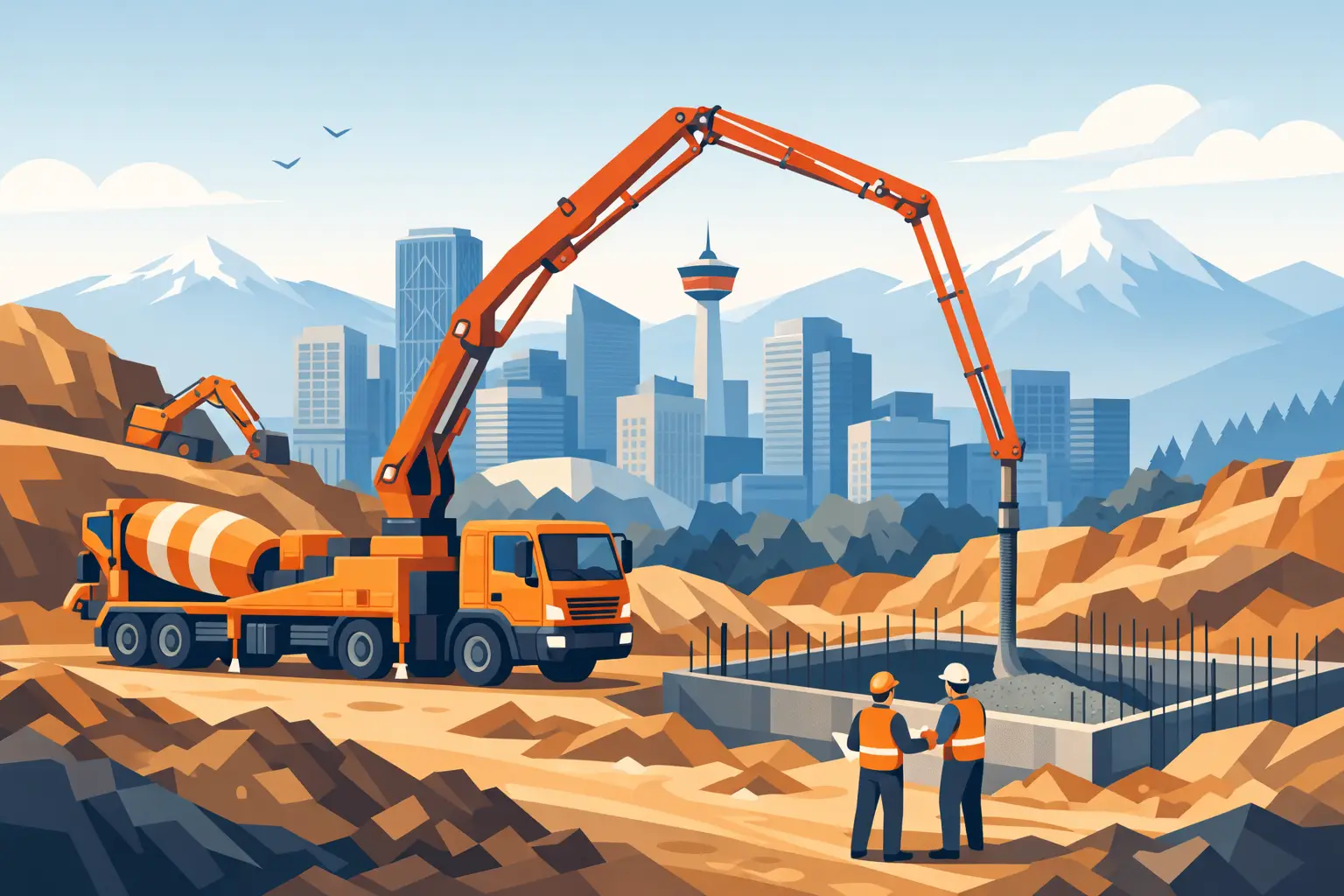
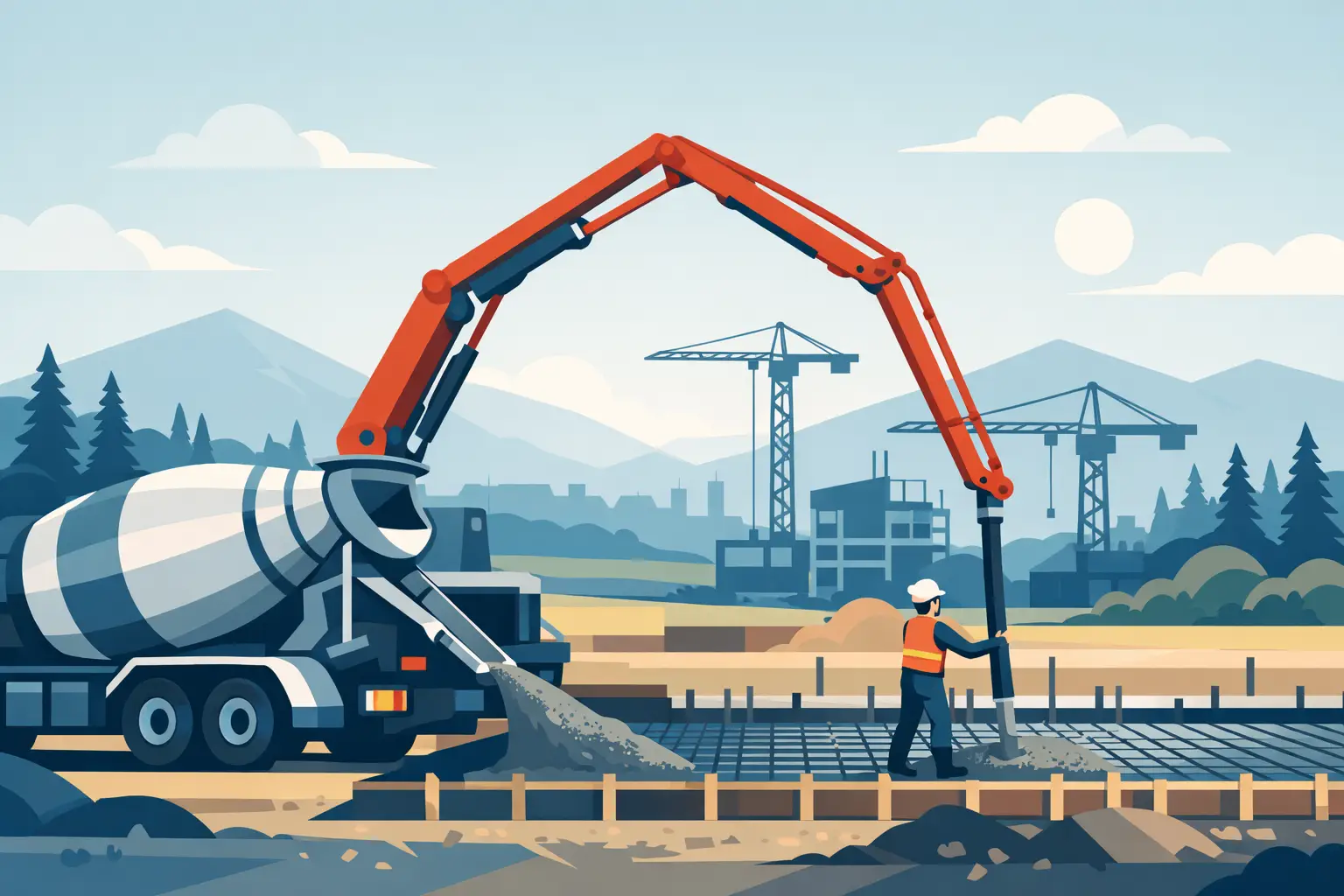
A concrete pump bridges that gap. A boom pump can reach across an excavation, over a garage or into a wide footprint while the truck stays positioned where it can safely unload. A truck-mounted line pump can be the better answer when access is tight, the placement route is awkward, or a smaller, more controlled hose setup is needed.
The benefit is not simply distance. Pumping lets the placing crew work from the right location rather than wherever the truck chute happens to reach. That matters when filling continuous footings, moving along long foundation walls, placing grade beams, or working around reinforcing steel and embedded items.
Pumping is especially useful when labour is limited. Moving concrete by wheelbarrow may look economical on a small job, but it adds handling, creates traffic around the excavation, and can become a bottleneck once the trucks begin arriving. The labour saved by pumping can be put toward screeding, vibrating, finishing, checking forms, and keeping the pour moving.
What a Pump Changes on the Pour Day
Foundation concrete needs to be placed steadily and handled properly. When the delivery rate is inconsistent, crews can be forced to rush one area while another sits too long. When concrete is dropped from the wrong height or dumped heavily in one spot, it can shift reinforcement, stress forms, and make consolidation more difficult.
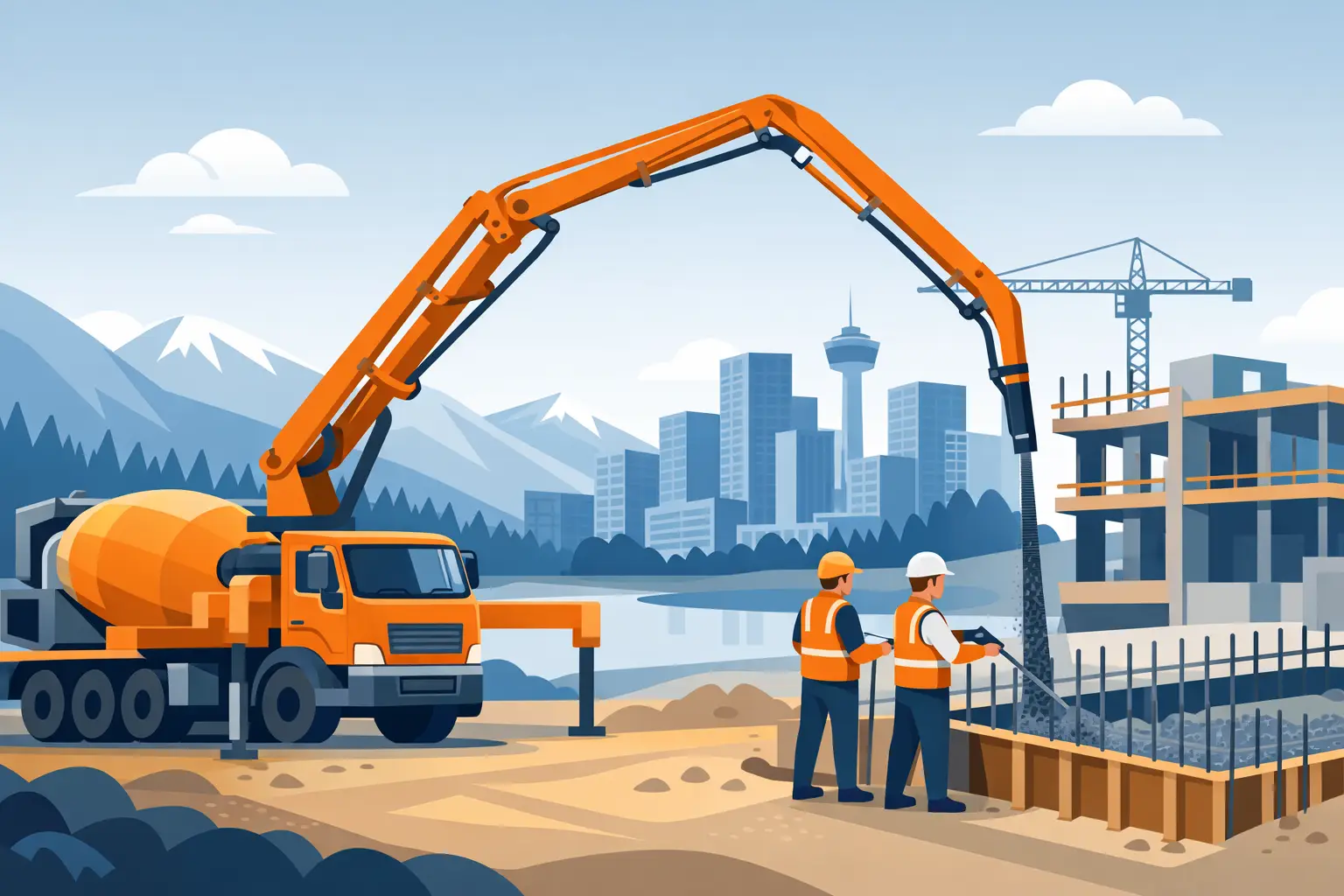
A skilled pump operator works with the concrete crew to control hose position and flow. Concrete can be placed closer to its final location, reducing unnecessary movement inside the forms. For walls, that gives the crew better control over lift height and placement sequence. For footings and pile caps, it helps fill corners and changes in elevation without repeated truck repositioning.
There is also a practical safety advantage. Fewer wheelbarrows moving around open excavations and less manual handling can reduce congestion. That does not remove the need for a proper site plan, competent placing crew, or fall protection around excavations, but it does make the work area easier to manage.
Cleanliness matters as well. Concrete tracked through a site, spilled along access routes, or dropped outside the forms becomes cleanup time and wasted material. Pump placement is not mess-free, but a well-planned setup keeps the work focused where it belongs. The crew should still prepare washout, protect finished surfaces, and identify where the pump and ready-mix trucks will stage before the first truck arrives.
Choose the Pump to Suit the Site
There is no single pump configuration that fits every foundation. The best choice depends on reach, access, volume, ground conditions, and the placement route.
A boom pump is usually the practical choice for larger residential foundations, commercial work, and sites where broad coverage is needed from one setup position. Its articulated boom can place concrete over obstacles and across a large work area. This can limit truck movement around the site and reduce the number of times the crew needs to relocate equipment.
Compact roll-and-fold boom equipment can be a strong fit for restricted-access residential sites. Tight setbacks, mature trees, overhead constraints, neighbouring homes, and narrow approaches all affect what can safely be set up. A compact configuration may provide the reach required without demanding the footprint of a larger machine.
A 4x4 line pump is often the right tool for difficult-to-reach placements where a boom setup is not practical. It can serve backyard foundations, garages, additions, shops, agricultural work, and locations with challenging ground or access routes. The line must be planned carefully, but it provides precise delivery where a truck chute cannot go.
The trade-off is straightforward: more reach and coverage can require more setup space, while a line pump may require more hose routing and labour to manage the line. The right decision comes from looking at the actual site rather than selecting equipment by habit.
Plan the Pour Before the Pump Arrives
Good foundation pumping starts before concrete is ordered. The pump operator needs clear information about the work, and the concrete contractor needs a placement plan that matches the forms, reinforcing, crew size, and finishing requirements.
Confirm where the pump will set up and where ready-mix trucks will enter, wait, and discharge. Check that the access route can support the equipment. Soft ground, fresh backfill, buried services, overhead powerlines, low branches, parked vehicles, and limited turning space should be addressed early. Outrigger placement for boom pumps requires stable, suitable ground and adequate clearance.
The forms should be braced, inspected, and ready before the first truck arrives. Pumping can place concrete quickly, which is an advantage only when the forms can handle the planned rate and the crew is prepared to consolidate and monitor them. Foundation walls are normally poured in controlled lifts, not filled aggressively from one location.
Coordinate the concrete mix with the ready-mix supplier and the placement method. Pumpable concrete needs an appropriate mix design, aggregate size, workability, and admixture plan. Adding water on site to make concrete easier to move is not a substitute for proper mix planning. It can affect strength, finish, and long-term performance.
Alberta conditions add another layer of planning. In warm weather, the team needs to manage slump loss, timing, and curing. In cold weather, protection, temperature requirements, and the concrete supplier's cold-weather procedures need to be in place. A pump helps place concrete efficiently, but it cannot correct a delayed site, unprepared forms, or poor curing practices.
Keep Communication Tight During Placement
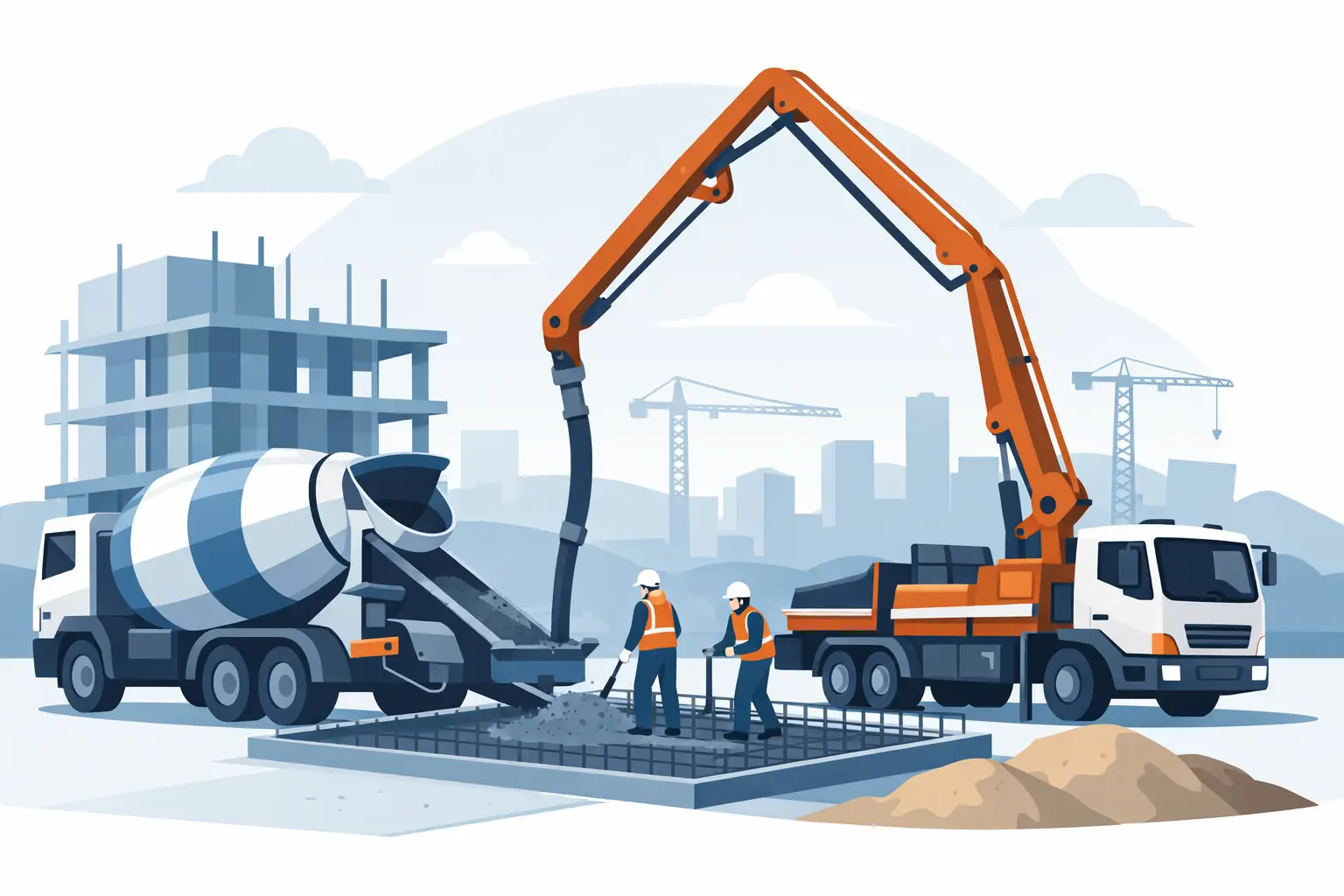
The best pours have a clear chain of communication. The pump operator, placing crew, finisher or foreman, and ready-mix drivers need to know the sequence before placement begins. A simple discussion about starting point, travel direction, lift heights, truck order, and any areas that need special attention prevents costly confusion once the line is charged.
One person should direct the hose placement in coordination with the operator. Too many voices around a pour can lead to overfilling, missed areas, or sudden changes in flow. The crew should also have a plan for vibration, form checks, and responding if a form shows movement or leakage.
The operator's role goes beyond running the pump. Experienced operators watch the setup, line behaviour, truck rhythm, and placement conditions throughout the job. They can help identify practical issues early, but the concrete contractor remains responsible for the forms, reinforcing, placement crew, and finished concrete work.
Cost Is More Than the Pump Rate
A pump adds a direct cost to a foundation pour, so it is reasonable to ask whether it is necessary. The answer depends on the job. On an open, small foundation with excellent truck access, direct chute placement may be the most efficient option.
On a site with restricted access, long reaches, high volumes, or a limited crew, the pump cost can be offset by reduced labour, faster placement, less handling, and lower cleanup requirements. It can also help avoid the expensive consequences of a pour that falls behind because concrete cannot reach the work efficiently.
The useful comparison is not pump cost versus no pump cost. Compare the full placement cost: extra labour, truck delays, access preparation, material handling, cleanup, production time, and risk to the schedule. That is where pumping often proves its value.
Bandit Concrete Pumping provides boom and line pump options backed by experienced operators who understand the pace and constraints of Alberta foundation work. The goal is straightforward: arrive prepared, place accurately, and keep the crew moving.
Before booking the pour, walk the site with the same attention you give the forms. If the concrete has a clear path from truck to final placement, the entire foundation crew has a better chance of finishing the day clean, on schedule, and ready for the next trade.