 (587) 703-6048
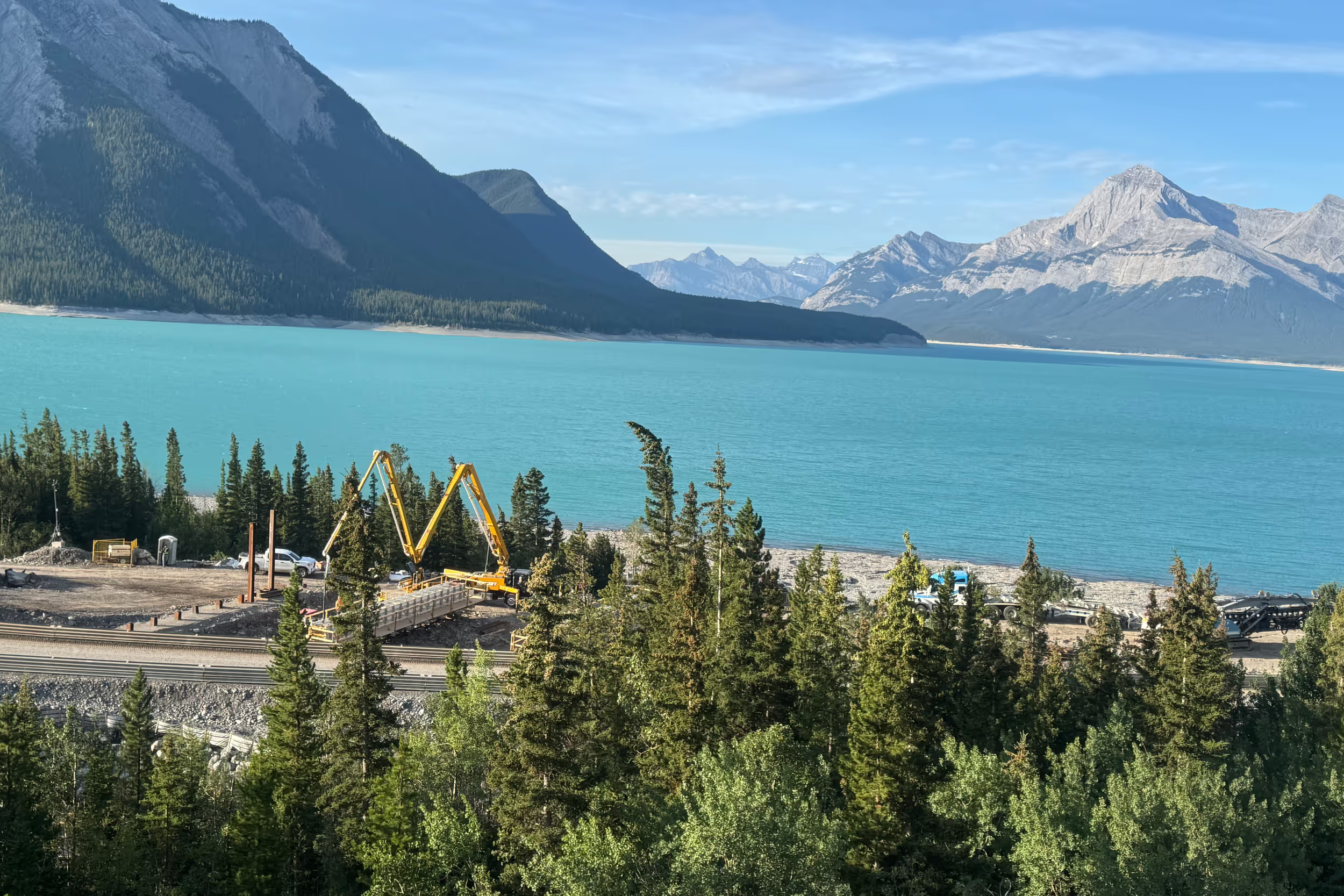

4x4 Line Pump Service for Tight Alberta Sites

A 4x4 line pump service is built for the pours that look simple on paper but become difficult once access, ground conditions, and crew movement are considered. A garage pad behind a house, a shop floor on an acreage, a foundation beyond a narrow lane, or a repair pour on soft ground can all turn into a labour-heavy job without the right pump setup. A truck-mounted 4x4 line pump brings concrete closer to the point of placement, so the crew can keep moving instead of fighting wheelbarrows, chutes, and uneven ground.
For contractors and property owners across Central Alberta, the benefit is practical: concrete gets where it needs to go with less handling, better control, and a cleaner site. The right pump does not replace good planning or finishing work, but it removes one of the biggest bottlenecks in a concrete pour.
When a 4x4 Line Pump Service Is the Right Call
A 4x4 line pump is a strong fit when a full boom truck is not necessary, cannot physically set up, or would be more capacity than the project requires. It combines the mobility of a four-wheel-drive truck with the controlled delivery of a line system. The pump can work from an accessible staging point and run pipe or hose to the pour location.
That matters on Alberta jobsites where conditions change quickly. Gravel approaches, muddy acreage lanes, uneven lots, snow-packed access routes, and partially developed sites can limit where equipment can travel. Four-wheel drive helps the pump truck reach work areas that may be difficult for standard two-wheel-drive equipment, provided the route and ground bearing are suitable.
A line pump is often the practical choice for projects such as residential foundations, garage slabs, additions, basement floors, sidewalks, retaining walls, agricultural pads, shop floors, pile caps, and smaller commercial placements. It is especially useful when concrete must travel around a building, through a narrow side yard, down a slope, or across a site where direct truck access is not possible.
What the Right Pump Setup Changes on Site
Concrete placement is a race against time, but rushing the wrong parts of the job creates problems. When a crew depends on wheelbarrows or long chutes, the work can slow down as soon as the ready-mix truck cannot get close enough. Labour is pulled away from screeding, vibrating, forming, and finishing just to move material.
With a properly planned line pump setup, concrete is delivered continuously to the placing crew. The hose can be moved along the forms as the pour progresses, helping maintain a steady pace and reducing the distance concrete needs to be handled manually. That gives finishers a more manageable workflow and can improve consistency across slabs and walls.
Better access without forcing equipment into the site
The goal is not to drive a pump truck as close as possible at any cost. The goal is to position it where it can operate safely and efficiently, then use the line to reach the work. This approach can protect landscaped areas, reduce unnecessary traffic over prepared subgrade, and avoid squeezing heavy equipment through tight spaces.
On residential sites, that may mean staging at the front of the property and running line along a planned route to the rear yard. On an acreage, it may mean setting up on firm ground near the access road rather than taking a loaded truck across a wet field. Every site is different, and the best setup depends on grades, overhead obstructions, turning room, line distance, and the condition of the access route.
More control at the point of placement
The person handling the hose has direct control over where the concrete is discharged. That makes a difference around reinforcing steel, footings, wall forms, isolated pads, and tight slab edges. Instead of dropping a large volume in one area and moving it by hand, the crew can place concrete closer to its final position.
Precision does not mean the pump eliminates placing and finishing work. Concrete still needs proper consolidation, strike-off, and finishing. It means the crew starts with material where it is needed, rather than spending valuable time redistributing it after delivery.
Planning a 4x4 Line Pump Service Before Pour Day
The pump works best when the site plan is clear before the first ready-mix truck arrives. A quick conversation about access and placement can prevent delays that cost more than the pumping itself. The operator needs a realistic picture of the route into the site, the pump location, the line path, and the volume being placed.
Confirm that the access route has adequate width, clearance, and a stable surface. Soft ground, steep grades, low branches, parked vehicles, overhead lines, and tight corners should be identified early. Four-wheel drive improves mobility, but it does not make unsuitable ground safe for a heavy truck. If conditions are questionable, plan a staging location on firmer ground and allow for additional line.
The line route also needs attention. Pipe and hose should be kept clear of sharp edges, traffic lanes, open excavations, and areas where other trades need to work. On a busy commercial or industrial site, that may require coordinating the pour time with site supervision so the route stays protected.
It also helps to have forms, reinforcing steel, vapour barrier, base preparation, and crew readiness confirmed before the pump arrives. A pump can place concrete quickly. If the site is not ready, the advantage disappears while trucks and workers wait.
Concrete Mix and Pumpability Matter
Not every mix behaves the same way through a pump line. Aggregate size, slump, admixtures, fibre content, air entrainment, and mix design all affect how concrete moves. A mix that is workable for chute placement may not be ideal for a long or complicated pump run.
This does not mean the mix needs to be overly wet. Adding water without approval can affect strength, finish quality, and specifications. The better approach is to coordinate the intended pump method with the concrete supplier and the pump operator in advance. They can help confirm a mix design suited to the placement requirements.
Fibre-reinforced concrete, high-strength mixes, and mixes with special additives can all be pumped when they are designed and managed correctly. The key is communication. Let the pump operator know what is being ordered, how far the line will run, and whether the placement includes difficult sections such as walls, narrow forms, or heavy reinforcing.
Line Pump or Boom Pump: Choose for the Actual Job
A boom pump is often the better tool for large-volume placements, broad coverage, elevated work, or projects where the boom can reach multiple areas quickly. It can reduce hose handling and cover a large footprint from one setup position. For big commercial slabs, multi-storey work, or wide foundations, that reach can be the efficient choice.
A 4x4 line pump earns its place where mobility, compact setup, and targeted delivery matter more than boom reach. It can be a cost-effective option for smaller and mid-sized pours, restricted sites, and work that requires concrete to travel through a route a boom cannot easily serve.
There is no automatic winner. A short, open-access residential pour may be handled well by chute delivery. A larger open slab may justify a boom pump. A rear-yard foundation with narrow access may call for a line pump. The right decision comes from the site layout, concrete volume, finish requirements, and the labour needed to place the concrete without pumping.
Skilled Operators Keep the Pour Moving
The pump is only part of the service. Concrete pumping depends on an operator who understands equipment setup, line management, pressure changes, safe communication, and the pace of an active pour. A good operator works with the placing crew, watches the flow, and responds before a small issue becomes a shutdown.
Bandit Concrete Pumping provides equipment and experienced operators for jobs where dependable placement matters. That includes working with contractors who have a repeatable process and property owners who may be organizing a major concrete pour for the first time. In both cases, clear information before dispatch leads to a better pour.
A clean pump-out area and a planned washout location are also part of doing the job properly. Concrete residue cannot simply be left wherever the truck happens to finish. Setting expectations ahead of time helps keep the site organized and avoids avoidable cleanup after the crew leaves.
Get More Value From the Pump Than Just Faster Placement
The cost of a pump should be measured against the whole pour, not just the line item on the invoice. Consider how many workers would otherwise be needed to move concrete, how long ready-mix trucks may be waiting, and how much risk comes with carrying heavy loads over rough ground. On a tight site, reducing manual handling can protect both the schedule and the crew.
A pump also helps keep concrete moving at a steady rate. That can be particularly valuable for slabs where maintaining a consistent placing sequence supports better screeding and finishing. It will not fix poor formwork, inadequate crew size, or weather-related issues, but it gives capable crews a much better starting point.
Before booking, walk the route from the road to the forms, identify the firmest pump location, and think through where every truck, hose, worker, and washout area will go. That preparation turns a 4x4 line pump service from a delivery method into a practical advantage when the concrete starts rolling.