 (587) 703-6048
Concrete Pump for Tight Access: What Works Best

A backyard foundation with one narrow side yard. A garage slab behind an existing home. A commercial addition boxed in by fencing, parked equipment, and active trades. These are the jobs where a concrete pump for tight access earns its keep. When a ready-mix truck cannot get close enough to discharge directly and wheelbarrows would slow the pour, the right pump keeps concrete moving to the forms without turning the site into a labour bottleneck.
Restricted access does not automatically mean one type of equipment is best. The practical choice depends on the path to the pour, the volume of concrete, the placement distance, overhead clearance, ground conditions, and how much room is available to set up safely. A proper site review before booking prevents wasted time when the concrete truck is on the way.
Why Tight-Access Concrete Pours Need a Plan
Concrete has a clock on it. Once the trucks are loaded, the crew needs a clear placement plan that keeps the mix moving at the required pace. Carrying concrete by wheelbarrow through a gate or around a house may seem workable for a small pour, but it can quickly create inconsistent placement, crew fatigue, extra cleanup, and delays for the finishing team.
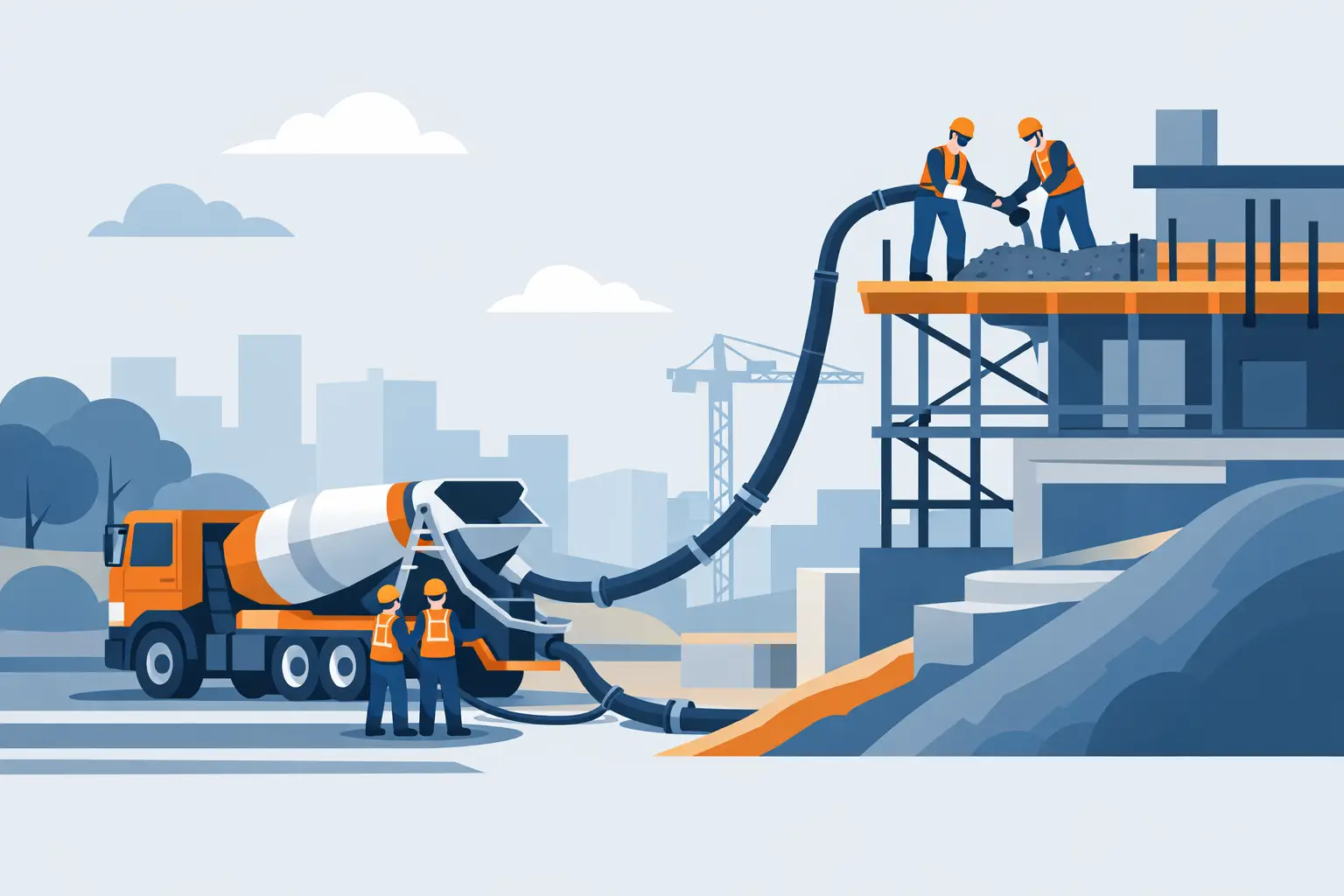
A pump changes the route, not the job. Concrete can travel from the ready-mix truck through a pipeline to the forms, allowing the placing crew to work where the concrete is needed rather than where the truck can physically park. That means fewer trips across lawns, less traffic through finished areas, and better control over where each load lands.
The trade-off is that pumping requires planning. The pump needs a suitable setup location, the line needs a clear and protected route, and the selected mix must be pumpable. Tight access is solved by preparation, not by forcing large equipment into a space that cannot safely accommodate it.
Choosing a Concrete Pump for Tight Access
For most restricted sites, the choice comes down to a truck-mounted line pump or a compact boom pump. Both can place concrete efficiently, but they solve different access problems.
When a line pump is the practical choice
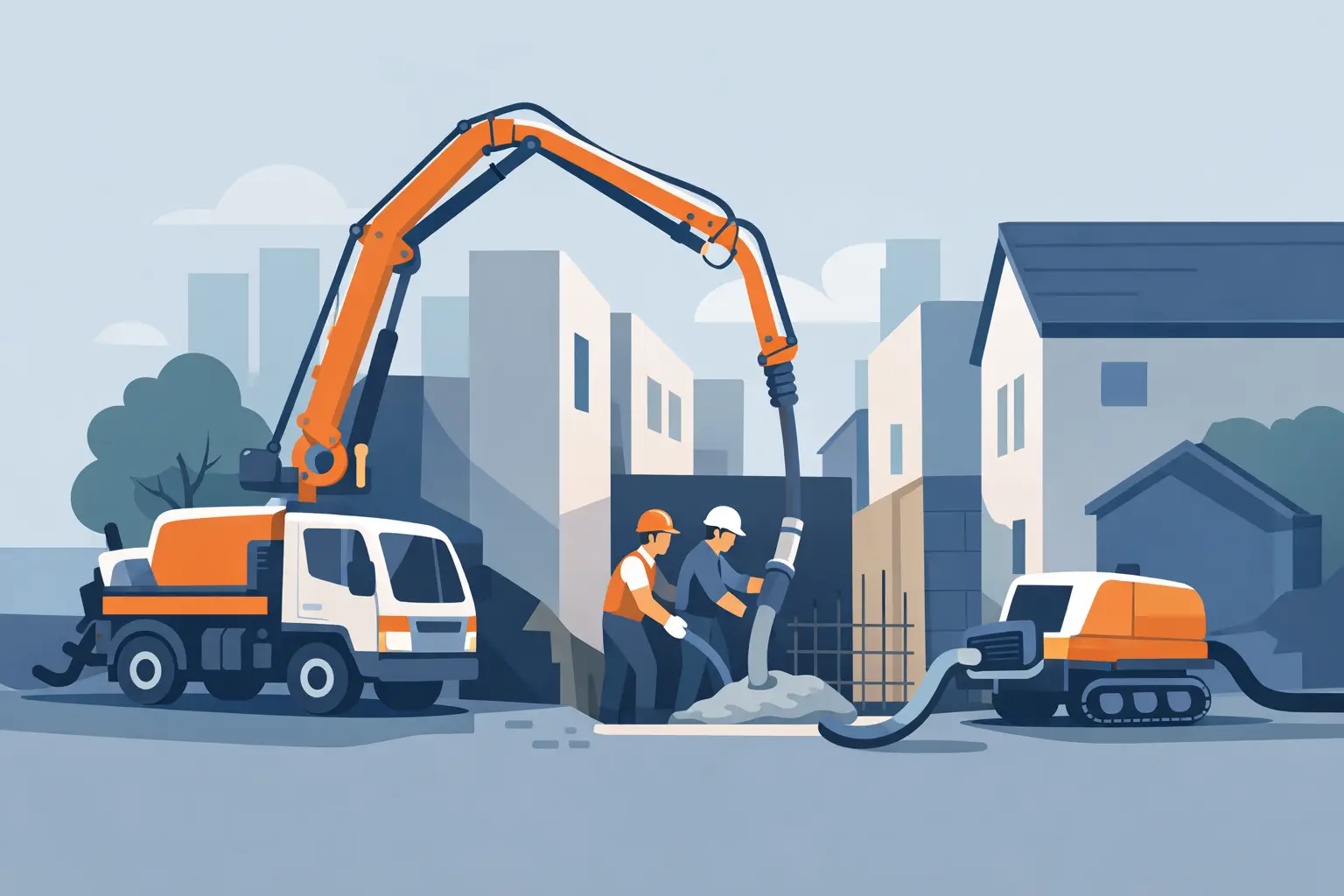
A truck-mounted line pump is often the right answer where the equipment can park at the street, lane, driveway entrance, or another stable location and run delivery line to the pour. Steel pipe and hose can be routed around a house, through a side yard, along a fence line, or into a building where overhead boom access is not possible.
This approach works particularly well for residential foundations, garage slabs, basement floors, additions, sidewalks, agricultural work, and repairs in established properties. A 4x4 line pump can also be valuable where the route to the setup area is uneven or soft, provided the operator confirms the site conditions are suitable.
Line pumping is not simply a matter of laying hose wherever it fits. Every bend, elevation change, distance, and transition affects the setup. The crew needs enough room to route the line without creating trip hazards, damaging landscaping, blocking emergency access, or interfering with other trades. On a tight residential lot, that can mean planning the route before forms are fully closed in or before fencing and material stacks restrict the path.
When a compact boom pump makes more sense
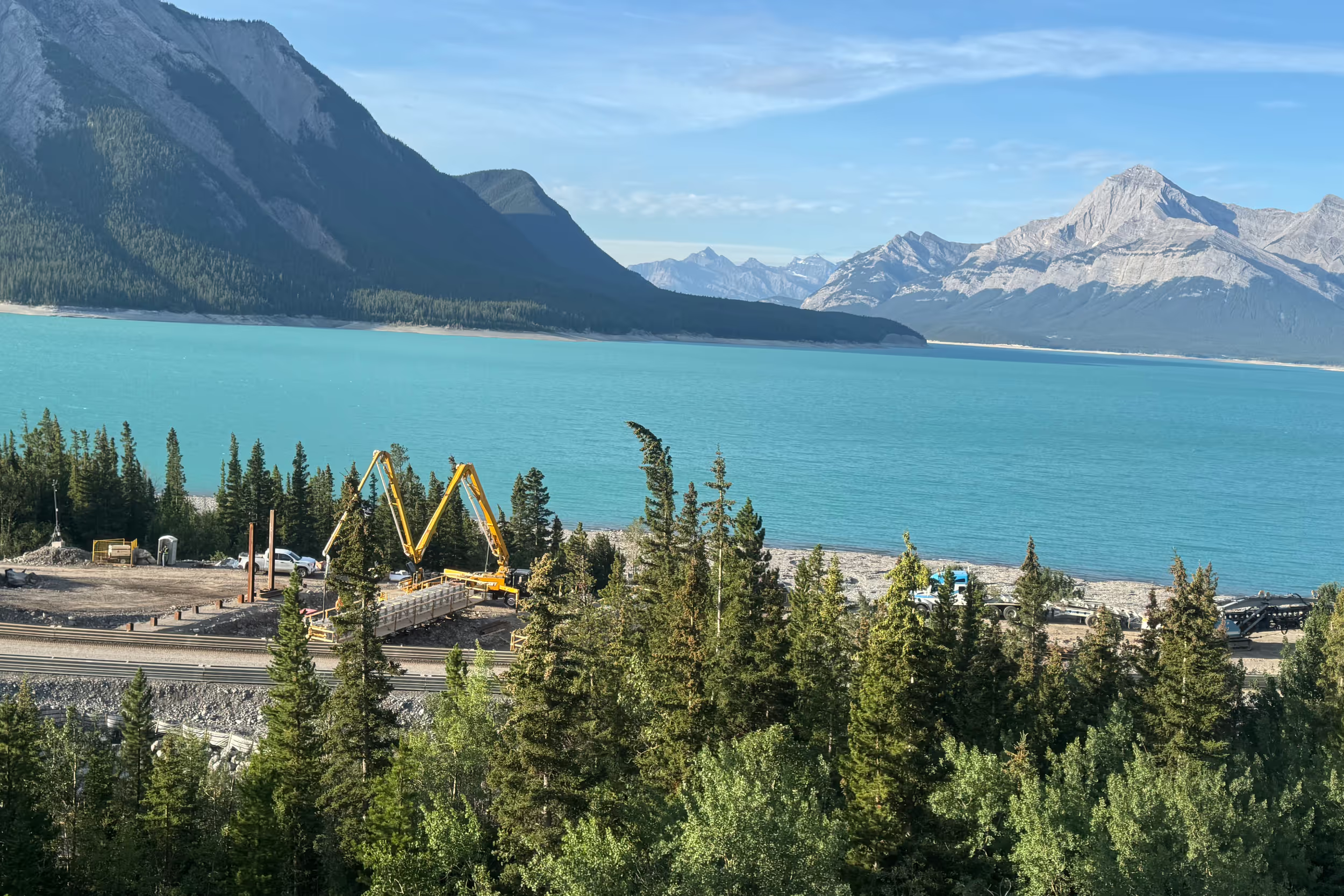
A compact roll-and-fold boom pump can be the better option when there is a workable truck setup area but limited room to swing a conventional long-reach boom. Its boom can reach over obstacles and place concrete across a broad area without running extensive ground line through the site.
This is useful for pours behind homes, inside constrained commercial properties, or on sites where the pump must work around existing structures. The boom gives the placing crew fast movement from one section of the forms to another, helping maintain a steady pour rate and reducing the need to relocate hose repeatedly.
Boom pumping still requires room for safe truck positioning and outrigger deployment. Overhead power lines, trees, rooflines, scaffold, neighbouring buildings, and soft ground can all affect whether it is the right fit. A compact boom is more manoeuvrable than a larger unit, but it is not a substitute for a proper setup area.
Distance, volume, and placement rate matter
A small pour is not always a line-pump job, and a large pour is not always a boom-pump job. If the concrete must travel a long distance through a narrow route, line pumping may be the most efficient solution. If the forms cover a wide area and the pump can set up close enough, a compact boom may keep placement faster and cleaner.
The key question is not, "What pump is smallest?" It is, "What equipment gives the crew the safest, most controlled route from the ready-mix truck to the forms?" That is the decision that protects the schedule and the finish.
Site Details to Confirm Before the Pour
A few accurate details can make the difference between a smooth pour and a last-minute equipment change. Before booking, provide the approximate pour volume, the location of the forms, and photos or measurements of the access route. Include gate widths, driveway width, slope, overhead obstructions, and the distance from the likely pump setup position to the farthest point of placement.
Also identify site conditions that affect truck movement and setup. Freshly graded ground, septic fields, retaining walls, buried services, narrow lanes, and soft shoulders need to be discussed early. Pump trucks are working equipment, and stable ground is part of safe operation.
Ready-mix access deserves the same attention. The pump may fit the site, but concrete trucks still need a safe approach, room to turn or stage, and a clear path to feed the hopper. On busy urban jobs, this may involve coordinating truck arrivals so they do not block traffic, neighbouring driveways, or each other.
For residential work, clear the route before the pump arrives. Move vehicles, material piles, bins, and loose items away from the setup and line route. If hose will cross a lawn, walkway, or driveway, discuss protection and cleanup expectations in advance. A clean route helps the crew work faster and reduces avoidable damage.
The Mix Must Be Suitable for Pumping
Equipment selection is only part of the job. The concrete mix has to move through the system properly. Aggregate size, slump, admixtures, fibre content, and the specified strength can all affect pumpability.
This does not mean a specialized placement needs a weaker mix or a compromised specification. It means the ready-mix supplier, contractor, and pump operator need to be aligned before the trucks are dispatched. Fibre-reinforced mixes, low-slump mixes, and mixes with larger aggregate can require particular attention. Changing the mix at the last minute without checking the pumping plan can cause slow placement or line issues when the crew can least afford them.
If the project has a specified mix design, provide it ahead of time. That gives the pump operator an opportunity to identify concerns and plan the setup accordingly. It is a straightforward step that can prevent costly delays during the pour.
Keep the Placing Crew in Control
A pump gets concrete to the work area, but a good finished product still depends on the people placing, vibrating, screeding, and finishing it. The operator and placing crew need clear communication throughout the pour, especially in confined areas where the end hose, formwork, and workers are close together.
The crew should agree on the placement sequence before the first truck starts discharging. For a foundation, that may mean moving steadily around the wall forms. For a slab, it may mean placing in strips that allow the screed and finishing crew to keep up. Pumping too quickly can overwhelm the crew; pumping too slowly can affect timing and finish quality. The right pace depends on the pour, the weather, the mix, and the finishing plan.
Safety remains non-negotiable. Keep workers clear of pinch points and the end hose, maintain a controlled exclusion area around the pump, and never treat blocked or pressurized line as a routine problem. Experienced operators understand the equipment, but the whole site needs to respect the placement zone.
Tight Access Does Not Have to Mean Slow Work
Restricted sites often create the assumption that concrete work will take longer and cost more. Sometimes it will, particularly when access requires extensive line, difficult routing, or careful staging. But using the right pump can remove the biggest source of wasted time: moving concrete manually from where the truck can reach to where the forms are located.
For contractors, that means fewer labourers tied up hauling material and more attention on placement and finish. For homeowners, it can mean less disruption to the property and a cleaner route through the jobsite. For project managers, it means a more predictable pour plan with equipment selected for the actual conditions, not the ideal conditions on a site drawing.
Bandit Concrete Pumping works with Central Alberta crews to match the pump configuration to the access challenge before pour day. Bring clear site information to the conversation, and the right equipment can turn a difficult route into a controlled, efficient concrete placement.