 (587) 703-6048
Concrete Pump Capacity for Your Next Pour

A footing pour can look straightforward on the drawings and still lose hours once the trucks arrive. The concrete pump capacity you need is not simply the biggest hourly output available. It is the ability to move the right volume of concrete, to the right location, at a pace the placing and finishing crew can maintain without creating stoppages, waste, or a rushed finish.
For projects across Central Alberta, that calculation starts before the first ready-mix truck is dispatched. Access, pour volume, concrete mix, required reach, crew size, and the sequence of the pour all affect whether a pump will keep the job moving or become a bottleneck.
What Concrete Pump Capacity Really Means
Pump capacity is often described in cubic metres per hour. That figure matters, but it is only one part of the decision. It represents the potential volume a pump can move under suitable conditions. On a live jobsite, actual production depends on the entire placement system.
A pump can only place concrete as quickly as ready-mix trucks can supply it, the hopper can be fed, the pipeline can be managed, and the crew can spread, consolidate, screed, and finish the material. If the finishing crew needs a controlled pace for a slab, pushing maximum volume is not a benefit. It can leave concrete sitting ahead of the crew and reduce control over the finished surface.
The useful question is: what placement rate does this pour require? A large commercial slab may need steady, high-volume production to stay ahead of set time and keep multiple crews working. A residential foundation, garage pad, retaining wall, or tight repair may need reliable, measured placement more than raw output.
The Rated Number Is Not the Jobsite Number
Pump manufacturers provide output ratings under defined conditions. Real-world capacity changes with the mix design, aggregate size, slump, line diameter, pumping distance, vertical rise, hose length, and number of bends in the system. Cold weather, hot weather, truck spacing, and site traffic can also change the pace of the pour.
A stiff mix or a long line run creates more resistance than a short, direct boom placement. More pressure may be required, which can reduce the practical output rate. That does not mean the pump is undersized. It means the pump and pipeline need to be matched to the placement plan rather than selected from one number on a spec sheet.
Match Concrete Pump Capacity to the Pour
Start with the total concrete volume, then look at the time available to place it. A 30-cubic-metre foundation does not automatically require a high-output boom pump. If truck deliveries are staggered and the crew needs time to vibrate walls, check forms, and manage consolidation, a controlled flow may be the better fit.
On the other hand, a large slab with a tight finishing window may require more sustained output. The goal is to avoid two costly situations: crews waiting on concrete, or concrete arriving faster than crews can properly place and finish it.
For planning purposes, consider the placement rate alongside the total volume. If a pour must be completed within a specific window, allow time for pump setup, priming, truck changes, normal site interruptions, cleanup, and washout. The fastest theoretical rate should not be used as the schedule promise.
Boom Reach Can Be More Important Than Output
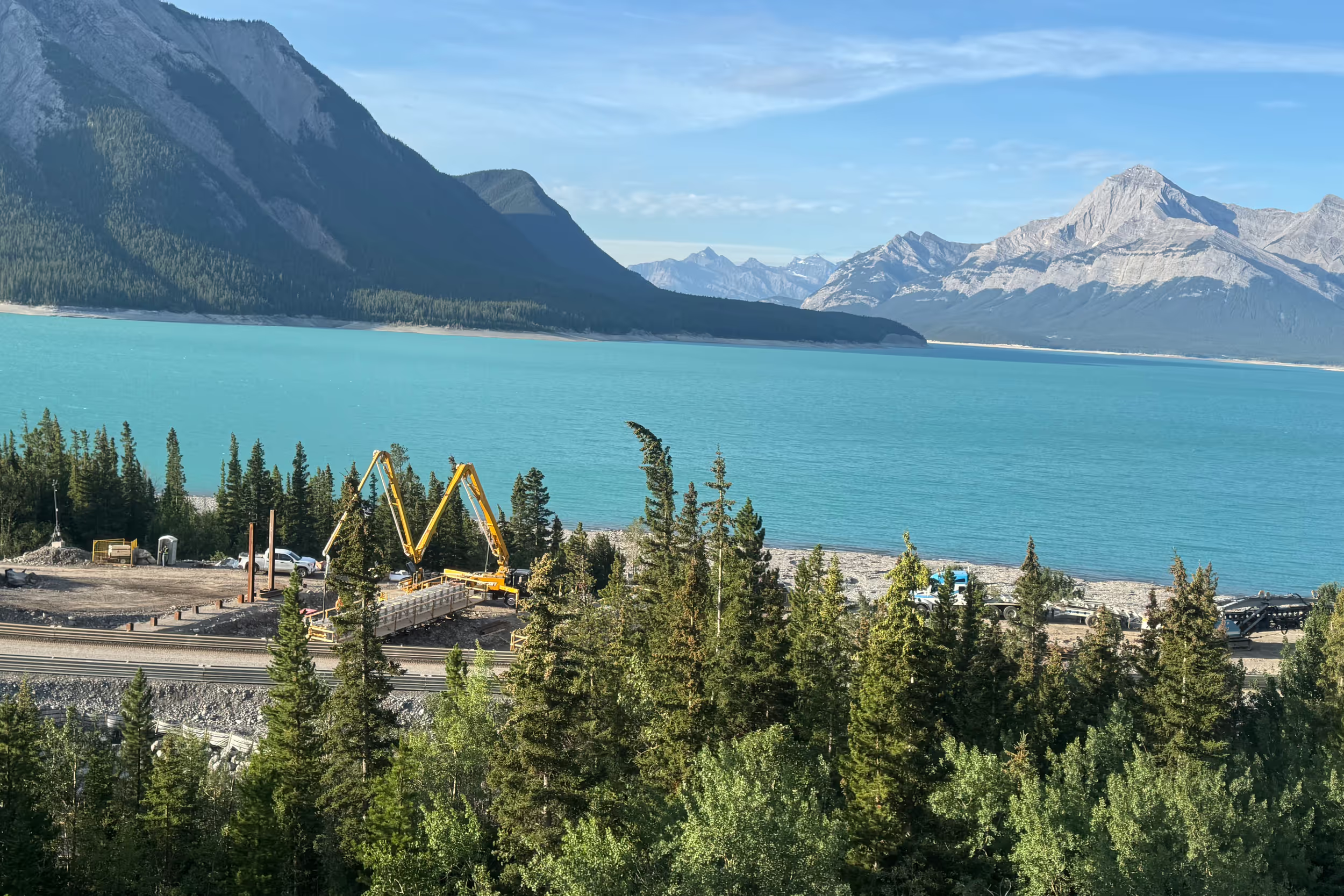
A high-capacity pump does little good if it cannot reach the work area safely and efficiently. Boom length, boom articulation, and setup space determine how much of a site can be covered from one position. The right boom can eliminate repeated moves, reduce hose handling, and keep concrete flowing to several areas of a large pour.
High-reach boom pumps are a practical choice when placing concrete across broad foundations, commercial slabs, elevated work, or sites where the truck must remain well back from the forms. A longer boom can also help crews work around existing structures, excavations, and other active trades.
Restricted sites call for a different approach. Compact roll-and-fold boom equipment can be better suited to residential lots, infill work, and areas with limited overhead clearance. The capacity requirement may be modest, but the equipment still needs to get concrete where the crew needs it without forcing risky or inefficient setup.
Line Pumps Deliver Capacity Where Booms Cannot
A line pump is often the practical answer when the placement point is beyond a boom setup area, through a building, around a backyard, down a narrow access route, or into an awkward agricultural or industrial location. Capacity in this case includes the ability to maintain a dependable flow through properly planned hose or pipeline runs.
Truck-mounted 4x4 line pumps add another advantage on Alberta sites with soft ground, uneven approaches, or limited access. They can bring concrete closer to difficult placement areas while providing the control needed for smaller footings, piles, walls, pads, and detailed work.
Long line runs require more preparation than a simple boom pour. The route must be protected, supported where needed, and kept as direct as possible. Every unnecessary bend adds resistance and makes cleaning more involved. A skilled operator will assess the route, the mix, and the required pace before the pour begins.
The Mix Design Sets the Pace
Concrete is not all pumped the same way. Aggregate size, cementitious content, admixtures, fibre, slump, and air content all influence pumpability. The mix must be suitable for the pump, line diameter, and placement method being used.
A mix that works well through a short boom hose may require a different plan for a long line run or significant vertical lift. Fibre-reinforced mixes and low-slump concrete can be pumped successfully when the equipment and process are right, but they should be discussed in advance. Surprises at the hopper are expensive when trucks, finishers, and form crews are all on the clock.
The ready-mix supplier, contractor, and pump operator should be working from the same placement plan. Confirm the mix designation, aggregate size, expected slump, admixtures, truck order, and any special requirements before the first load arrives. This helps prevent line issues and keeps the pour at a manageable rate.
Plan for the Whole Placement System
The pump is one link in the chain. A good capacity plan also accounts for truck access and turnaround, safe outrigger setup, overhead hazards, ground conditions, washout location, hose movement, and crew communication. If trucks cannot reach the hopper consistently, even the strongest pump will spend time waiting.
The placing crew needs enough people to handle the flow safely. Labour requirements are usually lower than wheelbarrow placement, but they do not disappear. Someone must direct the hose, place concrete to grade, vibrate where required, manage forms, and keep the work area organized. For a slab, screed and finishing crews must be ready before the pump starts.
Weather deserves a place in the plan as well. Alberta conditions can change quickly. Hot, dry conditions can shorten working time, while cold temperatures may affect set behaviour and site access. The right output rate gives the crew control when conditions are less than ideal.
Why an Experienced Operator Matters
A capable pump operator does more than unfold a boom or start a line pump. They help establish a safe setup, assess reach and hose routing, manage pressure and flow, communicate with the ready-mix drivers, and adjust the pace to suit the work in front of the hose.
That experience is especially valuable on complex sites. Tight residential access, deep excavations, uneven ground, overhead lines, elevated decks, congested commercial work, and long line runs all demand sound judgement. The best pump choice is the one that reaches the pour cleanly, operates safely, and supports the crew's actual placement rate.
Bandit Concrete Pumping matches boom and line-pump configurations to the access, reach, and production demands of each job. That means looking beyond a headline output figure and planning for the conditions that affect the pour from setup through cleanup.
Before booking, have the pour volume, mix details, placement location, site access information, and desired start time ready. A clear conversation before concrete is ordered gives the operator time to recommend the right setup. On pour day, the right concrete pump capacity is the one that lets your crew place with control, finish with confidence, and leave the site ready for the next trade.