 (587) 703-6048
Concrete Pumping Costs in Alberta Explained

A concrete truck backed into a garage pad is easy to price. A foundation behind a house, a shop slab with limited truck access, or a commercial pour spread across a large footprint is a different job altogether. Concrete pumping cost Alberta builders and property owners pay depends less on one flat number and more on how efficiently the concrete can be placed on the day of the pour.
A pump is not simply an added expense beside ready-mix concrete. On the right job, it replaces wheelbarrows, reduces handling, keeps the ready-mix truck turning over, and gives the placing crew better control where the concrete lands. The goal is not to hire the biggest pump available. It is to match the equipment, operator, and pour plan to the site so the job moves without costly delays.
What goes into concrete pumping cost in Alberta?
Most pumping quotes reflect the equipment required, operator time, travel, setup, and the expected duration of the pour. A straightforward residential slab close to the street will not carry the same cost as a long-reach commercial placement or a rural foundation that requires significant travel and line setup.
The concrete supplier, concrete mix, finishing crew, forms, reinforcement, and pump are separate parts of the overall pour budget. Looking only at the pump line on an estimate can be misleading. The better question is what the placement method costs the whole job once labour, ready-mix truck time, cleanup, access, and risk of delay are included.
Pump type and reach
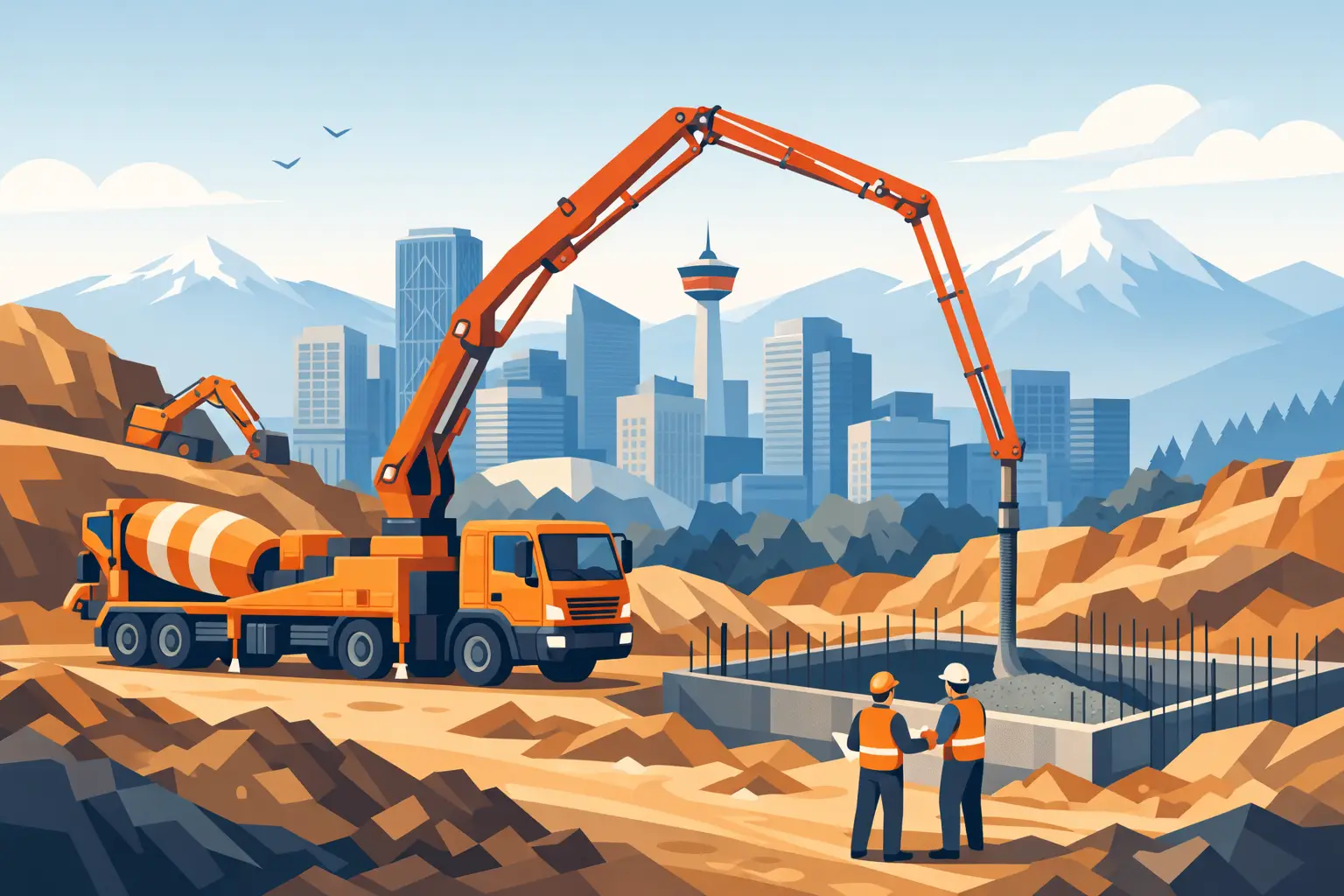
Boom pumps are built for coverage. They can reach over a house, across a large slab, or into areas where a ready-mix chute cannot get close. A larger boom may cost more than a compact unit, but it can be the right choice when it eliminates repeated moves, extra hose runs, or excessive manual handling.
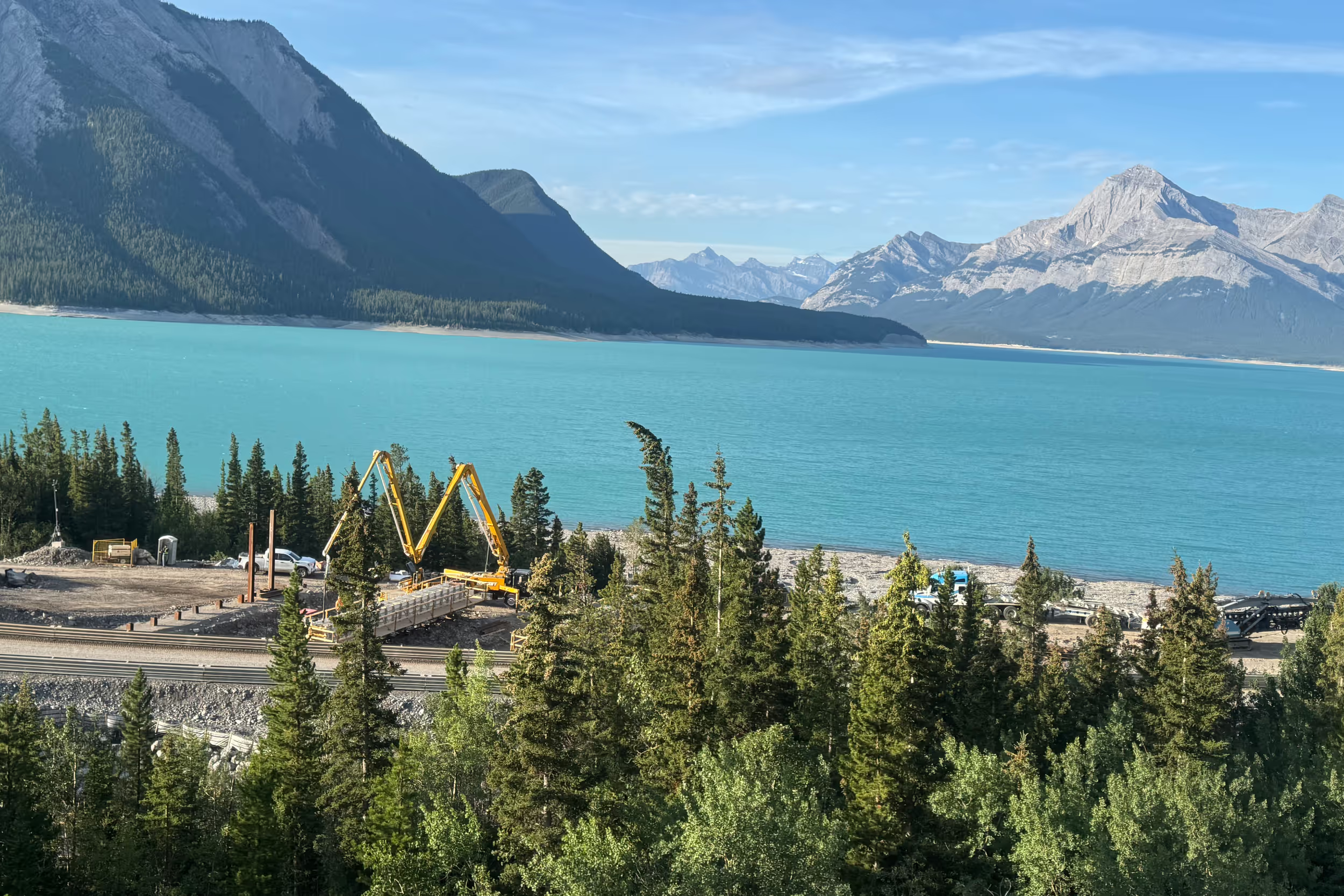
On tight residential sites, a compact roll-and-fold boom may provide the reach needed without taking up more street or yard space than necessary. For narrow access, backyards, agricultural buildings, or locations where a boom cannot set up effectively, a truck-mounted line pump can place concrete through hose with greater precision.
The cheapest equipment option is not always the lowest-cost option. If a smaller pump cannot safely reach the placement area or requires a long, slow hose route, the crew can lose time fast. The right pump keeps the placement controlled from the first load to the last.
Time on site and pour volume
Pump service is commonly affected by how long the unit and operator are committed to the job. That means pour readiness matters. If the pump arrives and forms are unfinished, rebar is still being tied, trucks are late, or the crew is not ready to receive concrete, waiting time can become part of the cost.
Volume matters, but it does not tell the whole story. A small but difficult foundation can require more setup and careful hose work than a larger open slab. Conversely, a high-volume pour with clear access and a steady supply of concrete can be placed efficiently because the pump stays productive throughout the job.
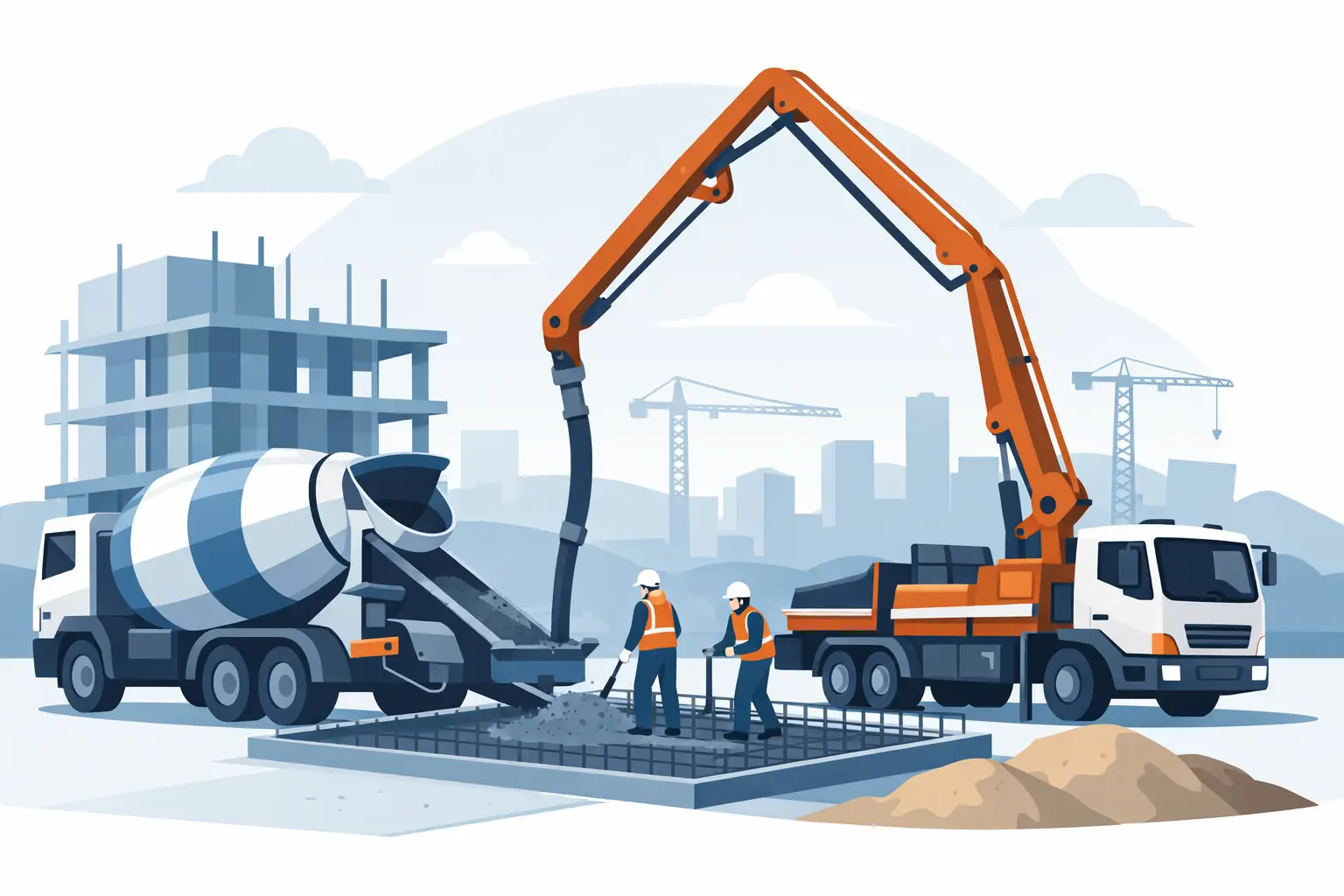
Ready-mix coordination is a major cost-control point. The pump needs a consistent supply of concrete, and the placing and finishing crews need to keep pace. Gaps between trucks can leave the pump and crew standing by. Trucks arriving too quickly can create pressure at the site and increase the chance of rushed work.
Access, setup, and hose requirements
Access conditions often decide whether pumping is necessary and what type of pump makes sense. A truck must have a safe place to set up, room for outriggers where applicable, and a clear path that accounts for overhead lines, trees, excavations, traffic, soft ground, and neighbouring property.
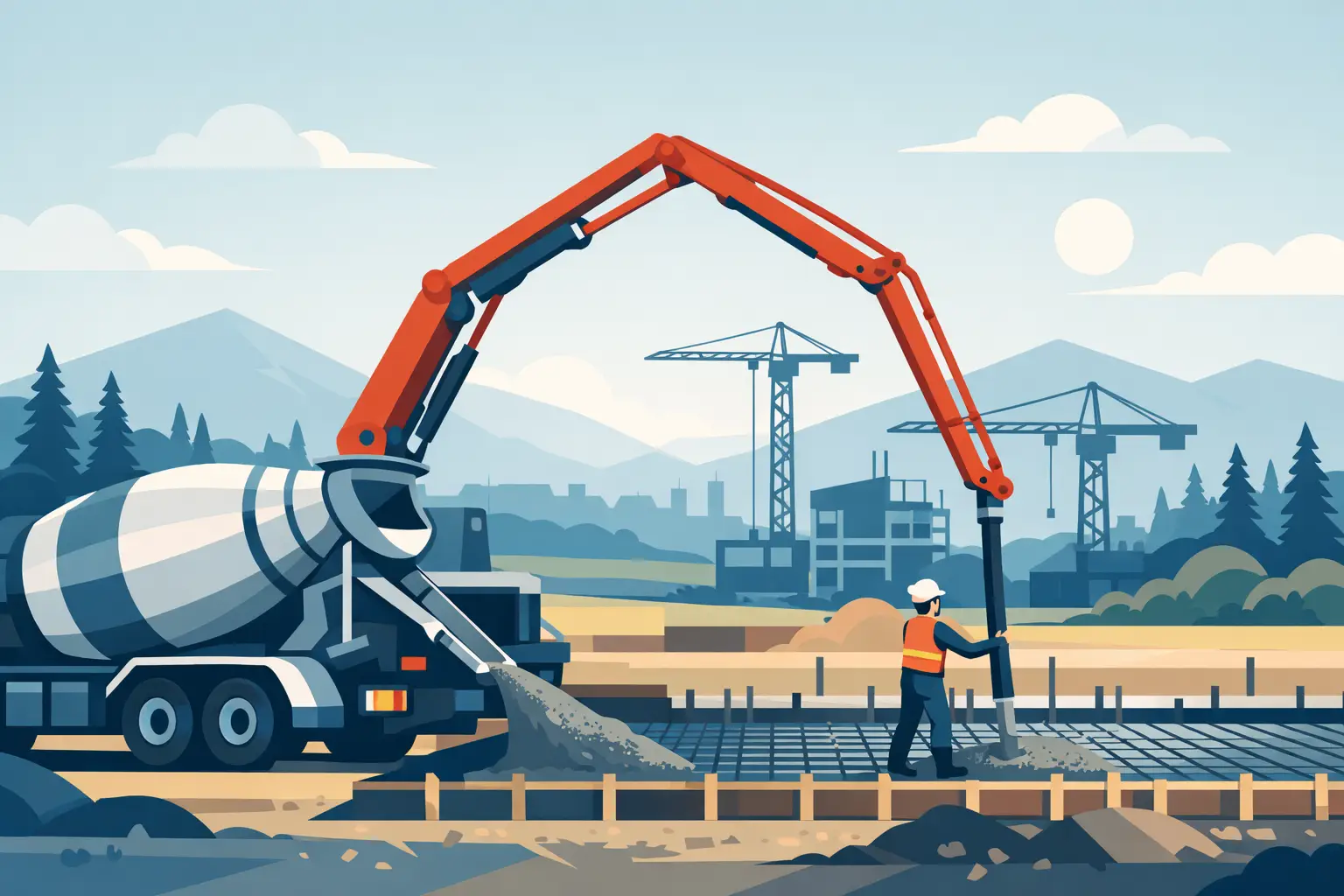
Line pumping can be an effective answer when the placing area is difficult to reach, but additional hose, elevation changes, corners, and tight routing all affect setup and pumping speed. The hose route should be planned before the truck arrives. It needs protection from traffic and sharp edges, and it should not create a trip hazard across an active site.
For boom pumping, the placement area must be assessed for reach and safe boom movement. A good site plan avoids the false economy of booking a pump based only on the closest possible parking spot. What matters is whether the equipment can safely serve the entire pour without unnecessary repositioning.
Travel and Alberta jobsite conditions
Travel can be a meaningful part of concrete pumping costs in Alberta, particularly for projects outside major centres or on rural and agricultural properties. Distance from the pump yard, route conditions, and mobilization time all affect the quote. Providing an accurate site address at the start prevents surprises.
Alberta weather also has a direct impact on concrete work. Cold-weather protection, muddy approaches, snow management, and difficult ground conditions can change the plan. A pump cannot safely set up on unstable ground, and a pour should not begin until the site, forms, crew, and concrete protection plan are ready.
Seasonal demand can influence scheduling as well. During busy construction periods, the best way to protect your schedule is to book early and confirm the pour once concrete delivery, site access, and crew availability are locked in.
How pumping can reduce total placement costs
Manual placement looks less expensive until labour and lost time are counted. Wheelbarrowing concrete across a lot or through a building requires people, space, and a steady effort to avoid spills, segregation, and fatigue. It also creates more cleanup and can make it harder to keep a pour moving at the pace required for a proper finish.
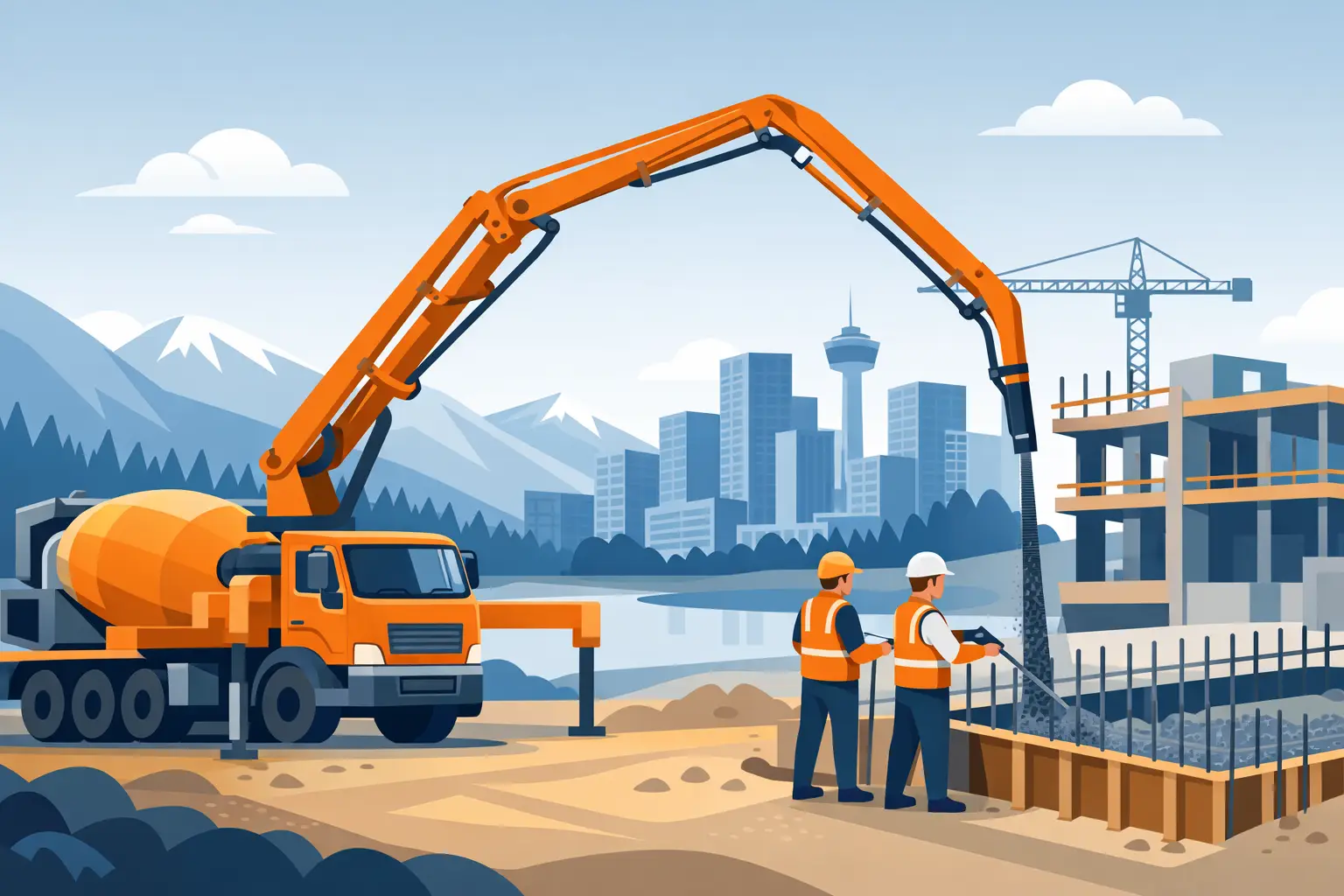
A pump places concrete where the crew needs it. That reduces the distance between the truck and the forms, which can lower labour requirements and help finishers focus on grade, consolidation, and surface quality instead of moving material. For a foundation, that can mean cleaner placement around walls and corners. For a slab, it can mean a more consistent supply of concrete across the full pour area.
There is still a trade-off. Very small, open pours with excellent chute access may not justify a pump. But once access is restricted, placement is spread out, concrete must cross obstacles, or the volume is large enough to burden the crew, pumping often becomes the more practical choice.
How to get an accurate concrete pumping quote
A useful quote starts with clear job information, not a rough guess at reach. Before calling, have the site address, pour date and time, estimated concrete volume, placing location, and a description of access available. Photos, a site sketch, or foundation plan can help identify restrictions before the equipment arrives.
Be direct about conditions that affect setup: narrow driveways, overhead power lines, soft ground, gates, road closures, other trades, long hose runs, steep grades, and whether the pump must reach over a structure. If the project is phased, identify whether each pour will require a separate mobilization.
It also helps to confirm who is responsible for site preparation. The pump crew brings the equipment and operator expertise, but the contractor or owner needs a clear, stable setup area, completed forms, a ready placing crew, and proper washout arrangements. Those details protect the schedule and the finished work.
Bandit Concrete Pumping works with contractors and property owners across Central Alberta to select a pump configuration that fits the site rather than forcing the site to fit the equipment. A quick conversation before the pour can prevent the common problems that drive up cost later: wrong reach, poor truck staging, unfinished site prep, and missed delivery timing.
Plan the pour, not just the pump
The best way to control concrete pumping cost in Alberta is to treat pumping as part of the pour plan from the start. Coordinate the ready-mix supplier, confirm access, choose equipment that can safely cover the work, and make sure the placing and finishing crews are ready before the first truck arrives.
A properly planned pump pour gives the crew a clear advantage: concrete goes where it is needed, when it is needed, without turning placement into the slowest part of the job. That is where the real value shows up - in a cleaner site, a steadier pour, and a project that keeps moving.