(587) 703-6048

Industrial Concrete Pumping Projects That Stay Moving

Industrial concrete pumping projects rarely fail because the crew cannot place concrete. They lose time when access is restricted, the pour sequence is unclear, trucks stack up at the gate, or a pump is selected without considering the whole site. On industrial work, every delay can affect follow-on trades, production schedules, and the cost of keeping a site open.
Concrete pumping gives contractors a practical way to keep placement controlled over distance, around obstacles, and into areas where chutes or wheelbarrows create a bottleneck. The result is not just faster concrete movement. It is a better-controlled pour with fewer people handling material, less disruption around the placement area, and a cleaner path to the finish line.
Start With the Placement Plan, Not the Pump
A pump truck is only as effective as the plan around it. Before booking equipment, confirm what is being poured, where the concrete trucks will stage, where the pump can set up, and how the crew will move through the pour. Industrial sites often have active traffic, stored materials, excavation edges, overhead lines, pipe racks, equipment pads, and restricted work zones to contend with.
The best setup is not always the one closest to the pour. A boom pump needs stable ground, room for outriggers, safe clearance, and a path that allows the boom to reach the work without crossing hazards. A truck-mounted line pump may be the better choice when placement must travel through a building, around fixed equipment, down a narrow access route, or into a location with limited room for a larger truck.
Access also affects ready-mix delivery. If the pump is set up correctly but concrete trucks cannot enter, turn, discharge, and exit without conflict, the pour can still slow down. A site walk or detailed pre-pour discussion helps identify these issues while there is time to solve them.
Match the Pump to Industrial Concrete Placement
Industrial concrete work covers a wide range of placements. Equipment pads, structural footings, slab-on-grade pours, retaining walls, loading areas, agricultural buildings, utility structures, and shop floors do not ask for the same equipment or setup.
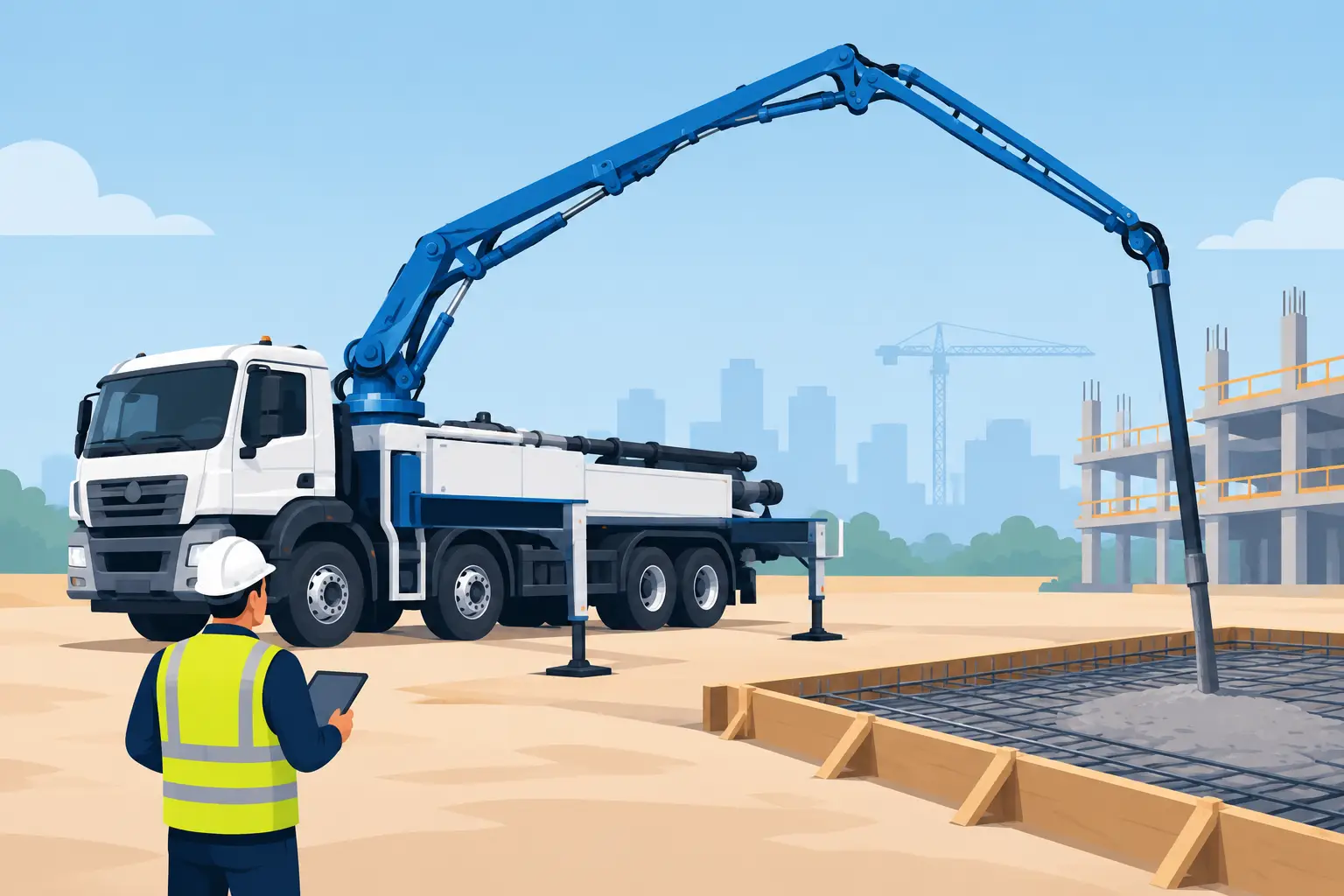
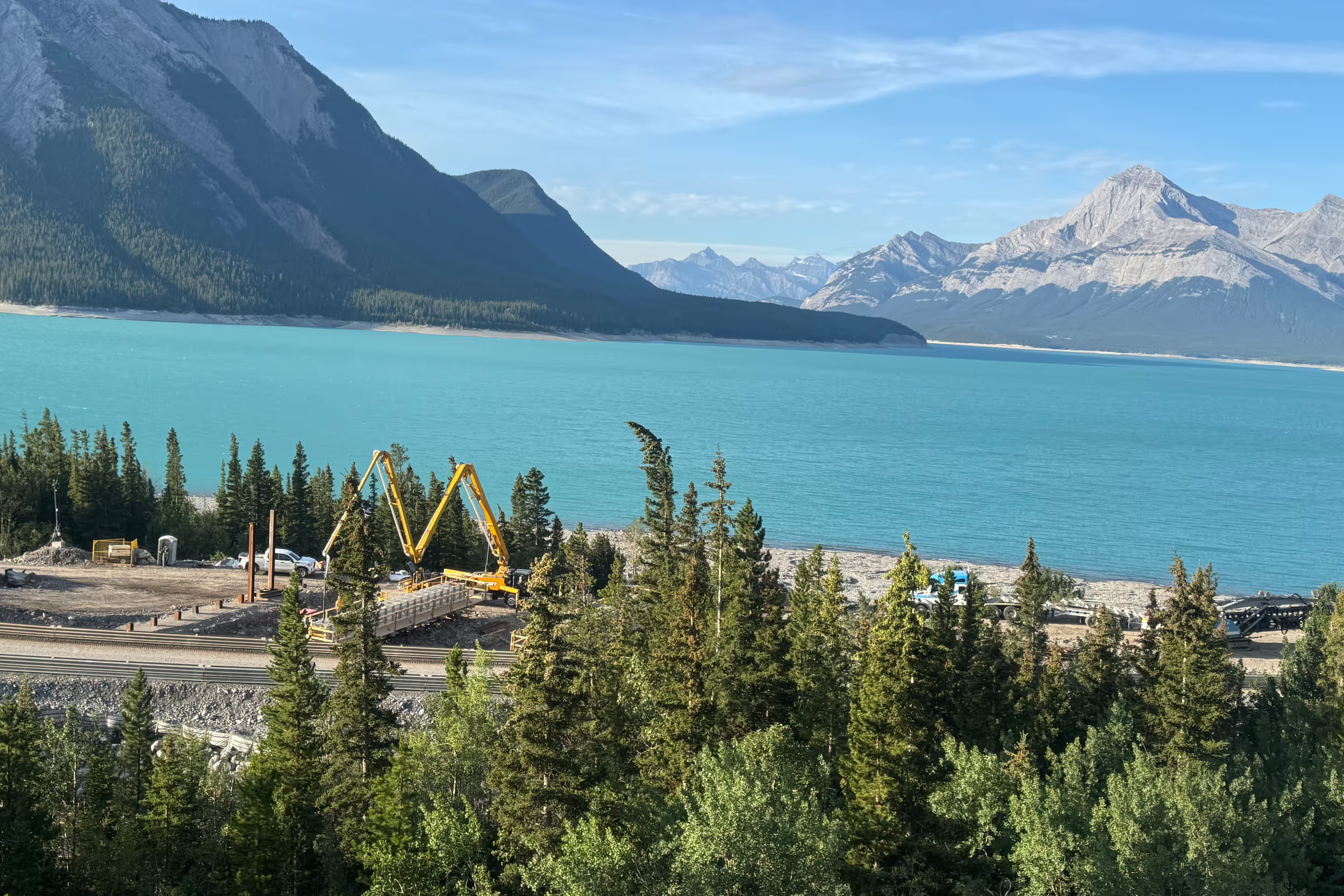
Boom pumps are often the right fit for broad slab coverage, foundations, elevated work, and sites where the placement area is beyond the reach of a concrete truck chute. A high-reach boom can cover significant ground from one position, reducing the number of times equipment needs to be moved. That matters when the crew is working against a concrete set time or coordinating around other site activity.
Restricted sites call for a different approach. Compact roll-and-fold boom equipment can work effectively where access is tight, provided the setup area and overhead clearance have been checked. For precise or hard-to-reach placements, a 4x4 line pump can move concrete through hose where a boom truck is not practical.
There is a trade-off. Longer hose runs and difficult routing can add time and affect the pumping setup. The right question is not simply, “What is the biggest pump available?” It is, “What equipment will place this mix safely and consistently from this site layout?”
Industrial Concrete Pumping Projects Depend on Mix Design
Pumpability starts at the batch plant. A concrete mix designed for the required strength is not automatically suited to a long line run, tight hose routing, or high-volume placement. Aggregate size, slump, admixtures, fibre content, air requirements, and temperature all affect how the material moves through the system.
This does not mean every industrial pour needs a custom mix. It means the pump operator, concrete supplier, contractor, and finisher need to be working from the same plan. If fibre-reinforced concrete, a low-slump specification, specialty aggregate, or an aggressive placement rate is involved, raise it before the trucks are dispatched.
Clear communication protects the schedule. An operator can prepare for the material and route selected, while the concrete supplier can confirm that the mix will meet both specification and placement requirements. Trying to solve a mix issue after the pump is primed and trucks are lined up costs time for everyone.
Keep the Pour Moving With a Real Sequence
A productive pour has a defined order. The crew knows where placement starts, where it stops, how screeding and finishing will follow, and who is responsible for directing the hose. This is especially important on large industrial slabs, where placing too far ahead of the finishers can create quality problems and placing too slowly can create cold joints or inconsistent surface conditions.
The pump operator controls the equipment. The placing crew controls the hose at the point of discharge. The site superintendent or designated lead should control the overall sequence, truck timing, and communication with the batch plant. When those responsibilities are clear, the work stays steady instead of becoming a series of hurried corrections.
Rate matters, but maximum output is not always the goal. A fast pump rate may suit a deep footing or a large, well-staffed slab pour. It may be too aggressive for detailed walls, congested reinforcement, narrow forms, or a finishing crew working on a smaller area. Consistent production that matches the crew's capacity is usually more valuable than short bursts followed by waiting.
Build Safety Into the Setup
Industrial sites demand disciplined setup because there are more variables in play. Overhead power, buried services, soft ground, crane activity, site traffic, and nearby operations can all affect where and how a pump operates.
Before the pour, confirm the pump location, outrigger bearing area, overhead clearance, hose route, exclusion zones, and truck traffic pattern. Ground conditions deserve particular attention in Alberta, where wet weather, thawing conditions, uneven grades, and recently disturbed soil can change a setup area quickly. Outriggers need a stable, properly prepared surface, not an assumption that the ground will hold.
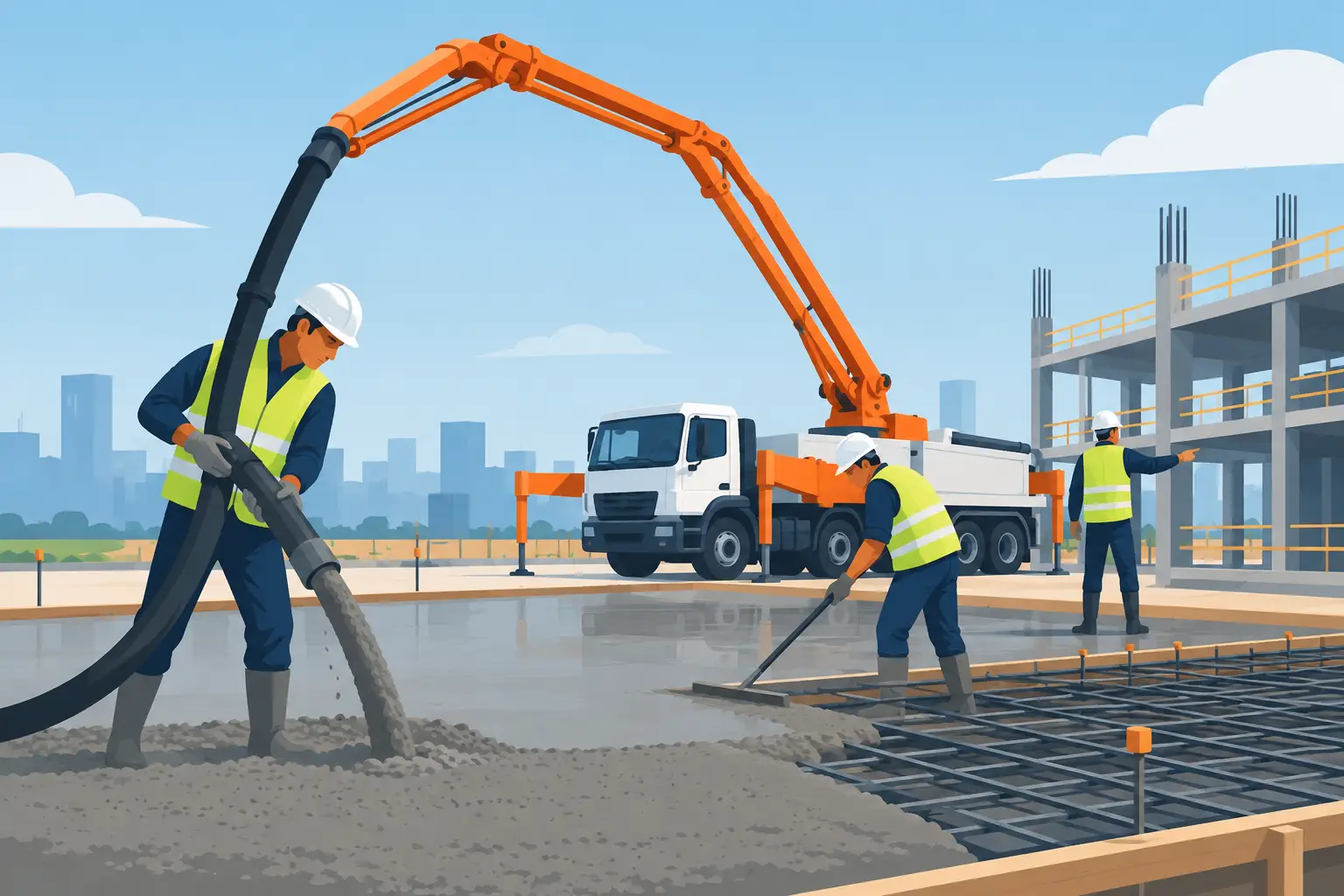
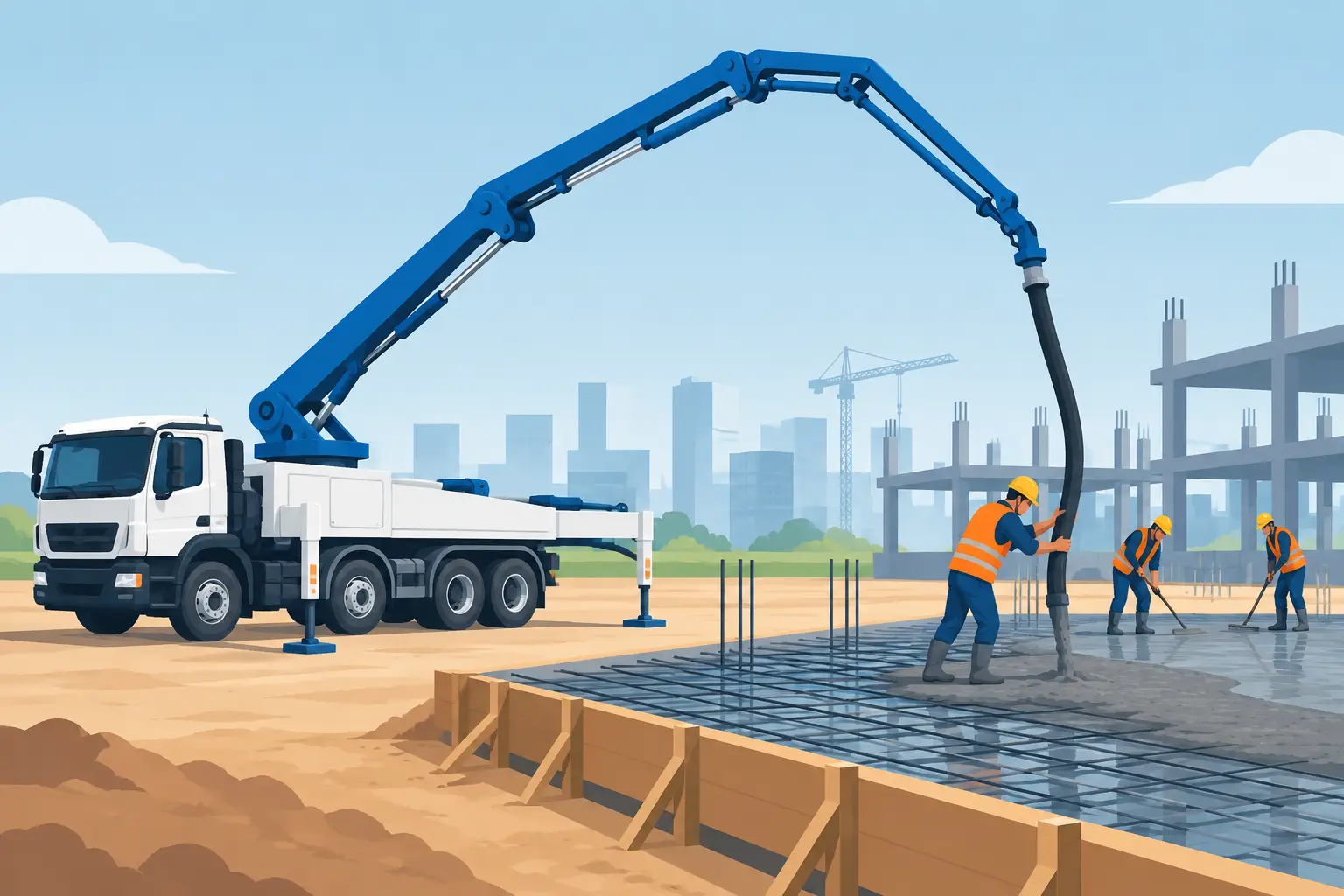
The hose should be handled by trained personnel who understand pinch points, movement under pressure, and the need to stay clear of unsafe positions. The placement crew also needs direct communication with the operator. Hand signals can work when the crew is close and visible, but radios may be the better option on larger or noisier sites.
Plan for Cleanout Before the First Truck Arrives
Cleanout is part of the job, not an afterthought. Concrete residue, wash water, and leftover material need a designated containment area that meets site requirements and keeps the work area clean. Leaving this decision until the end of a long pour creates unnecessary mess, lost time, and potential conflict with the owner or general contractor.
A good cleanout location is accessible to the pump, away from drainage routes, and planned so it does not interfere with active work. It should be identified during the pre-pour discussion along with the route for truck entry and exit. Clean sites run better, and a professional cleanup protects the next trade coming into the area.
What to Confirm Before Booking a Pump
For industrial concrete pumping projects, a short pre-pour review prevents most avoidable surprises. Have the information ready before the equipment arrives:
- The pour type, volume, dimensions, placement elevation, and required finish.
- Pump setup location, access route, ground condition, and overhead or underground hazards.
- Concrete mix details, including any fibre, special admixtures, or unusual aggregate requirements.
- Ready-mix truck schedule, expected placement rate, finishing capacity, and cleanout location.
Photos, a site sketch, or a current plan can be useful when access is complicated. They give the pumping contractor a clearer picture of what will be needed and help avoid sending the wrong equipment to the job.
Reliable Placement Is a Schedule Advantage
The value of pumping is often measured in cubic metres per hour, but that is only part of the story. Reliable placement reduces the labour required to move concrete manually. It helps crews reach forms and slabs without repeatedly repositioning trucks. It can reduce material waste, keep traffic routes clearer, and give finishers a more consistent supply of concrete.
For contractors managing multiple trades, those gains add up. A pour that starts on time, stays controlled, and leaves the site clean makes it easier to release areas for curing, stripping, steel, framing, equipment installation, or the next phase of work.
Bandit Concrete Pumping works with contractors across Central Alberta to select the right boom or line-pump setup for the site, then place concrete with experienced operators who understand how quickly job conditions can change. The goal is simple: arrive prepared, place accurately, and keep the work moving.
Before your next industrial pour, walk the access route, confirm the mix and sequence, and talk through the setup with the pumping crew. Those few minutes of planning can protect an entire day of production.