(587) 703-6048

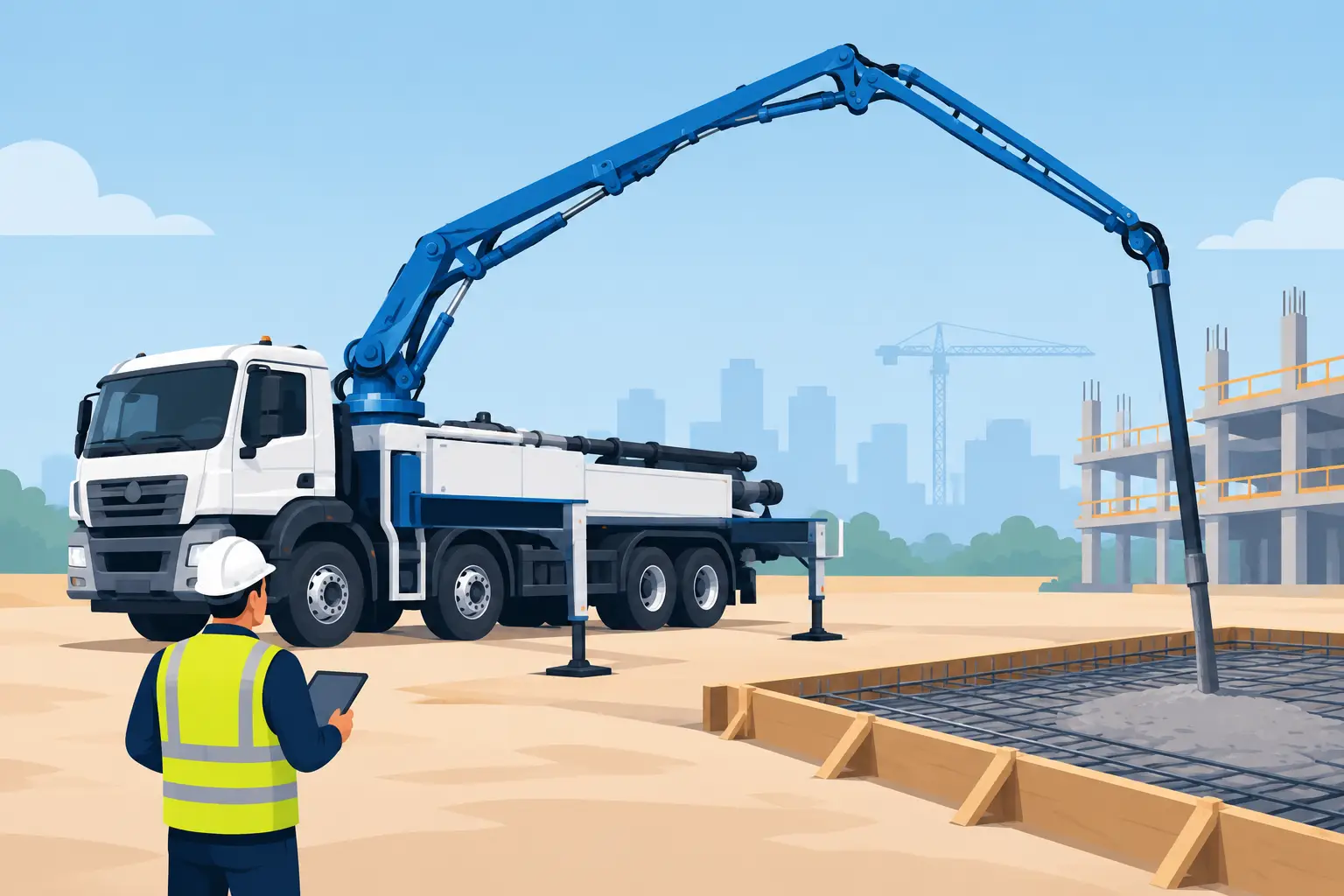
How to Select a Concrete Pump for Your Jobsite

A pump that looks right on paper can still be the wrong machine at the pour. Knowing how to select a concrete pump starts with the actual placement path: where the ready-mix truck can park, where the concrete must land, and what stands between those two points. Get that right before the trucks arrive and the pour moves faster, cleaner, and with fewer people tied up moving mud.
For Alberta builders, contractors, and property owners, the best choice is rarely just the biggest boom available. A large boom can cover a wide footprint, but a compact machine or line pump may be the better fit when access is tight, the placement is precise, or site conditions limit truck positioning.
Start With the Placement Plan, Not the Pump Size
Before booking equipment, walk the route from the truck staging area to every part of the pour. Measure distances where possible and identify anything that affects the boom or hose path: buildings, overhead lines, trees, excavation edges, traffic, parked equipment, soft ground, and neighbouring properties.
The critical question is not simply, “How far away is the foundation?” It is, “Can the pump safely set up and reach every placement point while keeping its outriggers, boom, and delivery hose clear of hazards?” A pump needs a stable setup area as well as reach.
Provide the pump contractor with the site address, a site plan or photos, the planned truck location, pour dimensions, and the order in which concrete will be placed. Those details allow the operator to recommend equipment based on the job rather than making assumptions at the gate.
Choose Between a Boom Pump and a Line Pump
Most jobs come down to a choice between a boom pump and a truck-mounted line pump. Both place concrete efficiently, but they solve different site problems.
When a boom pump is the practical choice
A boom pump is usually the right answer when the pour covers a broad area or requires substantial reach. Foundations, large slabs, suspended work, commercial floors, retaining walls, and industrial placements benefit from a boom that can move concrete quickly across the work zone. The operator can reposition the boom during the pour while the placing crew focuses on grade, consolidation, and finish.
Boom pumps also reduce the labour required to move concrete. Instead of building long wheelbarrow routes or dragging discharge hoses across the site, concrete is delivered directly where the crew needs it. That improves pace and helps prevent unnecessary material loss and cleanup.
However, boom pumps need room to set up. Outriggers require firm, level support, and the truck must have a safe route in and out. On a confined infill lot, a large boom may have the reach but lack the space to deploy safely.
When a line pump makes more sense
A line pump sends concrete through steel or rubber lines placed along the ground. It is often the better option for restricted-access work, backyard pours, interior placements, agricultural buildings, small additions, and locations where the truck cannot get close to the final pour area.
A 4x4 truck-mounted line pump can be particularly useful on difficult Alberta jobsites where ground conditions or access routes rule out larger equipment. The trade-off is that lines take time to set up, secure, and clean, and the placement rate may not match a boom on a large, open pour. For precise, hard-to-reach work, that trade-off is often worth it.
Match Reach to the Real Jobsite Conditions
Do not select a boom based only on a maximum reach number. Reach changes with the pump's setup position, boom configuration, elevation, obstacles, and required hose length. A machine may theoretically reach a far corner while leaving little room for controlled placement or safe boom movement.
Compact roll-and-fold boom pumps are built for sites where access is restricted but a boom is still the most efficient tool. Their boom sections can work around structures and into tighter areas than larger configurations. High-reach boom trucks, on the other hand, are well suited to wide sites and larger placements where coverage and production matter most.
Ask these practical questions before the pour:
- Can the pump truck enter, turn, and exit without blocking the concrete trucks?
- Is there enough level ground for the outriggers and any required cribbing?
- Are overhead power lines, rooflines, trees, or neighbouring structures inside the boom's working area?
- Will the pump reach the full pour without the truck being moved mid-placement?
- Does the final hose position give the crew enough control at forms, corners, and edges?
These checks are not paperwork. They prevent delays once concrete is on the way and the clock is running.
Confirm the Mix Is Pumpable
The concrete mix and the pump must work together. A mix that is suitable for chute placement is not automatically ideal for pumping. Aggregate size, slump, air content, fibres, admixtures, and overall mix design all affect how concrete moves through the system.
Tell the pump contractor what mix has been ordered, especially if it includes fibres, pea gravel, specialty admixtures, low-slump material, or a high-strength specification. The ready-mix supplier should also know the concrete will be pumped. Proper coordination helps avoid line blockages, poor flow, unnecessary water additions, and last-minute changes at the site.
This matters even more in cold weather. Alberta temperatures can affect travel time, slump retention, setup planning, and finishing windows. The pump needs to be ready when the first truck arrives, but the whole placement plan must also account for weather protection, ground conditions, and the crew's ability to finish the concrete properly.
Size the Pump for Pour Volume and Pace
A small garage pad and a large commercial floor should not be planned the same way. Total volume, desired placement rate, number of ready-mix trucks, crew size, and finishing capacity all influence pump selection.
For a modest residential pour, the goal may be controlled placement without excessive hose handling or site damage. For a large slab, the priority may be maintaining a steady supply so the crew can place and finish without cold joints. A pump that can place faster than the crew can manage is not automatically an advantage. The right rate is one that keeps concrete moving while allowing proper vibration, screeding, and finishing.
Discuss the planned truck spacing with both the concrete supplier and pump provider. If trucks arrive too slowly, the pump and crew wait. If they arrive too quickly, the site becomes congested and concrete may sit too long. Good scheduling protects the quality of the placement as much as the pump selection does.
Plan for Access, Ground Conditions, and Cleanup
A pump truck is heavy equipment. Soft shoulders, fresh backfill, steep approaches, narrow lanes, and poor drainage can change what is safe to set up. After rain or spring thaw, ground that appeared suitable during a site visit may need a second look on pour day.
Access also includes concrete truck traffic. A pump positioned perfectly for reach is of little use if mixers cannot approach, unload, and leave safely. Plan a clear staging sequence, account for road restrictions or lane closures, and make sure the site contact can direct drivers when they arrive.
Cleanup deserves the same attention. Concrete washout must be planned before the first truck backs in. Choose an approved washout location away from storm drains, finished surfaces, and areas that will be damaged by discharge. A clean site is easier to hand back to the owner and safer for every trade working around the pour.
Use an Experienced Operator as Part of the Plan
Concrete pumping is not a truck rental with a hose attached. The operator is part of the placement team, managing setup, boom movement, pressure, communication, and safe delivery throughout the pour. An experienced operator can spot a setup issue early, work with the placing crew on hose position, and keep the job moving without sacrificing control.
Bandit Concrete Pumping matches boom and line-pump equipment to the jobsite, then provides skilled operators who understand the practical demands of Central Alberta pours. That matters when a schedule is tight, access is limited, or the work needs to be placed cleanly around an active site.
When you call to book, have your pour date, concrete volume, mix details, site address, access notes, and placement drawings ready. A few minutes of clear information before dispatch can prevent hours of lost time on the day.
The right concrete pump is the one that gives your crew safe access, controlled placement, and enough production to finish the work properly. Plan it before the first mixer leaves the plant, and the pour has a far better chance of going the way it should.