
 (587) 703-6048
Garage Slab Concrete Pumping That Keeps Pours Moving

A garage slab is often one of the first major concrete pours on a residential or acreage build, and it has to go right the first time. Garage slab concrete pumping puts the concrete where the crew needs it, without turning fresh ground, forms, and framing areas into a wheelbarrow route. For builders, contractors, and property owners across Central Alberta, that means a faster pour, better control at the point of placement, and fewer people working around an open slab.
A pump is not necessary for every garage. If a ready-mix truck can back directly to the forms and chute concrete evenly across a small, simple pad, conventional placement may be enough. But once access is restricted, the slab is large, the truck must stay on the street, or the job needs to move quickly before weather changes, pumping becomes the practical option.
Why garage slabs benefit from concrete pumping
Garage slabs look straightforward on paper. On site, they can be anything but. There may be a narrow side yard, a newly framed house blocking access, soft or landscaped ground, power lines, an existing driveway, or a busy development where truck movement is limited. Sending concrete through a chute only works when the truck can get close enough and reach every area without excessive handling.
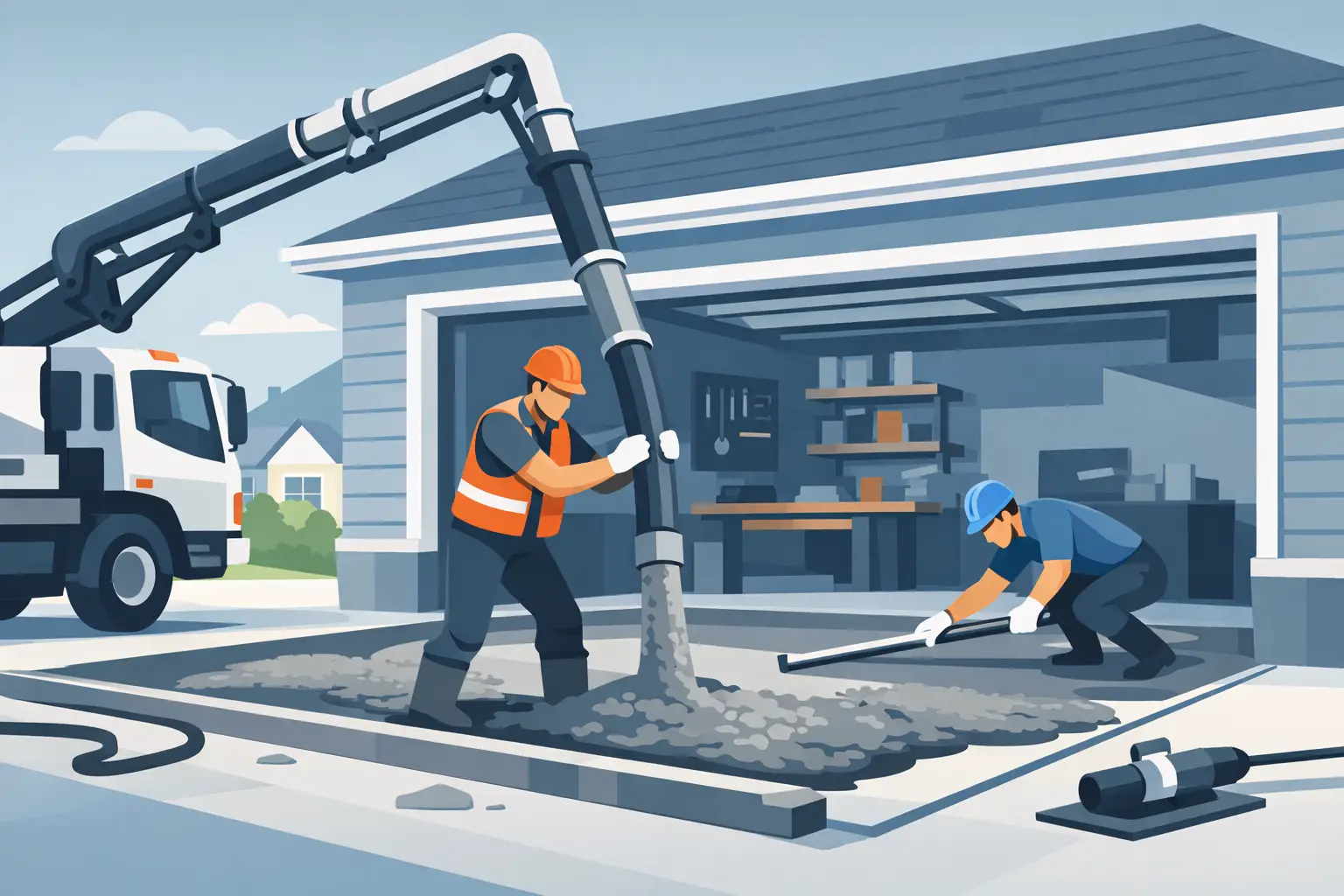
A concrete pump moves the mix from the ready-mix truck to the forms through a boom or delivery line. The placement crew can direct concrete across the slab instead of dragging material with rakes from one overloaded drop point. That reduces segregation risk, helps maintain a consistent pace, and gives finishers a more manageable surface to work.
The biggest gain is not simply speed. It is control. Controlled placement lets the crew build the slab steadily, keep the right amount of material ahead of the screed, and avoid piles that need to be spread over long distances. On a garage floor, that matters because flatness, proper slope where required, and a clean edge at doors and walls all affect the finished result.
When garage slab concrete pumping makes sense
The right setup depends on access, concrete volume, slab layout, and the rest of the work happening around the pour. A pump is especially useful when the mixer truck cannot safely get beside the forms or when using a chute would force the crew into too much manual movement.
For a detached garage behind an existing home, a line pump may be the practical answer. A truck-mounted line pump can send concrete through hose around a house, through a tight lot, or into a location the mixer truck cannot approach. It gives the operator and placing crew precise control without needing a large boom set up over the property.
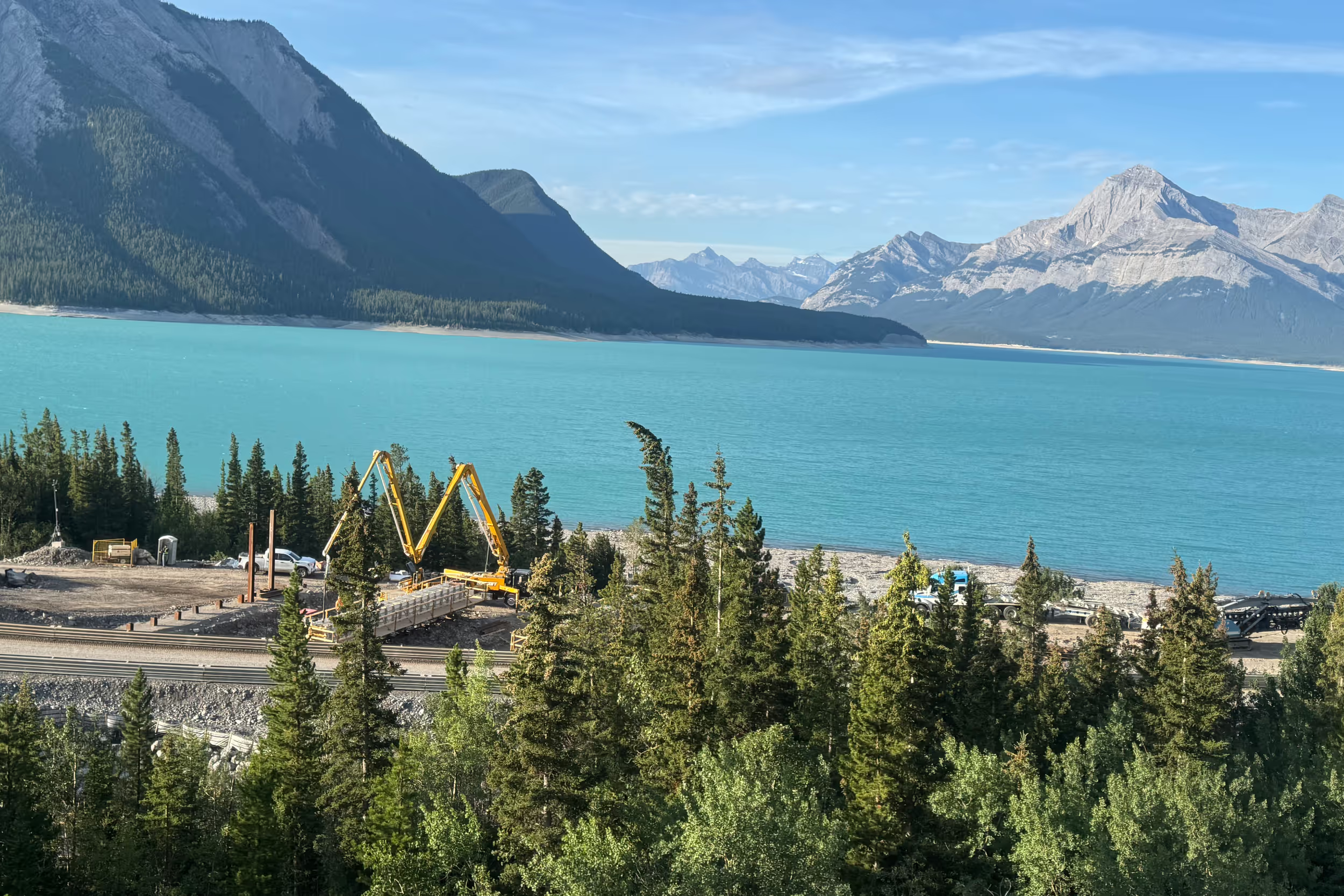
For larger garages, shops, multi-bay buildings, or slabs on active commercial and agricultural sites, a boom pump can cover more ground from a single setup position. The boom reaches over obstructions and distributes concrete throughout the forms, reducing interruptions caused by truck repositioning. Compact roll-and-fold boom equipment can also be a strong fit where access is limited but a line-only approach would be less efficient.
Pumping is not a substitute for poor site preparation. The forms, subgrade, reinforcement, vapour barrier, joints, and drainage plan still need to be ready before the first truck arrives. What pumping does is remove a major placement bottleneck once the concrete is on site.
Planning the pour before the pump arrives
A good garage pour starts well before concrete is ordered. The pump operator needs a safe, firm setup area with enough room to position the truck, deploy outriggers when required, and work clear of overhead hazards. Power lines, trees, roof overhangs, fences, excavations, and neighbouring buildings should all be identified early.
Access needs an honest assessment. A paved lane may look suitable but have load restrictions. A soft rural yard may need ground protection or a different truck position. In winter or shoulder-season conditions, frozen ground, thawing edges, snow storage, and mud can change a workable plan quickly. The best time to solve these issues is before dispatch, not when concrete trucks are lined up.
The placing crew should also confirm the order of the pour. Most garage slabs are placed in a pattern that allows the team to work back toward an exit while keeping finishers off fresh concrete. Reinforcement must be supported at the correct elevation, not pulled up after concrete is placed. If there are thickened edges, pad footings, service penetrations, grade beams, or a recessed area, the operator needs to know where they are and when they need material.
Concrete supply and pump capacity should be coordinated as one plan. A pump can place concrete quickly, but the pour still relies on ready-mix trucks arriving in a steady sequence and the finishing crew keeping pace. On a hot, windy Alberta afternoon, delays can shorten the finishing window. On a cool day, the schedule may allow more working time but still require attention to curing and protection.
Better placement means a better finishing pace
The pump operator does not finish the slab, but accurate placement makes the finishing work easier. Rather than dropping a large load at one end and asking labourers to move it across the forms, the operator can place manageable amounts near the final elevation. The crew can strike off, bull float, edge, and joint with less chasing and less unnecessary traffic over the slab.
That can reduce labour pressure, particularly on jobs where the contractor is trying to keep a small, skilled crew productive. Fewer people pushing wheelbarrows means fewer chances for ruts, spilled concrete, damaged forms, and material tracked across finished areas. It also keeps workers focused on placement, grade, and finish rather than repetitive hauling.
There is a trade-off. A pump requires coordination, setup space, and a crew that is ready when the truck arrives. For a very small slab with open truck access, the added service may not be the most economical choice. But where labour is limited or access creates long hauling distances, the cost of slower placement and extra cleanup can outweigh the cost of pumping.
Choosing the right pump for the jobsite
There is no single pump configuration that suits every garage project. The best choice comes down to reach, access, volume, and how precisely the concrete needs to be delivered.
A boom pump is built for coverage. It is well suited to larger garage slabs, shops, acreage construction, and sites where the truck can set up safely outside the working area and reach over the forms. The boom allows the operator to move efficiently across the slab with less hose handling by the crew.
A line pump is built for difficult access and controlled placement. It can be the better fit for backyard garages, infill projects, additions, or sites where a boom cannot safely operate. Hoses can be routed around obstacles, though they still need a clear plan so the crew can manage them without damaging forms or creating trip hazards.
Bandit Concrete Pumping matches the equipment to the job rather than forcing a one-size-fits-all setup. A clear conversation about site access, slab dimensions, truck position, overhead clearance, and concrete volume helps determine whether a high-reach boom, compact boom, or 4x4 line pump will keep the pour moving.
Jobsite details that protect the schedule
A pumped garage slab pour runs best when everyone knows their role. The concrete contractor controls the forms, grade, reinforcement, and finishing plan. The ready-mix supplier maintains delivery timing and mix consistency. The pump operator manages setup and safe concrete placement. When those pieces are coordinated, the job moves with less waiting and less confusion.
Keep the setup area clear before the pump arrives. Move vehicles, stack materials away from the working zone, and make sure the crew has a route to enter and leave the forms. Confirm that washout is planned and that fresh concrete will not be washed into drainage areas or across finished landscaping.
After placement, proper curing is still the difference between a slab that performs and one that causes callbacks. Pumping gets concrete into place efficiently, but it does not replace protecting the slab from rapid moisture loss, freezing temperatures, early traffic, or poorly timed saw cuts. The whole pour needs to be treated as one operation, from subgrade to curing.
A garage slab is too visible and too heavily used to treat as a basic pour. When access is tight, the schedule is compressed, or the slab needs consistent placement across a large area, pumping gives the crew room to do better work. Plan the site early, match the pump to the conditions, and make sure the concrete arrives to a crew that is ready to place and finish it properly.