(587) 703-6048

When Line Pumps Are Needed on Alberta Jobsites

A ready-mix truck can be on time, the crew can be ready, and the forms can be perfect - but if concrete cannot reach the pour without a long wheelbarrow run, the job slows down fast. Knowing when line pumps are needed helps contractors and property owners avoid that bottleneck before the first truck arrives.
A line pump is not the answer to every pour. For open sites with easy truck access and short chute distances, direct discharge may be the simplest option. But when access is restricted, the placement area is well away from the street, or the concrete must travel through a building or around obstacles, a line pump can keep the pour controlled, efficient, and far less labour-heavy.
When Line Pumps Are Needed for Access
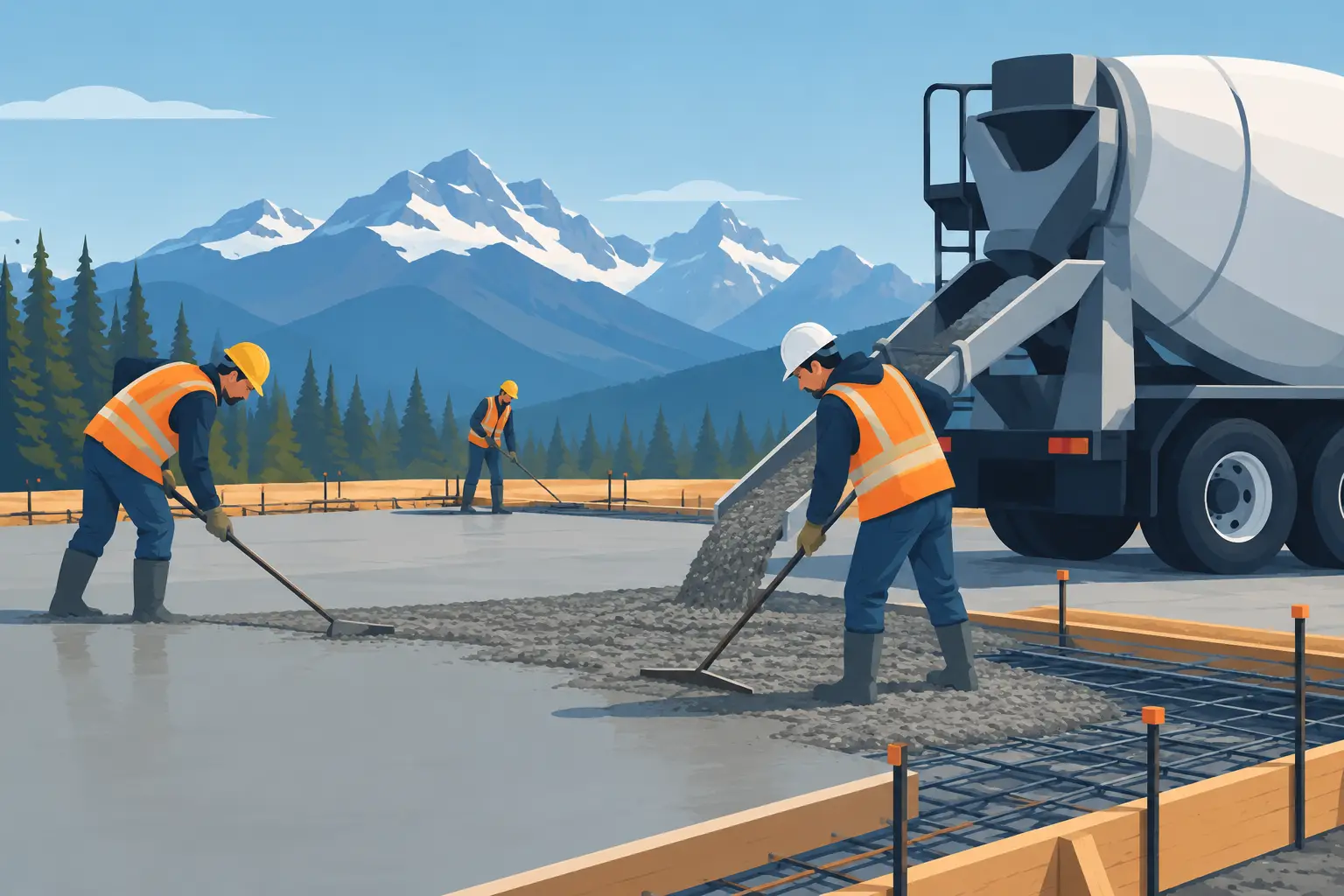
The clearest reason to use a line pump is distance. If the concrete truck cannot back close enough to the forms, its chute has limited reach. Extending that reach with wheelbarrows means more people, more handling, slower placement, and more chances for concrete to be spilled, segregated, or delayed before it reaches the finishers.
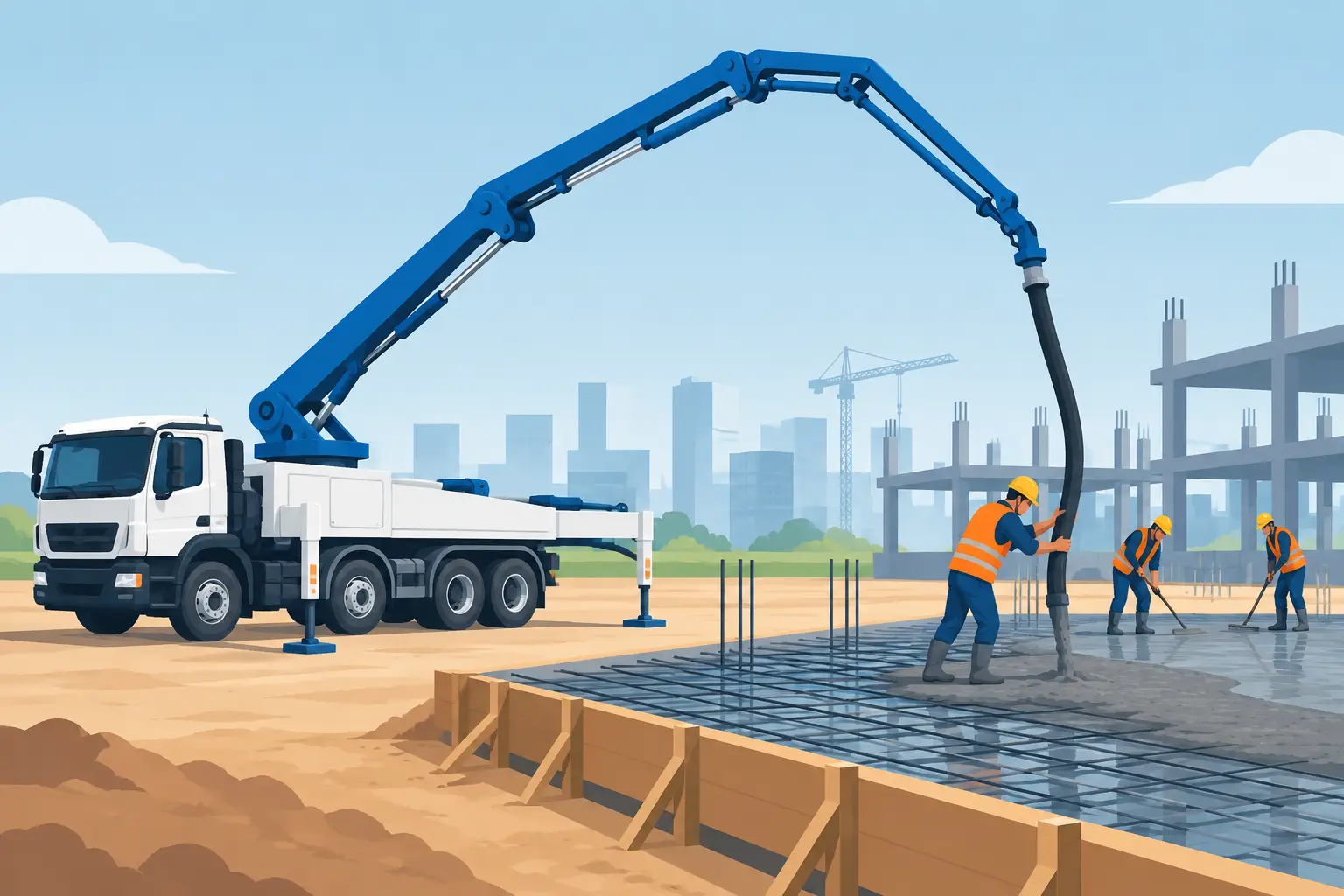
A line pump moves concrete through a hose system from the truck-mounted pump to the placement point. The hose can run around a house, alongside an existing building, through a gate, across a yard, or into areas where a ready-mix truck should not travel. That makes it a practical fit for backyard patios, walkout foundations, garages behind existing homes, additions, shop slabs, and agricultural structures with confined approaches.
Restricted access does not always mean a small job. A commercial or industrial site may have a large slab to pour but limited room because of fencing, stored materials, active trades, utilities, or ongoing operations. In those situations, the line can be routed to the work area while the pump and ready-mix trucks remain in a safer, more workable loading position.
Tight sites and finished landscaping
Many residential sites in Central Alberta are tight long before the concrete crew arrives. Mature homes, narrow side yards, retaining walls, fences, parked vehicles, and neighbouring buildings all affect how concrete can be placed. Driving a mixer over soft ground or finished grades may not be possible, and even a boom pump may not have room to set up safely.
A compact 4x4 line pump can be a strong option where equipment needs to work closer to the ground and in a confined footprint. It does not eliminate the need for site planning, but it can reduce the damage and cleanup that come with moving concrete by hand over long distances.
Pours That Benefit From Controlled Placement
Line pumps are valuable when the placement needs to be accurate, not just accessible. Concrete does not wait while crews reposition wheelbarrows. Once discharge starts, the team needs a steady, manageable flow that lets finishers place, consolidate, screed, and work the surface without being overwhelmed.
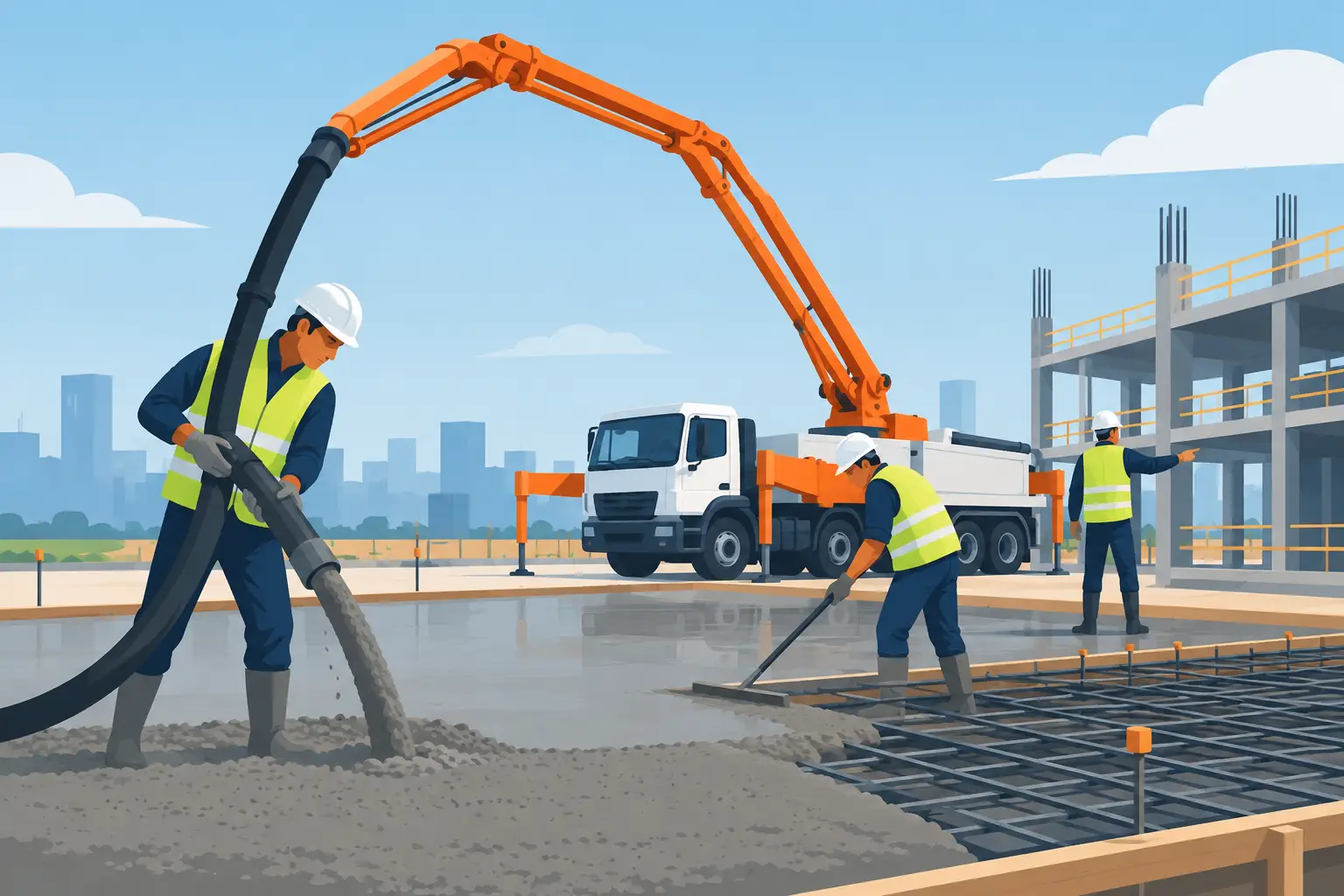
A hose operator can direct concrete where it is needed along a footing, grade beam, wall, slab edge, pile cap, or repair area. That control is especially useful around dense reinforcing steel, embedded items, existing structures, and narrow forms. Rather than dumping a large volume in one location and pushing it across the pour, the crew can place closer to final grade.
This can improve the pace of work, but the benefit depends on the mix, crew size, form layout, and finishing plan. A pump is a placement tool, not a replacement for proper concrete preparation. Forms still need to be braced, access routes need to be clear, and the finishing crew must be sized for the expected delivery rate.
Foundations, additions, and below-grade work
Foundation work often creates the exact conditions that call for a line pump. Excavations can limit truck positioning, and concrete may need to reach footings or walls beyond a bank, around an existing home, or through a narrow access route. Pumping lets the concrete travel to the forms without placing a mixer at the edge of an excavation or relying on repeated wheelbarrow runs.
For additions, the challenge is often the existing building. There may be no route for a truck to reach the rear of the property, and the work area may sit between fences, decks, or landscaping that the owner wants protected. A line pump can carry concrete to the addition while keeping heavy traffic away from sensitive areas.
Below-grade work requires added attention. The pump setup, hose route, communication between the operator and placing crew, and truck movement all need to be planned before concrete arrives. Good planning keeps the pour moving without crowding the excavation or creating unnecessary hazards.
When a Boom Pump May Be the Better Choice
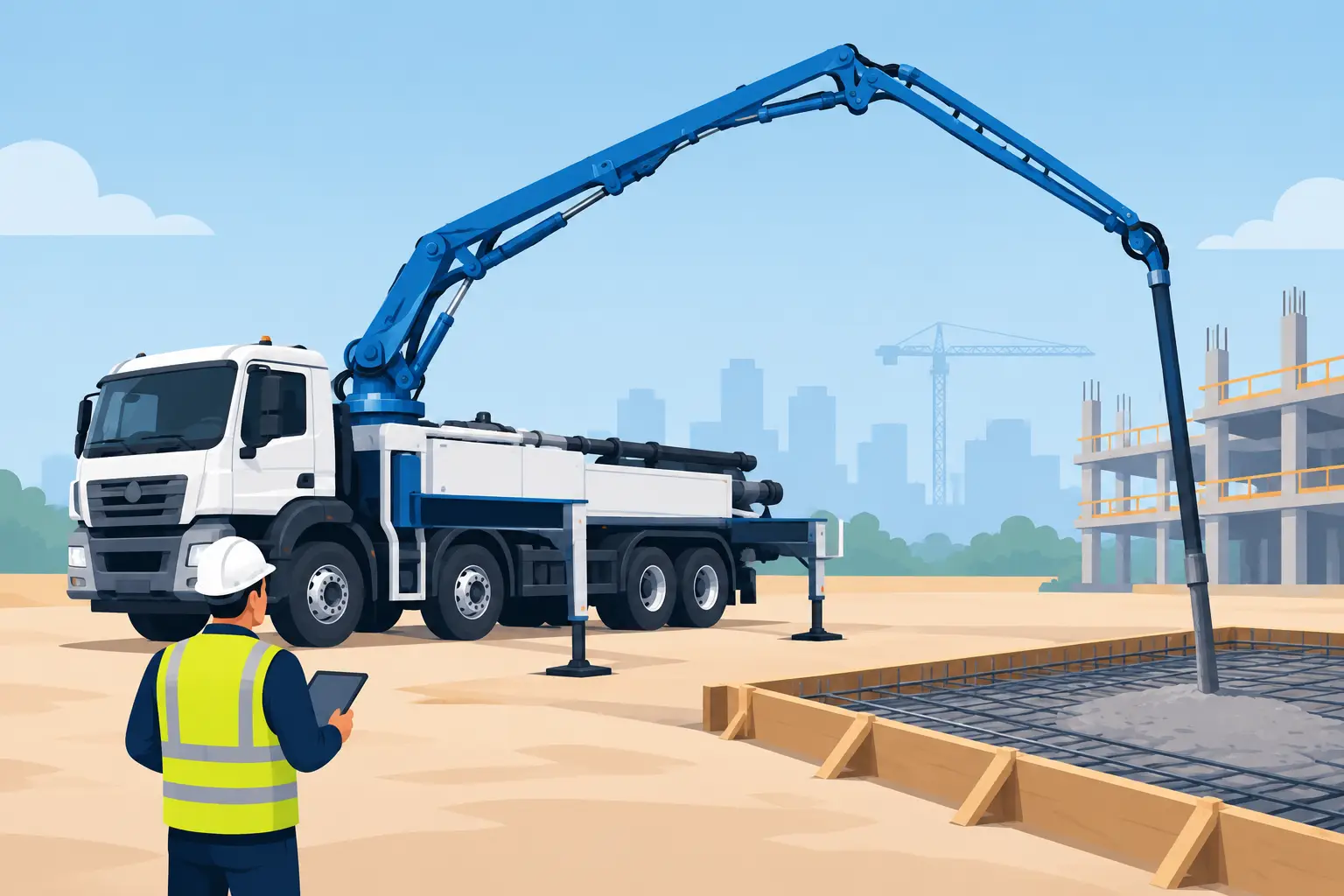
A line pump is not automatically the best choice just because access is difficult. On larger pours, sites with broad coverage requirements, or placements that need to reach over buildings and obstacles, a boom pump may be more efficient. Its articulated boom can deliver concrete over distance while allowing the placing crew to work across a larger area with fewer ground lines to move.
The trade-off is setup space. Boom pumps need adequate room for the truck and outriggers, along with safe clearance from overhead power lines, structures, and other site activity. If that space is available, a boom can be the faster choice for large slabs, commercial foundations, elevated decks, and wide structural pours.
Line pumps earn their place where flexibility matters more than overhead reach. They are well suited to jobs where a hose can follow the site layout and where the crew needs concrete delivered into a hard-to-reach pocket rather than across a broad open area.
Signs Wheelbarrow Placement Is Costing Too Much
Wheelbarrows still have a place on small, simple pours. The problem starts when hand placement becomes the job's main production method rather than a short finishing task. If the crew needs several people just to shuttle concrete from the truck to the forms, labour costs rise while the actual placing and finishing work competes for attention.
Consider a line pump when the pour involves a long travel path, repeated ramps or slopes, rough ground, tight corners, or a route that crosses finished surfaces. It is also worth considering when the concrete needs to move through an opening, around the side of a building, or into an area that cannot safely support ready-mix truck traffic.
The cost comparison should include more than the pump rate. Account for the extra labour needed to wheel concrete, the time trucks spend waiting, the risk of concrete hardening before placement, potential damage to the site, and cleanup after the pour. A pump can often reduce those hidden costs while giving the finishing crew a more consistent workflow.
Plan the Pump Job Before the Concrete Is Ordered
A successful line-pump pour begins with accurate site information. The pump operator needs to know where the ready-mix trucks can park, where the hose must run, how far concrete will travel, and whether there are gates, slopes, soft ground, overhead hazards, or active work zones to consider.
The concrete mix also matters. Pumpable concrete requires the right mix design and aggregate for the job. Discuss the planned pump method with the ready-mix supplier and pump provider early, particularly for specialized mixes, fibre-reinforced concrete, high-strength applications, or long hose runs. A poor match between mix and placement method can create delays that no crew wants on pour day.
Before the truck arrives, clear the hose route, protect surfaces where needed, confirm washout arrangements, and make sure the placing crew knows the sequence. Keep a clear communication line between the pump operator, concrete driver, and crew lead. The best pours look straightforward because the important decisions were made before concrete was on the road.
Bandit Concrete Pumping works with contractors and property owners across Central Alberta to match the pump setup to the actual jobsite, not a generic assumption. Whether the issue is a narrow backyard, an excavation, a shop slab, or a congested commercial site, the goal is the same: get concrete to the forms safely, cleanly, and at a pace the crew can finish properly.
When access is the part of the pour keeping you up at night, plan for it early. The right line-pump setup can turn a difficult route into a controlled concrete placement job.