(587) 703-6048

Residential Concrete Pumping for Alberta Builds

A foundation crew is ready, concrete trucks are booked, and the forms are checked. Then the real question becomes clear: how will the concrete get from the truck to every part of the pour without tying up the crew, tracking mud across the site, or losing time? Residential concrete pumping gives Alberta builders and property owners a faster, more controlled way to place concrete where it needs to go.
For foundations, basement walls, garage slabs, acreage shops, additions, patios, and difficult-access work, a pump can turn a labour-heavy pour into a controlled operation. The right equipment and an experienced operator matter just as much as the pump itself. Good placement keeps the crew productive, helps finishers stay ahead of the concrete, and reduces the cleanup waiting at the end of a long day.
When Residential Concrete Pumping Makes Sense
Concrete pumping is not only for large commercial placements. It is often the practical choice on residential work where distance, elevation, access, or production speed creates a problem for direct chute discharge.
A ready-mix truck can only reach so far with its chute. If forms are behind a house, around a corner, down a slope, or beyond a narrow side yard, crews may otherwise be left moving concrete with wheelbarrows or conveyors. That means more hands, more handling, and more opportunities for delays and mess.
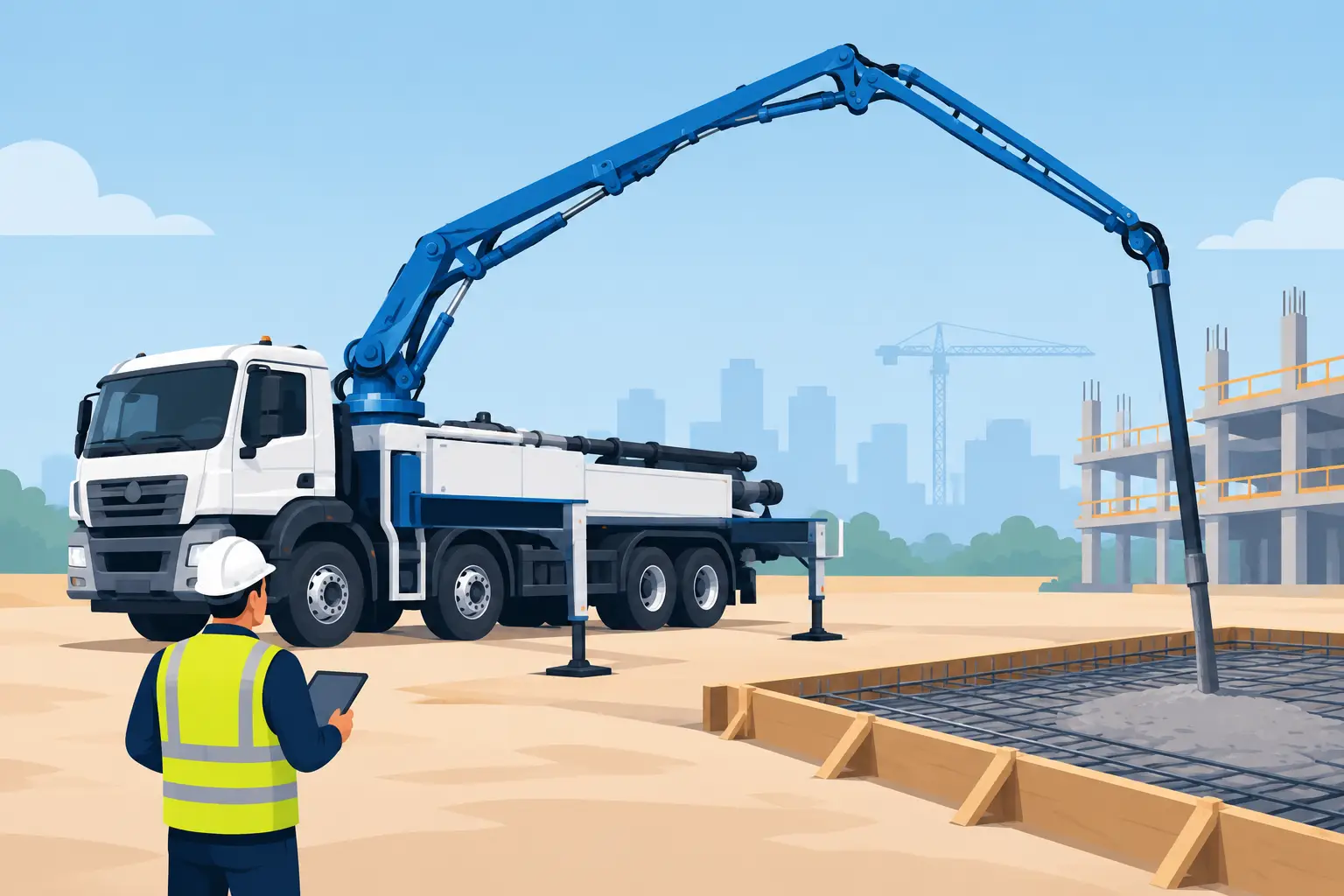
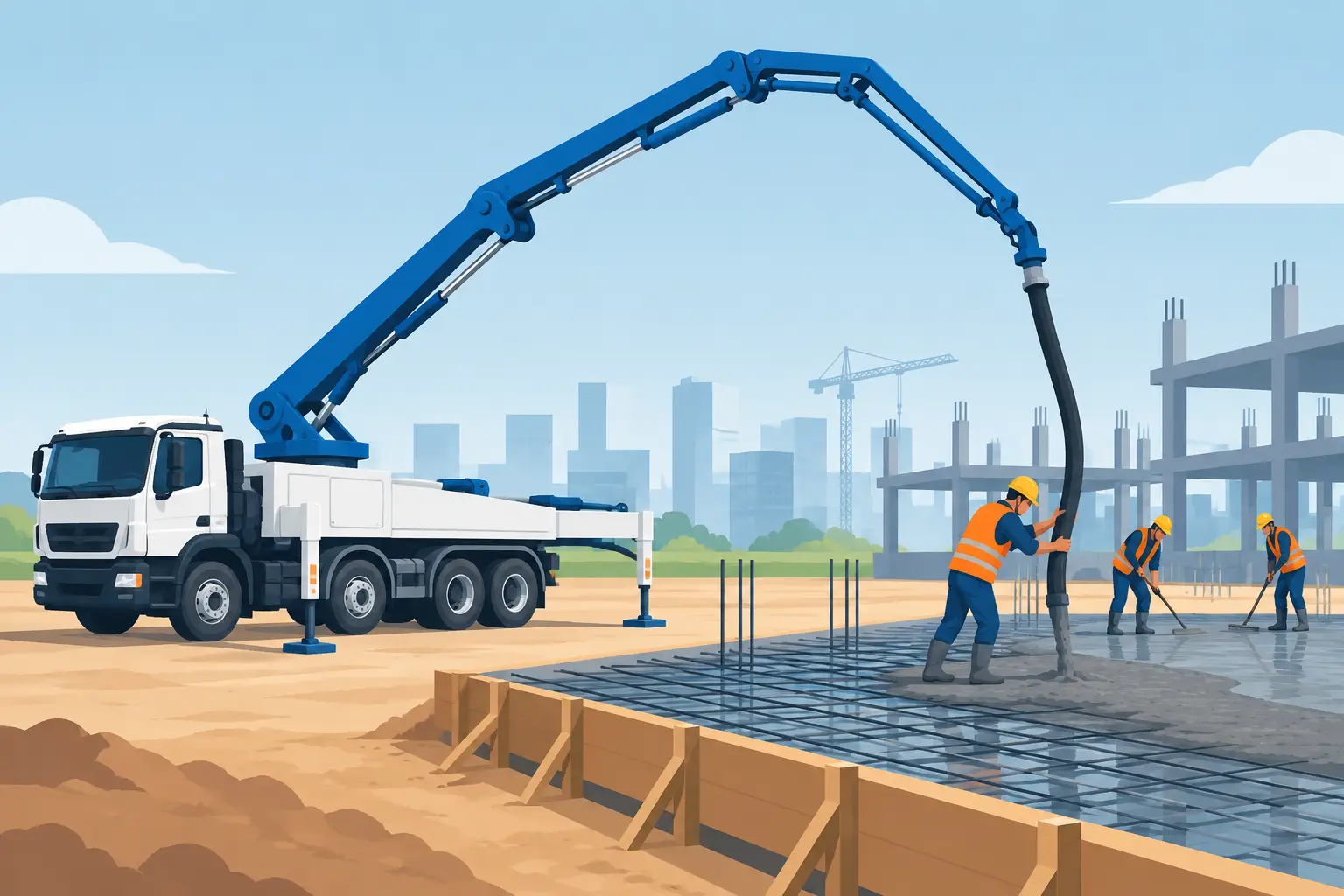
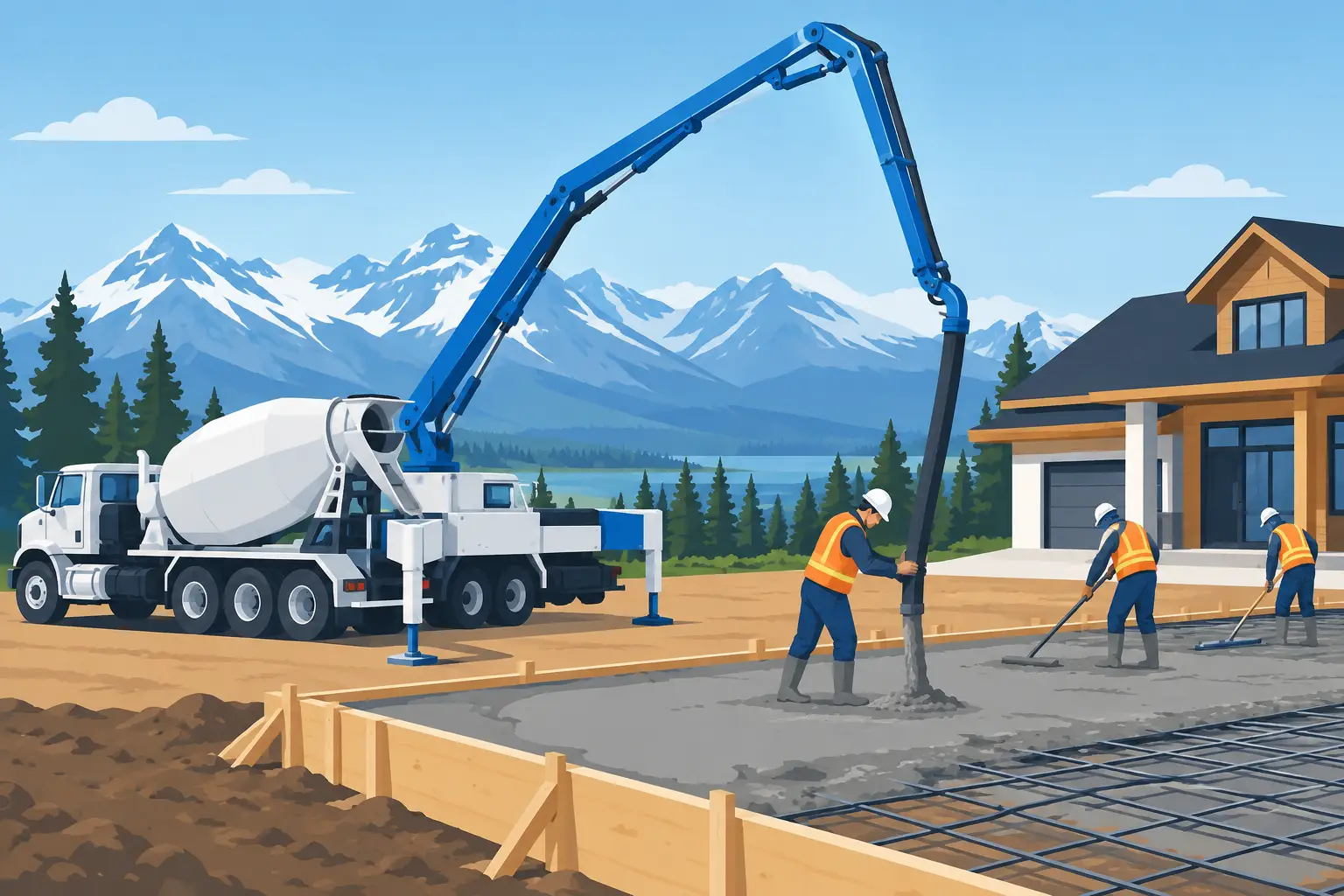
A boom pump can place concrete over obstacles and across broad areas from a stable setup position. On a typical residential job, that may mean reaching a backyard slab without driving equipment across finished landscaping, placing footings around an existing structure, or working over a foundation excavation while keeping the ready-mix truck where it belongs.
A truck-mounted line pump is often the better fit when access is restricted or the work calls for controlled placement through hose. It is a strong option for basements, tight urban lots, backyard projects, smaller slabs, and areas where a boom truck does not have enough room to set up safely.
The best choice depends on the job. A larger boom is not automatically better if the site has tight setbacks, overhead lines, soft ground, or limited setup space. The pump has to suit the placement plan, not simply the size of the pour.
What a Pump Changes on a Residential Pour
The biggest benefit is not just that concrete moves farther. It is that the pour becomes easier to manage.
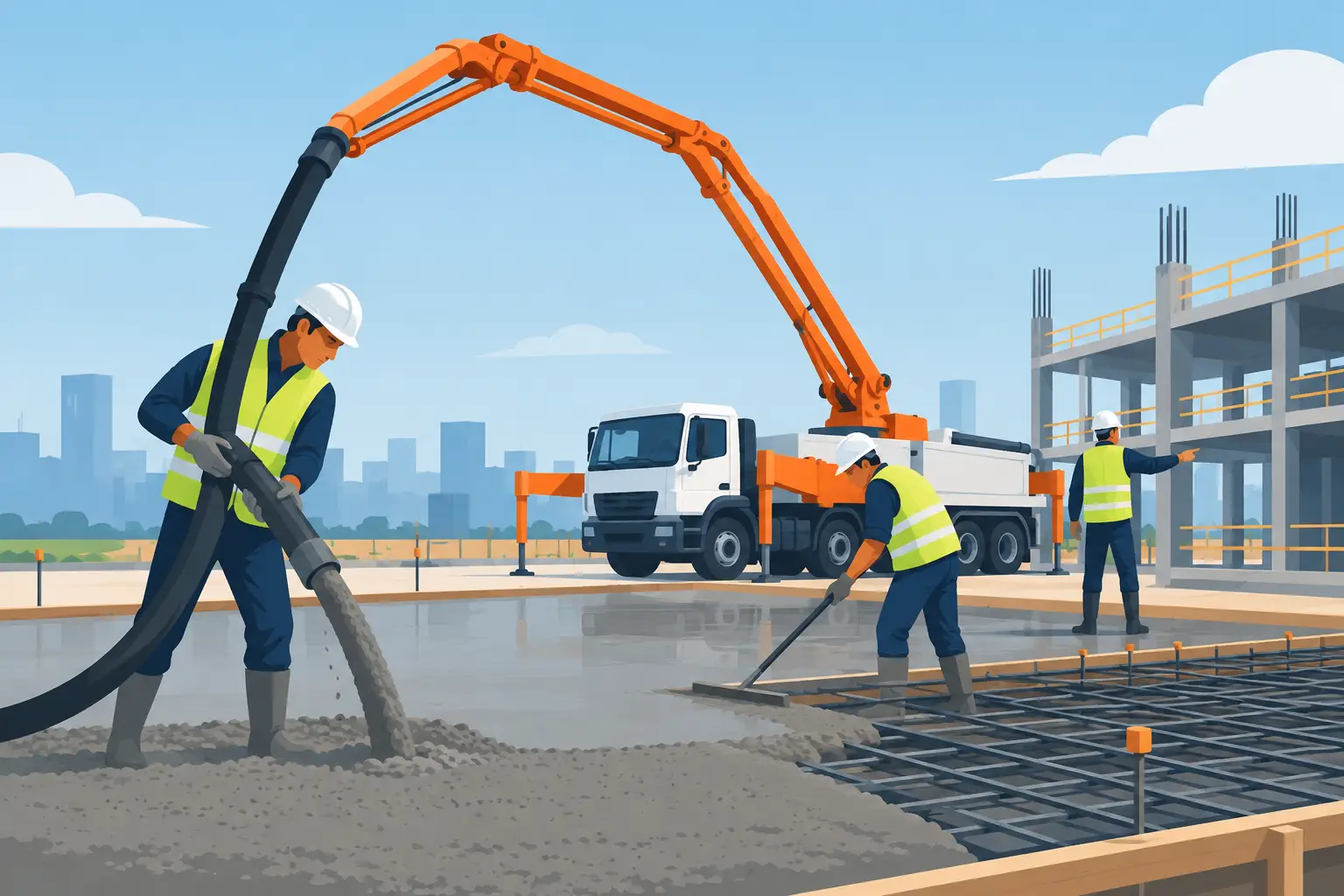
With concrete delivered directly into forms or close to the finishing area, the crew spends less time transporting material and more time doing the work that affects the finished product. Form crews can monitor pressure and consolidation. Finishers can focus on timing, levels, edges, and surface quality. The general contractor has fewer people crowded around a truck chute or pushing loaded wheelbarrows through a site.
That matters when concrete starts to set. Alberta weather can change quickly, and long travel paths between truck and form do not help when a crew is working against time. A pump helps maintain a steady placement rate, provided the concrete mix, supply schedule, and crew capacity are properly coordinated.
It can also reduce site damage. Repeated wheelbarrow traffic tears up access routes, spreads concrete residue, and creates unnecessary cleanup around completed work. Pumping does not eliminate cleanup, but it keeps placement more contained. A careful operator and hose crew can place concrete accurately while avoiding walls, windows, landscaping, and other finished areas.
Planning the Pump Before Pour Day
A successful pump pour is planned before the first truck arrives. The pump operator needs clear information about the scope, site conditions, mix, and sequence of placement. Guessing at access on pour day can lead to avoidable delays.
Start with the placement area. Know the approximate volume, form layout, concrete thickness, and the furthest point from the truck setup. Photos and site details are useful, but they should be current. A lot can change after excavation, framing, or rough grading.
Next, consider where the pump and ready-mix trucks will sit. The setup area needs suitable ground conditions, room for equipment, and a safe path for trucks to enter, turn, and leave. A boom pump needs proper outrigger clearance. A line pump needs a practical hose route that avoids sharp turns, pinch points, and areas where the line could be damaged.
Before booking, confirm these jobsite details:
- the concrete volume, mix specification, and planned delivery time;
- access width, slope, overhead hazards, and available truck staging;
- the distance and elevation from pump setup to placement;
- whether the pour involves footings, walls, slab work, or several separate placements;
- who is supplying the hose crew and who will direct the pour on site.
Concrete mix is part of the pumping plan. Some mixes pump more easily than others, and the mix must be appropriate for both the structure and the equipment. Do not make last-minute changes to aggregate, slump, fibres, or admixtures without discussing them with the concrete supplier and pump contractor. What works well for a chute pour may need a different approach when it is moving through a line.
Choosing a Boom Pump or Line Pump
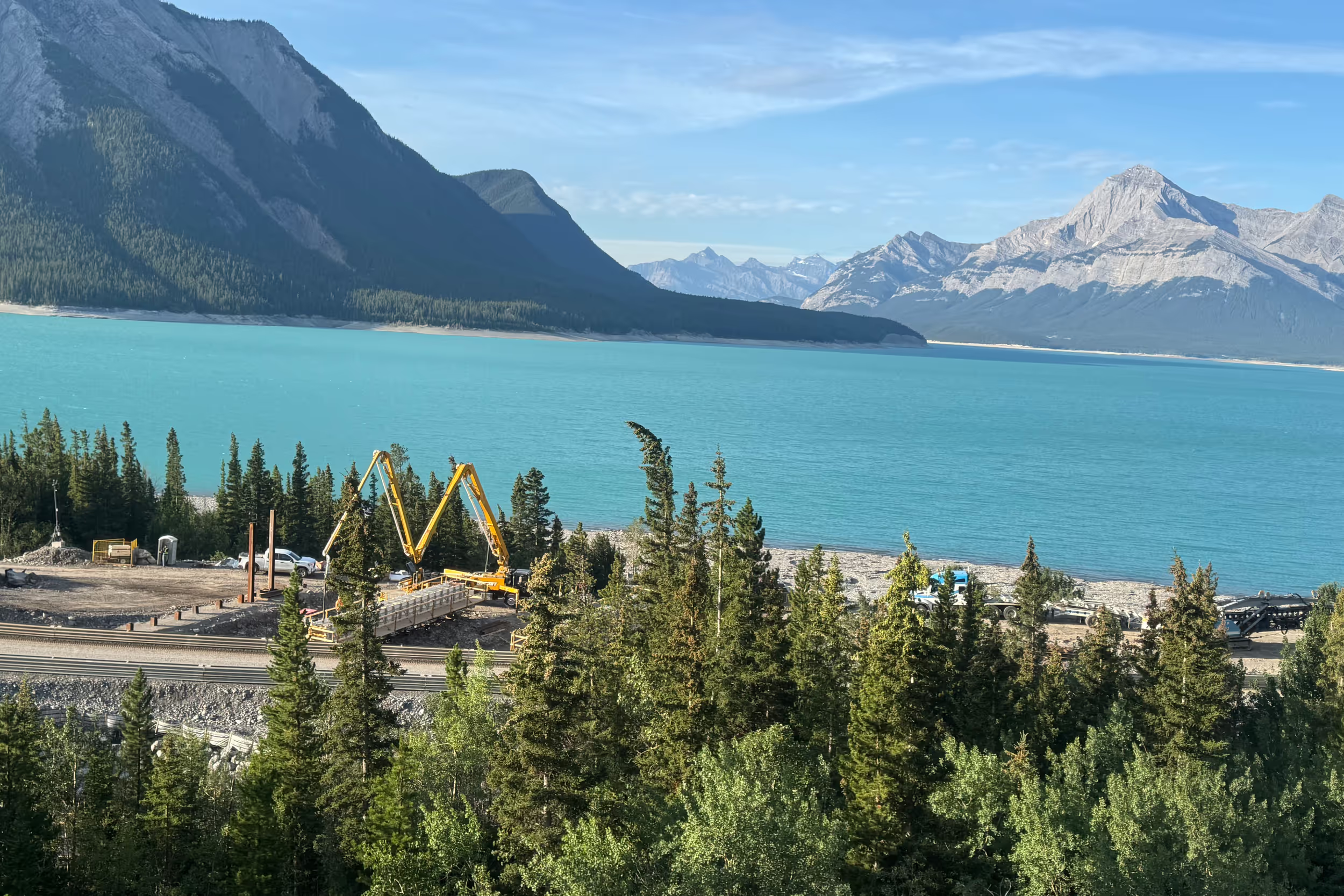
Boom pumps are built for reach and coverage. They are especially useful for foundation walls, large slabs, new home construction, garages, shops, and acreage projects where the truck can set up nearby but the concrete must travel over or around obstacles. A roll-and-fold boom can also be a practical solution where access is restricted and a conventional large boom is not the right fit.
Line pumps move concrete through connected steel pipe and flexible hose. They offer placement control in tight areas and can be routed into locations a truck cannot reach directly. For a backyard addition, a basement floor, a narrow side yard, or a small detached garage with limited access, a 4x4 line pump can be the right tool.
There are trade-offs. Boom pumps generally offer faster coverage over a wide placement area, but they require adequate room and safe outrigger setup. Line pumps are more flexible in confined spaces, though hose routing takes planning and the placement rate may be better suited to smaller, controlled pours. The right recommendation starts with the site, not a one-size-fits-all answer.
Keep the Pour Moving Without Cutting Corners
Pumping improves efficiency, but it does not replace good concrete practice. The formwork must be braced, the reinforcement complete, the crew ready, and the finishing plan in place before concrete starts moving through the system.
Assign one person to coordinate the pour. That person should communicate with the pump operator, ready-mix drivers, concrete crew, and site superintendent. Clear direction helps control where the hose moves, when trucks are dispatched, and how quickly each section is filled.
For wall pours, place in a controlled sequence and avoid creating excessive pressure in one area. For slabs, establish the placement path so finishers are not forced to work around fresh piles of concrete. For footings, ensure the hose can reach each run without dragging through prepared areas or disrupting reinforcement.
Safety stays ahead of speed. The operator needs to assess overhead power lines, slopes, unstable ground, excavation edges, public traffic, and the position of workers around the hose. No one should stand in front of the hose end, and the crew should understand the operator's signals before pumping begins. A dependable pour is one where production, site control, and safety all work together.
Cost Control Is About the Whole Job
Some owners look only at the hourly pump rate and decide wheelbarrows are cheaper. That comparison often misses the real cost of a slow pour. Extra labour, delayed finishing, damaged access, wasted material, overtime, and poor placement can quickly outweigh the cost of pumping.
That does not mean every small pour needs a pump. If a truck can back directly to a compact slab and the crew can place and finish it efficiently, chute placement may be the practical choice. Pumping earns its value when it removes a genuine access or production bottleneck.
For residential builders, the strongest results come from treating pumping as part of the construction plan rather than an emergency solution. Booking early gives the pump contractor time to match equipment to the job, flag access concerns, and help the crew arrive prepared.
A clean, well-planned pour protects the schedule and the work that follows it. When the site calls for reach, control, and a crew that knows how to work around Alberta conditions, Bandit Concrete Pumping can help put the concrete exactly where the job needs it.