(587) 703-6048

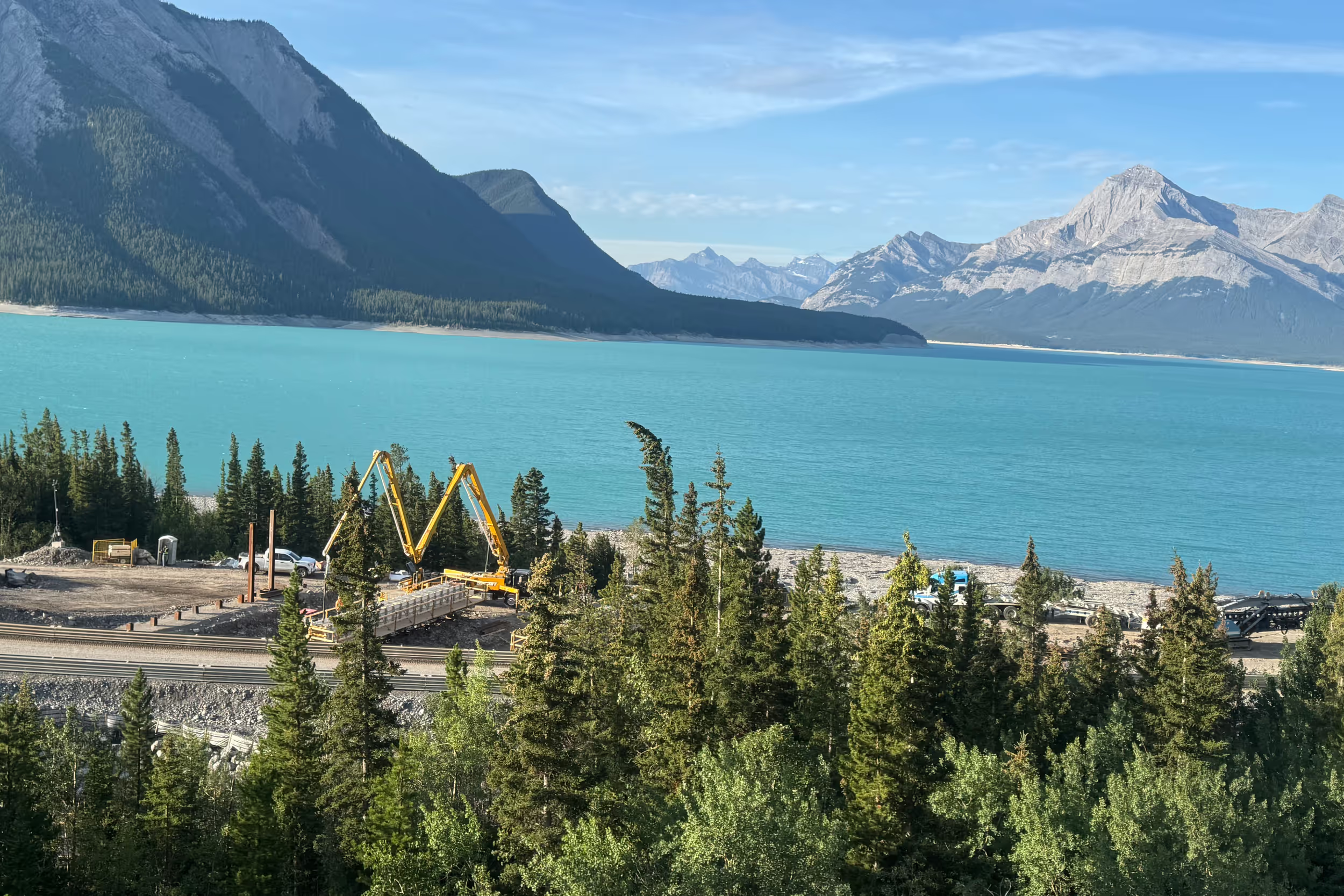

Plan Pump Access Before Your Concrete Pour

A concrete pump can save a pour that would otherwise turn into a labour-heavy, slow-moving mess. But the pump only works as well as the site allows. Plan pump access before the ready-mix trucks are rolling, and you give the operator room to set up safely, reach the placement area, and keep concrete moving without disrupting the rest of the job.
For Alberta contractors, builders, and property owners, access planning is not paperwork for its own sake. It is how you avoid a blocked driveway, a boom that cannot clear a power line, a hose run that comes up short, or a concrete truck waiting while crews scramble for a solution. A few decisions made early can protect the schedule, the finish, and the budget.
Start With the Entire Truck Route
Pump access begins well before the truck reaches the pour location. Consider the route from the public road to the setup area, including turns, gates, driveways, crossings, and any tight spots between buildings, equipment, or material stacks.
A boom pump is a large piece of equipment. It needs a route with enough width, height, and bearing capacity to enter and leave without backing through hazards or damaging soft ground. A narrow acreage lane may look passable when dry but become a problem after rain or during spring thaw. The same applies to new residential streets with curbs, parked vehicles, and unfinished landscaping.
Identify the access route during the booking stage and keep it clear on pour day. Move parked trucks, trailers, bins, pallets, forms, and loose material that could limit turning room. If the route includes a gate, confirm its opening width and make sure someone can open it when the pump arrives.
Concrete supply trucks need access too. The pump and ready-mix trucks need to work together in a position that allows steady feeding without blocking traffic or creating a difficult exit. On busy commercial sites, that may mean setting a traffic plan and assigning one person to manage truck arrivals.
Choose a Safe Pump Setup Area
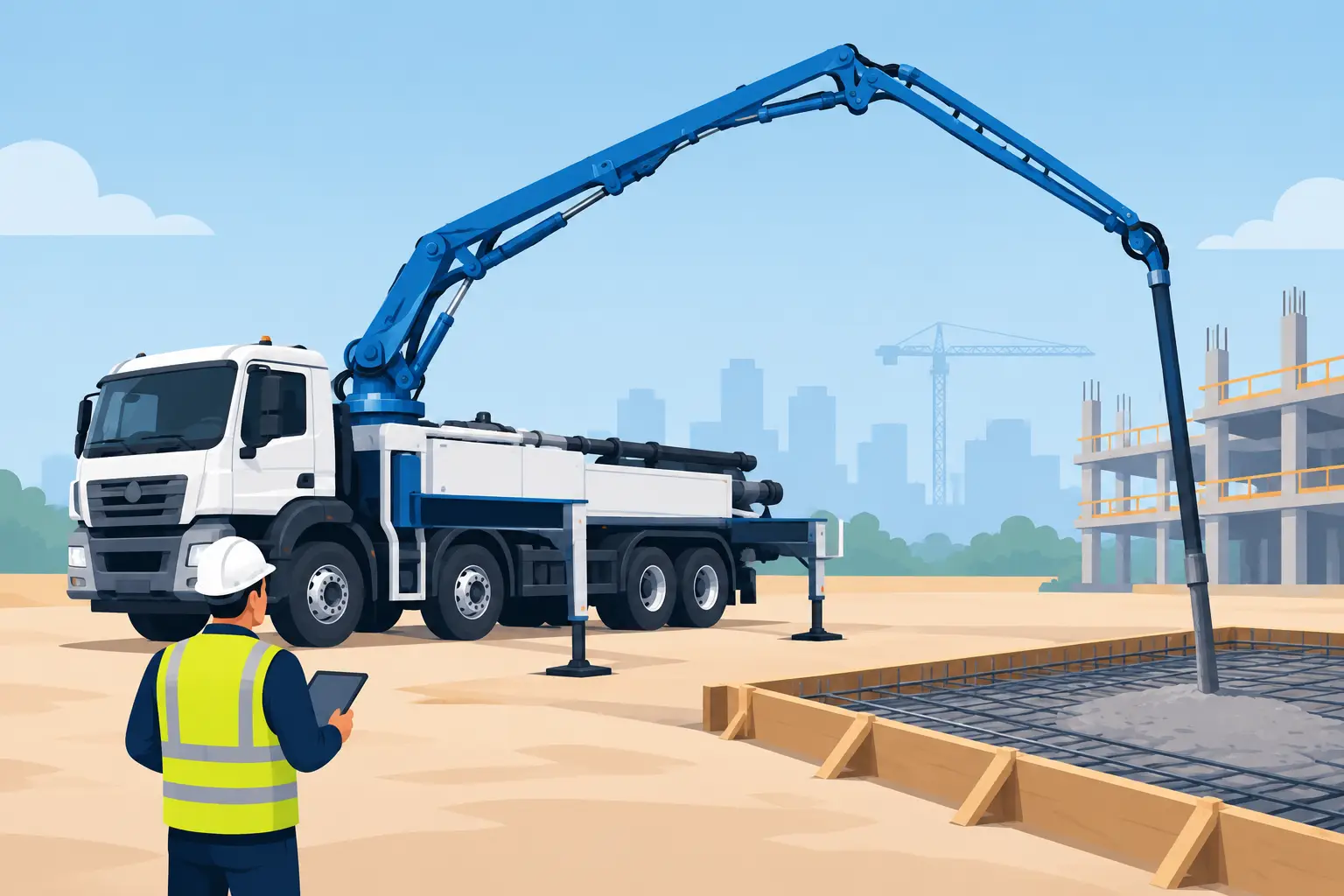
The pump truck needs a level, stable area for setup. Boom pumps use outriggers to support the truck while the boom is unfolded and concrete is being placed. Those outriggers require clear space and solid ground. Soft shoulders, recently backfilled areas, steep slopes, unprotected utility trenches, and unsupported slabs are not suitable without proper planning.
Do not assume compacted-looking ground will carry the load. Review where underground services, septic systems, basements, vaults, culverts, and drain lines are located. Outrigger pressure can damage buried infrastructure or create an unstable setup if the ground beneath is not sound.
The best location is usually the one that gives the operator a stable setup, a clear boom path, and practical access for ready-mix trucks. That position is not always closest to the formwork. A pump is built to reach across obstacles and reduce the need for manual concrete handling, so a slightly more distant setup can often be the safer and more efficient choice.
If the only available setup area is questionable, discuss it before the pour. Ground protection, outrigger pads, a different truck position, or a line-pump solution may be needed. Waiting until the pump is on site limits the options.
Keep Clear of Overhead Hazards
Overhead power lines deserve early attention. A concrete pump boom and its delivery hose can create serious electrical hazards if clearances are not maintained. Trees, service drops, communication lines, rooflines, cranes, scaffolding, and nearby structures can also restrict the boom path.
Walk the route from the intended pump position to the farthest placement point. Look up as well as across the site. If overhead lines are present, provide that information when booking so the pump configuration and setup plan can be assessed properly. Never treat a power line as a minor inconvenience that can be worked around on the fly.
Match Pump Reach to the Pour
Reach is more than a number on a spec sheet. The operator needs to place concrete throughout the forms while maintaining workable boom angles, keeping the hose under control, and avoiding site obstacles. A foundation behind a house, a suspended slab inside a commercial structure, and a shop floor on an acreage can each demand a different approach.
Boom pumps are often the right choice when broad coverage and high reach are needed. They can place concrete over structures, around obstacles, and across larger footprints with less hose handling. Compact roll-and-fold boom equipment can be a better fit where access is restricted by homes, trees, narrow lots, or lower overhead clearance.
A truck-mounted line pump is often the practical answer when the placement point is difficult to reach with a boom or the site calls for a controlled hose route. Line pumping can work well for rear-yard work, garages, shops, additions, and areas where the pump truck must remain well away from the forms. The trade-off is that hose layout, labour for hose handling, and the route through the site need to be planned carefully.
Provide clear job details when arranging the pump: the type of pour, approximate concrete volume, form dimensions, distance from the proposed setup area, elevation changes, and any barriers between the truck and placement zone. Photos and a simple site sketch can prevent assumptions, especially on residential infill projects and rural properties.
Build the Site Around the Pour, Not Against It
Concrete placement works best when the pump, ready-mix trucks, finishers, and form crew each have defined working space. Avoid filling the area around the forms with tool trailers, lumber packages, insulation, equipment, or garbage bins before the pour begins.
Create a clean path for the delivery hose and for the crew working around it. Remove trip hazards, cover or protect finished surfaces where needed, and secure loose items that could be hit by the hose. If concrete must pass through a gate, over a retaining wall, or beside a finished home, identify those details ahead of time so the crew can choose the cleanest approach.
The pour zone should also be ready before the pump arrives. Forms need to be braced, reinforcement checked, embeds and sleeves installed, and the finishing crew on site. A pump keeps concrete moving efficiently. If the forms, crew, or ready-mix supply are not ready, that speed becomes downtime instead of an advantage.
Confirm Timing, Mix, and Crew Responsibilities
Pump access planning is also scheduling planning. Confirm the pump arrival time, concrete dispatch schedule, estimated volume, placement sequence, and the contact person who can make decisions on site. Make sure the operator has a direct way to reach the site lead if conditions change before arrival.
The concrete mix must be suitable for pumping. Aggregate size, slump, admixtures, and fibre content can affect pumpability. Coordinate the mix with the concrete supplier and the pumping contractor before ordering. Do not make last-minute mix changes without checking whether they will affect the pump or the finished work.
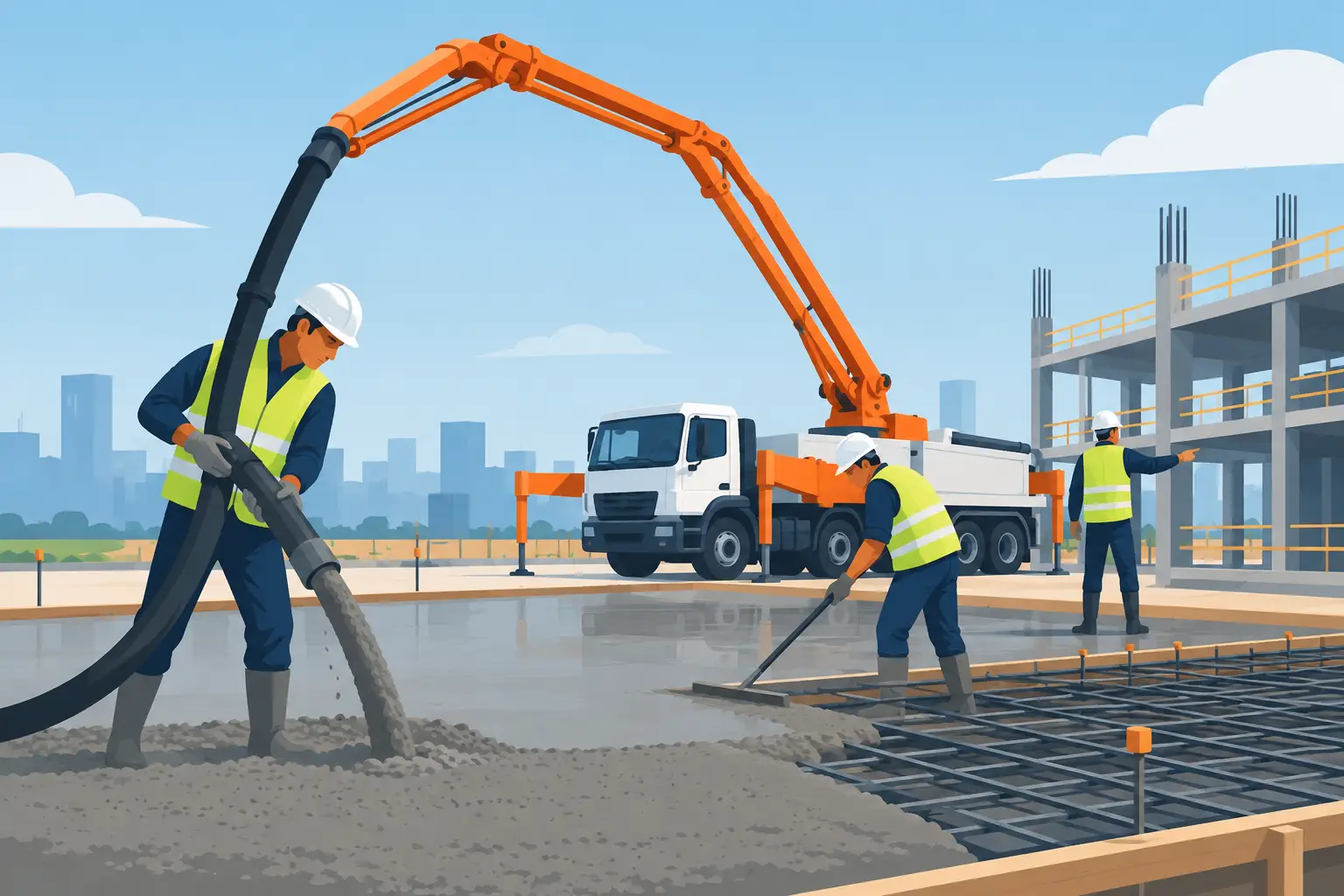
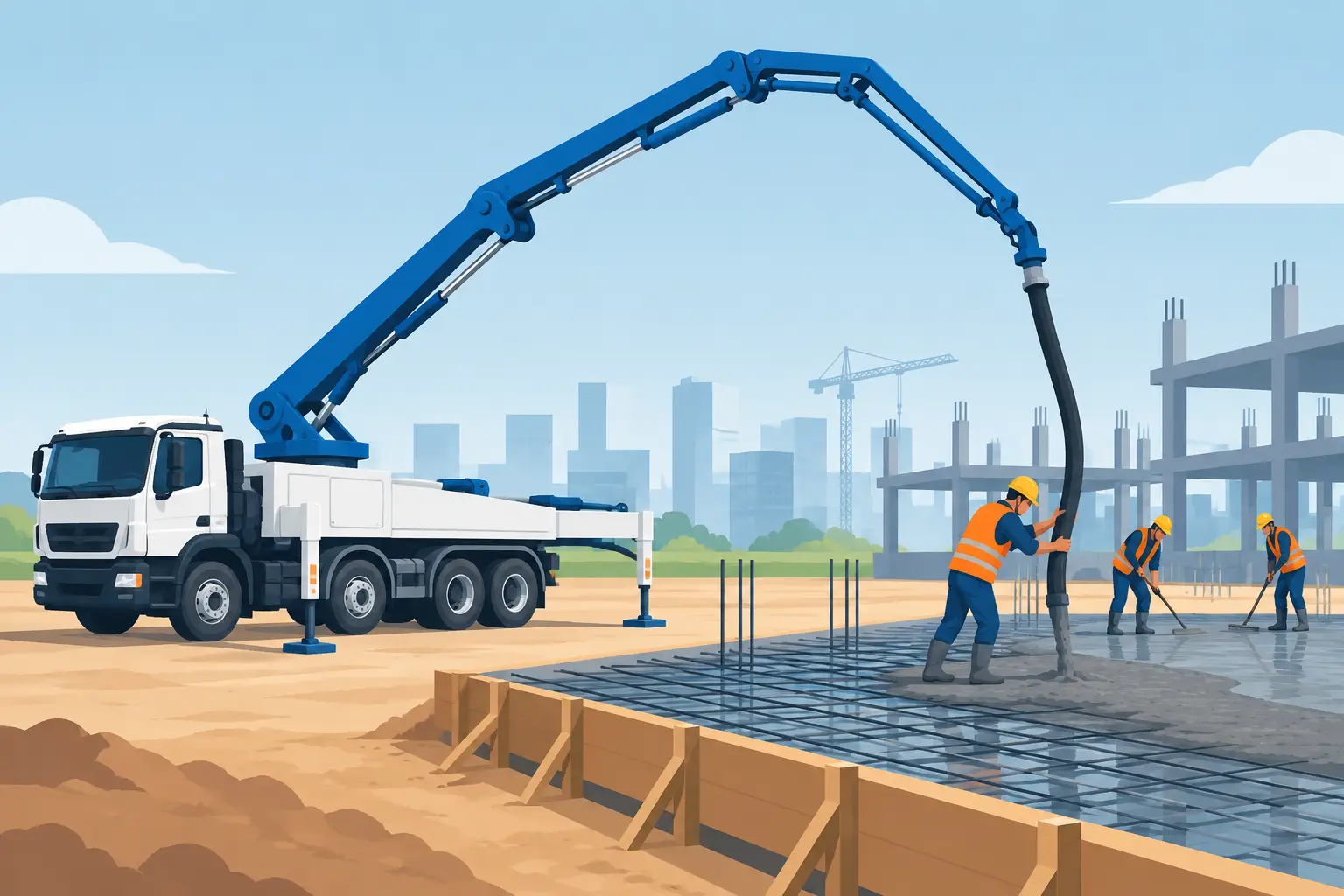
Assign enough people for the pour. The pump operator manages the equipment, but the placing crew controls the hose at the forms, directs placement, consolidates concrete, and keeps the work moving. Larger pours may require a designated signal person, especially when the operator cannot see every part of the placement area.
Check Conditions Again on Pour Day
A site can change overnight. Rain can soften an access lane. A delivery may block the setup area. Another trade may park equipment where the pump needs to go. Before the pump arrives, do a final walk-through and confirm that the planned route, setup area, overhead clearances, and hose path are still open.
This is also the time to manage neighbours, traffic, pets, and site visitors. Keep unauthorized people outside the working area. If a road, shared lane, or occupied property is affected, communicate early and make room for the trucks to operate safely.
Good access planning does not make a concrete pour complicated. It removes the preventable complications. When the route is clear, the ground is suitable, the reach is matched to the job, and the crew is ready, concrete can be placed faster, cleaner, and with better control.
For projects across Central Alberta, Bandit Concrete Pumping can help assess the practical details before pour day. Bring the access question up early, and the right pump plan can keep the job moving when it matters most.