(587) 703-6048


How to Prepare for Concrete Pumping on Site

A pump truck can place a large volume of concrete quickly, but it cannot fix a site that is blocked, soft, understaffed, or poorly coordinated. Knowing how to prepare for concrete pumping protects the pour schedule, the finished product, and the crews working around it. The goal is straightforward: give the pump a safe place to set up, give the operator a clear plan, and have every part of the pour ready before the first truck arrives.
On Alberta jobsites, weather, tight access, changing grades, and active trades can all affect that plan. A few decisions made the day before can prevent a costly delay when concrete is already on the road.
How to Prepare for Concrete Pumping Before Pour Day
Start by confirming the scope of the placement, not just the total cubic metres. The pump operator needs to know where the concrete starts and finishes, the required reach, whether the pour moves between areas, and which parts of the work are most time-sensitive. A garage slab, a basement wall, an elevated deck, and an agricultural floor may all need a pump, but they do not need the same setup.
Share the site address, contact information, pour date, concrete supplier, expected truck spacing, estimated volume, and placement details when booking. Mention anything that could change equipment selection: narrow gates, overhead power lines, steep approaches, limited street access, soft ground, neighbouring structures, or a long run to the placement area.
Bandit Concrete Pumping can match the equipment to the job, whether that calls for broad boom coverage, a compact setup for a restricted site, or a truck-mounted line pump for difficult-to-reach placement. The more complete the information is before dispatch, the better the crew can arrive ready to work.
Confirm access from the road to the setup area
A concrete pump is a working truck, not a pickup that can squeeze through an unfinished lot. Walk the access route with the actual equipment in mind. Check driveway width, turning room, gate openings, parked vehicles, material piles, temporary fencing, excavation spoil, and low tree limbs.
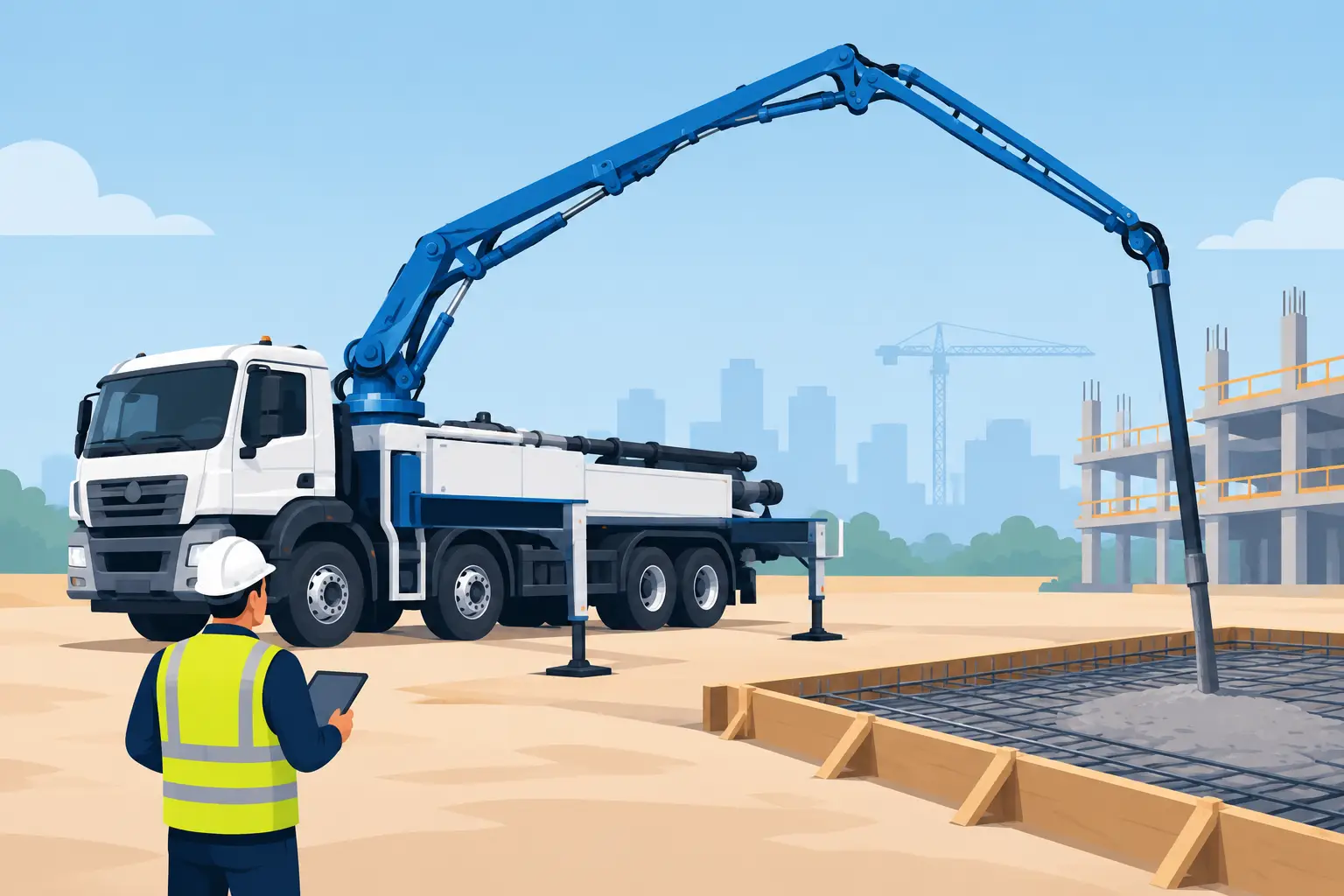
The truck needs a level, firm location for setup. Boom pumps use outriggers, so allow enough room for the truck footprint and the stabilizers. Do not assume a gravel shoulder, fresh fill, or thawing ground will carry the load. If the ground is questionable, discuss it before pour day and prepare a suitable pad or alternate setup location.
Street setups also need planning. Confirm whether traffic control, permits, lane clearance, or neighbour notice is required. Keep concrete trucks moving through the site rather than backing up onto a busy road or blocking emergency access.
Look up before the boom arrives
Overhead hazards deserve an early site check. Electrical lines are the biggest concern, but rooflines, telecom lines, trees, light standards, scaffolding, and nearby buildings can also restrict boom movement. Mark or communicate these hazards clearly.
Never treat power-line clearance as something to judge from the ground while the boom is moving. The operator needs adequate clearance throughout the full range of placement, including when the boom swings or is repositioned. If lines are close to the planned work area, contact the utility and the pump provider well ahead of time to determine a safe method of work.
Build a Clear Pumping Plan With the Crew
Concrete pumping works best when one person is responsible for site coordination. That person should be available when the pump arrives, able to direct the operator to the setup point, and authorized to make decisions if site conditions have changed.
Before the pour, walk through the sequence with the forming crew, finishers, concrete supplier, and pump operator. Confirm where placement begins, where the hose will travel, who handles the end hose, and how the crew will signal a stop, slowdown, or move. Simple communication matters when trucks, equipment, and workers are all operating in a confined area.
Keep the planned route to the formwork open. Remove loose materials, cords, hoses, hand tools, and anything that could create a trip hazard or interfere with the hose crew. If concrete must be placed over excavations, through a building, or along a long line run, make sure the route is stable and protected before the pump is primed.
Make sure forms, reinforcing, and embeds are ready
Do not book the pump based on the hope that forms will be completed by arrival time. Forms should be braced, inspected, clean, and ready for concrete. Reinforcing steel, anchor bolts, sleeves, drain lines, conduits, and other embeds should be checked before the first load is discharged.
Pumping places concrete efficiently, which means weak forms or missed details become a problem faster. Check for gaps, inadequate bracing, poorly supported bulkheads, and areas where the crew will not have room to consolidate or finish the concrete properly.
For slabs, confirm base preparation, vapour barrier, reinforcement, elevations, screed guides, and joint layout. For walls and footings, verify access for vibrators and ensure the crew can place concrete in a controlled lift sequence. The pump puts concrete where it is needed. Proper consolidation, finishing, and curing still depend on the people and preparation around the placement.
Order a Pumpable Mix and Coordinate Truck Timing
The concrete mix must suit both the structure and the placement method. Tell the ready-mix supplier that the concrete will be pumped. Mix design, aggregate size, slump, admixtures, fibre content, and air entrainment can all affect pumpability and finish requirements.
Do not add water at the site as a quick answer to a mix or finishing issue without following the approved concrete process. Extra water can affect strength, durability, air content, shrinkage, and finish quality. If the specified mix is difficult to place, the right fix may be a conversation with the supplier, contractor, and project team, not an uncontrolled adjustment at the truck.
Truck timing matters just as much as the mix. Concrete should arrive at a pace the pump and finishing crew can handle. Trucks stacked too tightly can create pressure to place too fast. Large gaps can leave the crew waiting, interrupt finishing, and complicate cold-weather or hot-weather placement.
Allow for realistic production rates. A long hose run, a congested form, heavy reinforcing, a complex wall sequence, or limited finishing labour may slow the pour. Faster pumping is useful only when the whole site is ready to keep up.
Prepare for Safe, Clean Placement
The pump crew needs a controlled work zone. Keep non-essential workers, homeowners, children, and visitors away from the truck, outriggers, pipeline, and end-hose area. Everyone handling or working near the hose should have suitable personal protective equipment, including boots, gloves, eye protection, and high-visibility clothing where vehicle traffic is present.
The end hose can move under pressure. Assign experienced workers to handle it, keep a firm stance, and avoid standing where a sudden movement could push someone into forms, reinforcing, or an open edge. Nobody should stand in front of a pipe connection or attempt to open a pressurized line.
Plan washout before the job starts. Identify a contained location for cleaning the hopper, chutes, and equipment where concrete residue cannot enter storm drains, ditches, or landscaped areas. Protect finished surfaces, siding, windows, vehicles, and adjacent properties from splatter. A clean setup is easier to manage than a cleanup dispute after the last truck leaves.
Account for Alberta weather and ground conditions
Weather does not automatically stop a pour, but it changes what the crew must prepare. In cold conditions, ensure access routes and work areas are cleared of ice and snow, forms are free of frost, and the concrete protection plan is ready. In heat or wind, have curing materials, evaporation control, water for cleanup, and enough finishers on hand.
Rain can soften access routes and fill excavations. A hard freeze can affect ground bearing and site mobility. Check conditions again on the morning of the pour, especially after an overnight weather change. If the planned pump setup is no longer safe, address it before equipment is positioned.
The Morning-of-Pour Check
Before the pump arrives, make one final walk of the site. The access route should be clear, the setup area firm, forms complete, crew present, washout ready, and hazards identified. Confirm the concrete plant is on schedule and make sure the site contact has a working phone.
It is also worth checking the small items that cause big interruptions: fuel for equipment, vibrator availability, extension leads where needed, hand tools, curing supplies, lighting for late pours, and a clear route for ready-mix trucks. If the job is a remote acreage, industrial yard, or developing subdivision, confirm directions and site signage so drivers do not lose time searching for the correct entrance.
A well-prepared pumping job does not need a complicated script. It needs firm ground, clear access, the right mix, a ready crew, and direct communication. Set those conditions before the truck arrives, and the pump can do what it is there to do: place concrete quickly, accurately, and without turning the pour into a scramble.