(587) 703-6048


How to Pour Concrete Remotely on Alberta Jobsites

A chute can only reach so far. When a footing is behind a house, a slab sits inside a shop, or a commercial pour is blocked by existing structures, the question becomes how to pour concrete remotely without slowing the crew down or compromising the finish. The answer is not simply ordering a pump truck. It is planning the access, equipment, concrete mix, crew roles and placement sequence before the first ready-mix truck arrives.
Remote concrete placement means moving concrete from the mixer truck to the pour location by boom pump or line pump rather than relying on chute access, wheelbarrows or skid-steer buckets. Done properly, it puts fresh concrete where the finishers need it, at a controlled rate, with less handling and less mess across the site.
How to pour concrete remotely: start with the site
The right pump is selected from the site conditions, not just the volume of concrete. Before booking, look at where the mixer trucks can safely park, where the concrete must land, and what sits between those two points. Measure the distance and note elevation changes, tight gates, soft ground, overhead wires, neighbouring buildings and active traffic areas.
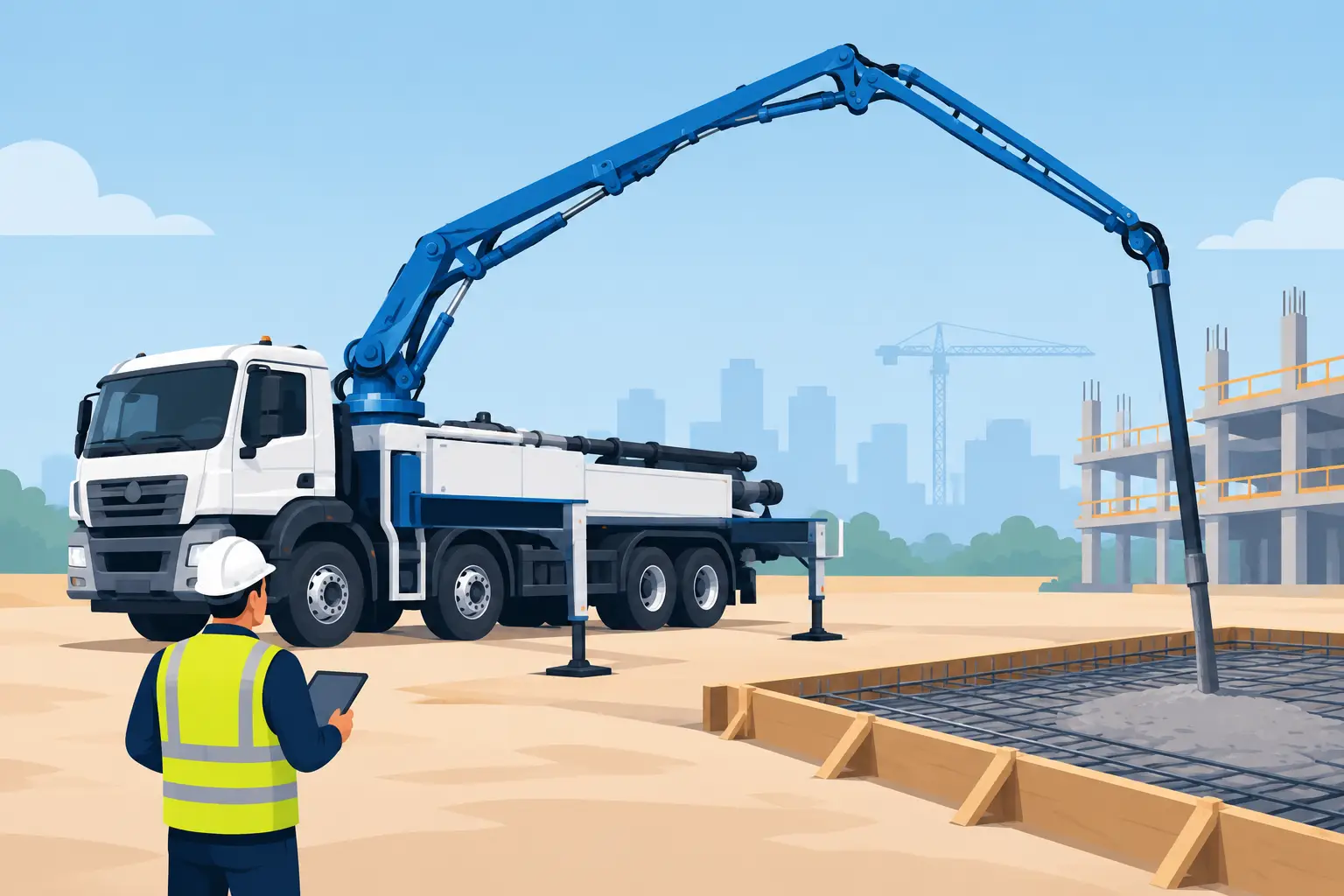
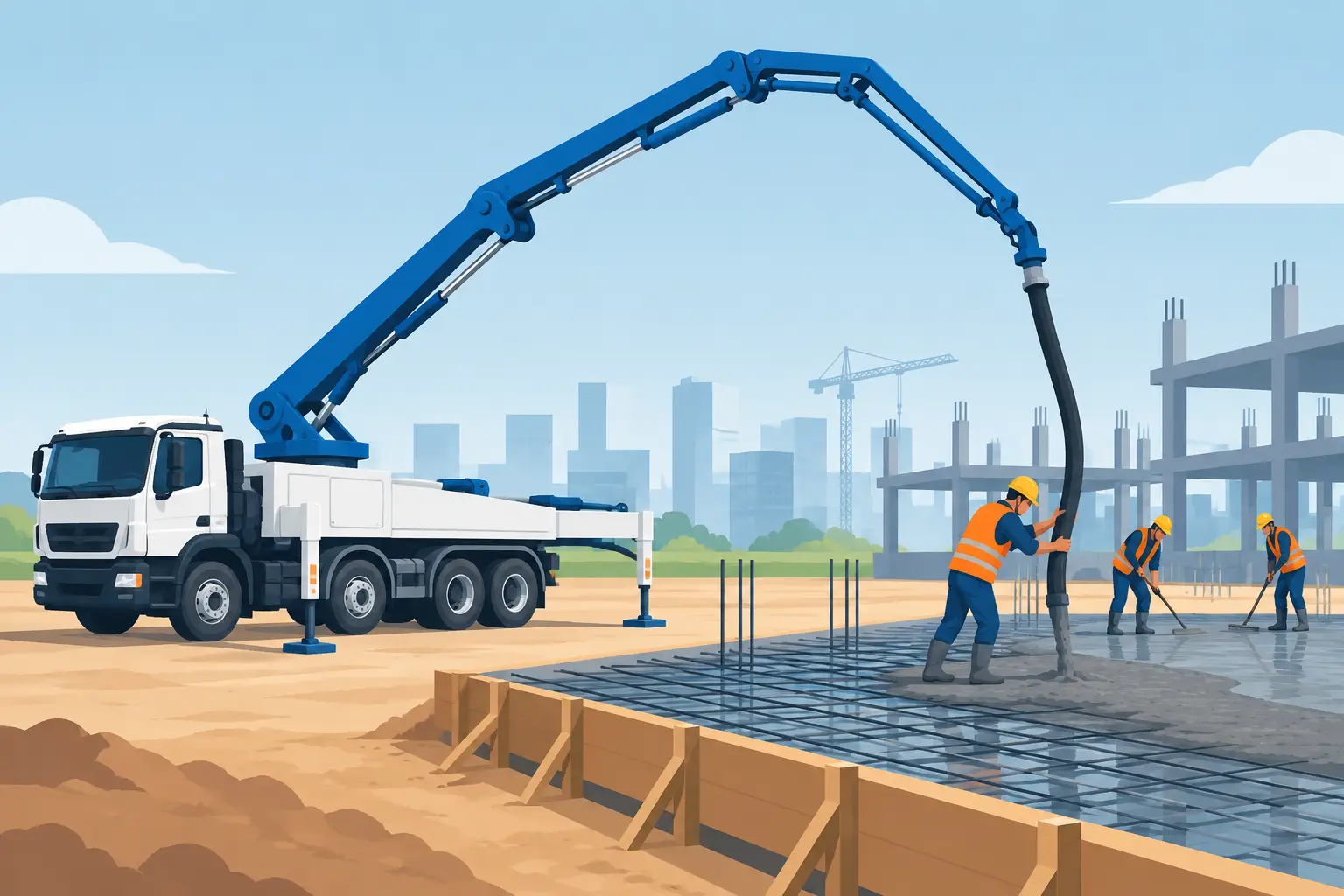
A boom pump is usually the efficient choice when the truck can set up close enough to reach over or around obstacles. Its articulated boom gives the operator broad coverage for foundations, slabs, walls and larger commercial work. It can keep the discharge hose moving with the crew instead of repeatedly relocating a line.
A line pump is often the better fit when access is restricted or placement needs to follow a long, narrow route. A truck-mounted 4x4 line pump can be especially useful for acreage work, rear-yard additions, agricultural buildings and sites where ground conditions or access roads rule out a larger setup. The line is laid from the pump to the placement area, giving the crew accurate delivery where a ready-mix chute cannot go.
The practical question is not which machine is bigger. It is which setup gets concrete to every part of the pour safely, without excessive hose handling, unnecessary line length or disruption to the jobsite.
Plan the pump location before concrete is ordered
The pump truck needs a stable, accessible setup area. That area must support the truck and its outriggers, remain clear of excavation edges, and allow enough room for ready-mix trucks to reverse in, discharge and leave without creating a traffic jam. On rural and acreage sites, confirm road conditions, turning room and bridge or culvert restrictions before pour day.
Overhead hazards deserve special attention. Power lines, tree limbs, scaffold, roof edges and nearby structures can limit boom movement. A qualified pump operator needs a clear view or reliable direction from a designated signal person when working near obstructions. Do not assume a boom can simply reach over anything in its path.
For line pumping, walk the proposed hose route with the pump provider. Avoid sharp bends, pinch points, vehicle crossings and routes that force hose through freshly landscaped areas or finished interiors. If lines must cross a driveway or traffic path, plan protection and site control in advance.
Good access planning also protects the schedule. A pump arriving to find buried utilities, blocked staging space or no room for mixer trucks is not a pumping problem. It is a coordination problem that can cost a crew valuable time while concrete is already on the road.
Match the concrete mix to the pumping method
Not every concrete mix pumps the same way. A pumpable mix needs workable consistency and aggregate that can travel through the boom or line without separating, plugging or causing excessive pressure. The mix design must still meet the structural requirements for strength, exposure, air entrainment and finish requirements.
Talk to the ready-mix supplier and pump provider before the pour, particularly when the job includes fibre, larger aggregate, specialty admixtures, coloured concrete or low-slump material. These products can be pumped successfully, but they affect planning. A mix that is suitable for a heavily reinforced footing may need a different approach than a mix for a polished shop slab.
Do not try to solve a stiff or difficult mix by adding water on site without approval. Extra water can affect strength, air content, finishing behaviour and the final surface. If workability needs adjustment, make that decision with the concrete supplier and project requirements in mind.
The same applies to volume. Order enough concrete to maintain a continuous placement rate, but do not stack mixer trucks so tightly that the pump has no room to work. The best pour sequence keeps concrete coming steadily while allowing the placing crew and finishers to stay ahead of the load.
Assign clear roles for the pour
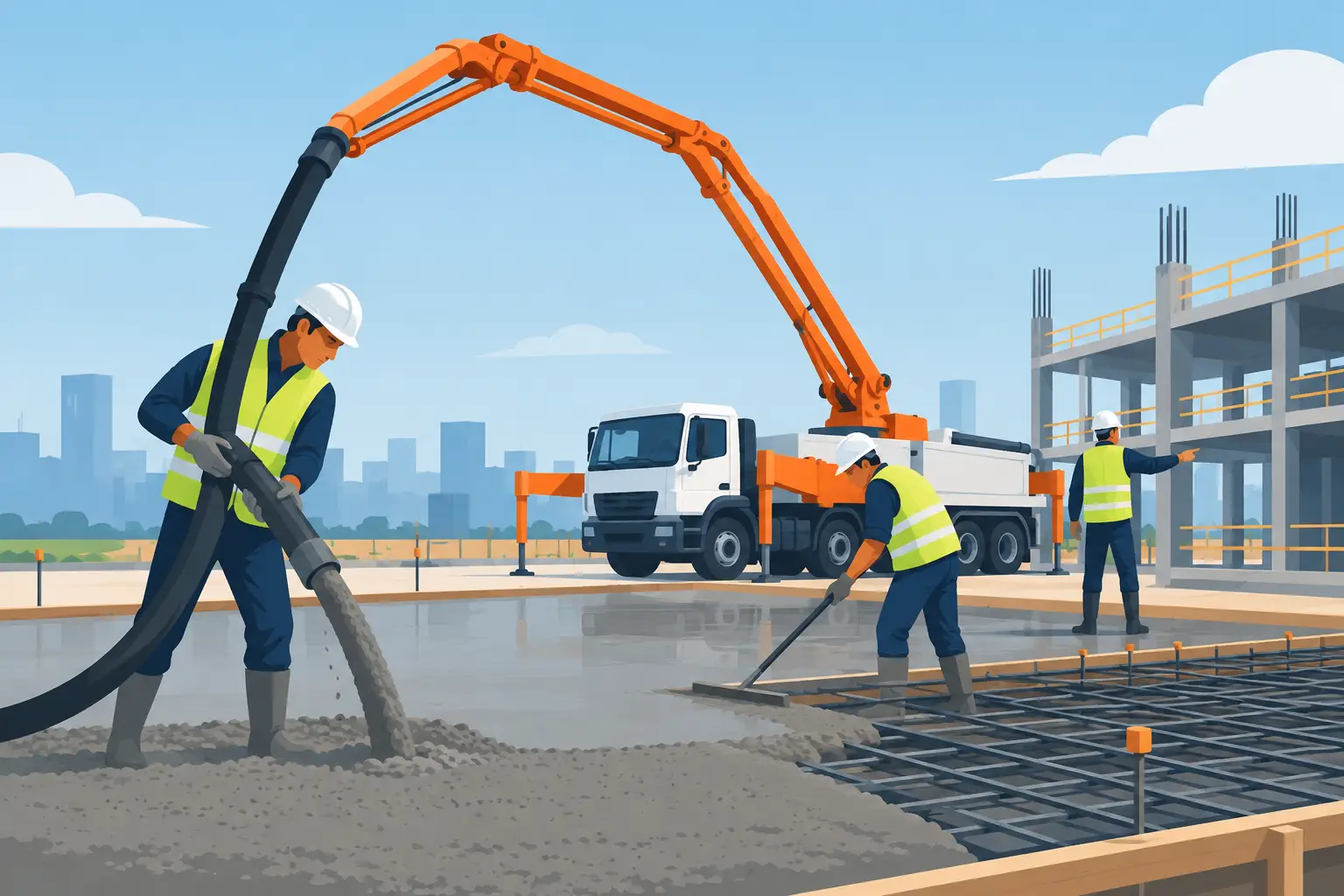
Remote placement works best when everyone knows their job before the pump is primed. The pump operator controls the equipment and responds to the flow demands of the placement crew. The hose handler directs the discharge hose, while the placing crew spreads concrete, works it into forms and reinforcement, and maintains grade. Finishers follow behind at the correct pace.
On a larger pour, one person should coordinate truck arrivals, mix tickets and any changes to the placement plan. This prevents the hose handler from being pulled into logistics while concrete is moving. For a homeowner or smaller builder, that coordination may be handled by the contractor, but it still needs to be assigned.
Keep communication plain and immediate. The hose handler must be able to signal for more flow, less flow or a stop. Nobody should stand in the line of a moving hose, under a boom, or in an area where they cannot move clear if conditions change. Pumped concrete moves with force, and a controlled pour depends on operators and crew working as one unit.
Place concrete in a sequence that supports the finish
A pump gets concrete to the work. It does not replace sound placing and finishing practice. Start at the point furthest from the crew's exit route when possible, then work back methodically. For slabs, place in manageable strips or sections so the crew can strike off and bull float without chasing concrete across the entire floor.
For footings and walls, keep placement uniform and avoid dumping large piles in one spot. Move the hose steadily so concrete fills around reinforcing steel and reaches corners without segregation. Deep wall pours may require lifts and controlled placement rates to manage form pressure. That detail should be set by the formwork design and site supervisor, not improvised mid-pour.
The discharge hose should be held close to the placement surface whenever practical. Dropping concrete from excessive height can separate aggregate from paste and create weak or uneven areas. The goal is controlled placement, not blasting concrete across the form.
A remote pour also needs a clean exit plan. Know where the hose will finish, where tools will be staged and how the crew will leave without tracking through fresh work. On residential sites, this can make the difference between an efficient foundation pour and a damaged yard or driveway that needs repair.
Do not overlook cleanup and cold-weather conditions
Concrete pumping is cleaner than moving loads by wheelbarrow across a site, but it is not cleanup-free. Set aside an approved washout area before the first truck arrives. It should be contained, away from storm drains, waterways and areas where cement slurry can damage finished surfaces. Plan where the pump lines will be cleaned out and where remaining concrete can be managed responsibly.
Alberta weather adds another layer to remote placement. In hot, dry conditions, concrete can lose workability quickly and surfaces can dry faster than finishers can manage. In cold weather, the concrete temperature, ground condition, protection plan and curing method all matter. Frozen subgrade, icy setup areas and unprepared enclosures can turn a straightforward pour into a costly problem.
Build weather checks into the day-before plan. Confirm the forecast, access conditions, crew readiness and protection materials. If the site is not ready, rescheduling before trucks are dispatched is usually better than forcing a poor pour.
When pumping is worth it
For a small pad beside an open driveway, chute placement may be all that is needed. But once concrete must travel around a house, across a large site, into a basement, over a retaining wall or through restricted access, pumping usually reduces labour and keeps placement more consistent.
The cost should be weighed against the labour required to move concrete manually, the risk of delays, and the impact on finish quality. A pump can allow a smaller crew to place more concrete in less time while keeping the mixer trucks and finishers on a workable pace. It also reduces repeated handling, which helps limit waste and keeps crews focused on the actual pour.
For Calgary-to-Red Deer jobsites where access is tight and schedules matter, Bandit Concrete Pumping can match the pump setup to the placement challenge. Bring the site plan, pour volume, mix details and access constraints to the conversation early. A few minutes of planning before the trucks roll can keep the concrete moving exactly where it needs to go.