(587) 703-6048

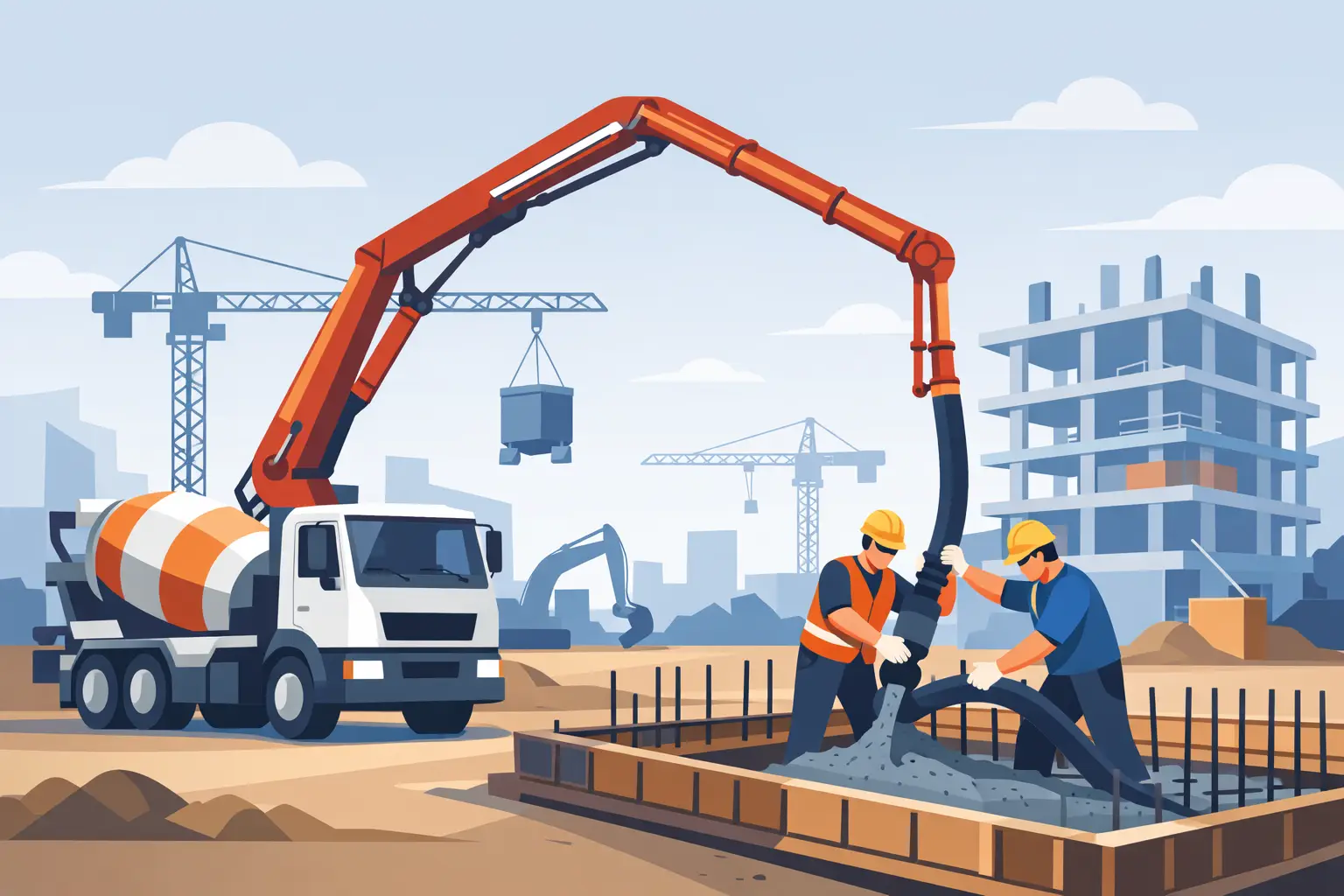
How Does Concrete Pumping Work on a Jobsite?

A foundation crew is ready, the concrete trucks are booked, and the forms cannot wait. But the pour location is behind a house, across a rough lot, or several storeys above grade. That is where the question, how does concrete pumping work, becomes a practical jobsite issue instead of a technical one. A concrete pump moves ready-mix concrete from the delivery truck to the exact placement point through a boom or pipeline, cutting out repeated wheelbarrow runs, chute repositioning, and the labour bottlenecks that slow a pour down.
For contractors and property owners across Central Alberta, pumping is often the difference between placing concrete steadily and fighting access all day. The right pump, a prepared site, and an experienced operator keep the concrete moving where the crew needs it.
How Does Concrete Pumping Work From Truck to Forms?
Concrete arrives on site in a ready-mix truck with the drum turning to keep the material uniform. The truck backs into position beside the concrete pump, then discharges concrete into the pump's hopper. The hopper is the receiving basin at the rear of the pump truck or line pump.
Inside the hopper, an agitator keeps the concrete moving toward the pumping system. A hydraulic pump drives two large material cylinders. While one cylinder draws concrete in, the other pushes concrete into the delivery line. A switching valve directs the flow from one cylinder to the other, creating a steady sequence of strokes that moves concrete through the system.
This is not a continuous stream in the same way water runs through a hose. It is a controlled series of hydraulic strokes. At the discharge end, the crew sees a consistent flow that can be directed into footings, walls, slab forms, piles, or other placement areas.
Before regular concrete enters the line, the operator primes the system. Priming material coats the inside of the pipe and helps the concrete move smoothly without separating or binding. Skipping this step can lead to a blockage, lost time, and a much harder cleanup. Good pumping starts before the first cubic metre of concrete reaches the hopper.
Boom Pumps Carry Concrete Over and Around Obstacles
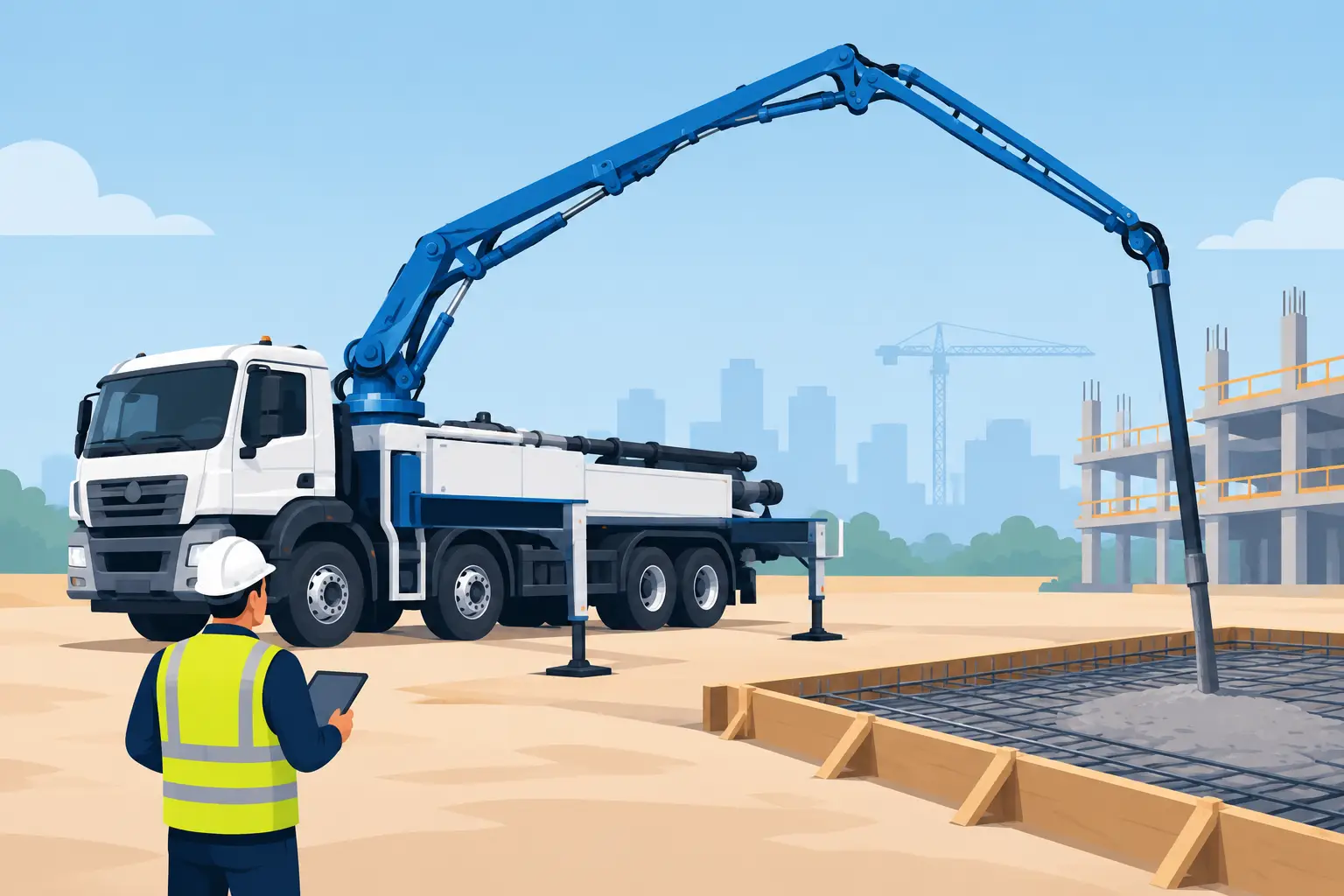
A boom pump uses a multi-section hydraulic arm mounted on a truck. The operator unfolds the boom, positions it above the pour area, and controls the end hose from a remote control. Delivery pipe runs along the boom, carrying concrete from the hopper to the hose.
Boom pumps are built for reach and coverage. They are a strong fit for large slabs, commercial foundations, elevated work, retaining walls, and sites where concrete needs to travel over houses, fences, excavation edges, stockpiles, or existing structures. Rather than moving the ready-mix truck repeatedly, the operator can reposition the boom across the pour area.
The truck must be set up on stable ground with enough room for outriggers. Outriggers spread the truck's load and stabilize the machine while the boom is working. Site access matters here. The operator needs to consider overhead power lines, soft ground, underground services, traffic routes, formwork, and the path needed to extend the boom safely.
Boom reach is useful, but it is not the only factor. A larger boom is not automatically the best choice for every site. Tight urban lots, narrow approaches, low overhead clearance, and restricted setup areas may call for a compact roll-and-fold boom pump instead. The best equipment is the equipment that can get in, set up safely, and place concrete without creating another problem for the crew.
Line Pumps Handle Tight Access and Precise Placement
A line pump moves concrete through steel or flexible hose laid along the ground. Unlike a boom pump, it does not rely on an articulated boom to carry the line to the pour. This makes it a practical option where access is restricted, the placement point is around a building, or the crew needs a controlled hose run into a difficult location.
A truck-mounted line pump can be especially useful for basement floors, garages, additions, shops, small slabs, footings behind existing homes, agricultural buildings, and locations with limited overhead room. On rough or remote ground, a 4x4 line pump can offer a workable solution when a larger boom truck cannot access the site.
The trade-off is setup. Hoses and pipe need to be routed properly, supported where required, and kept clear of traffic and sharp bends. The longer the line and the more elevation or turns involved, the more pressure the system needs to overcome. That affects pump selection, line layout, and the concrete mix specified for the pour.
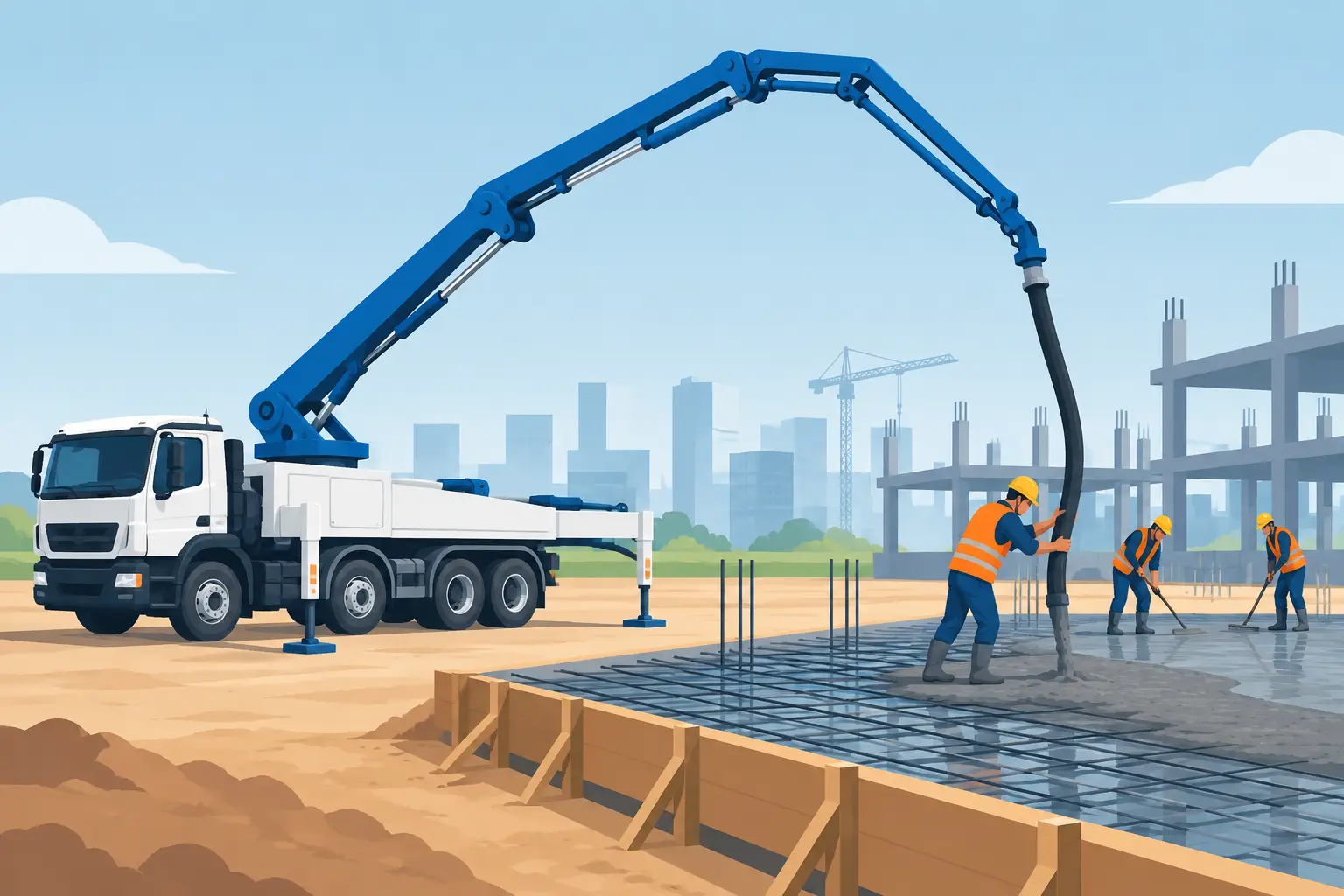
The discharge hose is still a working piece of equipment. It can be heavy, and pressure changes can cause movement at the hose end. The placing crew needs clear communication with the operator, firm footing, and a plan for where the hose will travel as the pour progresses.
The Concrete Mix Has to Be Pumpable
Not every concrete mix behaves the same way inside a pump line. Aggregate size, slump, cement content, admixtures, air entrainment, and temperature all affect pumpability. A mix can be strong enough for the finished structure but still create trouble if it is not suited to the line size, pump pressure, and placement method.
The goal is a cohesive mix that moves through the system without excessive segregation, bleeding, or blockage. Aggregate must be sized appropriately for the pipeline. The concrete supplier, contractor, and pump operator should be working from the same plan before the trucks arrive.
Water is not a quick fix for a difficult pump. Adding too much water at the site can change strength, finish, air content, and shrinkage performance. If adjustments are needed, they should be handled properly and documented according to the project requirements. This matters even more during Alberta temperature swings, when hot weather can shorten working time and cold conditions demand closer attention to concrete protection.
What Happens During the Pour
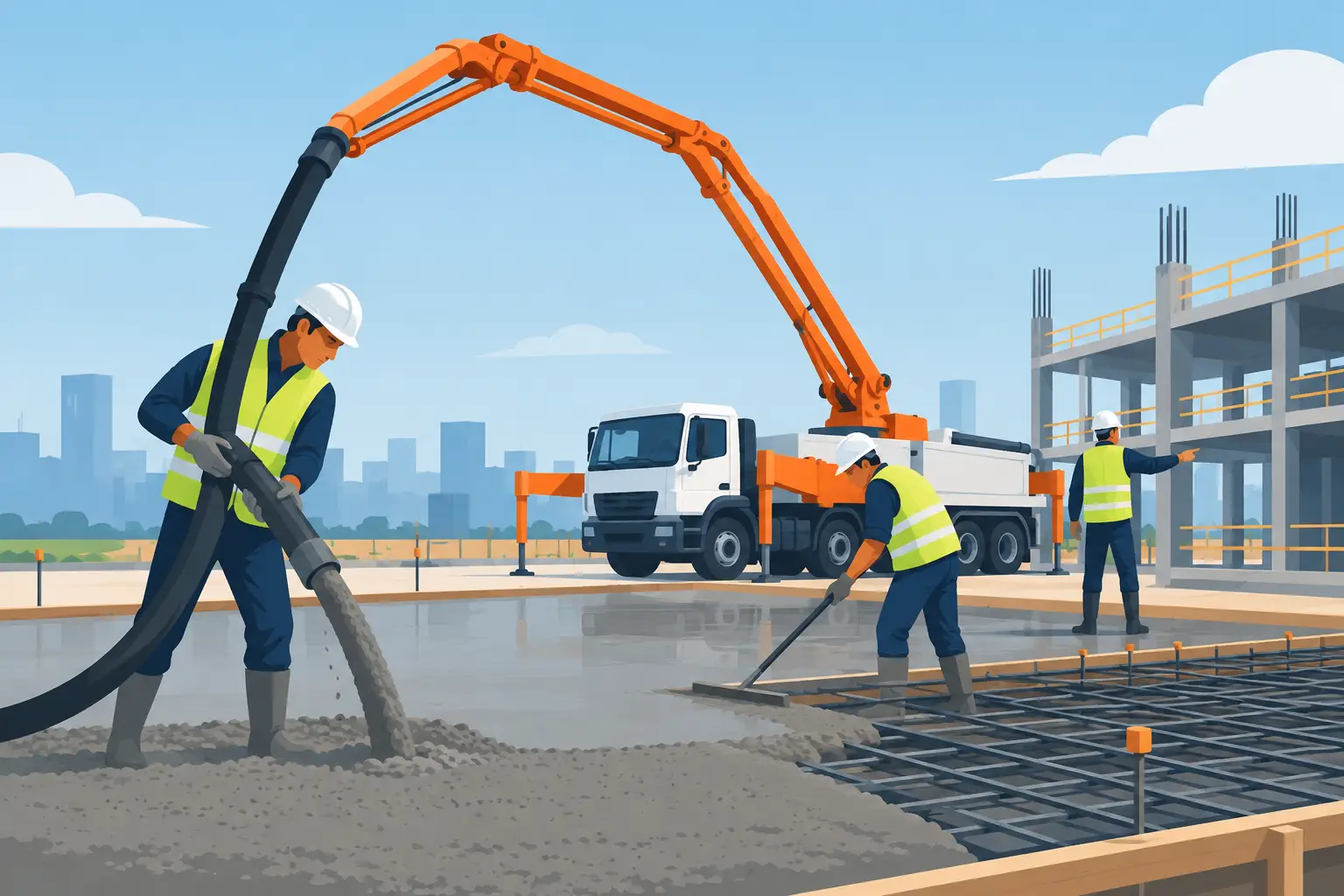
Once the pump is primed and the first truck begins discharging, the operator manages the pump output while the placing crew directs the hose. Concrete should be placed close to its final position instead of being pushed long distances with rakes. That reduces segregation and helps the crew maintain consistent depth and elevation.
For a slab, the hose works ahead of the screed crew so concrete is placed at a manageable pace. For walls and columns, the crew places in controlled lifts to avoid overloading forms. For footings, the hose can follow the excavation route and place concrete directly where it is needed without workers hauling material through uneven ground.
Communication is central to a clean pour. The operator needs to know when to start, stop, slow down, or move to the next section. The crew needs warning before the hose shifts. The ready-mix drivers need a clear staging plan so the next truck can arrive without blocking access or leaving a gap in supply.
A reliable pump service is more than sending a truck. Bandit Concrete Pumping matches boom and line-pump capability to the site so crews can focus on placing, consolidating, finishing, and protecting the concrete rather than fighting the delivery route.
Safety Comes Before Reach and Speed
Concrete pumping puts high pressure, moving equipment, suspended boom sections, and active truck traffic in one work area. That requires a controlled setup and operators who will stop when conditions are not right.
The most serious hazards include overhead power lines, unstable ground, improper outrigger support, damaged line components, pinch points, hose whip, and unauthorized workers near the pump. A line blockage must never be treated casually. Pressure must be relieved using the correct procedure before anyone opens a clamp or checks a line.
Formwork also deserves attention. Faster placement can expose weak bracing or poorly planned wall pours. The crew should know the designed pour rate and follow it. Pumping lets concrete arrive quickly, but the forms, finishers, and consolidation crew still set the workable pace.
Cleanup Is Part of the Service
When the final load is placed, the pump line must be cleaned before concrete hardens inside it. The operator clears the hopper and pushes a cleaning ball through the pipeline using water and controlled pressure. Residual concrete and wash water need to be managed in an approved location, not washed into streets, storm drains, or neighbouring property.
A clean site protects the next trade, reduces avoidable labour, and reflects well on the contractor. It also helps the pump crew inspect lines, clamps, hoses, and wear parts before the next job.
Planning a Pumped Pour That Stays on Schedule
The best time to solve pumping issues is before the first truck is dispatched. Confirm the concrete volume, pour sequence, mix design, truck access, pump setup area, line route, overhead clearance, washout location, and crew readiness. If the project has unusual access, steep grades, long line runs, or a high-volume placement target, discuss it early.
Concrete pumping works because it combines hydraulic force with proper planning and skilled placement. Give the pump operator a clear picture of the site, keep the placement crew ready, and choose equipment that fits the route from truck to forms. That preparation gives the concrete its best chance of arriving on time, landing accurately, and finishing the way the project demands.