(587) 703-6048


Foundation Concrete Pumping That Keeps Pours Moving

A foundation crew can have forms set, rebar tied and concrete booked, then lose valuable hours because placement cannot keep up with the pour. Foundation concrete pumping removes that bottleneck by moving concrete directly from the truck to the forms, footings, walls or slab area with controlled reach and a steady flow.
For builders and contractors across Central Alberta, the value is straightforward: fewer labourers moving concrete, less mess around the site, and better control where the concrete lands. But a pump is not a one-size-fits-all answer. The right equipment, access plan and pour sequence matter just as much as the pump itself.
Why Foundation Concrete Pumping Changes the Pour
Foundation work has little room for delays. Concrete arrives on a clock, crews need to maintain placement rates, and forms need to be filled evenly without creating avoidable cold joints. When access is poor, relying on a ready-mix truck chute or wheelbarrows can turn a manageable pour into a labour-heavy scramble.
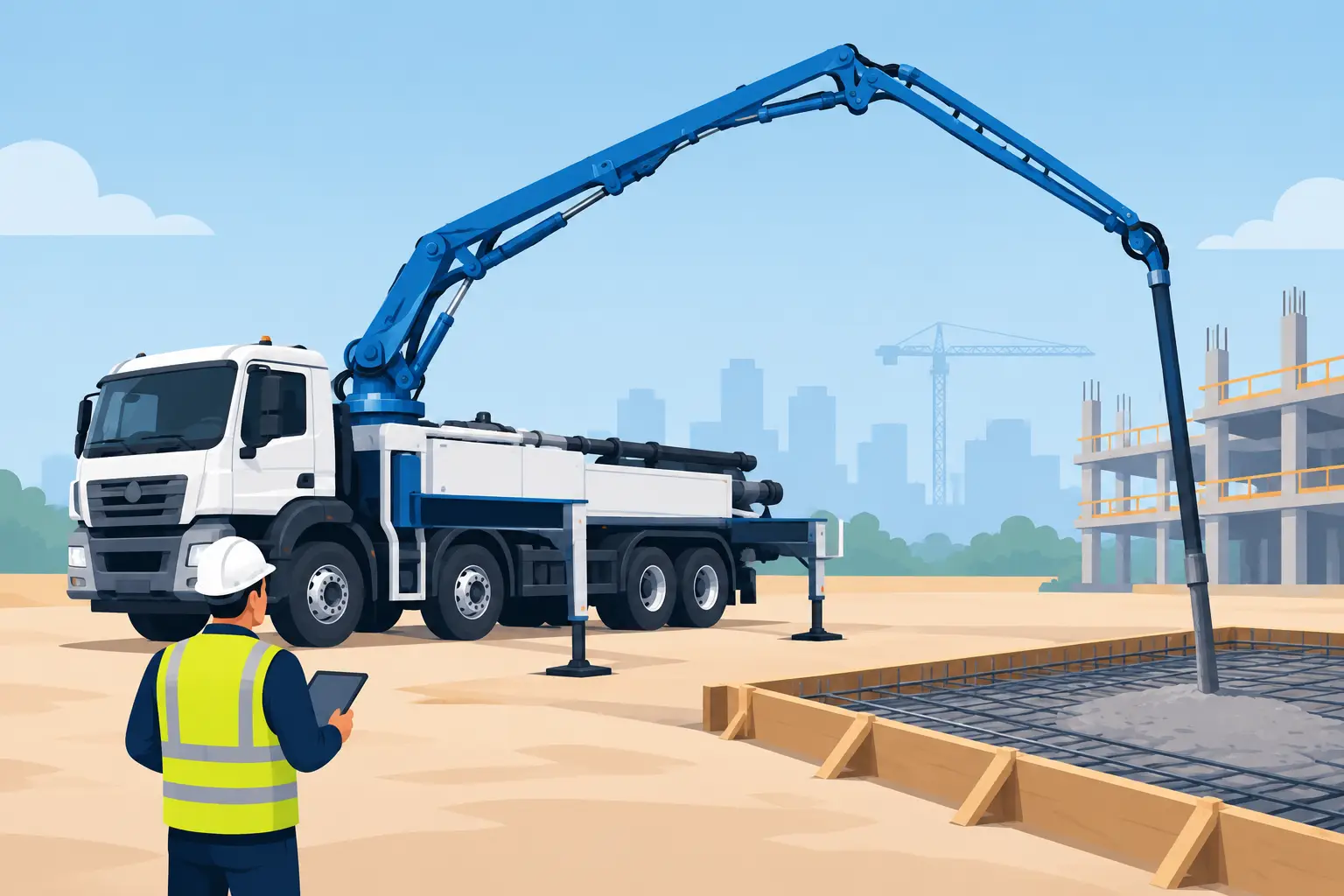
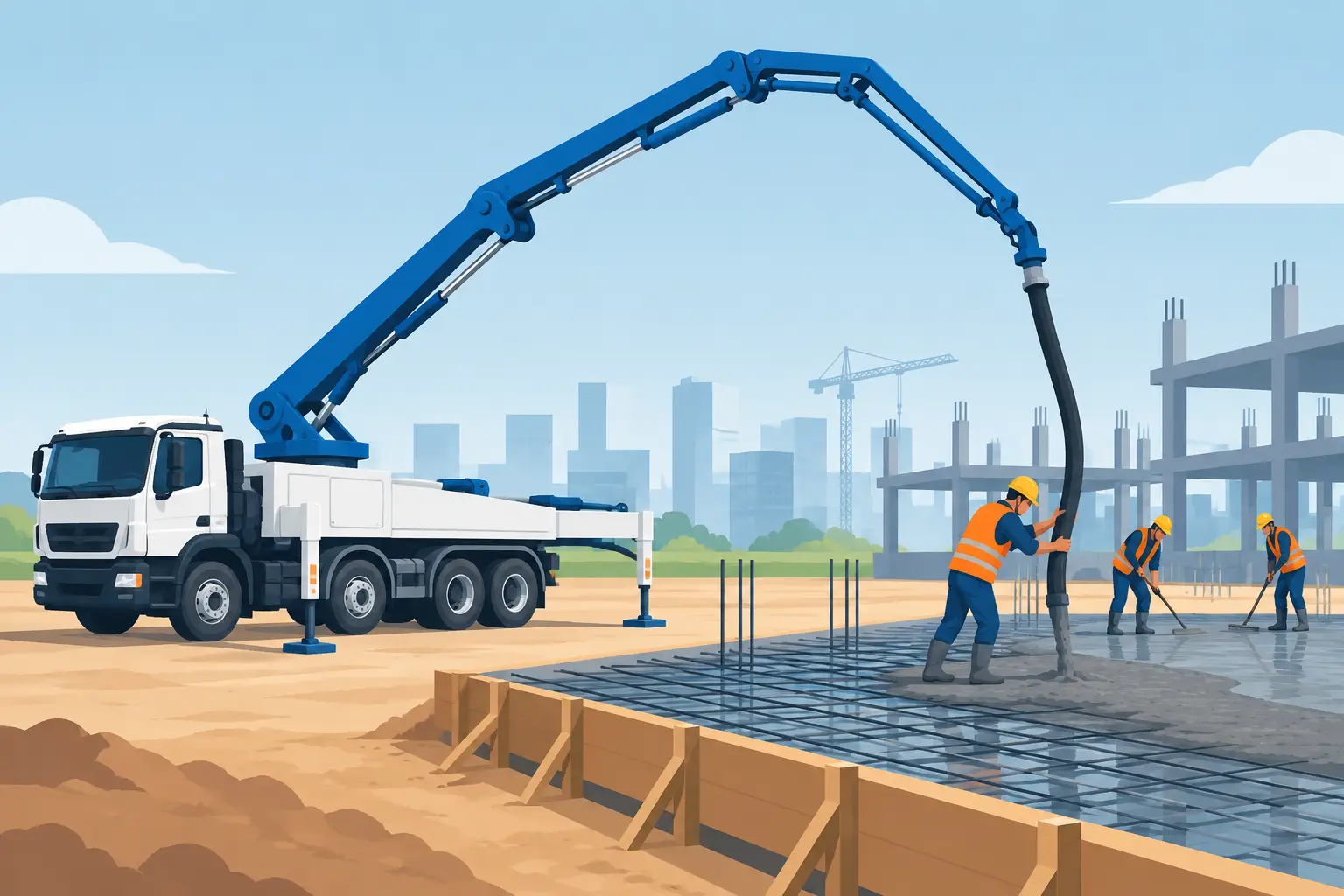
A concrete pump extends the reach of the delivery truck. A boom pump can place concrete over a house, around excavation edges, across a large footprint or into areas that a truck cannot physically reach. A truck-mounted line pump can carry concrete through hose where precision and restricted access are the main concerns.
That reach does more than save steps. It helps keep the placing crew focused on the work that affects the finished product: managing the hose, consolidating concrete properly, monitoring form pressure and maintaining a consistent level. The result is a smoother operation from the first footing to the last wall section.
Pumping also reduces traffic around the excavation. Fewer wheelbarrows and fewer people working near uneven ground can make a crowded residential site safer and easier to manage. On commercial, agricultural and industrial work, the same benefit applies at a larger scale: concrete can be placed without constantly repositioning equipment or disrupting other trades.
Choosing the Right Pump for the Foundation
The best pump depends on the site, not simply the size of the pour. A large boom truck offers broad coverage and can be the efficient choice when there is room to set up beside the excavation or along a roadway. It is well suited to foundation walls, basement slabs, large garages, shops and projects where the pump must cover multiple placement areas from one position.
Restricted lots call for a different approach. Infill homes, narrow side yards, established neighbourhoods and sites with overhead obstacles may require compact roll-and-fold boom equipment. The goal is not to bring the largest pump possible. It is to bring a pump that can set up safely, clear the required obstacles and reach the work without forcing last-minute compromises.
A 4x4 line pump is often the practical answer when the route to the pour is tight or rough. It can be especially useful for backyard additions, remote acreage work, small foundations, grade beams and locations where a boom truck cannot get into position. Hoses can be run around buildings and through difficult access routes, giving the crew direct placement where it is needed.
There are trade-offs. A boom pump can cover more ground quickly, but it needs sufficient setup space and safe outrigger placement. A line pump can work in tighter conditions, but hose routing, labour at the hose and line length need to be planned carefully. Sharing site details before booking helps determine which setup will move the pour forward rather than create a new constraint.
Access Is Part of the Equipment Decision
Before a pump arrives, look beyond the foundation forms. Consider the approach road, truck turning radius, ground conditions, overhead power lines, neighbouring structures, excavation setbacks and the area needed for ready-mix trucks to cycle through.
Soft ground and wet weather can change a setup plan quickly. Alberta jobsites can go from dry to muddy in a short stretch of weather, particularly on rural builds and new subdivisions. A pump operator needs firm, workable ground and a clear route to work safely. If site access is questionable, raise it early. A short conversation before dispatch is easier than trying to solve an access problem with concrete trucks waiting.
The same applies to the batch plant schedule. The pump, concrete supplier and foundation crew should be working to the same plan. If trucks arrive too close together, the site can become congested. If they arrive too far apart, the crew may struggle to maintain a continuous pour. Good pumping supports a good concrete schedule, but it cannot replace one.
What a Clean, Controlled Foundation Pour Looks Like
The strongest foundation pours are planned around placement, not just volume. That means deciding where the hose starts, how the crew will move through each section, where concrete trucks will enter and exit, and who is responsible for directing the pour.
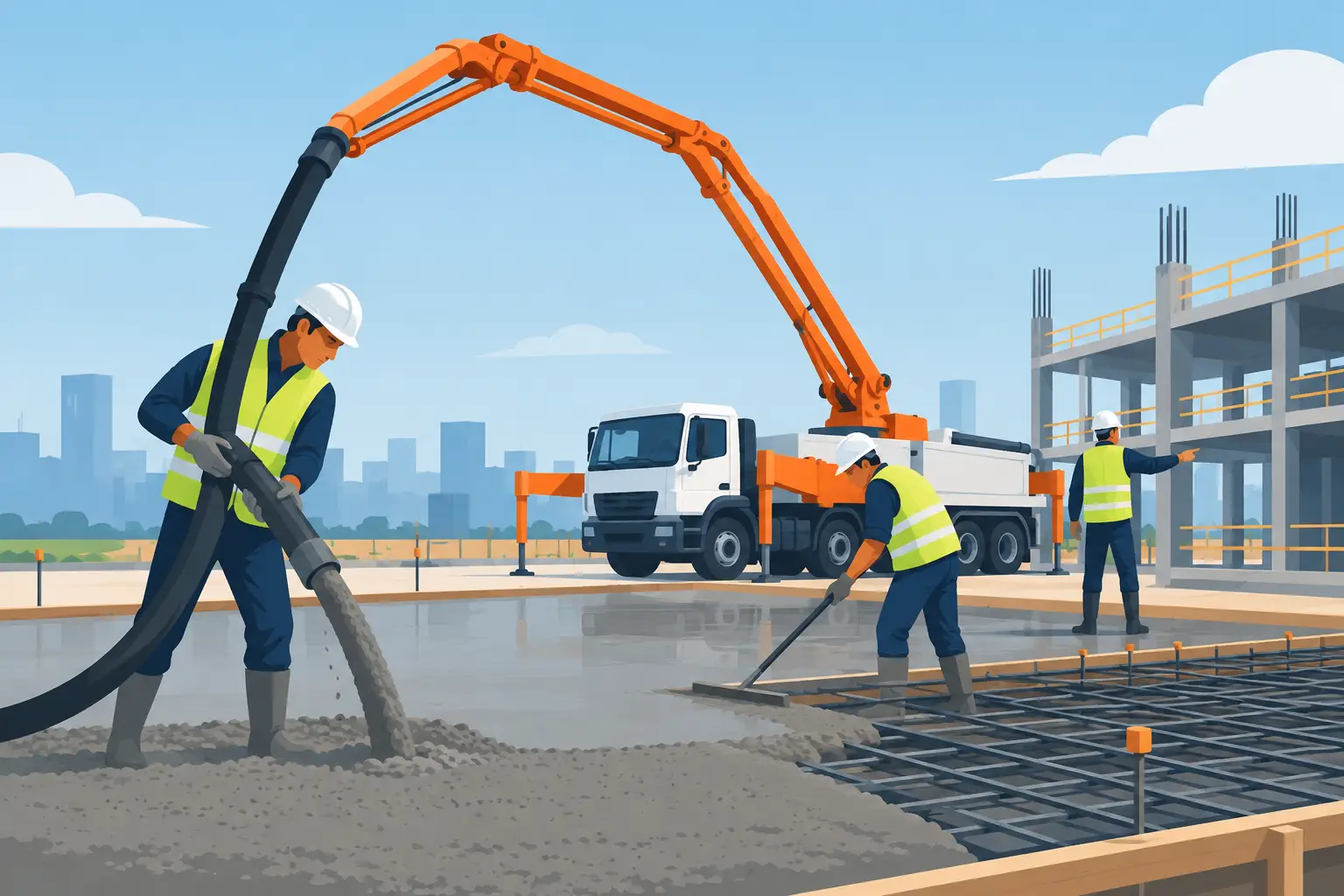
For footings, controlled placement helps keep concrete inside the form rather than spread across the excavation floor. This limits cleanup and keeps the crew from having to rehandle material. For foundation walls, placing in manageable lifts helps control pressure on forms and gives the crew time to vibrate properly without chasing a fast-moving stream of concrete.
Slabs require the same discipline. The hose should place concrete close to its final position so the finishing crew is not dragging excess material across long distances. Less unnecessary movement helps preserve grade, reduces waste and gives finishers a more consistent surface to work with.
Pumping does not eliminate the need for a capable concrete crew. Forms still need to be secure, rebar needs to be ready, vibrators need to be on hand, and the crew needs a clear plan for washout and cleanup. What pumping does is remove the inefficient transport step between the truck and the work.
Keep the Operator in the Plan
An experienced pump operator is not just there to unfold a boom and run the controls. The operator helps assess safe setup, manages the equipment during placement and works with the concrete crew to keep the pour moving at the right pace.
Give the operator accurate information before arrival: foundation type, approximate concrete volume, requested pour date and time, site address, access route, known overhead hazards and any special placement requirements. Site photos are useful when access is tight, but they should show the full approach as well as the pour area.
On pour day, maintain a clear point of contact. The pump operator needs to know who is directing placement, while the site lead needs to know if conditions change. Direct communication prevents small issues, such as a blocked truck route or a hose path crossing fresh concrete, from becoming expensive delays.
Cost Control Is More Than the Pump Rate
Some projects focus only on the hourly pump cost and miss the larger picture. The real comparison is between the cost of pumping and the full cost of moving concrete by other methods. That includes added labour, slower placement, potential waste, site cleanup, finishing delays and the risk of trucks waiting while the crew falls behind.
On a small, open job with easy chute access, a pump may not always be necessary. On a basement foundation behind a house, a multi-section wall pour, a shop slab with limited access or a site where the crew would otherwise wheelbarrow concrete for hours, the calculation changes quickly.
Pumping can also protect the schedule. A faster, cleaner pour allows crews to move on to stripping forms, waterproofing, backfilling and the next stage of construction sooner. That value is difficult to see on a single invoice, but it matters when several trades are lined up behind the foundation crew.
Bandit Concrete Pumping matches boom and line-pump capability to the jobsite so contractors are not forced to make a poor fit work. The aim is simple: put concrete where it needs to go safely, accurately and without turning placement into the longest part of the day.
Prepare Before the Trucks Roll
A reliable foundation pour starts with a site that is actually ready. Confirm forms, rebar, blockouts and embeds are inspected before concrete is on the road. Make sure there is a firm pump setup area, a clear truck route, room for ready-mix trucks to stage and a washout plan that meets site requirements.
Check the weather as well. Cold conditions, heat, wind and rain affect concrete handling, finishing and curing. The pump can keep placement efficient, but the foundation crew still needs to plan for the concrete mix, protection measures and finishing conditions appropriate to the day.
When booking, be specific about the job rather than estimating from a general description. A clear picture of access, volume, foundation layout and timing gives the pumping crew the information needed to arrive prepared. That preparation is what keeps concrete moving when the first truck turns onto the site.