 (587) 703-6048
Farm Building Concrete Pumping That Keeps Work Moving

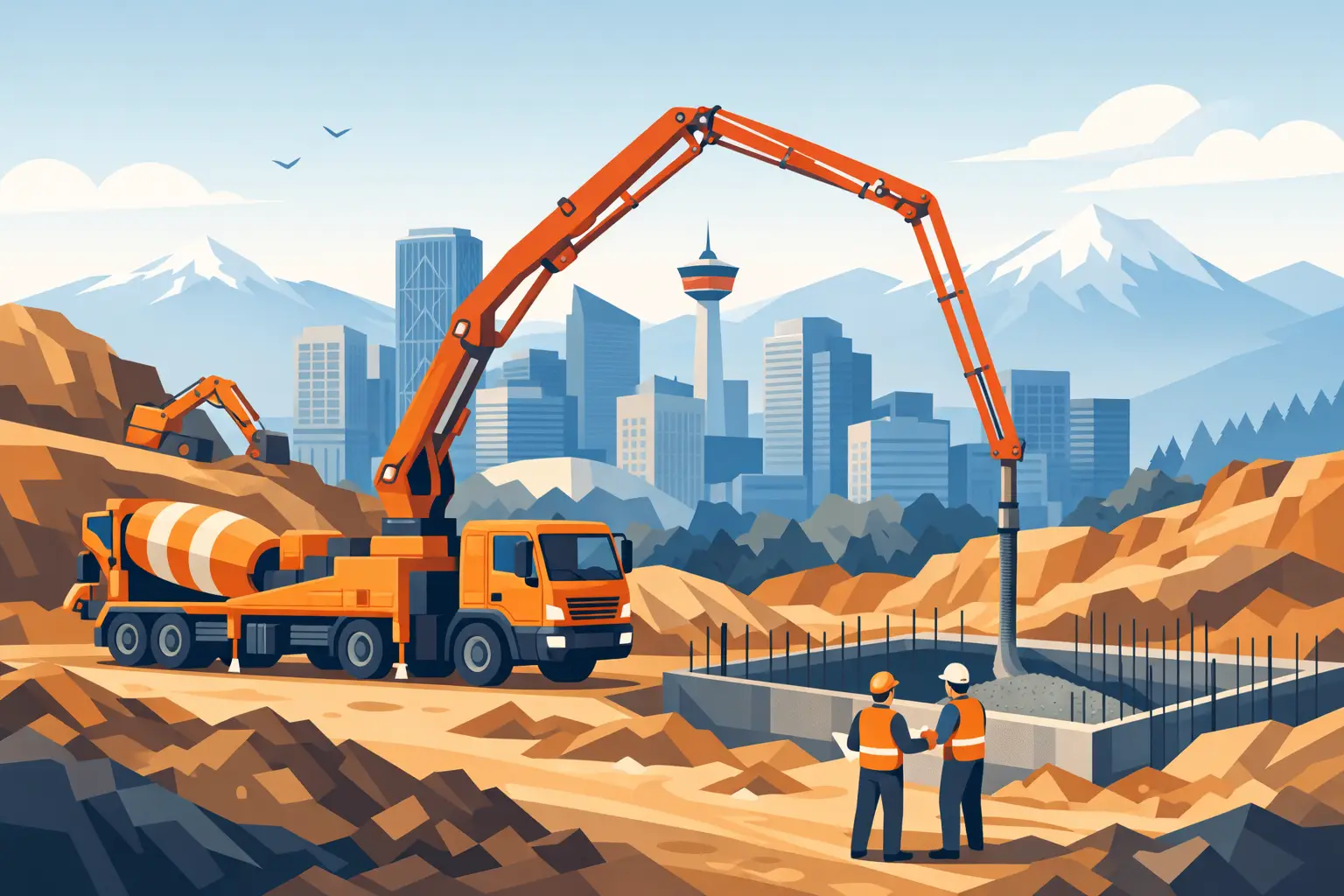
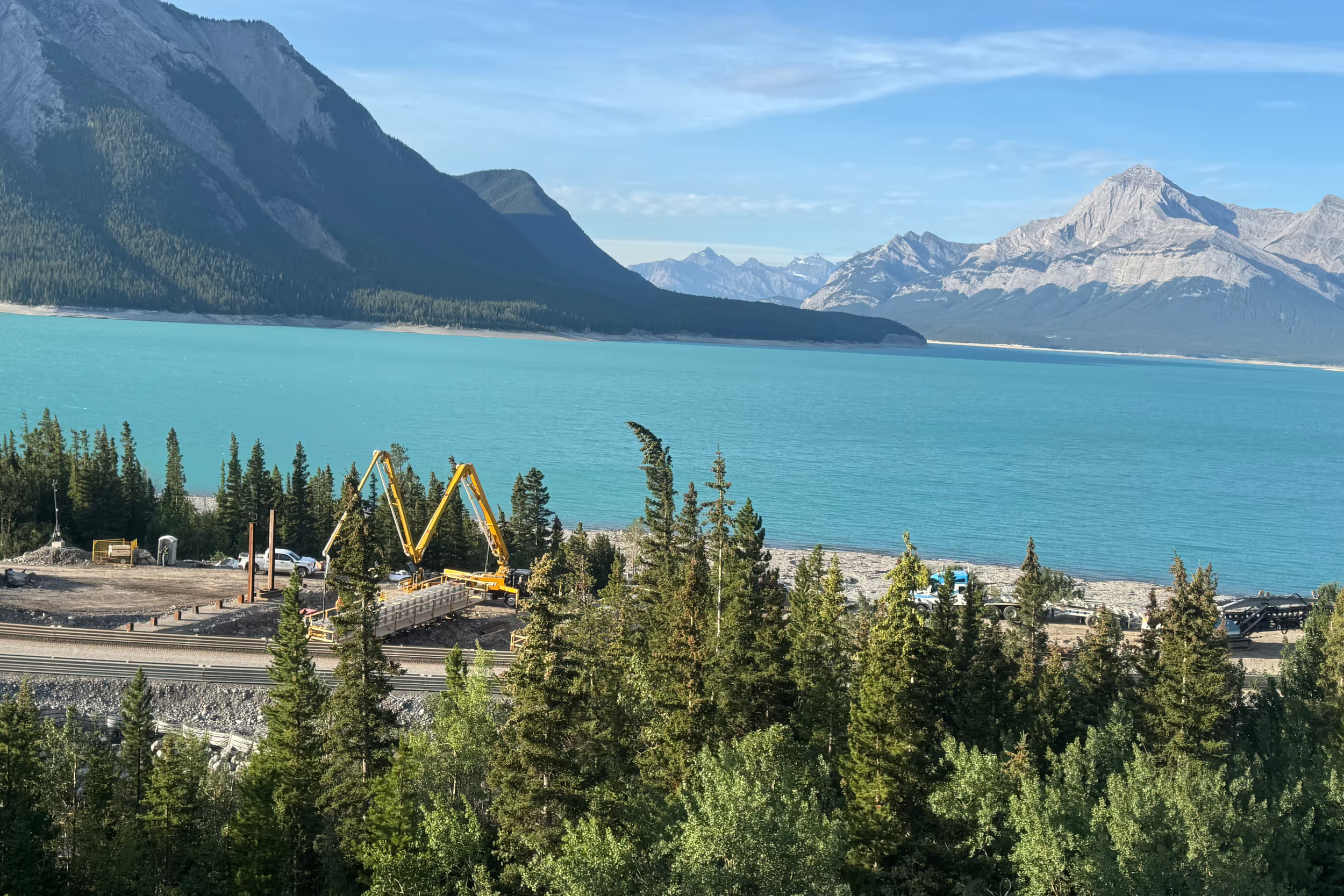
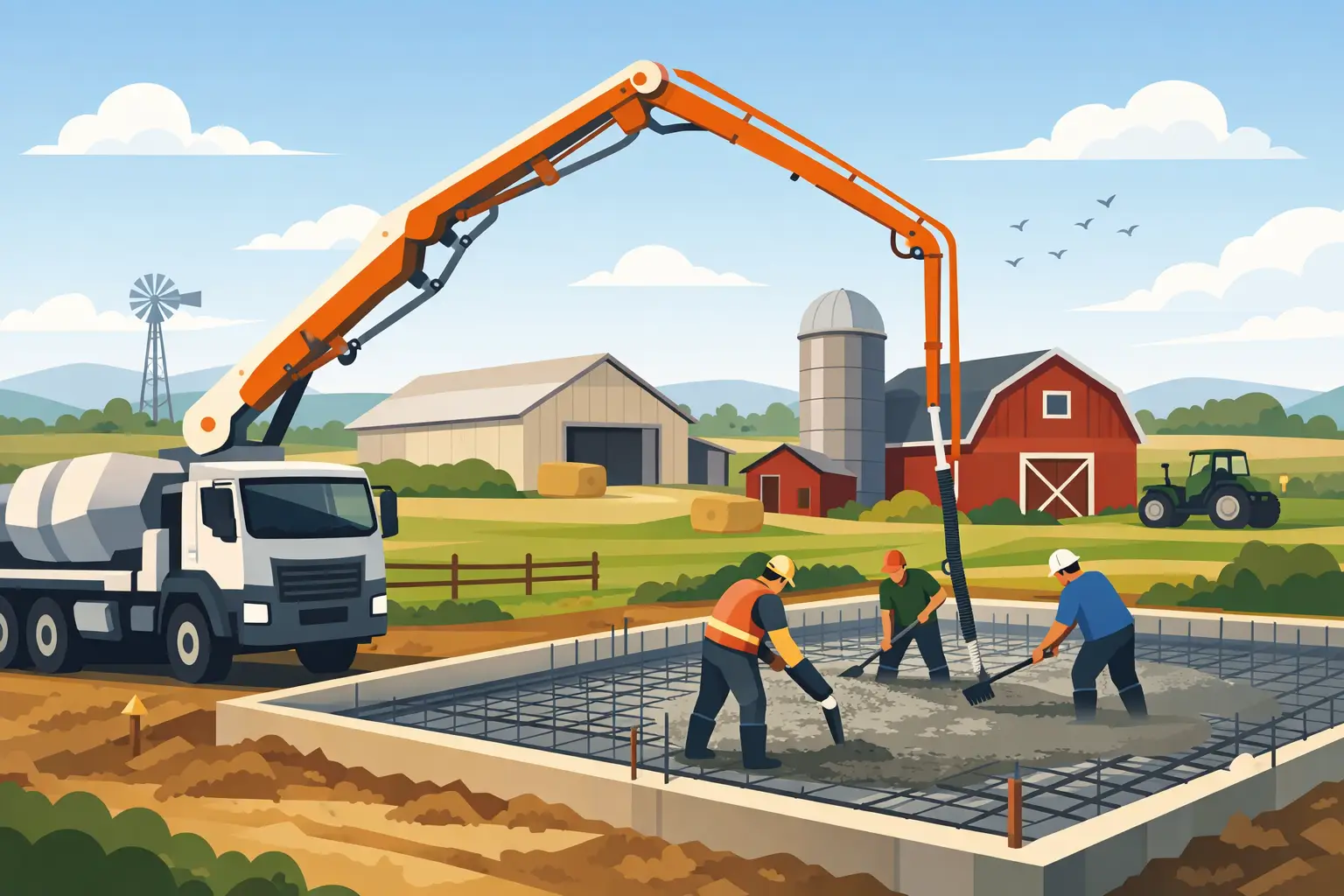
A farm pour rarely happens on an easy site. The new shop may sit well beyond the road, the feed pad may be boxed between existing buildings, or the calving barn addition may need concrete placed without turning the whole yard into a cleanup job. Farm building concrete pumping gives contractors and agricultural operators a practical way to get concrete where it needs to go, quickly and with control.
For foundations, slabs, walls, equipment pads and manure-management structures, the pump is not just a faster alternative to wheelbarrows. It can reduce the labour tied up in the pour, protect finished areas and help the placing crew keep a consistent pace from the first load to the last.
Where farm building concrete pumping earns its keep
Agricultural buildings demand concrete that can handle real use. Shop slabs carry trucks, tractors and implements. Livestock facilities face moisture, traffic and aggressive cleanup. Grain-handling pads, bin foundations and retaining walls need accurate placement and proper consolidation. A poor pour can create expensive problems long after the crew leaves the site.
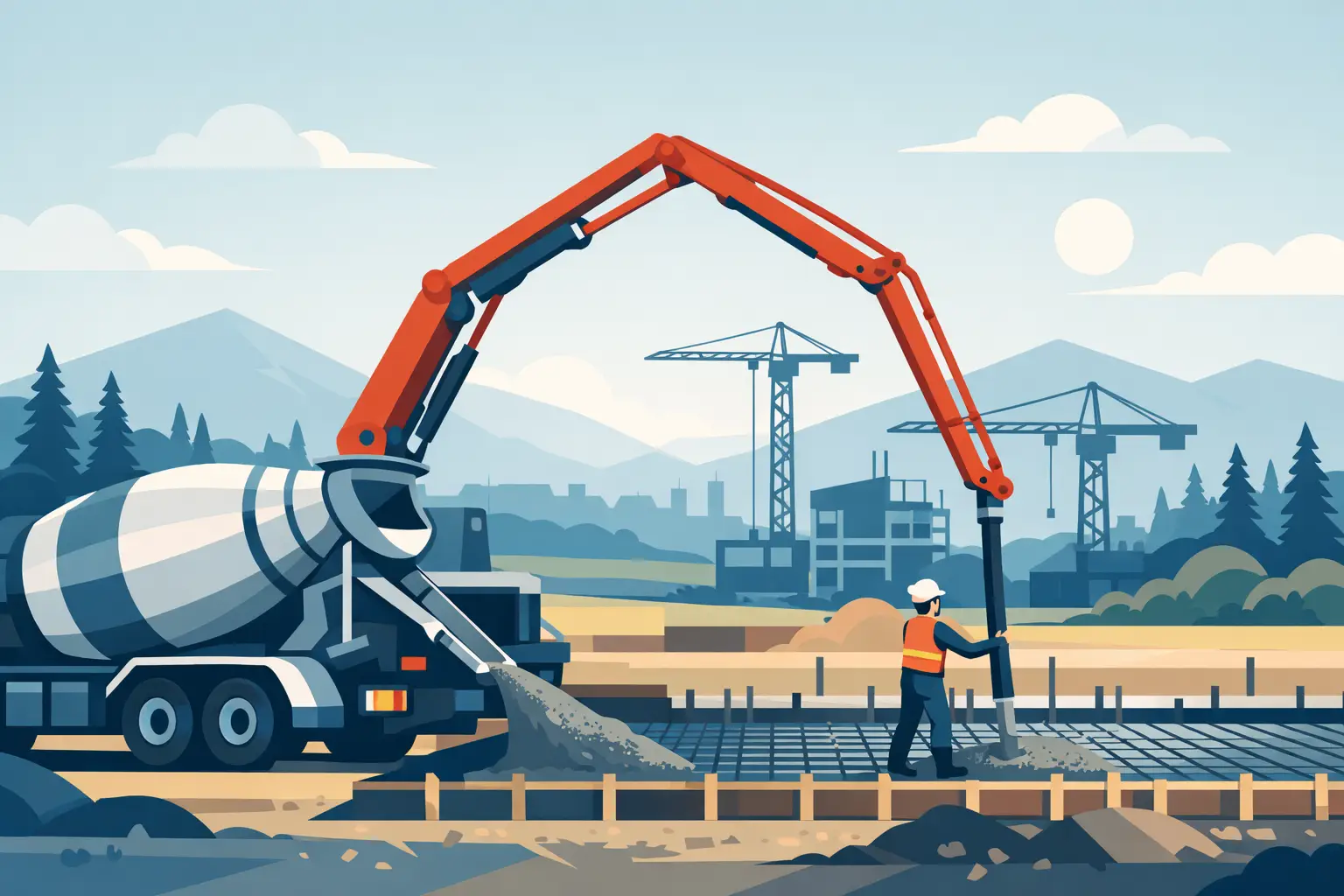
Pumping helps place concrete directly at the point of work. Instead of relying on a ready-mix truck chute, a crew can reach across a building footprint, over forms or around equipment. That matters when the truck cannot back close to the pour, when the ground is soft, or when access through the yard needs to stay open.
The gain is not simply distance. Controlled placement allows the crew to keep concrete moving without repeatedly dragging it across forms with rakes. Less unnecessary handling helps maintain the mix where it belongs and gives finishers a better chance to stay ahead of the pour.
Typical farm applications
Farm building concrete pumping suits a wide range of work across Central Alberta, including new shop and machinery-shed slabs, barn and livestock-building foundations, bin pads, feed alleys, equipment pads, retaining walls, manure pits, silage-bunker work and additions to existing structures.
Each application has different demands. A broad shop slab may call for a boom pump that covers most of the floor area from one setup position. A confined barn renovation may be better suited to a compact boom or line pump that can work around buildings, pens and tight lanes. The right choice comes down to access, volume, reach, concrete mix and how the placing crew plans to finish the work.
Start with access, not the concrete order
The pump works best when access is discussed before trucks are booked. On a farm site, the route from the road to the pour can be the deciding factor. Narrow approaches, low power lines, soft shoulders, gates, overhead structures and active livestock areas all affect where a pump can set up and how ready-mix trucks can cycle through.
A proper site review considers the pump’s setup area, including stable ground for outriggers, as well as the travel path for concrete trucks. It also considers the distance between the pump and the forms. A boom pump may provide the cleanest, fastest placement solution, but only if there is room to position it safely. When access is restricted, a truck-mounted line pump can place concrete through hose to reach locations that a larger unit cannot cover effectively.
Do not assume a pump can set up on recently placed fill or a wet yard just because it looks firm at the surface. Pump trucks are heavy, and their outriggers need solid support. If the ground condition is questionable, deal with it before pour day. Building a stable setup area is much cheaper than recovering a stuck truck or delaying a full line of concrete loads.
Match the pump to the building and the site
There is no single pump configuration that fits every agricultural project. Bigger reach is useful on large slabs and wide building footprints, but a compact machine may be the better tool where overhead clearance and access are limited.
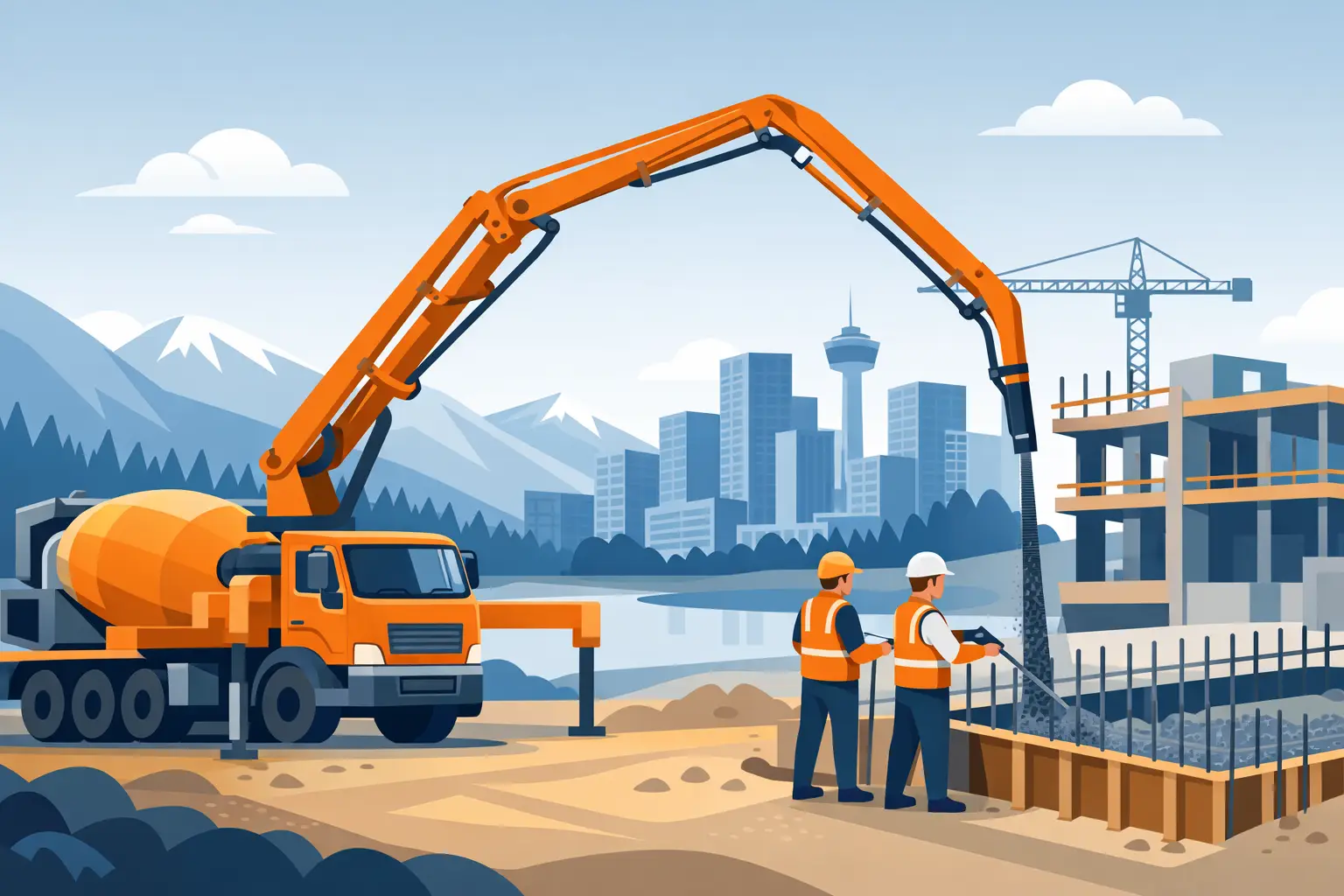
A high-reach boom pump can cover a large area efficiently, reducing hose moves and keeping the placement crew working steadily. This can be particularly valuable for shop floors, large livestock barns and expansive yard slabs where a continuous pour supports a more consistent finished surface.
Compact roll-and-fold boom equipment is useful when the pump must work in a tighter setup area. It can be a strong choice for additions, enclosed yards and sites where buildings, trees or services limit boom movement.
A 4x4 line pump has its own place on farm work. It is well suited to precise placement along footings, in difficult corners and at sites with limited access. It may require more hose handling than a boom pump, but it can solve placement problems that would otherwise mean excessive labour, extra equipment or a less efficient pour plan.
The lowest pump rate is not always the lowest overall cost. A pump that cannot reach the work well can add labour, slow finishing and create unnecessary hose moves. The best setup is the one that gives the concrete crew reliable placement without putting pressure on the forms, finishers or truck schedule.
Plan the pour around the finish crew
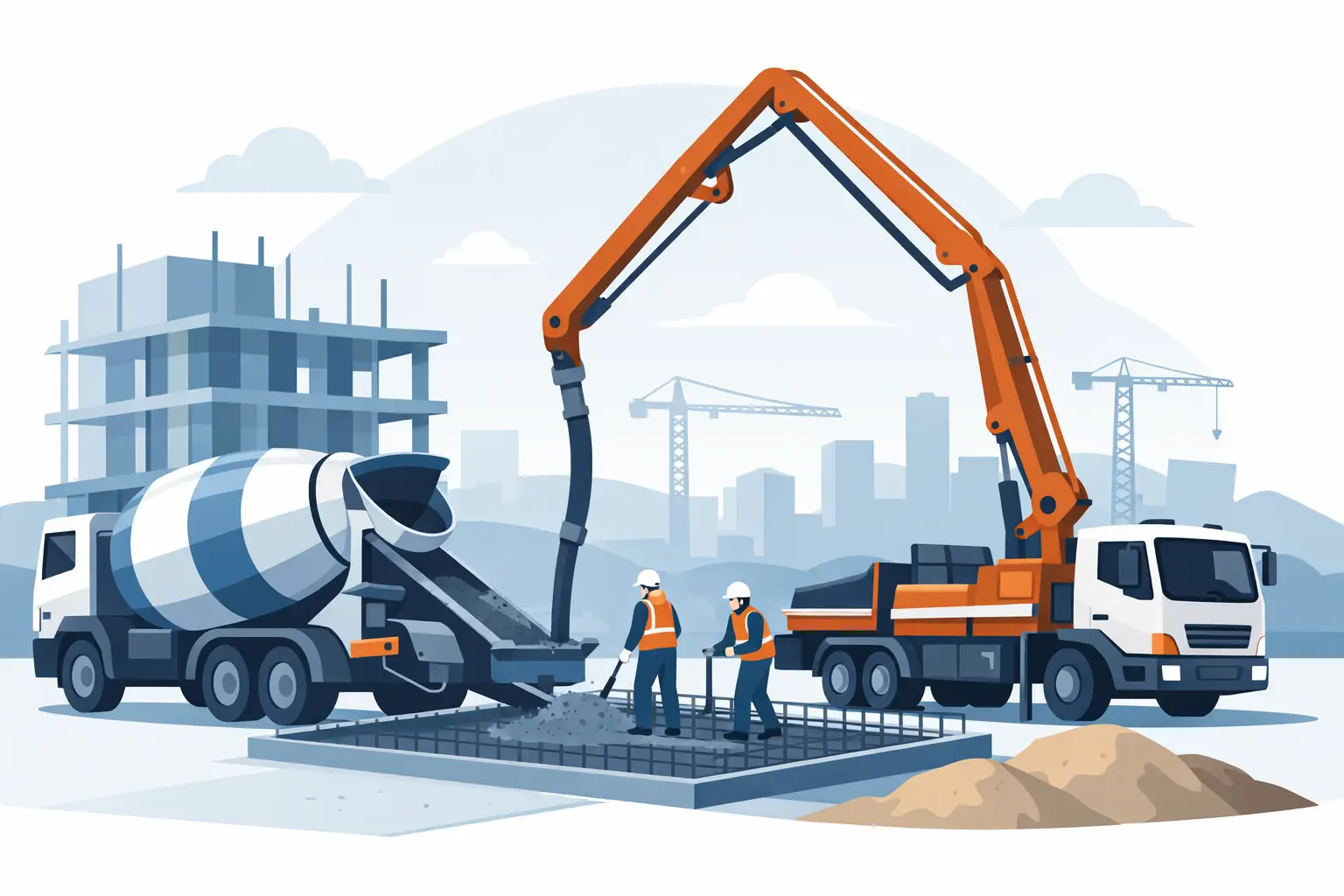
Concrete pumping can move material quickly. That is an advantage only when the crew, forms and finishing plan are ready for it. Before the first truck arrives, confirm that forms are secure, reinforcement is complete, embeds are checked and access for finishers is clear.
For slabs, the crew needs a placement sequence that avoids boxing itself into a corner. The pump operator and concrete foreman should know where the pour starts, where it ends and how the hose will move as the work advances. On larger floors, planning the truck order and expected discharge pace helps prevent long gaps that can create finishing issues.
The concrete mix matters too. Pumpable concrete must be specified correctly for the application and the placement method. Aggregate size, slump, admixtures and fibre content can all affect how the mix travels through the system. Do not make field changes without speaking to the ready-mix supplier and the placing team. Adding water on site to make concrete easier to move can compromise strength, finish quality and long-term performance.
Weather deserves the same attention. Alberta conditions can shift quickly, especially on exposed rural sites. Hot, dry wind may speed surface drying, while cold conditions can affect set time and protection requirements. Pumping gets the concrete placed efficiently, but curing, finishing and cold-weather procedures still determine whether the slab performs as intended.
Keep the jobsite working while the pour happens
Farm operations do not always stop for construction. Feed deliveries, livestock movement, equipment traffic and family access can continue around the work area. A pump can help reduce disruption by allowing concrete trucks to stay in a designated position rather than driving close to every section of the pour.
That said, a pump pour still needs a controlled work zone. Keep people clear of the boom, hose and truck traffic. Identify overhead electrical hazards before setup. Maintain a clean route for ready-mix trucks, and keep non-essential vehicles away from the placing area. If livestock are nearby, plan gates, noise and movement well in advance so the pour does not become a problem for the operation.
Cleanliness also affects the final cost of the job. Proper washout planning and careful hose handling limit concrete residue in lanes, finished gravel and working yards. The goal is to place the concrete accurately, complete the finishing work and leave the site ready for the next phase rather than creating a second cleanup project.
Use an experienced operator as part of the crew
A concrete pump is only as useful as the person operating it. The operator controls boom movement, pump output and the pace at which concrete reaches the crew. On agricultural projects, that experience becomes especially valuable when access is irregular and site conditions change through the day.
A skilled operator works with the foreman instead of simply waiting for instructions. They can help position the equipment, manage hose movement, adjust delivery pace and flag issues before they turn into delays. That coordination protects the forms, reduces waste and makes the work easier on finishers.
Bandit Concrete Pumping provides the equipment and experienced operators needed to place concrete safely and accurately on farm sites across Central Alberta. The useful conversation happens before the trucks arrive: what is being built, where the pump can set up, how the concrete will travel and what the crew needs to keep the pour on schedule.
When the building is expected to carry livestock, machinery or daily farm traffic for decades, give the placement plan the same attention as the forms and reinforcement. A well-planned pump pour keeps concrete moving, keeps the crew productive and gives the finished work a better start.