(587) 703-6048

Does Concrete Pumping Reduce Labour on Site?

A six-person crew moving concrete by wheelbarrow can fall behind quickly when the pour is large, the access is tight, or the weather turns. So, does concrete pumping reduce labour? In most cases, yes. A properly matched pump replaces much of the manual hauling, rehandling, and waiting that slows a pour down. It does not eliminate the need for a capable concrete crew, but it lets that crew spend more time placing, vibrating, screeding, and finishing concrete where it matters.
For contractors and property owners across Central Alberta, the labour savings are often only part of the value. Pumping can also improve placement accuracy, reduce site mess, keep the ready-mix truck moving, and make difficult pours more manageable. The real question is not whether a pump saves labour in theory. It is whether the pump configuration, site setup, and crew plan fit the job.
How concrete pumping reduces labour
Traditional chute placement works well when the truck can back directly alongside a small, accessible form. Once concrete has to travel around a house, across a lot, into a backyard, below grade, or across a commercial footprint, labour starts piling up. Workers have to move concrete from the truck to the forms using wheelbarrows, buggies, skid steers, or buckets. Every transfer adds time and creates another chance for segregation, spills, or inconsistent placement.
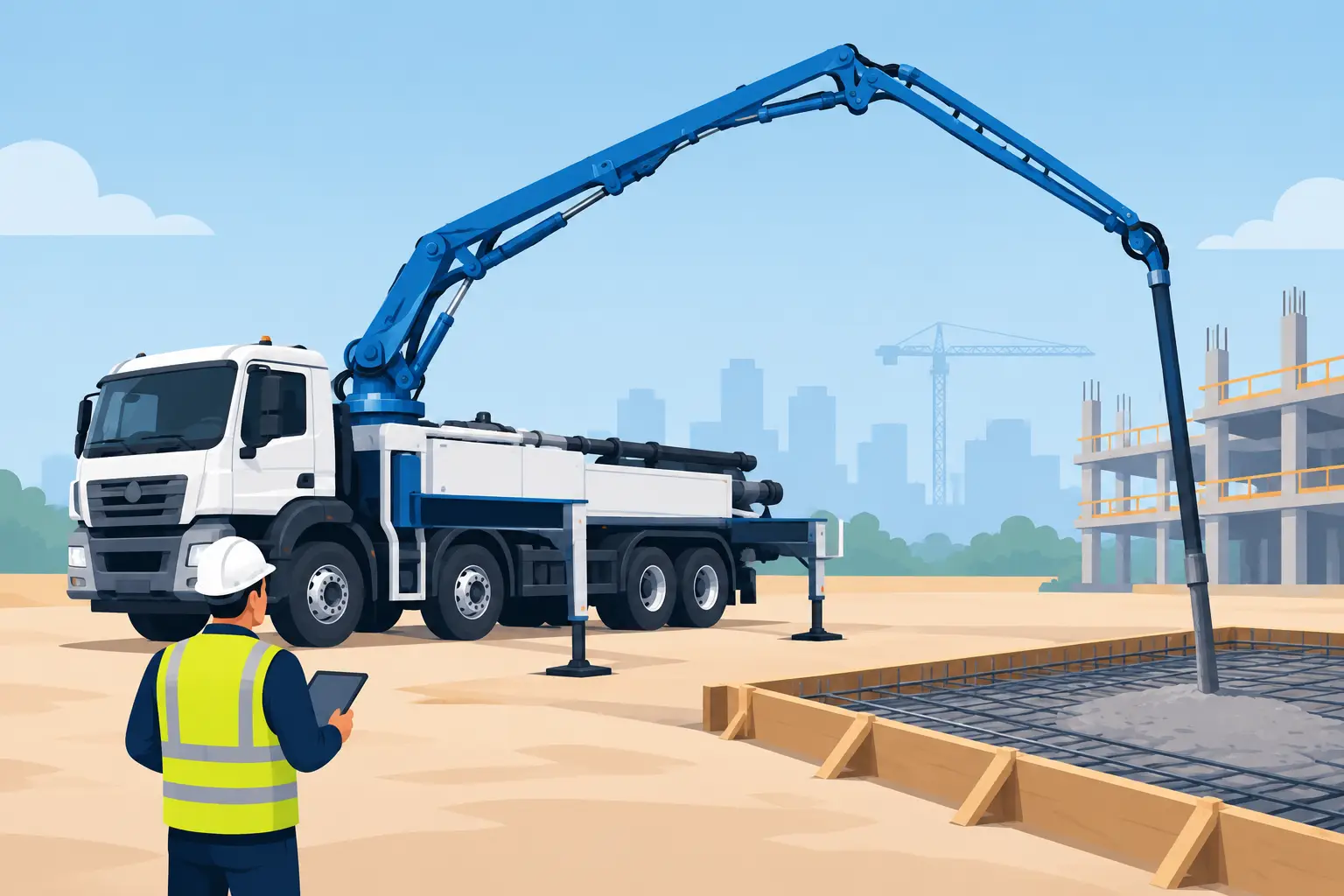
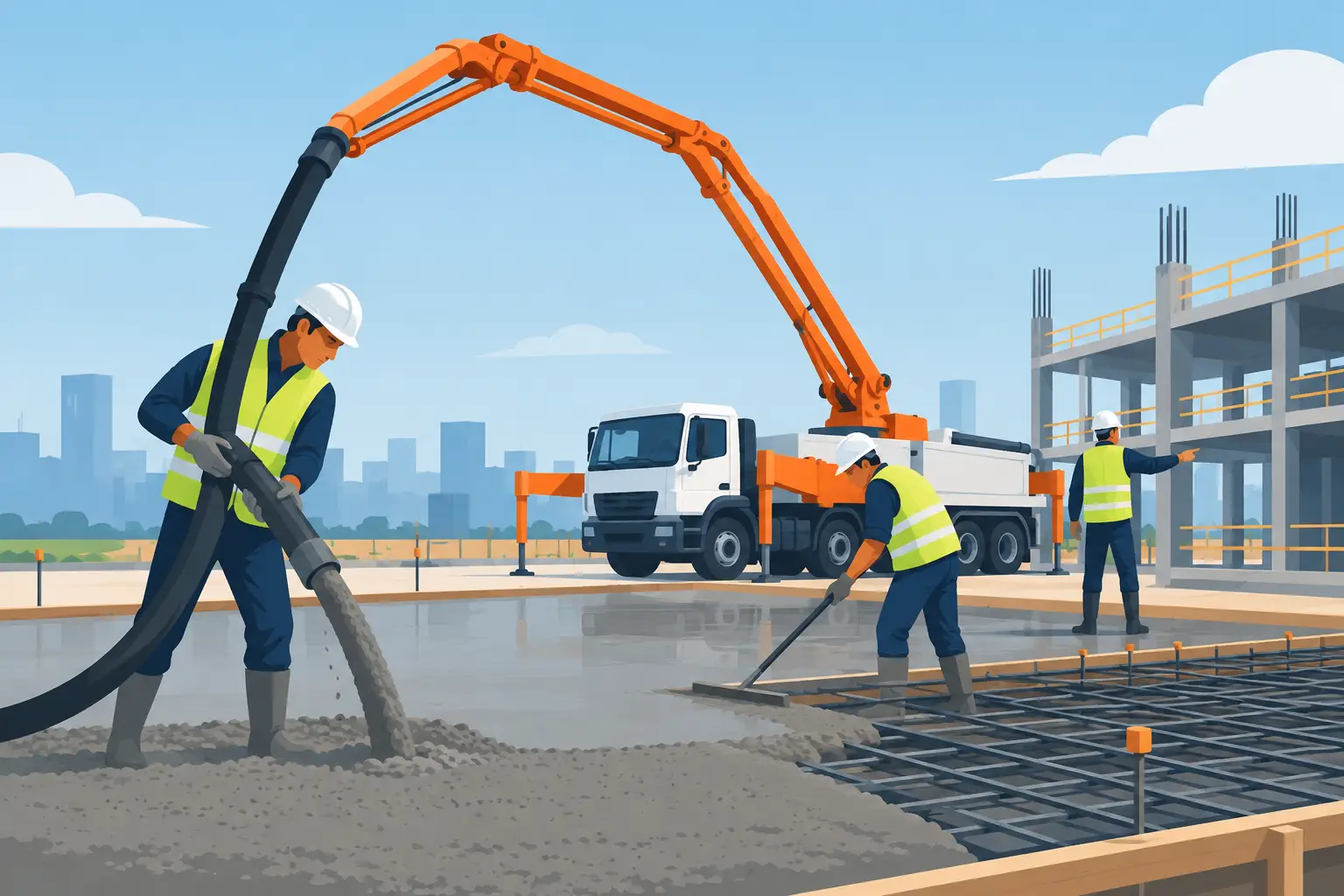
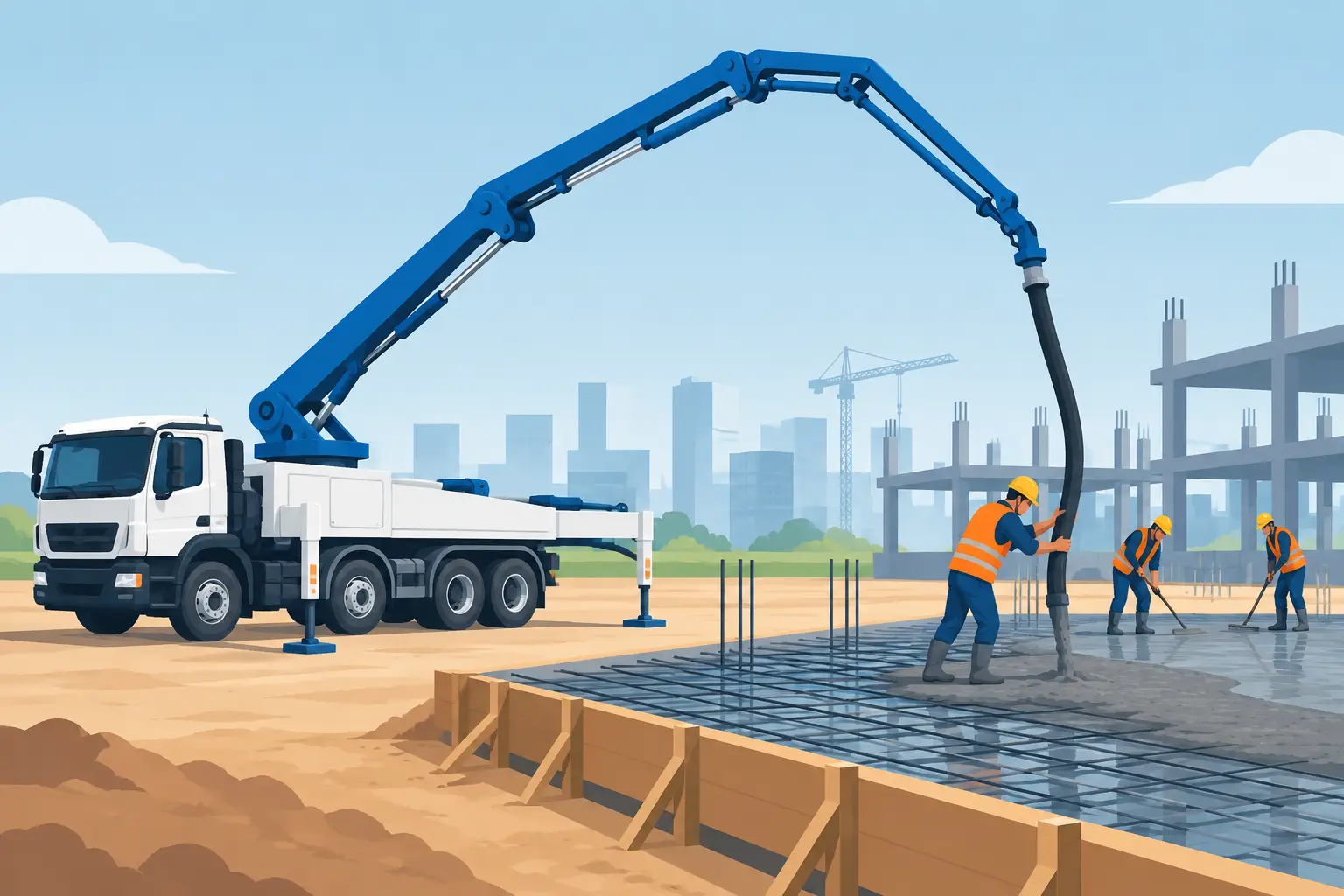
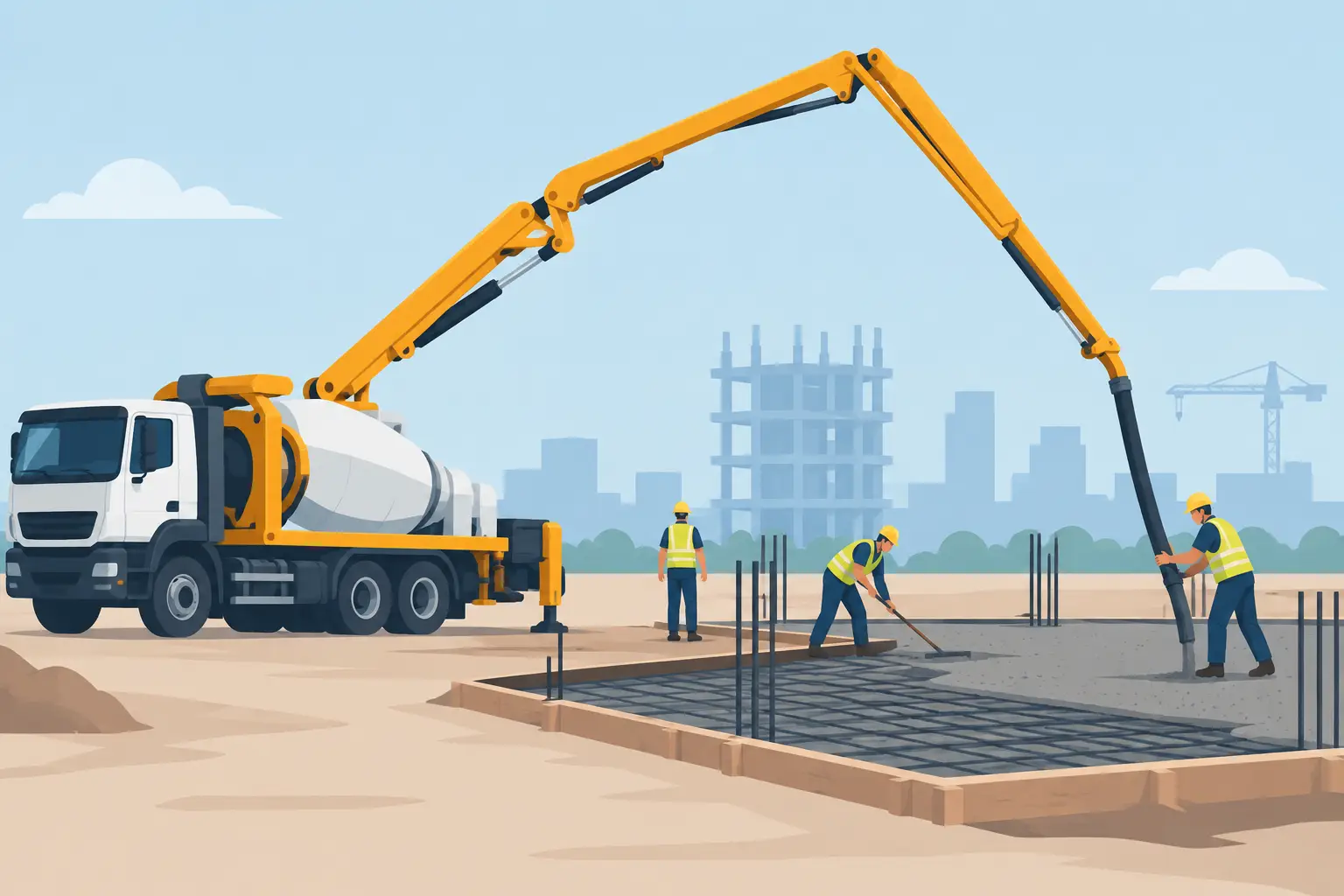
A concrete pump sends the mix from the ready-mix truck through a boom or line directly to the placement point. The crew no longer needs several people assigned mainly to transporting wet concrete. Instead, the hose operator and placing crew can control where the concrete goes while finishers stay focused on level, consolidation, joints, and surface work.
On a foundation pour, that can mean fewer workers running loads around excavations and more workers keeping wall forms filled evenly. On a slab, it can mean the screed crew receives a steadier supply instead of stopping repeatedly while material is hauled from one end of the building to the other. The result is a more productive crew, not an unattended crew.
The biggest saving is usually in material handling
Concrete is heavy, time-sensitive, and unforgiving once the truck arrives. Manual movement is physically demanding and takes people away from skilled tasks. A pump removes repeated loading, pushing, dumping, and returning for another load.
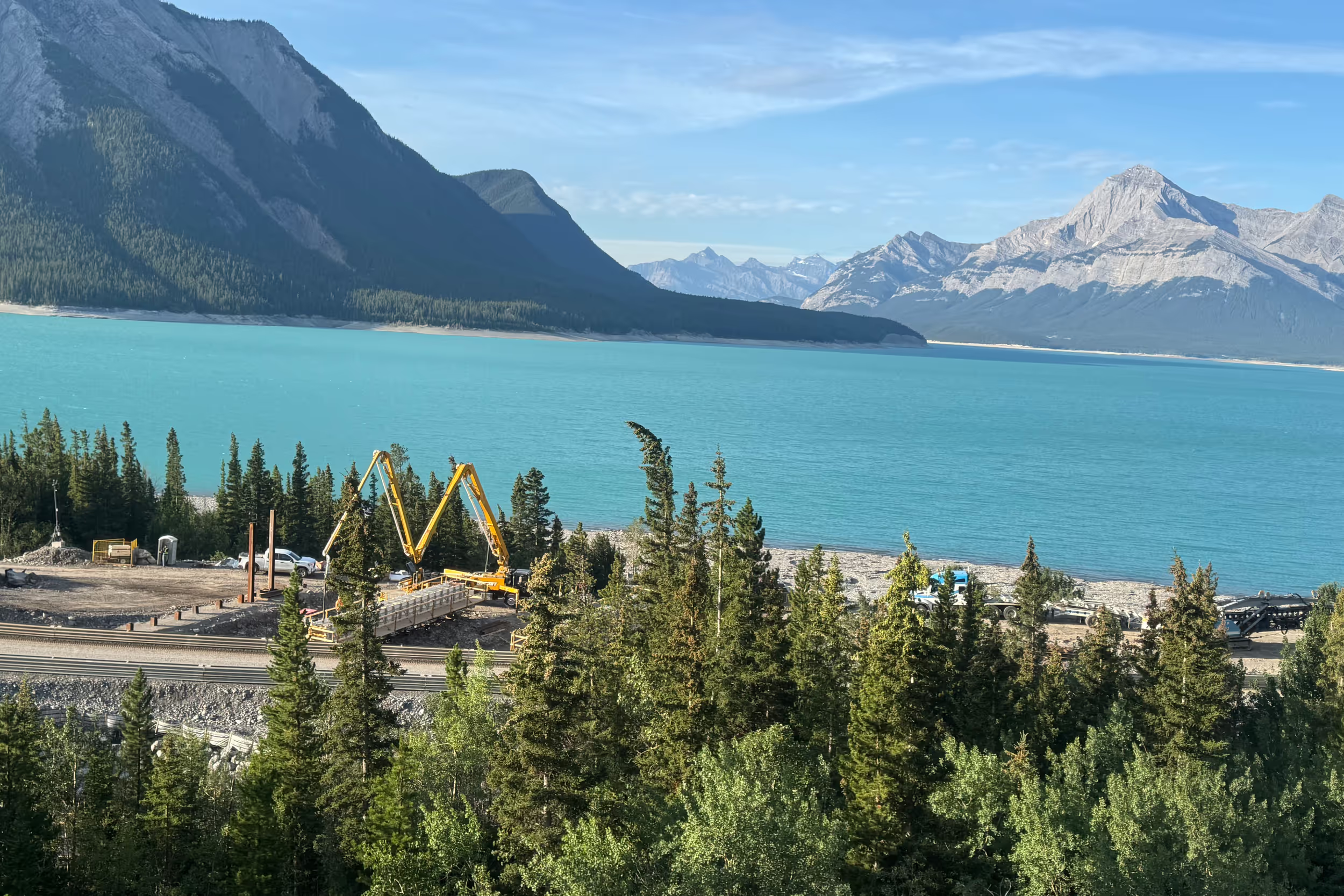
The difference becomes clear on pours with distance, elevation, or obstacles. A garage pad behind an existing home may only need a short line run, but it can still avoid hours of wheelbarrow work through narrow side access. A boom pump can reach over a house, around stockpiled materials, or across a large building footprint without creating a travel path for buggies or carts.
That reduction in handling also helps with fatigue. A tired crew is slower, less consistent, and more likely to need cleanup or corrective work at the end of the day. Pumping does not replace good workmanship, but it gives the crew a better chance to maintain it through the full pour.
Where a concrete pump saves the most crew hours
Labour savings depend on site conditions. A small sidewalk beside a driveway may be faster and less expensive with direct chute placement. Bringing in a pump for every load is not automatically the right call.
Pumping becomes a strong option when access is restricted, placement is spread across a large area, or the concrete must travel farther than the truck chute can reach. It is particularly useful for basement walls, footings, suspended slabs, shop floors, agricultural buildings, commercial foundations, retaining walls, and additions with limited access.
Jobs with elevation changes also benefit. Moving concrete uphill, down into a basement excavation, or to a second-level deck by hand uses time quickly. A boom can deliver concrete from above, while a line pump can run hose through or around areas that larger equipment cannot reach.
On larger pours, speed matters beyond the hourly labour count. Ready-mix trucks have a delivery schedule, concrete has a workable time window, and forming or finishing crews are often booked tightly. Faster, more consistent placement helps prevent the stop-start rhythm that can leave crews waiting, rush finishing work, or push the day later than planned.
Pumping changes the crew's role, not the need for a crew
One common mistake is assuming that a pump means fewer people are needed everywhere. The right crew size still depends on the volume, mix design, form complexity, weather, finishing requirements, and access. A pump operator controls the equipment, but the placing and finishing work remains in the hands of the concrete crew.
What changes is how those workers are used. Instead of assigning several labourers to material transport, the contractor can keep people on critical work: managing the hose, checking forms, vibrating walls, striking off slabs, setting anchor bolts, protecting edges, and maintaining a clean pour line.
This matters when skilled labour is hard to schedule. There is little value in having experienced finishers pushing wheelbarrows because the truck cannot reach the work area. Pumping helps reserve skilled hands for the work that affects tolerances, appearance, and long-term performance.
Does concrete pumping reduce labour costs on every job?
Not always. A pump has a service cost, and the smallest, simplest pours may not have enough manual handling to justify it. If a ready-mix truck can discharge directly into forms with minimal repositioning, chute placement can be the practical choice.
The comparison should be based on total job cost, not only the pump rate. Consider how many crew hours are required to move concrete manually, whether extra equipment is needed, how long ready-mix trucks may be held on site, and whether difficult access creates cleanup or damage risks. Also consider the cost of a delayed pour when weather, truck timing, or finishing windows are tight.
A pump often makes financial sense when it prevents the need for additional labour, shortens the placement window, or avoids using other equipment to move concrete. It can be especially valuable on jobs where a small crew needs to complete a significant pour without compromising the finish.
Accuracy and cleanup also affect the bottom line
Labour reduction is not only about headcount. It is about avoiding non-productive work before, during, and after the pour. When concrete is placed close to its final location, there is less spilled material to shovel, less tracking across the site, and less chance of concrete ending up where it does not belong.
Accurate hose placement can also reduce overfill and excessive movement inside the forms. That helps crews maintain grade and limits the rework that comes from cleaning edges, correcting low spots, or managing concrete that was dropped too far from the intended area.
A clean, organized pump setup supports safer movement around the site as well. Fewer wheelbarrow routes and fewer people working between trucks, forms, and equipment can reduce congestion during a busy pour. Safe work still depends on planning and communication, but the jobsite is easier to control when concrete has a direct route to the work.
Matching the pump to the site matters
The labour benefit of pumping depends on using equipment that suits the access and placement plan. A high-reach boom pump is built for broad coverage and can keep a large pour moving with fewer truck and crew interruptions. Compact roll-and-fold boom equipment is useful where overhead clearance, residential streets, or restricted access limit larger setups. A truck-mounted 4x4 line pump can provide precise placement where a boom cannot position effectively.
Before the pour, the contractor should confirm truck access, setup area, overhead hazards, hose route, concrete volume, mix requirements, washout planning, and where the pump will discharge. A few minutes of site planning can prevent a costly change once trucks are loaded and the crew is standing by.
Bandit Concrete Pumping works with contractors to match boom and line-pump capability to the actual conditions on site, not just the size of the pour. That is what turns pumping from an equipment expense into a practical production tool.
For the next difficult foundation, slab, shop floor, or backyard pour, look at where your crew will spend its time moving concrete. If the answer is wheelbarrows, long runs, tight access, or repeated rehandling, a pump may be the simplest way to keep the people you already have working where their skill counts most.