(587) 703-6048

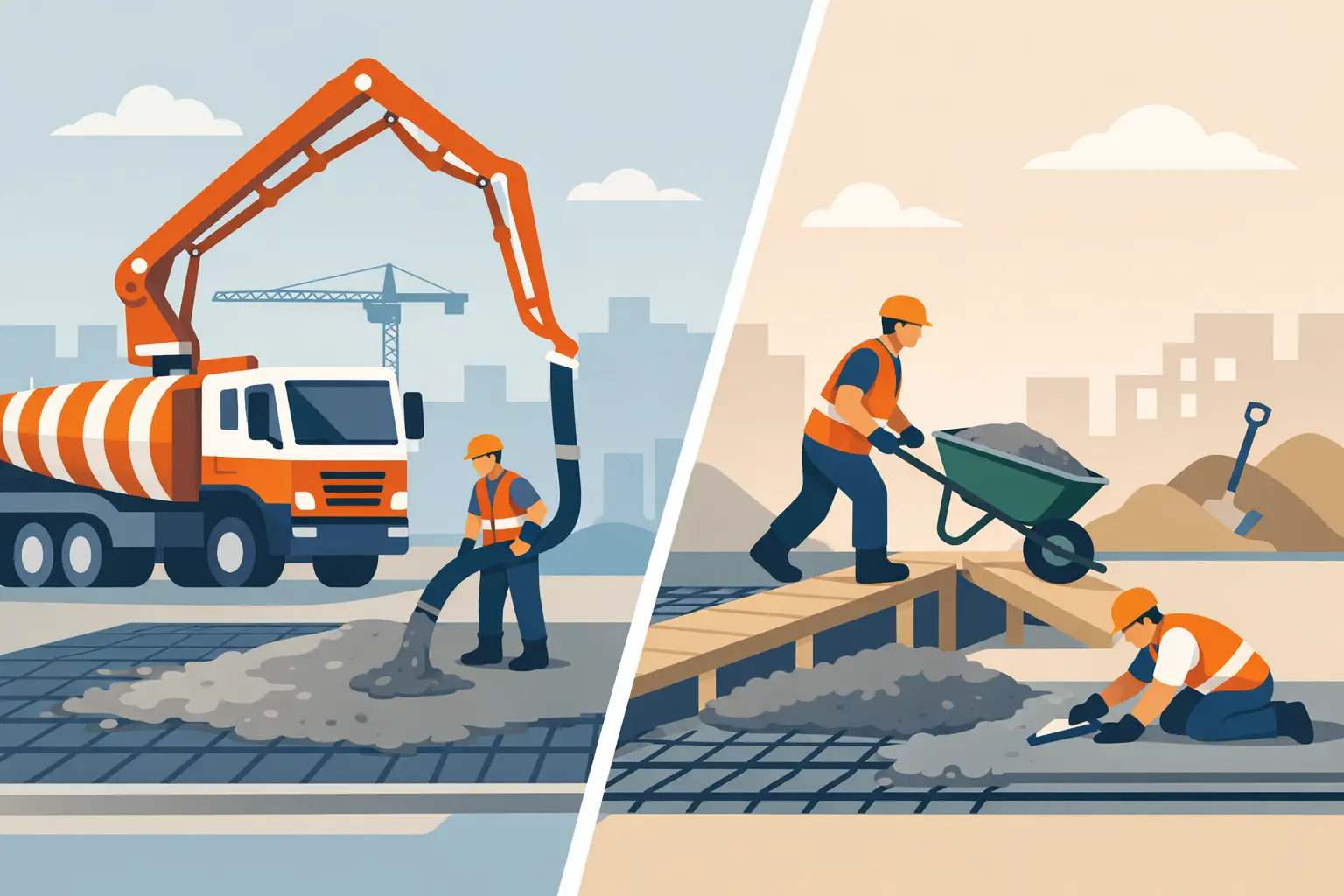
Concrete Pumping vs Wheelbarrow Placement

A concrete truck can be on site, the crew can be ready, and the forms can be perfect - but placement still controls the pace of the pour. When comparing concrete pumping vs wheelbarrow placement, the real question is not whether a wheelbarrow can move concrete. It can. The question is whether it can move enough concrete, far enough, accurately enough, without tying up the crew or compromising the pour.
For a small, open, ground-level job, wheelbarrows may be a workable choice. On larger slabs, foundations, elevated work, restricted sites, or any pour where access is limited, pumping is usually the more controlled and productive method. The right call depends on the site, the concrete volume, the crew, and how much risk a schedule can carry.
Concrete Pumping vs Wheelbarrow Placement on the Jobsite
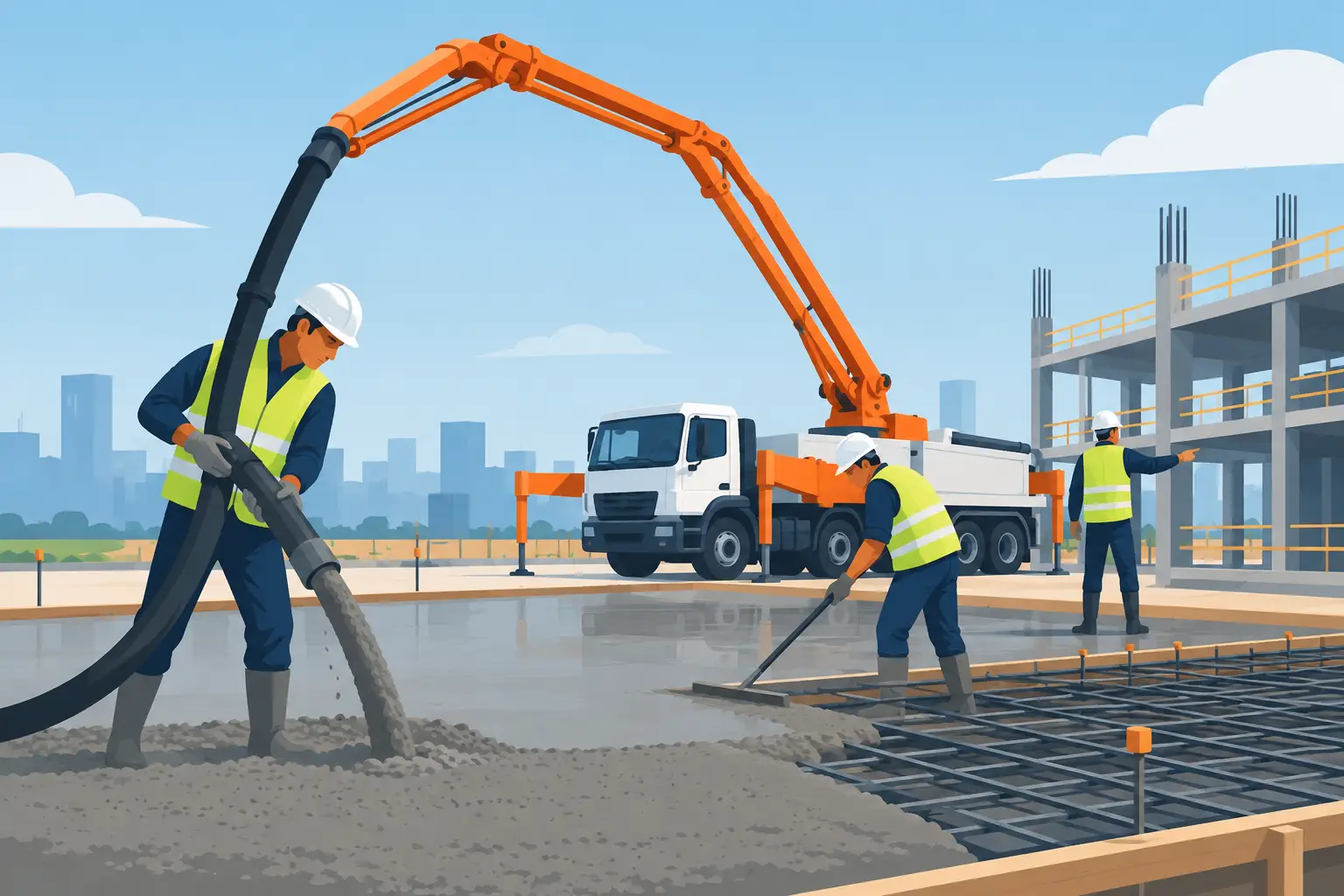
Wheelbarrow placement is straightforward. Concrete is discharged from the ready-mix truck into wheelbarrows, then labourers move it to the forms. It requires basic equipment and can work when the placement point is close to the truck, the volume is low, and there is a clear, firm route.
That simple process becomes less simple once distance, elevation, mud, tight access, or production volume enter the picture. Every trip takes time. Every turn through a gate, around a form, or across uneven ground increases effort and the chance of spills. By the time concrete reaches the far end of the pour, the finishing crew may be waiting for material while the wheelbarrow crew is still making runs.
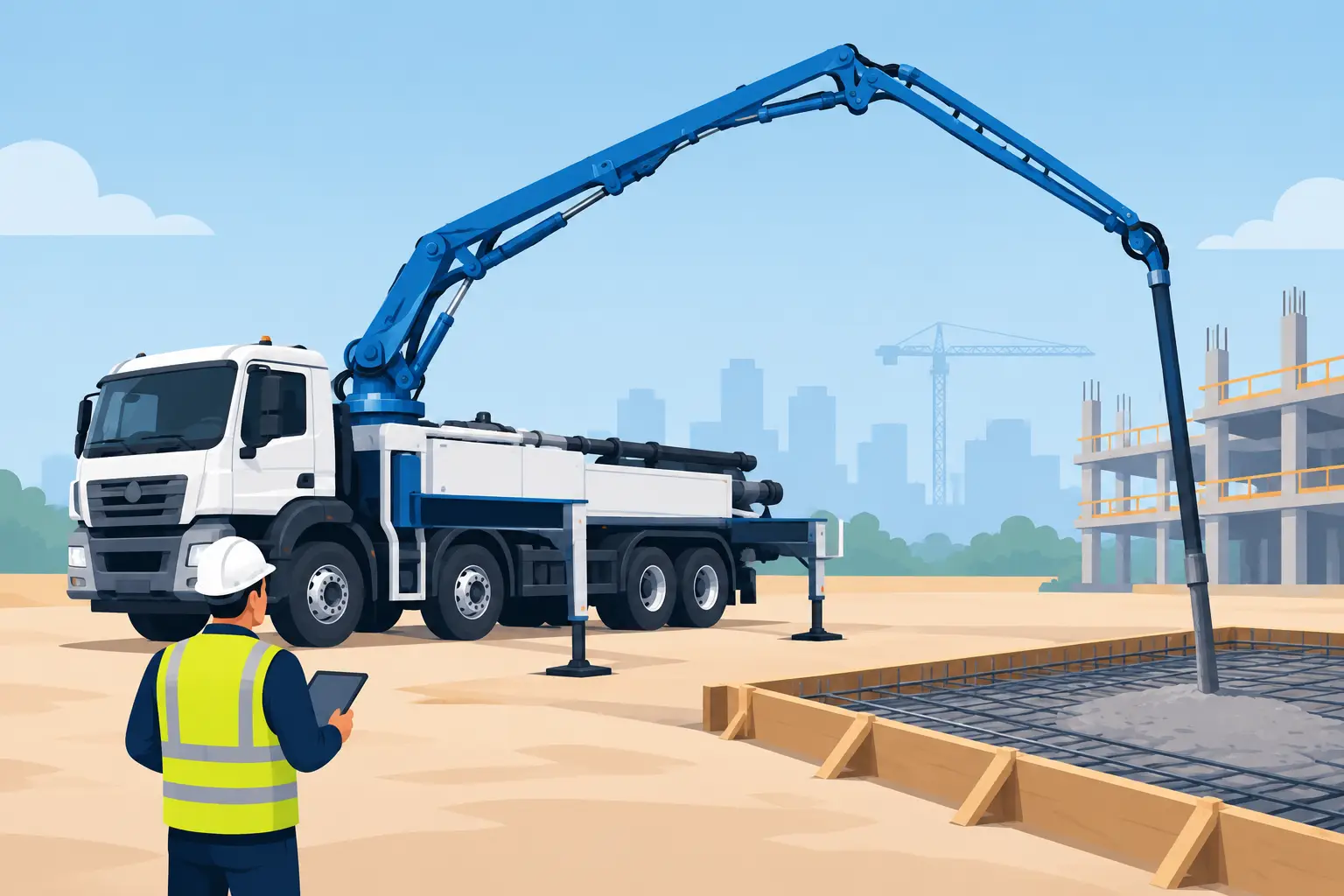
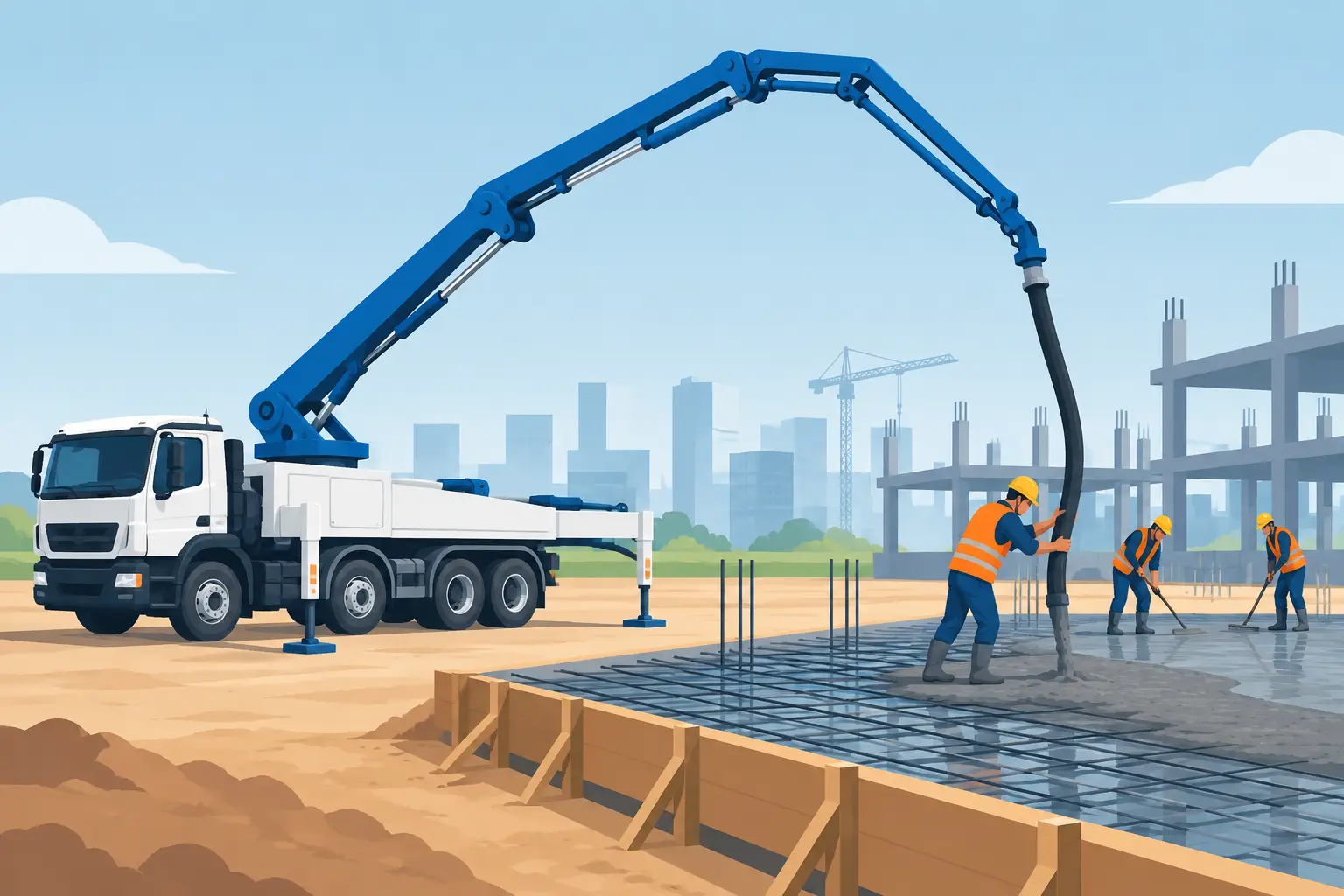
A concrete pump moves material from the truck directly to the placement area through a boom or line system. The operator controls the hose position, allowing concrete to be placed where it is needed rather than dumped nearby and moved again by hand. That changes the flow of the whole operation: fewer people are assigned to transport, concrete arrives more consistently, and finishers can concentrate on placing, screeding, vibrating, and finishing.
Speed Is More Than a Faster Pour
Speed matters because fresh concrete has a working window. The longer placement takes, the more pressure lands on the crew to keep the mix workable, maintain consistent consolidation, and stay ahead of joints. This is especially relevant during hot, dry Alberta weather, on big footprints, or when the batch plant and delivery schedule leave little room for delays.
Wheelbarrows create a stop-start supply line. A strong crew can move a surprising amount of concrete over a short distance, but output drops as the route gets longer or more difficult. If the path crosses soft ground, slopes, stairs, or congested framing, production can slow quickly.
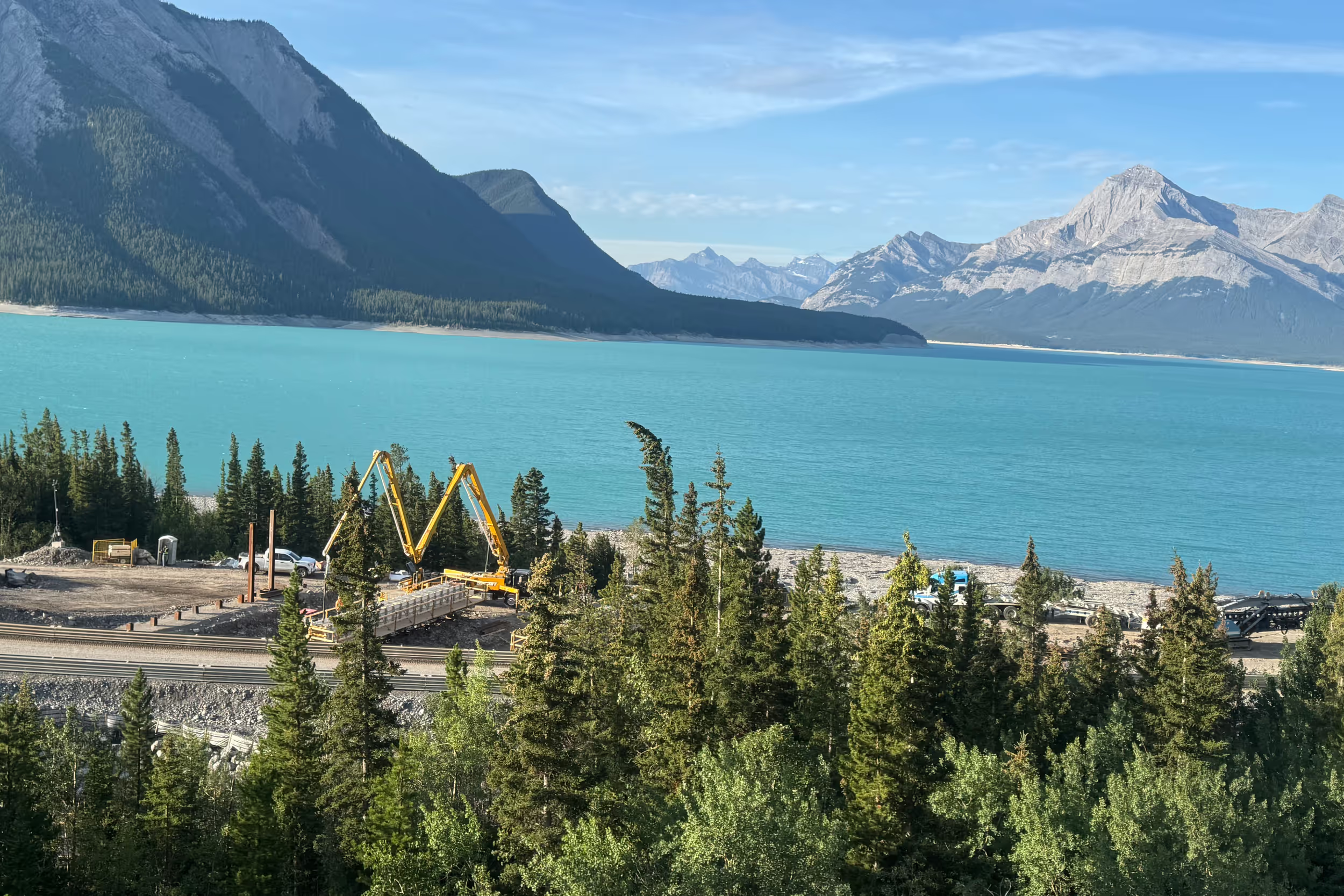
Pumping provides a continuous supply at the hose. A boom pump can cover broad areas from one setup position, while a truck-mounted line pump can send concrete into locations that are awkward or impossible to reach by chute. This does not eliminate the need for an organized placing and finishing crew, but it removes a major material-handling bottleneck.
A faster, steadier pour also reduces the chance of an expensive scramble. When concrete is arriving faster than a wheelbarrow crew can handle, the job can turn into spilled material, rushed finishing, and avoidable cleanup. When the crew is waiting on wheelbarrows, the pour can lose momentum. Neither situation helps quality or cost control.
Reach and Access Decide Many Pours
Access is often the deciding factor. A concrete truck chute has limited reach, and wheelbarrows need a route that is wide enough, stable enough, and safe enough to travel repeatedly under load. That is not always available on residential infills, acreage properties, commercial sites with active trades, or builds where forms sit behind an existing structure.
Consider a backyard addition with narrow side-yard access. Concrete may need to travel past landscaping, fencing, services, and finished exterior work. Repeated wheelbarrow traffic can damage the route, create mud, and leave concrete splatter across areas that were not part of the pour.
For these conditions, a compact boom configuration or line pump can be the practical answer. Concrete can be routed over, around, or through access challenges with far less traffic across the property. The same applies to suspended slabs, shop floors, agricultural pads, pile caps, retaining walls, and foundations where the truck cannot back close to the forms.
The pump selection still matters. High-reach boom trucks suit broad coverage and larger pours. Compact roll-and-fold equipment helps when setup room is restricted. A 4x4 line pump is well suited to precise placement in difficult-to-reach areas, including sites where ground conditions or access make standard equipment impractical. Matching the pump to the site is what turns reach into productive placement.
Labour Costs Need an Honest Comparison
Wheelbarrows can look less expensive because the equipment cost is low. That comparison often misses the labour required to keep concrete moving. A few wheelbarrows and several labourers may be enough for a small sidewalk section. For a sizeable garage slab or foundation, the crew required to maintain pace can grow quickly.
Those workers are also unavailable for other tasks. Instead of helping manage the hose, consolidate concrete, check elevations, clean edges, or prepare the next section, they are walking loaded and empty wheelbarrows back and forth. Fatigue becomes a factor as the pour continues, particularly over uneven terrain or in poor weather.
Pumping has a direct service cost, but it can reduce the total labour demand around the pour. One experienced pump operator and a properly planned placing crew can often do more controlled work with fewer people dedicated to transport. On commercial and industrial projects, that efficiency can be significant because labour, schedule coordination, and site congestion all carry real cost.
The lowest-cost option is not always the one with the lowest line item. It is the method that gets the concrete placed safely, cleanly, and on time without creating rework or pulling too many people away from skilled tasks.
Finish Quality Starts With Controlled Placement
Concrete finishers can only work with the material they receive. If concrete is dumped in oversized piles and then dragged long distances, it is harder to maintain a consistent pace and slab profile. Excessive handling can also increase segregation risk, especially when crews are trying to move material quickly across a large area.
Pumping lets the crew place concrete in a more deliberate pattern. The hose can feed the pour close to final position, reducing the need to pull material across the forms. This supports more consistent depths, easier consolidation, and a smoother workflow for screeding and finishing.
That does not mean a pump automatically guarantees a better slab. The crew still needs correct mix design, solid forms, proper vibration where required, accurate grade control, and disciplined finishing. But a pump gives that crew a better supply system. It puts concrete where the work is happening instead of making workers spend the pour hauling it there.
When Wheelbarrow Placement Still Makes Sense
Wheelbarrows are not obsolete. They remain a reasonable option for very small pours with direct truck access, short travel distances, stable ground, and enough labour already on site. A small repair, isolated pad, or short walkway may not justify arranging a pump.
The threshold changes when the pour has volume, distance, difficult terrain, limited access, or a tight finishing schedule. It also changes when the jobsite has completed landscaping, confined work areas, or other trades that cannot be disrupted by constant wheelbarrow traffic.
Before booking concrete, look at the full route from truck to forms. Measure the distance, identify elevation changes, consider where workers would turn and dump, and ask what happens if weather softens the ground. Then consider how many loads are arriving and how quickly each load must be placed. This planning usually makes the right method clear.
Plan the Placement Method Before the Truck Arrives
A pump works best when the pour is planned around it. Confirm truck access, setup area, boom or hose reach, form readiness, crew positions, and washout expectations before the first load arrives. Tell the pump provider about gates, overhead lines, slopes, soft ground, tight corners, and any finished surfaces that need protection.
Bandit Concrete Pumping helps contractors, builders, and property owners across Central Alberta match equipment to the actual placement challenge. That means looking beyond the cubic metres on the ticket and considering where the concrete needs to land, how the site will operate during the pour, and what the finishing crew needs to stay productive.
If wheelbarrows offer a short, clear route for a small job, use them. If hauling concrete by hand will slow the pour, strain the crew, or put finish quality at risk, bring in the pump. The best placement method is the one that keeps concrete moving steadily and lets the crew do its best work where it counts: at the forms.