(587) 703-6048


Concrete Pumping Versus Wheelbarrow for Alberta Pours

A ready-mix truck is on the clock, the crew is waiting, and the forms are ready. At that point, concrete pumping versus wheelbarrow placement is not a theoretical choice. It determines whether the pour moves steadily into place or turns into a labour-heavy scramble across the site.
Wheelbarrows still have a place on small, straightforward work. But on foundations, garage slabs, shops, commercial pads, and any pour with distance or access restrictions, a concrete pump can change the pace and quality of the entire operation. The right method depends on pour size, site layout, crew capacity, concrete mix, and how much control the finisher needs at the point of placement.
Concrete Pumping Versus Wheelbarrow: The Jobsite Difference
The biggest difference is simple: a pump moves concrete directly to the placement area, while wheelbarrow placement requires workers to transport every load manually after it leaves the truck chute. That gap affects production speed, crew fatigue, cleanup, safety, and the risk of running short on workable concrete.
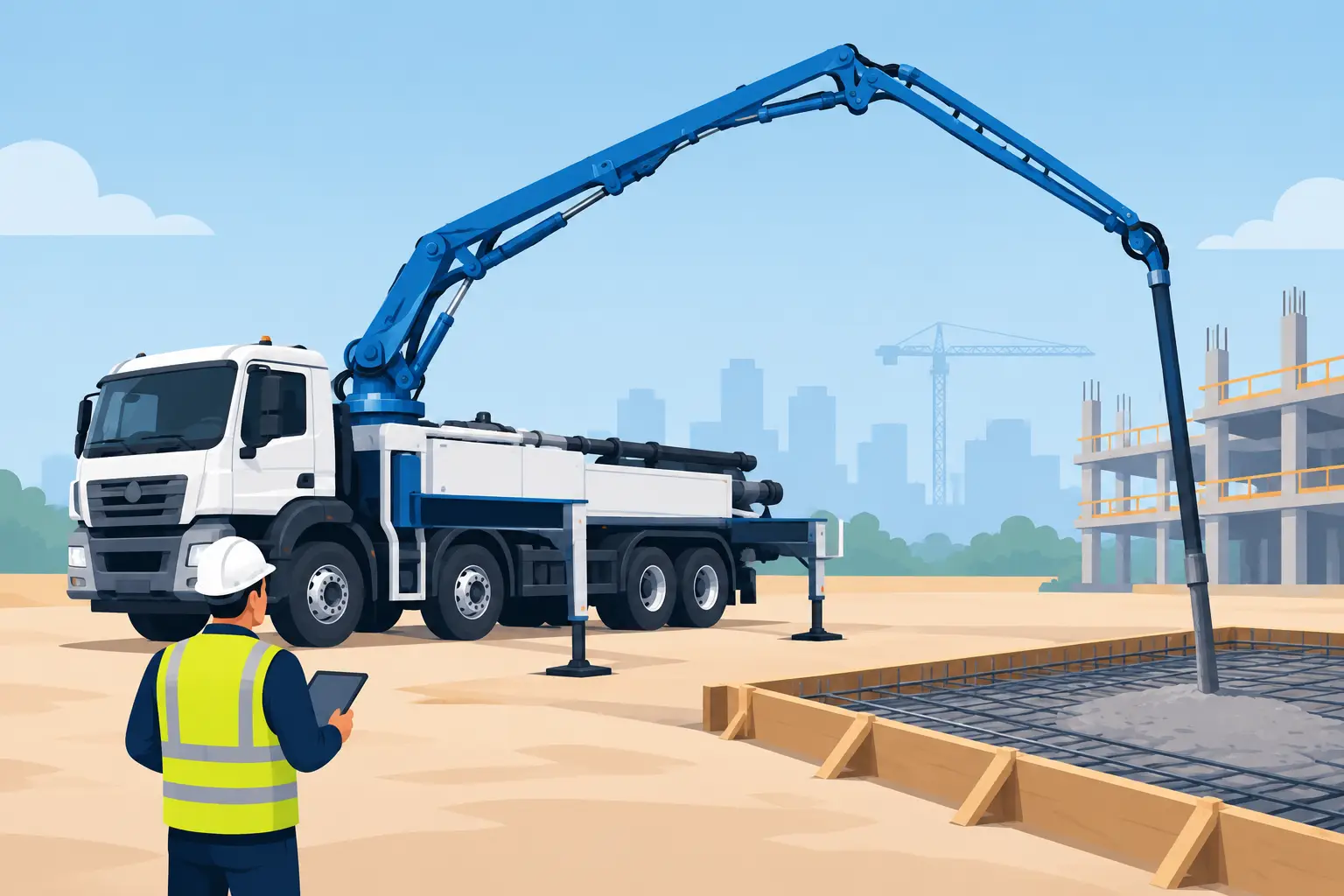
With a boom pump, the operator can place concrete across a broad area from a controlled delivery point. The boom reaches over obstacles, around structures, and into areas where a ready-mix truck cannot back in. A truck-mounted line pump is a practical option where a hose needs to run along the ground or through restricted access to reach a backyard, basement, interior area, or remote section of a property.
Wheelbarrows rely on a clear, stable travel route between the truck and the forms. Even a short route becomes slower when it crosses rough grade, mud, snow, narrow gates, scaffold legs, rebar, or active trades. Every wheelbarrow must be filled, pushed, dumped, returned, and refilled. For a small pad directly beside the truck, that may be manageable. For a larger pour, it becomes the bottleneck.
Speed Matters When the Truck Is Discharging
Fresh concrete does not wait for a crew to catch up. Once the truck begins discharging, the placement team needs a consistent supply of material so it can spread, consolidate, screed, and finish without falling behind.
Pumping provides a continuous flow that helps the crew keep a steady rhythm. The pump operator can move the boom or hose where the concrete is needed, reducing the stop-and-start work that comes with manual hauling. This is especially valuable on wide slabs, long footings, retaining walls, elevated work, and pours where multiple areas must be filled before finishing can begin.
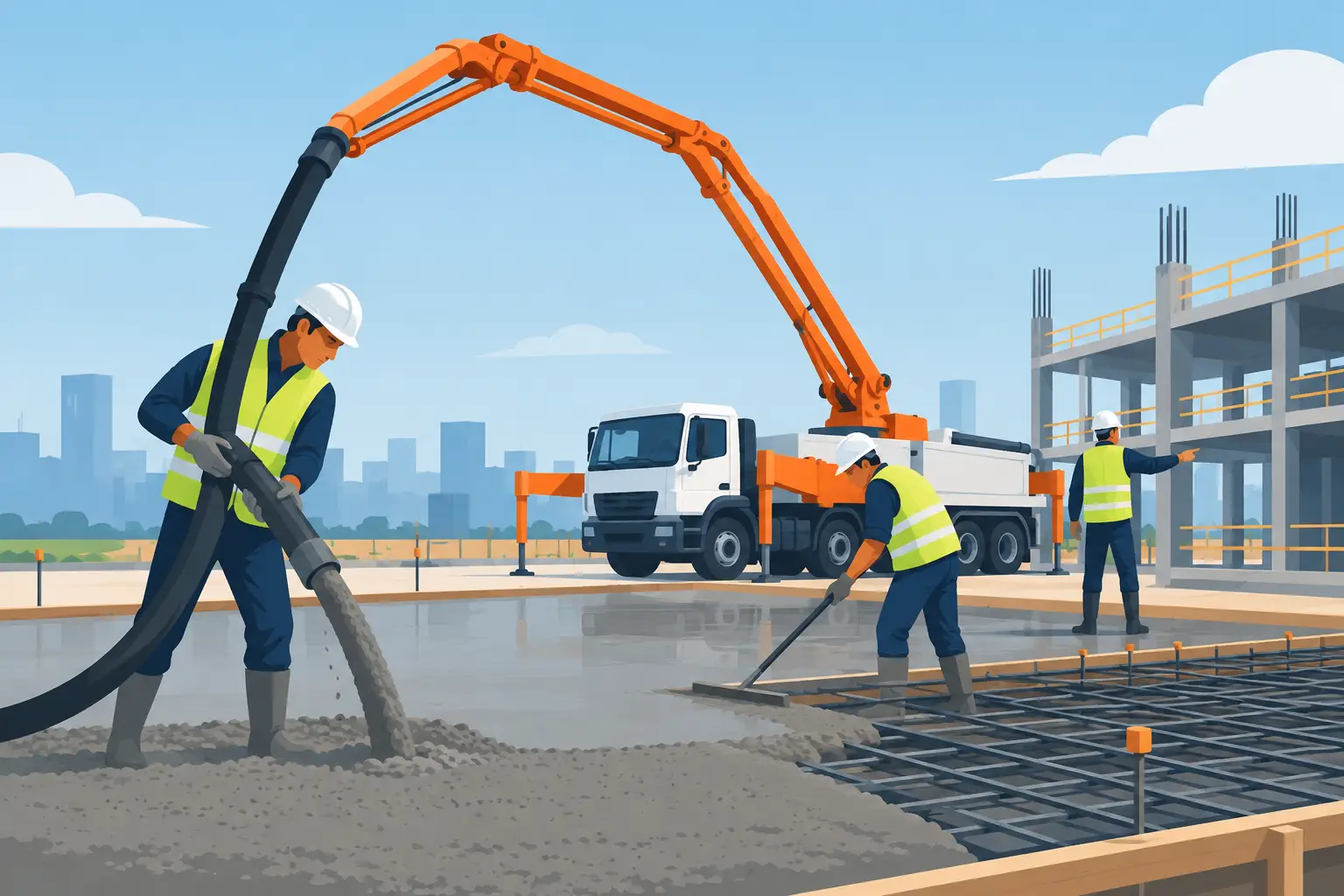
Wheelbarrow placement slows as distance increases. A crew may need several workers just to keep material moving, leaving fewer people available to rake, vibrate, screed, and finish. If the route is difficult, production drops further. The result can be rushed finishing, inconsistent slab levels, or delays that extend the truck time.
A pump does not eliminate the need for a capable concrete crew. Finishers still need to manage the pour properly. What it does is put more of the crew's effort where it counts: placing, consolidating, and finishing concrete instead of hauling it.
When wheelbarrows can still make sense
For a small repair, a narrow sidewalk section, or a modest pad immediately beside the truck, wheelbarrows may be the practical choice. If the volume is low, access is open, and there is enough labour on hand, setting up a pump may not be necessary.
The decision changes quickly when the truck cannot get close to the forms, the volume rises, or the route crosses a finished yard, soft ground, stairs, or congested work area. What looks like a short push on a site plan can become a slow, messy route once the work is underway.
Reach and Access Are Often the Deciding Factors
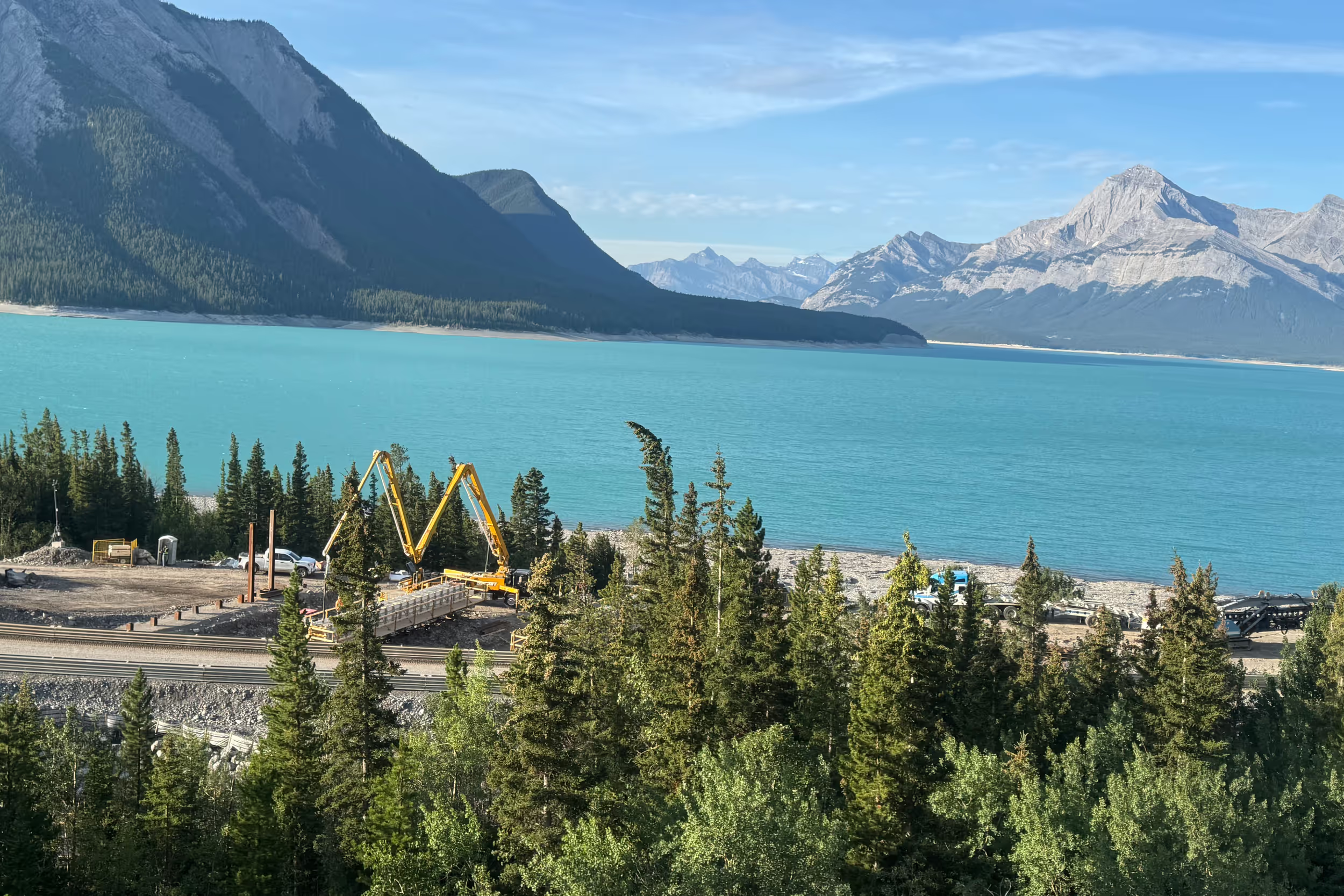
Alberta jobsites regularly present access challenges. A rear-yard garage pour may sit behind a house with a narrow side yard. A rural shop may have soft ground around the building. A commercial site may have traffic, excavation, materials, and other trades limiting truck movement. In winter or spring breakup, a route that seemed usable can become a problem fast.
A concrete pump gives the placement crew options. Boom pumps are suited to larger coverage areas and can deliver concrete over houses, fences, excavations, or other obstructions where conditions allow. Compact roll-and-fold boom equipment can be a strong fit for restricted sites where larger equipment has limited setup room. For difficult-to-reach locations, a 4x4 line pump can place concrete with a hose run while keeping the pump truck positioned where access is safer and more stable.
Wheelbarrows require a physical path all the way to the forms. That path needs room for workers to pass, turn, and dump without damaging landscaping, tracking mud through finished areas, or creating hazards around open excavations. When the route is tight, wheelbarrows can also make it harder to maintain a clean, organized site.
Labour Cost Is More Than an Hourly Rate
Wheelbarrow placement can appear less expensive because there is no pump charge on the estimate. That comparison misses the cost of the additional labour needed to move material, as well as the impact on the rest of the pour.
Consider a foundation pour where the truck can only discharge at the front of the building. A wheelbarrow crew may need multiple people hauling continuously while others try to keep up inside the forms. Those workers are tired before the finish work is complete. If the pour runs longer than expected, truck charges, overtime, or a second truck delay can erase the apparent savings.
Pumping adds a direct equipment and operator cost, but it can reduce the number of labourers required for transport and shorten the overall placement window. It also helps contractors plan their crew around skilled work rather than brute-force hauling. For many medium and large pours, that makes the total job cost easier to control.
There is no fixed break-even volume that applies to every site. A small but difficult backyard pour may justify a pump, while a larger open pad with truck access may be handled efficiently by chute placement. The useful question is not simply, “What does the pump cost?” It is, “What will it cost to place this concrete safely, cleanly, and on schedule?”
Placement Control Supports Better Finished Work
Concrete needs to arrive where it belongs with as little unnecessary handling as possible. Repeatedly dumping wheelbarrows can create piles that need extensive raking and moving. On a slab, that can make grade control harder and add unnecessary effort before screeding. On walls and footings, inconsistent delivery can leave the crew chasing the concrete rather than placing it evenly.
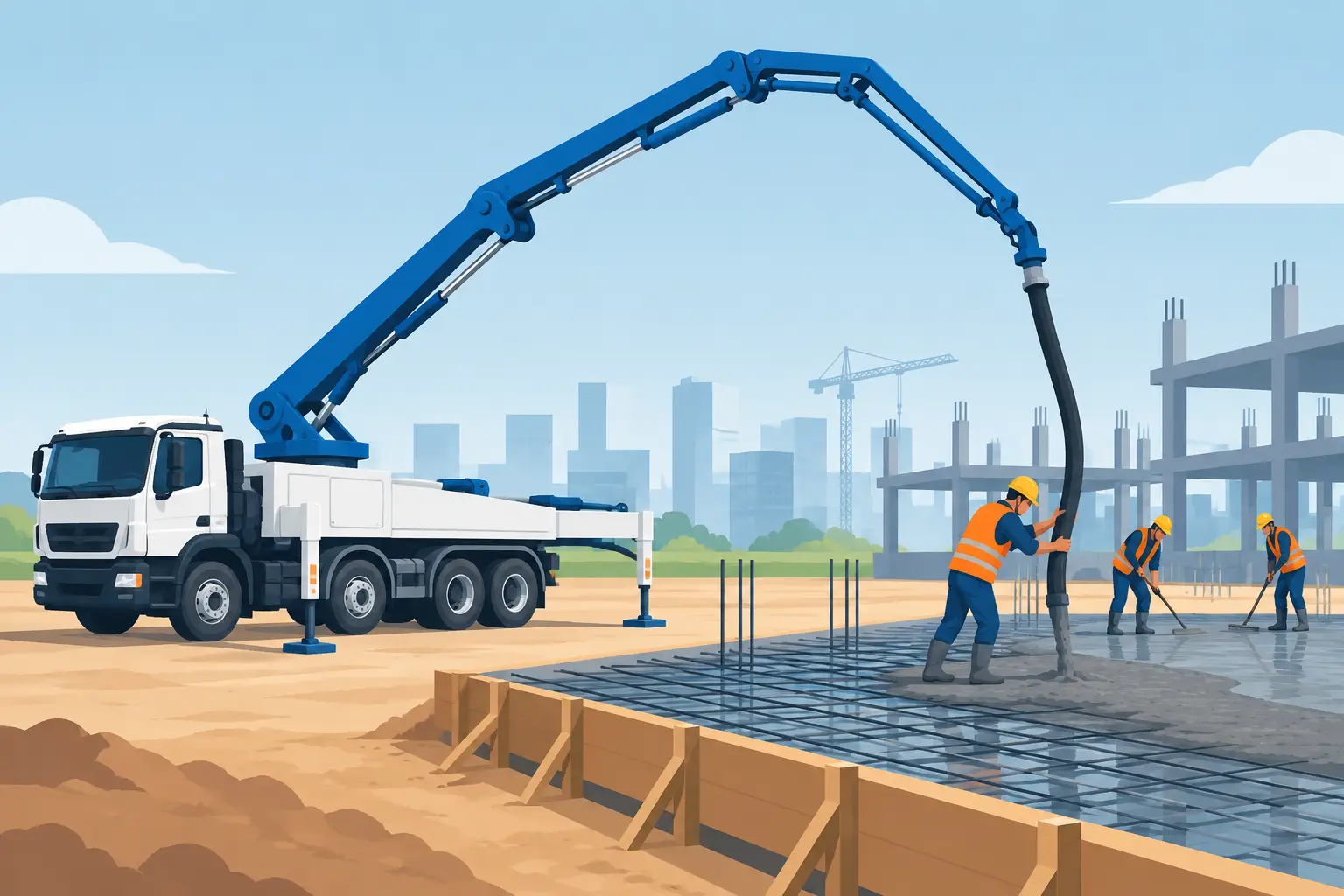
A pump allows the operator to direct flow close to the final placement point. The hose can be moved methodically along the forms, giving the crew better control over lift heights, spread, and consolidation. That is useful for footings, walls, grade beams, slabs, pile caps, and areas with dense reinforcing steel.
Good pumping also depends on preparation. The mix must be suitable for pumping, the pump must be positioned properly, the hose route must be planned, and the crew needs clear communication with the operator. An experienced operator helps maintain a workable flow without overwhelming the forms or finish crew.
Safety and Cleanup Should Be Part of the Comparison
Pushing loaded wheelbarrows across uneven ground is demanding work. Add wet concrete, poor weather, slopes, traffic, or crowded work areas, and the chance of strains, slips, and spills increases. Workers also need room to move safely around chutes, forms, and finishing equipment.
Pumping reduces manual travel with heavy loads. It does not remove jobsite hazards, and everyone working near a boom or hose must follow proper procedures, but it reduces repeated hauling across the site. It can also limit concrete tracked onto streets, driveways, lawns, and completed surfaces.
Clean placement matters after the truck leaves. Less spilled concrete means less scraping, washing, disposal, and repair work. On residential projects, that can make a major difference to the homeowner and the contractor's reputation.
Choose the Method That Keeps the Pour Moving
For a small, accessible pour with the truck parked beside the forms, wheelbarrows may be enough. For projects involving distance, elevation, limited access, larger volumes, tight schedules, or a lean crew, pumping is usually the more efficient route.
Before booking the pour, look at the truck access, ground conditions, concrete volume, placement distance, hose or boom path, available labour, and finishing requirements. Share those details early with the pumping provider. A crew such as Bandit Concrete Pumping can match the equipment to the site instead of forcing the site to work around the equipment.
The best placement method is the one that lets your finish crew work steadily, keeps concrete where it belongs, and gets the forms filled before the clock starts working against you.