(587) 703-6048

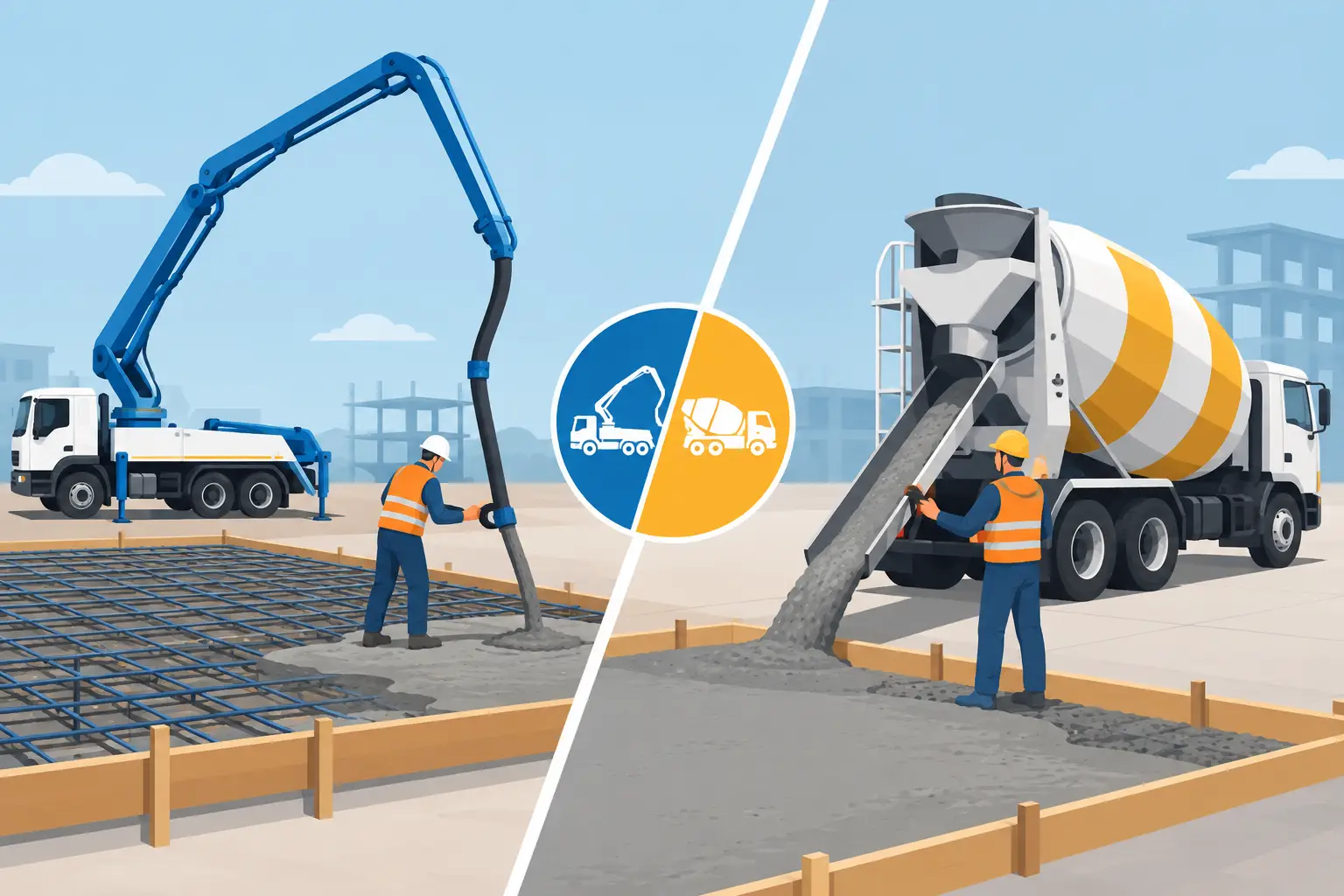
Concrete Pumping Versus Chute Delivery: Which Fits?

A ready-mix truck can be on site, the crew can be standing by, and the forms can be ready - but the pour still goes sideways if concrete cannot get where it needs to go. Concrete pumping versus chute delivery is not simply a question of equipment preference. It affects crew size, pour speed, concrete quality, cleanup, safety, and whether the job stays on schedule.
For some straightforward placements, a truck chute is the sensible choice. On restricted sites, long runs, elevated work, or large slabs, pumping can remove the bottleneck before it costs the crew a full day. The right method depends on the pour plan, not just the volume of concrete.
What chute delivery does well
Chute delivery uses the ready-mix truck's built-in chutes to place concrete directly from the truck into forms, a hopper, or a workable transfer point. It is a practical option when the truck can back close to the placement area and the concrete only needs to travel a short distance.
A front driveway, small sidewalk, curb section, or foundation with clear truck access may be well suited to a chute. There is less equipment to coordinate, setup is quick, and the direct approach can be cost-effective for a small, accessible pour.
That advantage disappears once the truck cannot get close enough. A chute has limited reach and works best on a reasonably direct path. If crews need to move concrete by wheelbarrow, buggy, skid steer, or repeated shovel work after it leaves the chute, the apparent savings can vanish quickly.
Chute placement also puts more pressure on the finishing and labour crew. Concrete must be moved, spread, and consolidated before it starts to set. On a busy Alberta jobsite, delays from truck positioning, soft ground, traffic, neighbouring structures, or tight lot lines can turn a simple plan into a labour-heavy one.
Concrete pumping versus chute delivery on real jobsites
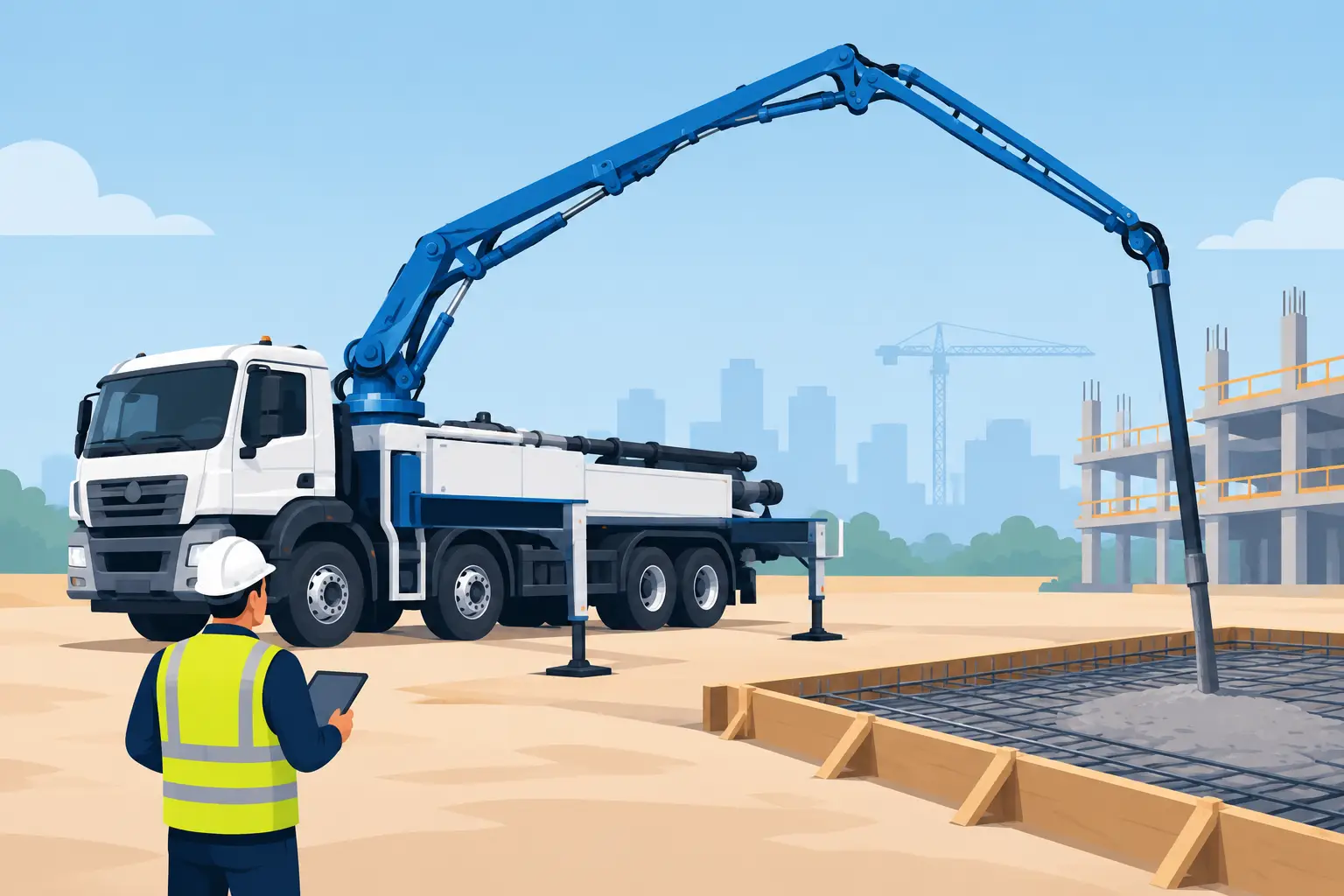
A concrete pump moves material through a pipeline or boom from the ready-mix truck to the point of placement. Instead of bringing the ready-mix truck as close as possible to every form, the pump is positioned for stable setup and the operator delivers concrete where the crew needs it.
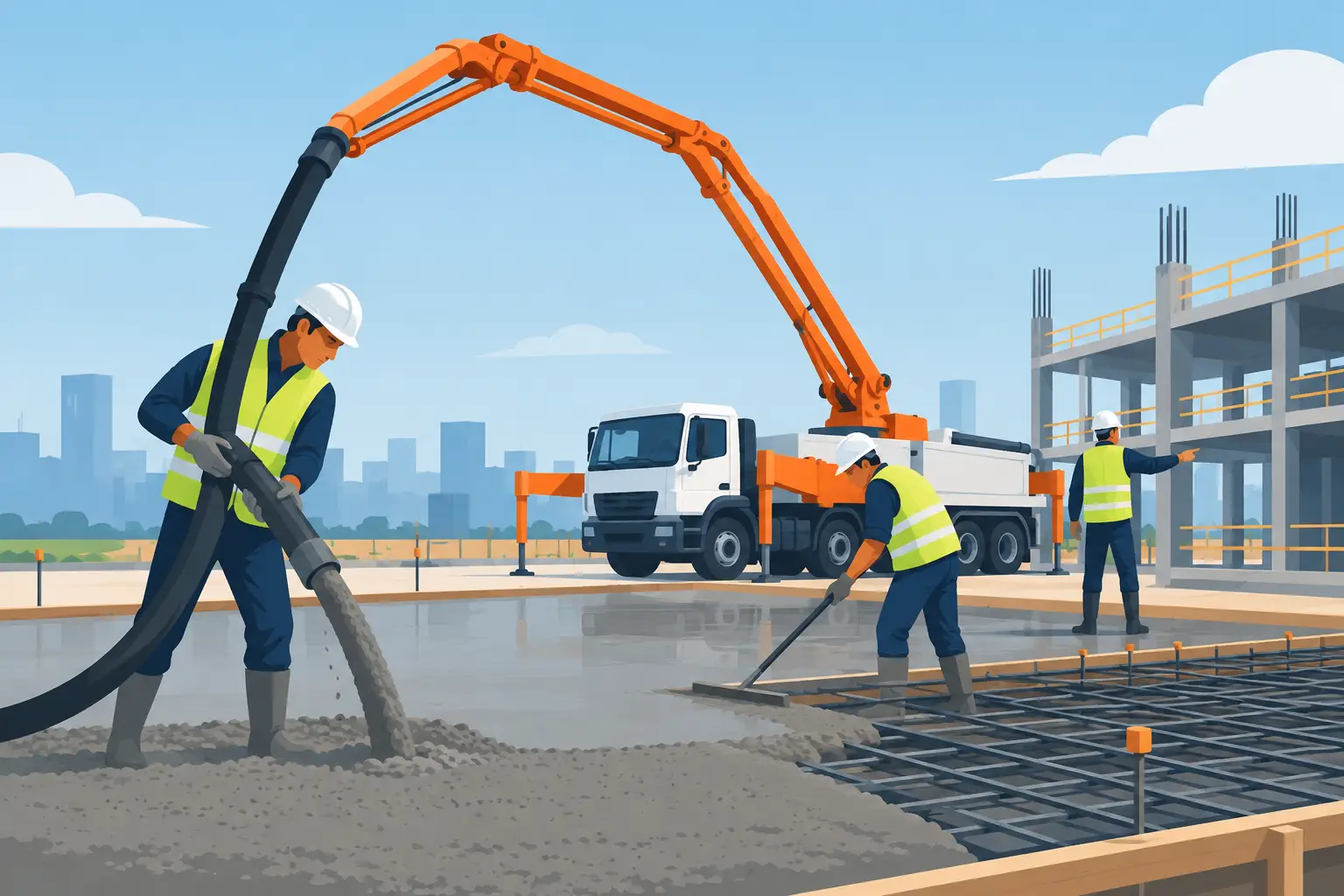
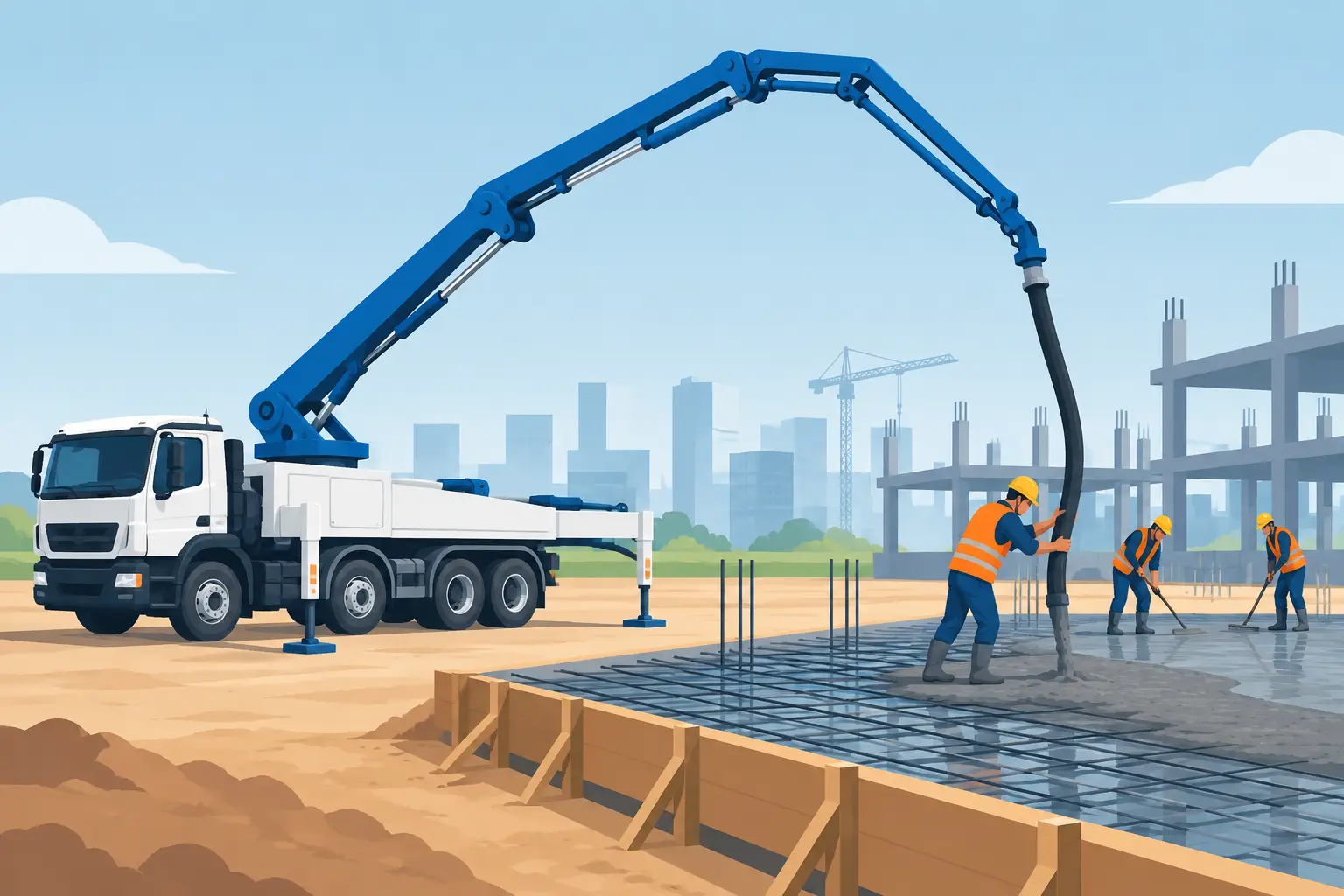
This changes the workflow. The concrete crew can focus on placing, vibrating, screeding, and finishing rather than repeatedly transporting material across the site. A controlled hose end also allows concrete to be placed closer to its final position, reducing rehandling and helping avoid segregation caused by excessive movement.
For larger slabs, walls, footings, suspended work, and pours behind buildings, that efficiency is substantial. The pump can maintain a steady placement pace while the crew manages the finish. That is especially valuable when weather, truck timing, or a limited finishing window puts pressure on the pour.
Reach is usually the deciding factor
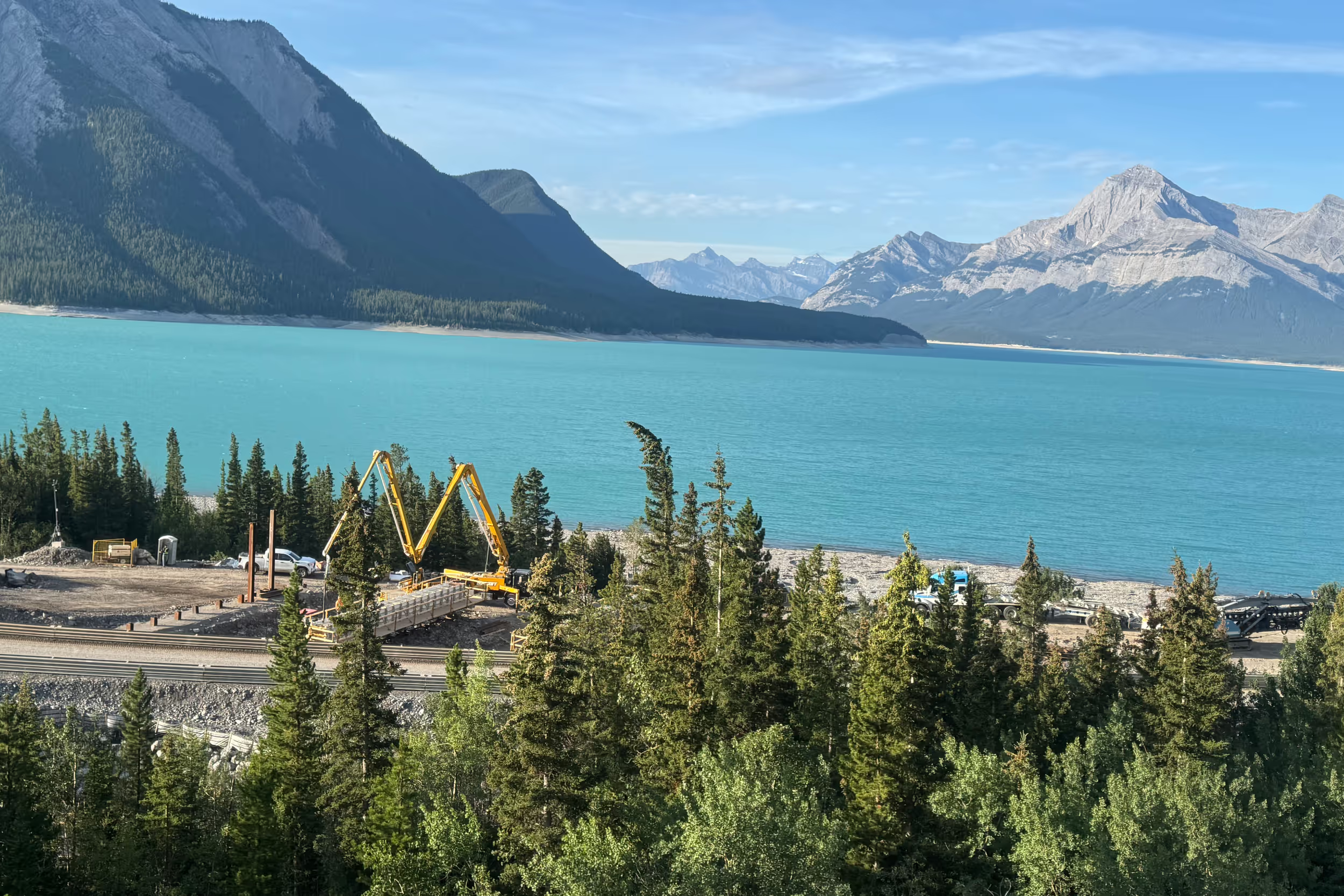
Chutes are limited by truck position. Pumps are built for access. A boom pump can reach over houses, garages, retaining walls, excavation edges, and other obstructions to cover broad placement areas. Compact roll-and-fold boom equipment can be the better fit where overhead clearance or setup space is limited.
For locations a boom cannot serve efficiently, a truck-mounted line pump can run hose to the work area. This is useful for backyard slabs, interior placements, tight infill lots, agricultural work, additions, and sites where the concrete must travel around a structure rather than over it.
Reach does not mean a pump can be set up anywhere. It still needs firm ground, safe outrigger clearance, a planned truck and pump location, and a clean route for the line or boom. The point is that pumping creates options where a chute requires the site to conform to the truck.
Labour requirements change the true cost
Chute delivery can look less expensive on the quote because it does not require a separate pump and operator. That comparison is incomplete if the chute leaves the crew moving metres of concrete by hand.
Consider the labour required to wheelbarrow concrete to a backyard pad, distribute a long footing run, or carry material across a large commercial slab. Add the time spent cleaning routes, managing traffic, correcting low spots, and keeping up with the ready-mix truck. The job may need more labourers, more finishing support, and more time than originally planned.
Pumping has an upfront equipment cost, but it can reduce the number of hands needed for material movement and shorten the overall placement window. On pours where access is poor or volume is significant, that can make pumping the better value even before considering reduced crew fatigue and improved control.
The best comparison is not pump cost versus no pump cost. It is total placement cost: equipment, labour, time, cleanup, risk, and the consequences of falling behind during a live pour.
Placement quality and finish results
Concrete performs best when it is placed efficiently and handled correctly. Neither a chute nor a pump replaces proper mix design, vibration, forming, or finishing. Both methods can produce good work when the pour is planned and the crew is prepared.
Pumping gives the operator and placing crew more control over where material lands. That matters when filling walls, placing footings around reinforcing steel, working around embeds, or maintaining a consistent supply across a broad slab. The crew is less likely to pull large piles of concrete long distances, which helps keep the pour organized.
For finish-sensitive flatwork, steady placement helps the crew maintain grade and avoid rushed corrections. It does not eliminate the need for enough finishers or a proper strike-off plan, but it removes one common source of chaos: concrete arriving far from where it is needed.
A chute can still be ideal for simple, open forms where it lands directly at the placement point. There is no benefit in adding a pump just because one is available. The goal is efficient, controlled concrete placement, not equipment for its own sake.
Access, safety, and site cleanup
When chute delivery requires trucks to reverse deep into a property or crews to work around moving vehicles, the site can become crowded quickly. Poor access can also mean concrete is tracked across driveways, yards, finished grades, or other trade work.
A well-planned pump setup keeps the ready-mix trucks feeding from a defined location while the boom or line handles delivery. This can reduce site traffic near the forms and limit the amount of concrete carried through the work area. It is particularly useful on occupied properties, narrow residential lots, and active commercial sites.
Pumping also demands disciplined setup. Operators need to assess overhead power lines, outrigger locations, ground conditions, hose routing, and the truck turnaround plan before concrete arrives. A capable pump crew will identify these constraints early, because a fast pour only works when the entire site is ready for it.
Cleanup deserves the same attention. Chute placement can leave material along travel paths if concrete is moved manually. Pumping concentrates washout and equipment cleanup around the planned staging area, but the site still needs a proper washout location and clear responsibility for final cleanup.
When chute delivery is the better call
Choose chute delivery when the truck can safely get close to the forms, the placement path is short, the volume is manageable, and the crew can place and finish without excessive rehandling. A small exposed pad at the front of a property is a typical example.
It can also be the right choice where setup room is extremely limited and there is no safe location for a pump or outriggers. Ground conditions, overhead obstacles, municipal restrictions, and site traffic can all affect the decision. A pump is not a workaround for poor planning or unsafe access.
When concrete pumping earns its place
Pumping is often the stronger choice for backyard work, long footings, basement walls, large slabs, elevated decks, commercial placements, industrial work, and any pour where the truck cannot directly serve the forms. It is also worth considering when labour is tight, timing matters, or the jobsite needs cleaner material flow.
For contractors, the biggest advantage is predictability. The right pump configuration and an experienced operator help keep concrete moving at a planned rate, even when access is not ideal. That gives the placing crew a better chance to stay ahead of the material instead of reacting to it.
Before booking, confirm the pour volume, mix, truck access, pump setup area, overhead clearance, placement distance, line route, and desired start time. Those details determine whether a boom pump, line pump, chute, or a different staging plan will work best.
A good pour plan starts with honest site conditions. If the chute can reach the forms cleanly and safely, use it. If access, labour, reach, or placement control will hold the crew back, a pump is built to keep the work moving. Bandit Concrete Pumping can help match the equipment to the job before the first ready-mix truck arrives.