 (587) 703-6048
Commercial Concrete Pumping Services That Keep Jobs Moving

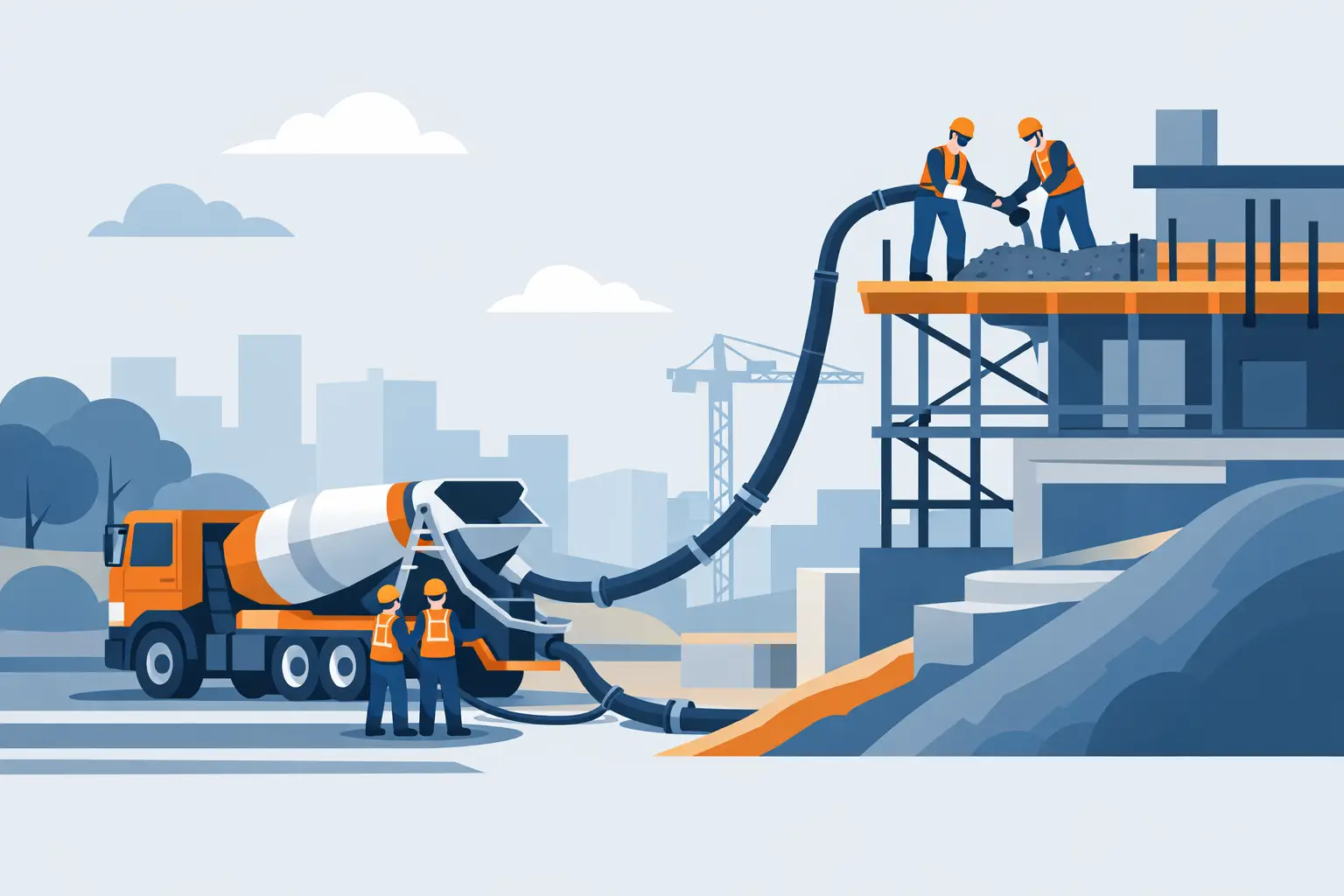
A commercial pour can lose time fast when the concrete truck cannot reach the placement area, the crew is tied up moving material, or access changes halfway through the day. Commercial concrete pumping services put concrete where the work is happening - over obstacles, across a large footprint, or into restricted areas - without turning placement into a labour bottleneck.
For commercial contractors across Central Alberta, the pump is not simply a delivery tool. It is part of the pour plan. The right equipment, a capable operator, workable site access, and clear communication with the ready-mix supplier all affect production, finish quality, and whether the schedule stays intact.
What commercial concrete pumping services solve on site
Commercial work rarely offers the simple conditions of an open residential lot. A project may involve a warehouse slab behind an active building, footings around congested excavation, a suspended deck, equipment pads, retaining walls, or a phased addition where other trades are already working nearby. In these situations, placing concrete by chute or wheelbarrow is often slow, physically demanding, and difficult to control.
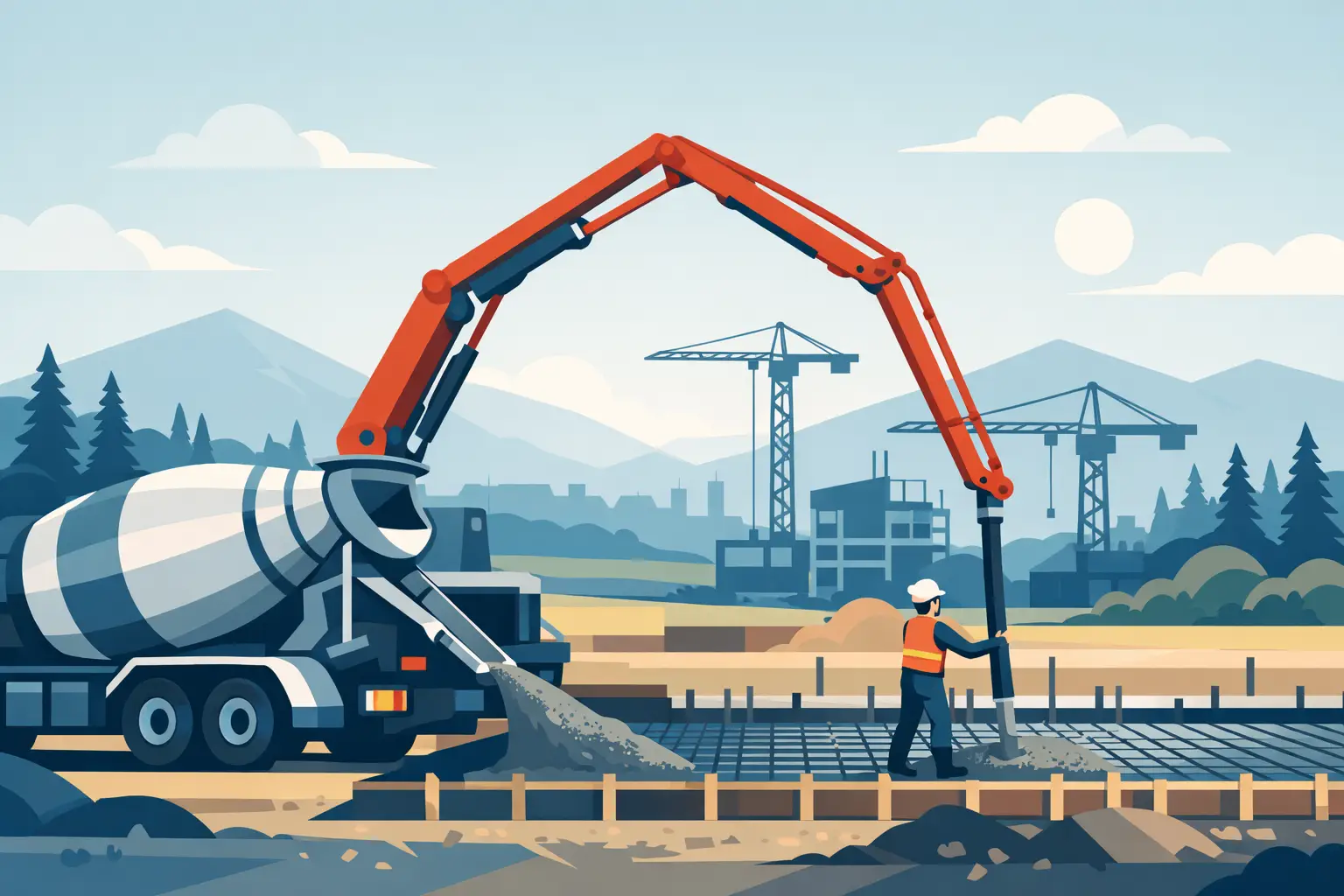
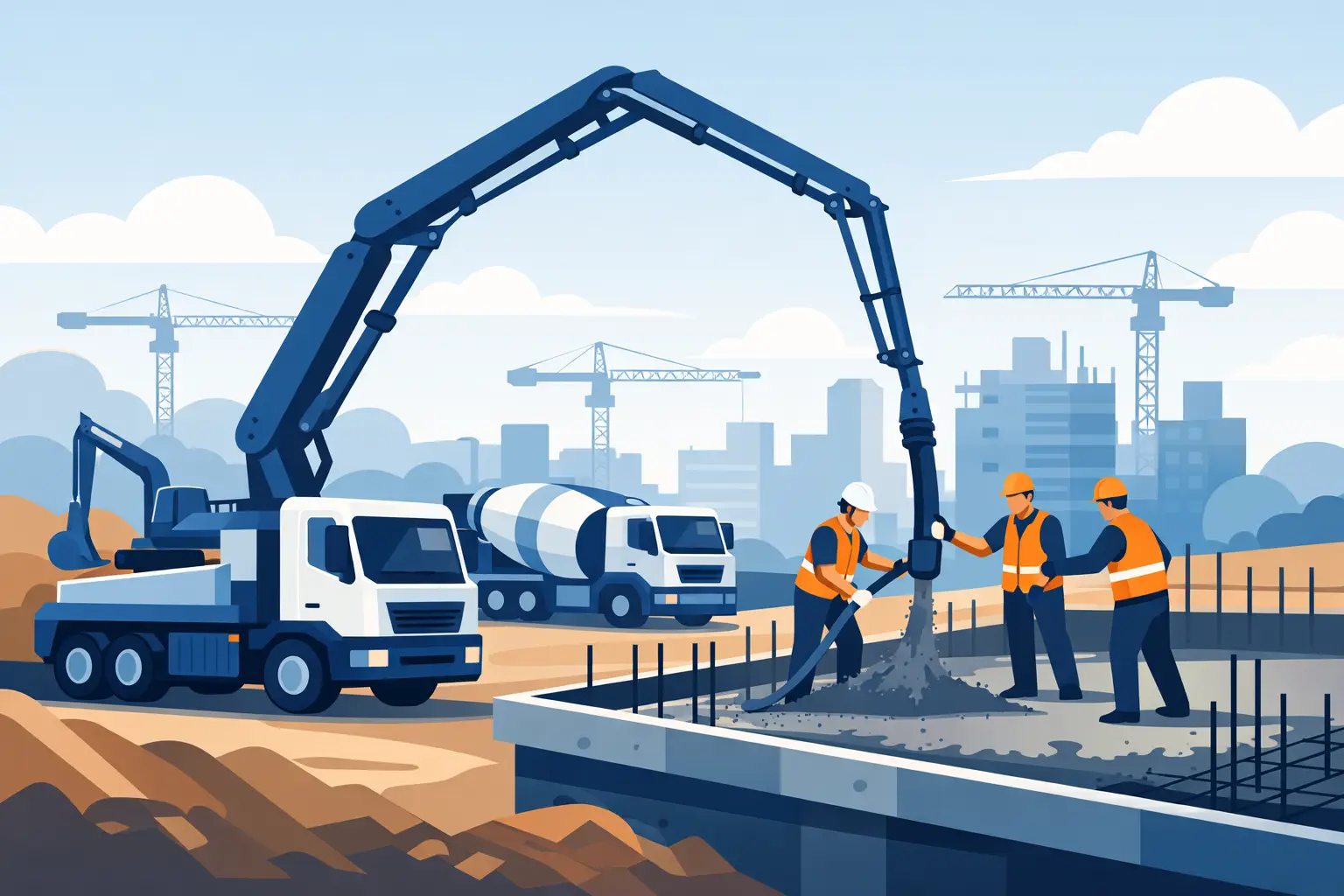
A boom pump gives the crew reach and coverage from a stable setup position. The operator can move the boom through the planned pour area while the placing crew focuses on grade, consolidation, screeding, and finishing. That separation of tasks matters. Labour is used on concrete work rather than repeatedly hauling concrete from the truck to the forms.
A line pump is often the better answer where access is tight or placement needs to be especially controlled. Truck-mounted line pumping can move concrete through hose around buildings, down a side yard, into a lower area, or through a route a large boom truck cannot safely set up for. It is not a replacement for a boom pump on every job. It is a different tool for sites where compact access and precise hose placement matter more than broad overhead reach.
The result is usually a more consistent pour pace, less unnecessary handling, and a cleaner path from the ready-mix truck to the forms. On a commercial job, those gains can protect more than the concrete crew's time. They can reduce disruption to traffic routes, staged materials, landscaping, and neighbouring operations.
Choosing the right pump for a commercial pour
Pump selection should start with the site, not a generic preference. The biggest boom is not automatically the best option, and a compact unit is not always enough. The right choice depends on reach, setup room, ground conditions, concrete volume, hose routing, and the sequence of the pour.
Boom pumps for reach and broad coverage
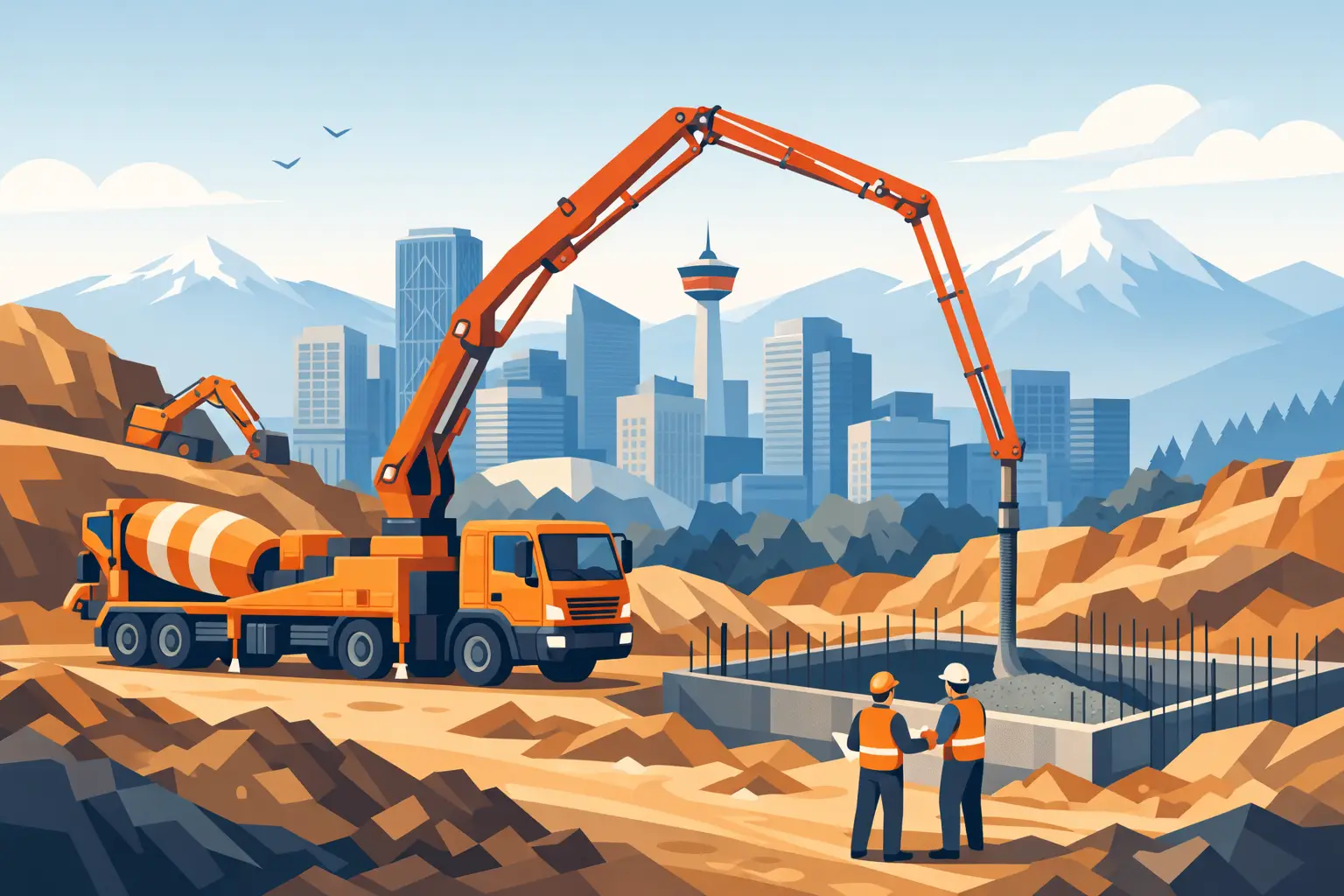
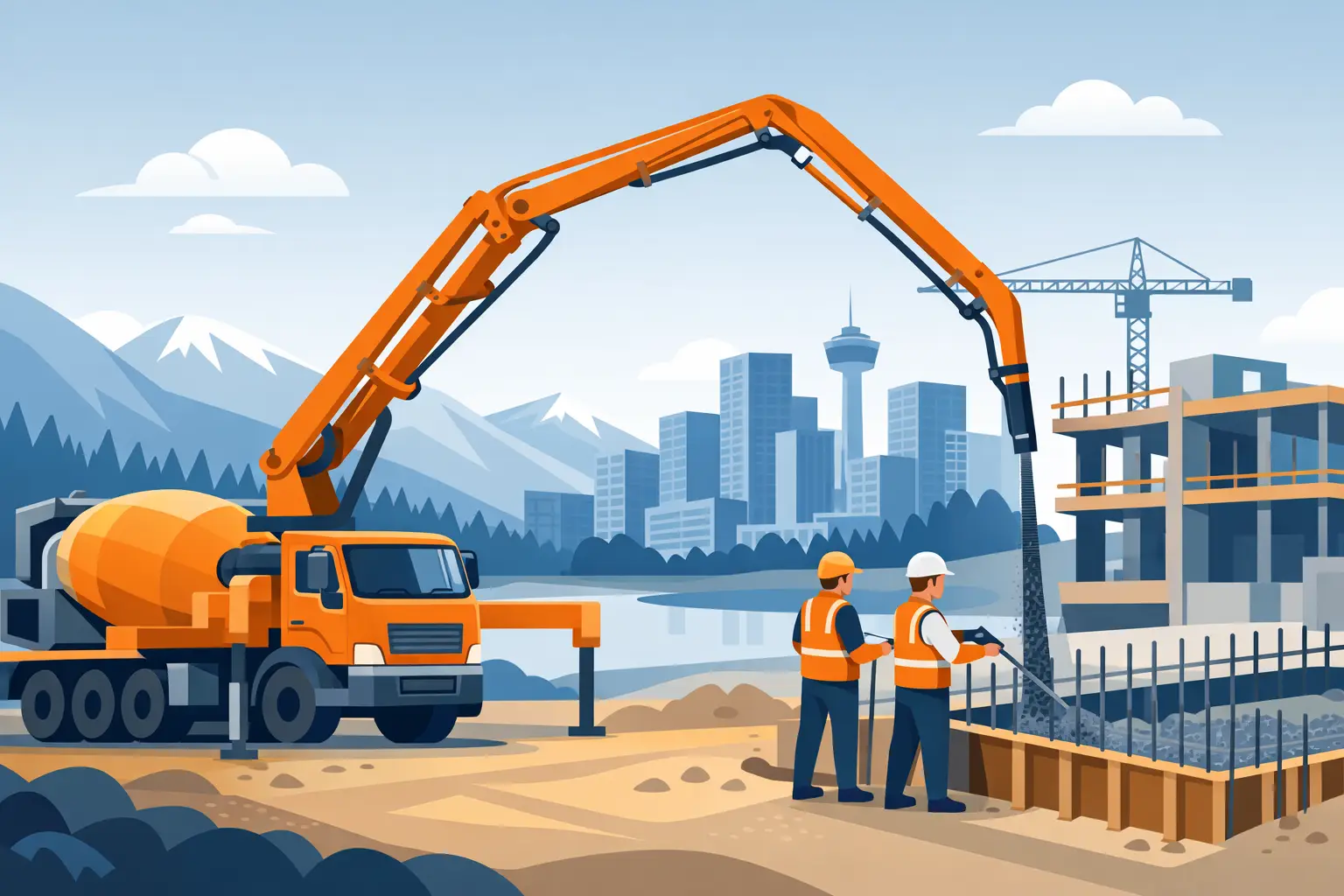
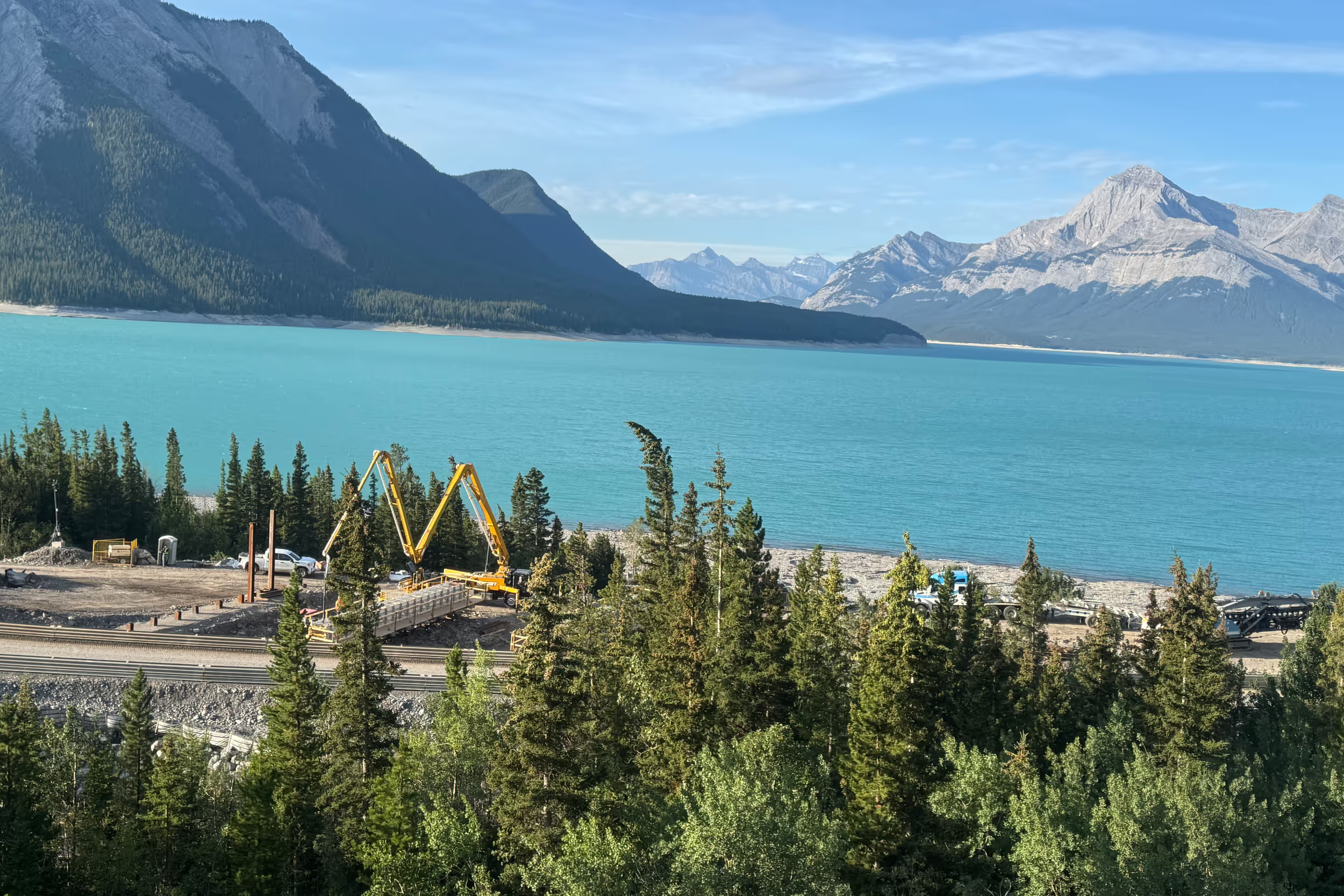
Boom pumps are well suited to larger slabs, structural concrete, commercial foundations, retaining walls, and pours where material must travel over a building, excavation, obstacle, or broad work area. High-reach boom trucks can cover substantial areas from one setup, which reduces the need to reposition equipment during the pour.
That coverage can make a major difference on production work. Fewer moves mean less interruption for the crew and fewer opportunities for grade or timing to get away from the team. A properly positioned boom also keeps the concrete truck traffic and the placement zone better organized.
Setup is still critical. The pump needs adequate space for outriggers, safe overhead clearance, firm support conditions, and a route that allows ready-mix trucks to feed the hopper without blocking the jobsite. Before booking, contractors should consider power lines, soft ground, excavation edges, site fencing, traffic controls, and overhead structures. These details are not paperwork. They determine whether the pump can work safely and efficiently when the trucks arrive.
Compact boom equipment for restricted access
Tight commercial sites often need a different approach. Compact roll-and-fold boom configurations can be a strong fit where access is limited, buildings are close together, or a standard setup would interfere with surrounding work. Their value is not just size. It is the ability to work within a confined footprint while still providing the reach and control that direct chute placement cannot offer.
This can apply to infill construction, commercial additions, urban redevelopment, small multi-unit projects, and work around established facilities. Every site has limits, so it depends on the actual access path and required placement area. A site review before the pour helps avoid sending equipment that is poorly matched to the conditions.
Line pumps for hard-to-reach placement
A 4x4 truck-mounted line pump is a practical option where a boom cannot reach, cannot set up, or is more equipment than the project requires. Line pumping is commonly useful for interior slabs, remote pads, narrow access routes, agricultural and industrial work, and locations where hose needs to be routed carefully around existing structures.
The trade-off is that hose routing and crew coordination become even more important. The line needs a clear, protected path, and the placing crew must be ready to manage the hose safely. When those details are planned properly, line pumping can provide controlled placement in locations that would otherwise require substantial manual handling.
How to prepare for a better pump day
Concrete pumping works best when the pump company is included before the ready-mix trucks are dispatched. A quick conversation early in planning can identify access issues, recommend the appropriate equipment, and establish a realistic setup location. Waiting until the truck is at the gate leaves little room to solve preventable problems.
Start with the placement plan. Confirm the pour area, total volume, intended pour sequence, concrete mix, expected truck spacing, and any locations that need special attention. If the job involves a structural specification or a mix with unusual aggregate, fibres, or admixtures, provide that information in advance. Pumpability depends on more than slump. The mix must be suitable for the equipment and the required finish.
The site should be ready before the pump arrives. That means access is cleared, the setup area is identified, forms and reinforcing are inspected, washout planning is in place, and the crew knows who is directing truck movement. On busy commercial sites, it also helps to notify other trades and keep the pump area free of stored materials, parked vehicles, and unnecessary foot traffic.
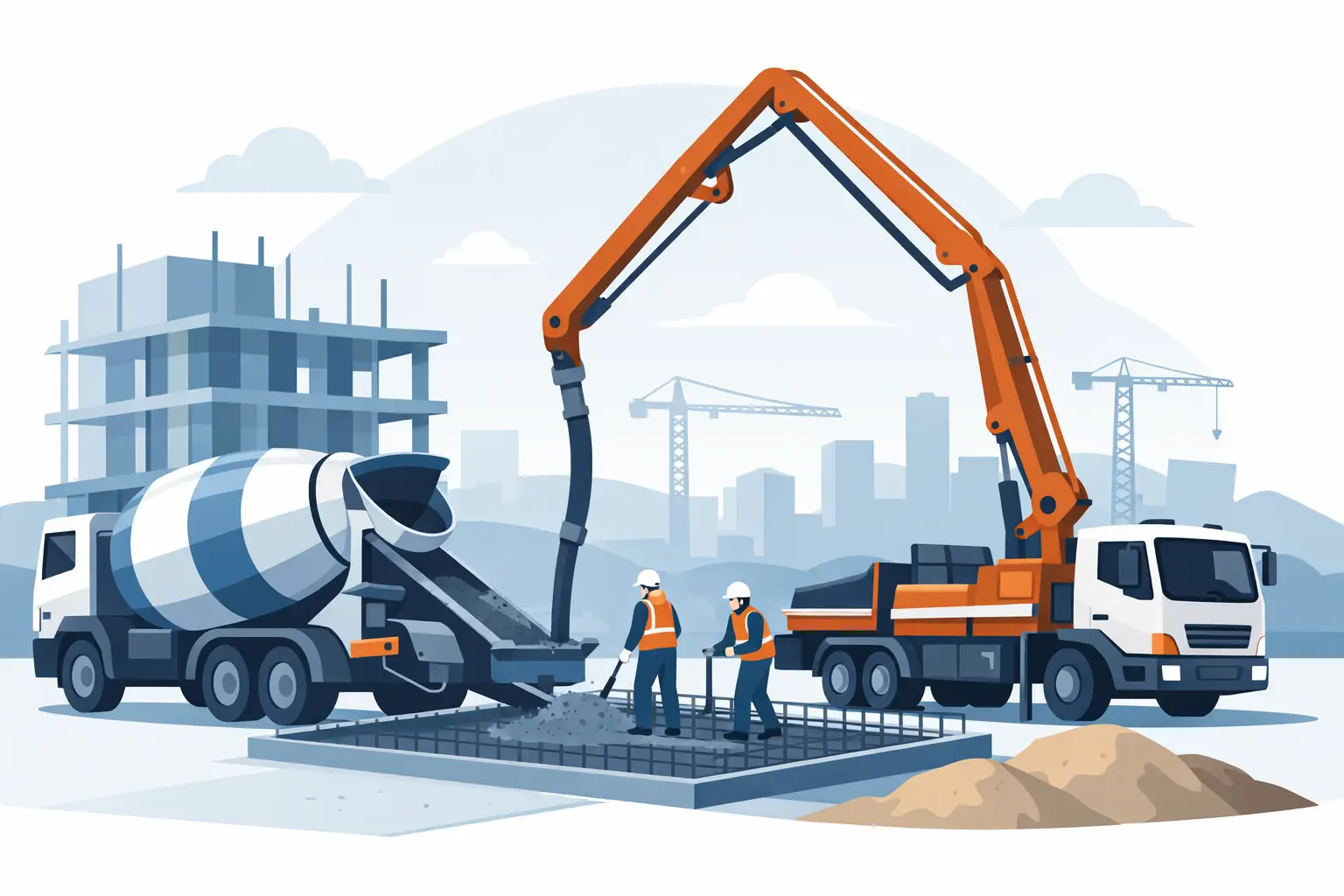
The placing crew should have its finishing tools, vibrators, laser or grade controls, and labour in position before pumping starts. A pump can maintain a productive pace, but it cannot compensate for an unprepared receiving crew. If concrete begins arriving faster than the forms can be placed and finished, quality and scheduling both suffer.
Safety and clean placement are part of the service
Commercial pumping involves moving concrete under pressure, operating around large equipment, and coordinating several crews in one active area. The operator, concrete contractor, and site superintendent all have a role in maintaining a safe work zone.
Keep people clear of the pump setup and boom operating area unless their work requires them to be there. Never stand in the path of a hose or between equipment and fixed objects. Maintain proper clearance from overhead power lines, and make sure the ground can support the pump and outriggers. If conditions change because of rain, excavation work, traffic, or another trade, speak up before the pour continues.
Clean placement also deserves attention. Concrete splatter, washout water, and material tracking can create avoidable cleanup and environmental issues. A professional pumping crew works with the site plan, protects the immediate work area where practical, and keeps the operation organized. Good housekeeping is not cosmetic on a commercial project. It reduces hazards and keeps the next phase of work from starting with a mess.
The value is in placement, not just pumping
The lowest hourly rate does not always produce the lowest project cost. A pump that is too small, poorly suited to the site, or operated without a clear plan can lead to delays, extra labour, rejected concrete, and rushed finishing. On the other hand, a properly matched pump can shorten placement time and allow the crew to concentrate on the work that affects the finished product.
That is why experienced operators matter. They read the setup, manage the boom or hose deliberately, communicate with the placing crew, and adapt when the jobsite presents a practical challenge. Equipment capacity is important, but it only pays off when it is handled by someone who understands the flow of a concrete pour.
Bandit Concrete Pumping provides commercial contractors with boom pumps, compact access options, and truck-mounted line pumping backed by experienced operators who understand Alberta jobsites. Whether the work is a large slab, a foundation, a difficult equipment pad, or a restricted-access placement, the goal stays simple: get the concrete placed accurately, keep the crew productive, and leave the site ready for the next task.
Before the next commercial pour is booked, walk the route from the truck entrance to the farthest form. That one step often reveals the access, reach, and sequencing details that determine whether the day runs smoothly.