(587) 703-6048

Concrete Pumping in Tight Spaces That Works

A narrow side yard, a fenced backyard, an active commercial site, or a shop build tucked behind existing structures can turn a straightforward pour into a labour problem fast. Concrete pumping in tight spaces gives crews a practical way to move concrete where ready-mix trucks, chutes, wheelbarrows, and skid steers cannot work efficiently.
For Alberta contractors and property owners, access is rarely the only challenge. The job still needs to stay on schedule, the concrete needs to arrive where the finishers need it, and the site cannot be left buried in spilled material. The right pump setup and an experienced operator make the difference between a controlled pour and a long day of unnecessary handling.
Why Tight-Access Pours Need a Different Plan
Concrete does not wait for a site to become convenient. Once the truck is on site and the mix is discharged, crews need a clear, reliable placement plan. On restricted jobs, relying on wheelbarrows can create a bottleneck between the truck and the forms. It adds labour, increases fatigue, and raises the chance of uneven placement, cold joints, damaged landscaping, or concrete tracked across finished areas.
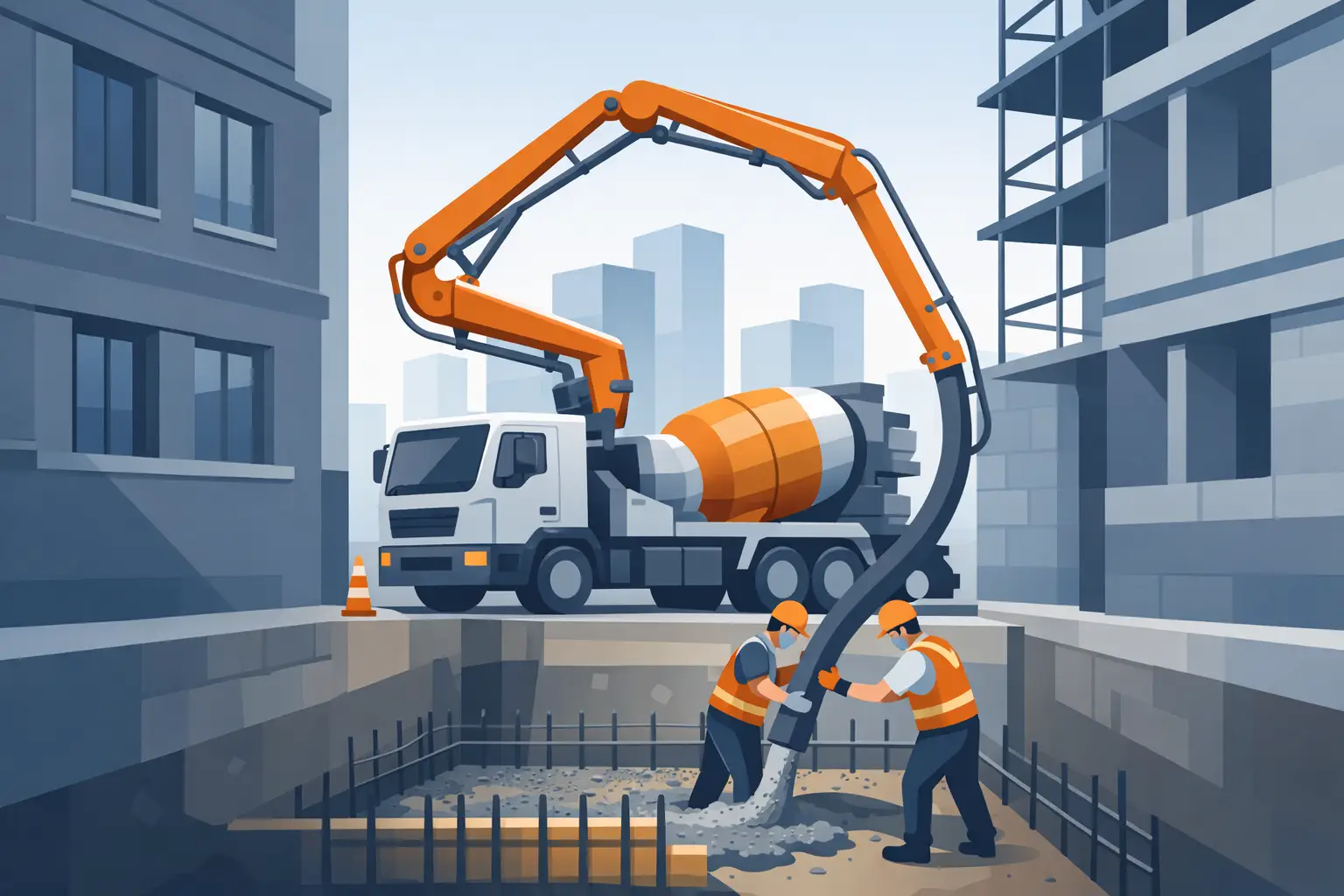
A pump changes the route, not the requirements. The forms still need to be ready, the base and reinforcement must be inspected, and the finishing crew needs to be in position. But instead of moving concrete by hand through a narrow access point, the pump line carries it directly to the pour.
That is especially useful for basement foundations, backyard patios, detached garages, additions, retaining walls, shop slabs, agricultural buildings, and interior commercial work. It also helps on infill projects where neighbouring homes, fences, overhead lines, and limited street space leave no room for a standard chute pour.
Concrete Pumping in Tight Spaces Starts With Access
The best equipment for a restricted pour depends on more than the size of the slab. Access to the site, the distance from the street, required reach, overhead clearance, ground conditions, and the concrete mix all matter. A pump that is ideal for one project may be the wrong fit for the next.
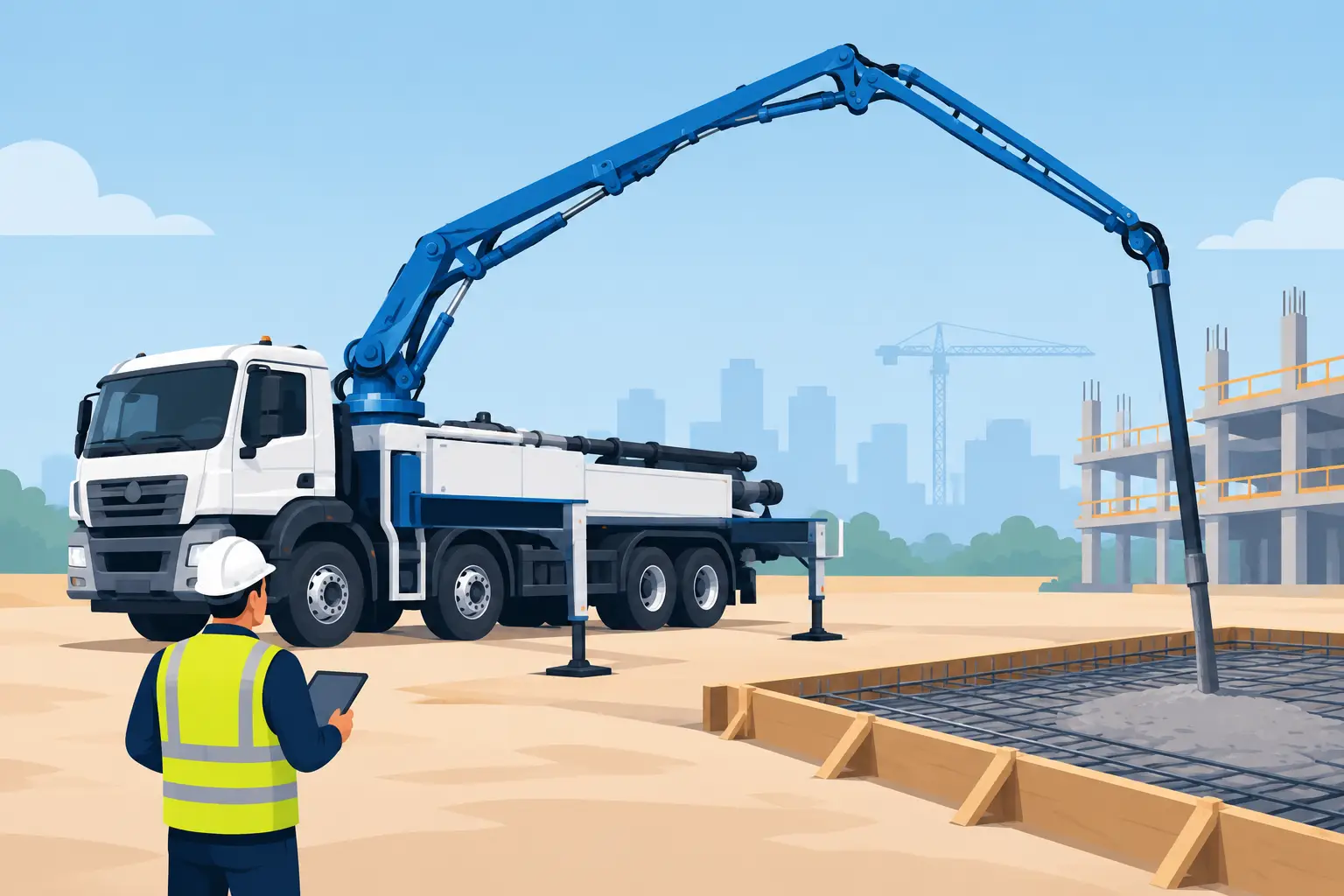
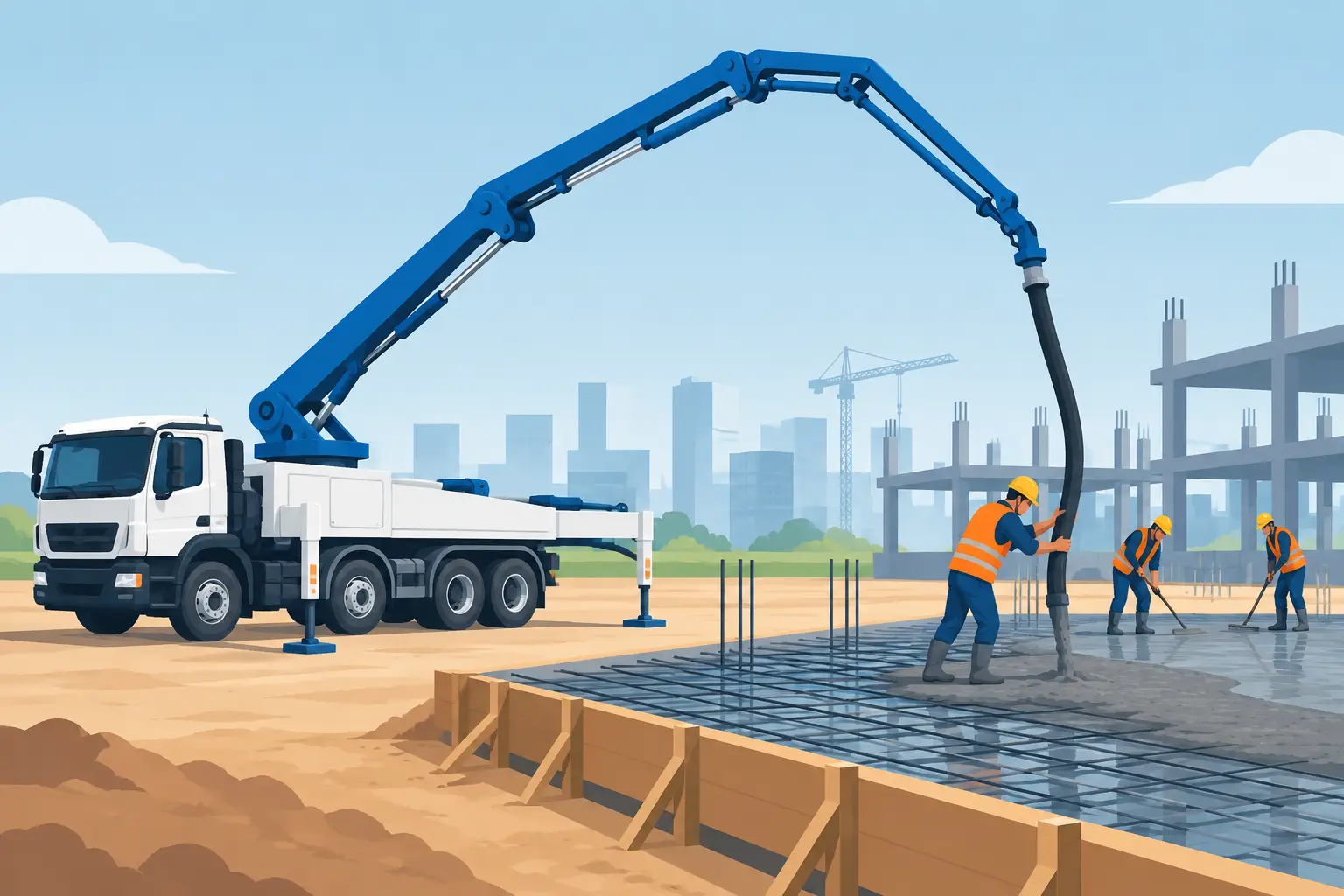
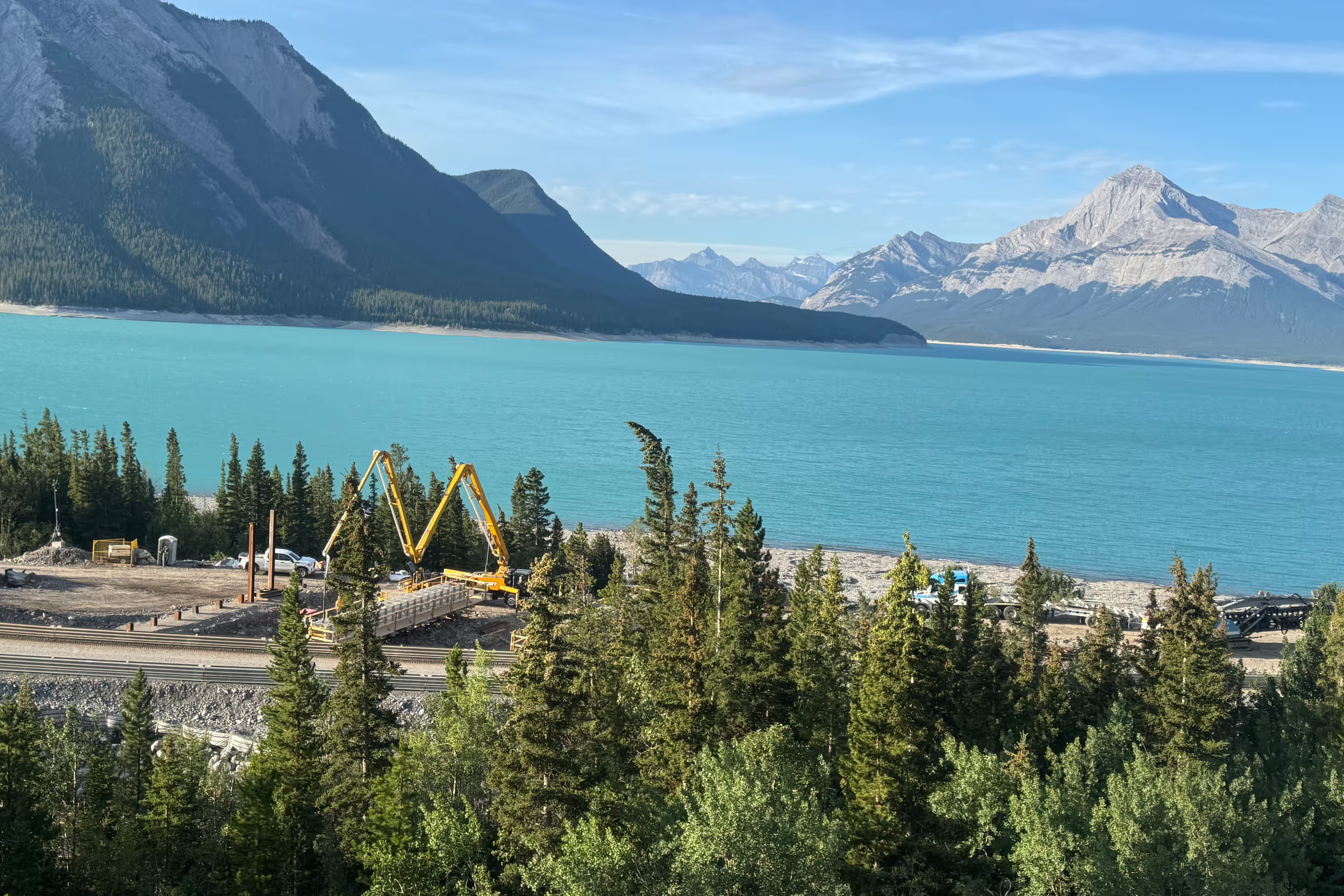
A compact boom pump can be a strong option when there is enough room to set up safely but the placement area is difficult to reach. Roll-and-fold boom configurations are built for sites where a larger boom cannot easily unfold or work around structures. They can place concrete over a house, around a corner, or into a confined area while keeping the ready-mix truck positioned where it has workable access.
When the path is too tight for a boom truck or the pour requires a more controlled hose route, a truck-mounted line pump is often the better choice. Line can be run along the ground, through a side yard, around a building, or into a location with limited overhead clearance. This approach is common for rear-yard slabs, additions, small foundations, and areas where the hose must follow a precise route.
It depends on the job. A line pump may take more time to set up and clean because the crew must manage the line route. A boom pump may provide faster coverage across a broad foundation or slab, but it needs adequate setup space and safe boom clearance. Good planning selects the equipment around the site, not just the cubic metres being poured.
The Details Worth Discussing Before Pour Day
A quick site conversation before booking can prevent avoidable delays. Contractors should identify the narrowest point of access, gate widths, slopes, soft ground, overhead utility lines, parked vehicles, fences, and any structures that limit boom movement. If line is required, the route should be considered before material or equipment is staged along it.
The concrete supplier and pumping crew also need to be on the same page about the mix. Pumpable concrete requires appropriate aggregate size, slump, and admixture considerations for the line and the placement distance. Changing the mix at the last minute can affect pump performance and finishability, so it is better to coordinate early.
Photos, site plans, and a clear description of the pour area are useful when access is complicated. They give the pump provider an opportunity to recommend the right machine and flag concerns before the crew arrives with trucks waiting.
Faster Placement Without More Bodies on the Ground
Tight sites often tempt crews to add labour and make do. That can work for a very small pour, but it becomes expensive quickly. Workers moving loaded wheelbarrows through narrow paths cannot place concrete at the same pace as a pump. The result is more time spent transporting material and less time spent striking off, vibrating, screeding, and finishing it properly.
Pumping lets the placement crew focus closer to the forms. The hose can be moved in a controlled pattern, placing concrete where it is needed rather than dropping a pile that must be dragged into place. That control matters around foundation walls, footings, grade beams, stepped forms, and reinforced sections where consolidation is critical.
Less manual transport also reduces site damage. Wheelbarrow traffic can rut lawns, damage landscaping, mark paving stones, and make a mess in a finished side yard. A properly planned pump setup limits the travel path and helps keep the work area more manageable during cleanup.
There is still labour involved. Someone must guide the hose, manage placement, vibrate where required, and maintain the pace of the pour. Pumping is not a substitute for a prepared concrete crew. It is a way to put that crew's effort into the work that affects quality instead of hauling concrete from point A to point B.
Safety Is Part of the Equipment Choice
Restricted access can create hazards that are easy to underestimate. Boom pumps require clear overhead space and a stable setup area for outriggers. Line pumps require hose routing that does not create unnecessary trip hazards, block emergency access, or place the line where it can be damaged by traffic or sharp edges.
Ground conditions matter as well. Soft shoulders, fresh excavation, steep grades, and poor access roads can affect where equipment can safely set up. The pump operator needs enough room to work without compromising the truck, the crew, or nearby structures.
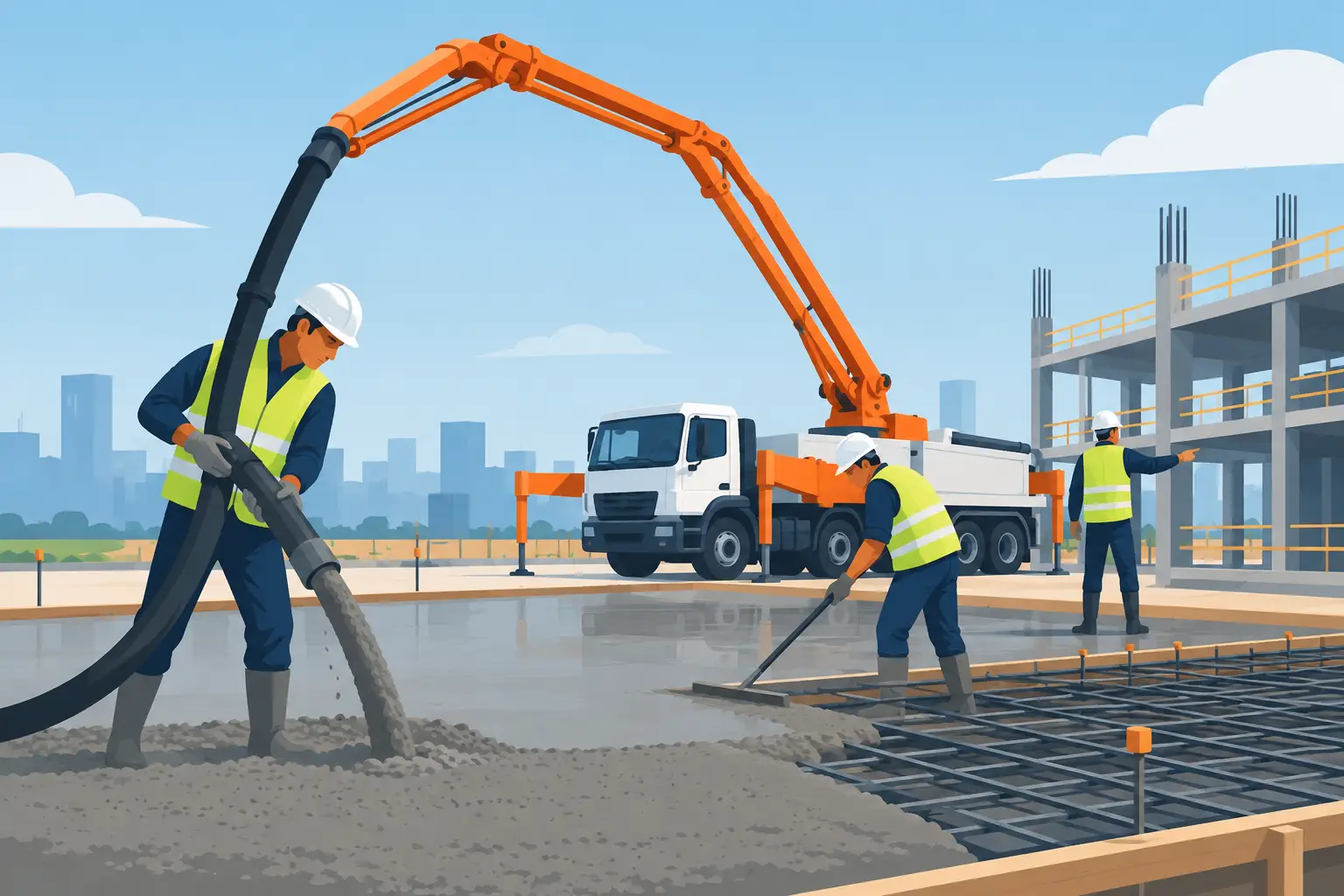
The placement zone needs attention too. Concrete hose is heavy and can move under pressure, particularly during start-up, stoppages, or changes in flow. Experienced operators coordinate with the placing crew, maintain steady communication, and adjust placement to keep the pour controlled.
This is why the lowest-cost approach is not always the best choice. Saving a little on equipment can cost far more if the job runs long, the crew cannot maintain the pour, or concrete ends up where it does not belong.
Scheduling Keeps the Pour Moving
A tight-space pour has more moving parts than a driveway with open access. Ready-mix truck timing, pump arrival, site readiness, crew availability, weather, and finishing requirements all need to line up. If the site is not ready when concrete arrives, there is limited room to wait or reposition equipment.
Before the scheduled time, confirm that forms are complete, reinforcement is secure, access routes are clear, and any gates or obstructions have been addressed. Keep the pump setup area free of vehicles and materials. If a line route crosses a lawn, walkway, or finished surface, discuss protection and cleanup expectations ahead of time.
On larger or more complex placements, it is worth confirming the expected pour sequence. Knowing whether the crew will start with footings, walls, thickened edges, or the far end of a slab allows the operator to position the hose and work efficiently from the beginning.
Bandit Concrete Pumping brings experienced operators and equipment options suited to the real access challenges found across Central Alberta. The goal is straightforward: get concrete placed accurately, keep the crew productive, and avoid turning a difficult access route into a jobsite delay.
A Better Way to Handle the Hard-to-Reach Pour
The right pump arrangement does more than get concrete through a narrow opening. It protects the pace of the pour, gives finishers better control, and reduces the amount of manual handling that slows a crew down. Whether the answer is a compact boom, a line pump, or a different setup entirely depends on the site.
Before booking, walk the route from the street to the forms and look for the point where access stops being easy. That one detail usually tells you what kind of placement plan the job needs.