(587) 703-6048

Concrete Pumping for Multi Storey Buildings

A high-rise or mid-rise pour does not leave much room for improvising. Concrete has a working window, crews are staged across multiple levels, and one blocked access route can slow down the entire operation. Concrete pumping for multi storey buildings gives contractors controlled placement from the truck to the pour location, without relying on labour-heavy wheelbarrow runs, crane buckets, or long chute setups.
For Alberta builders, the right pumping plan helps keep structural work moving through tight schedules, busy sites, variable weather, and changing access conditions. The pump matters, but so do the operator, the mix, the pour sequence, and the site preparation behind it.
Why pumping changes the pace of a multi-storey pour
As a building rises, getting concrete to the point of placement becomes a logistics problem as much as a concrete problem. Ground-level delivery is straightforward. Elevated decks, suspended slabs, walls, columns, stair cores, and elevated grade beams require reach, hose control, and a crew that can place material where the finishers need it.
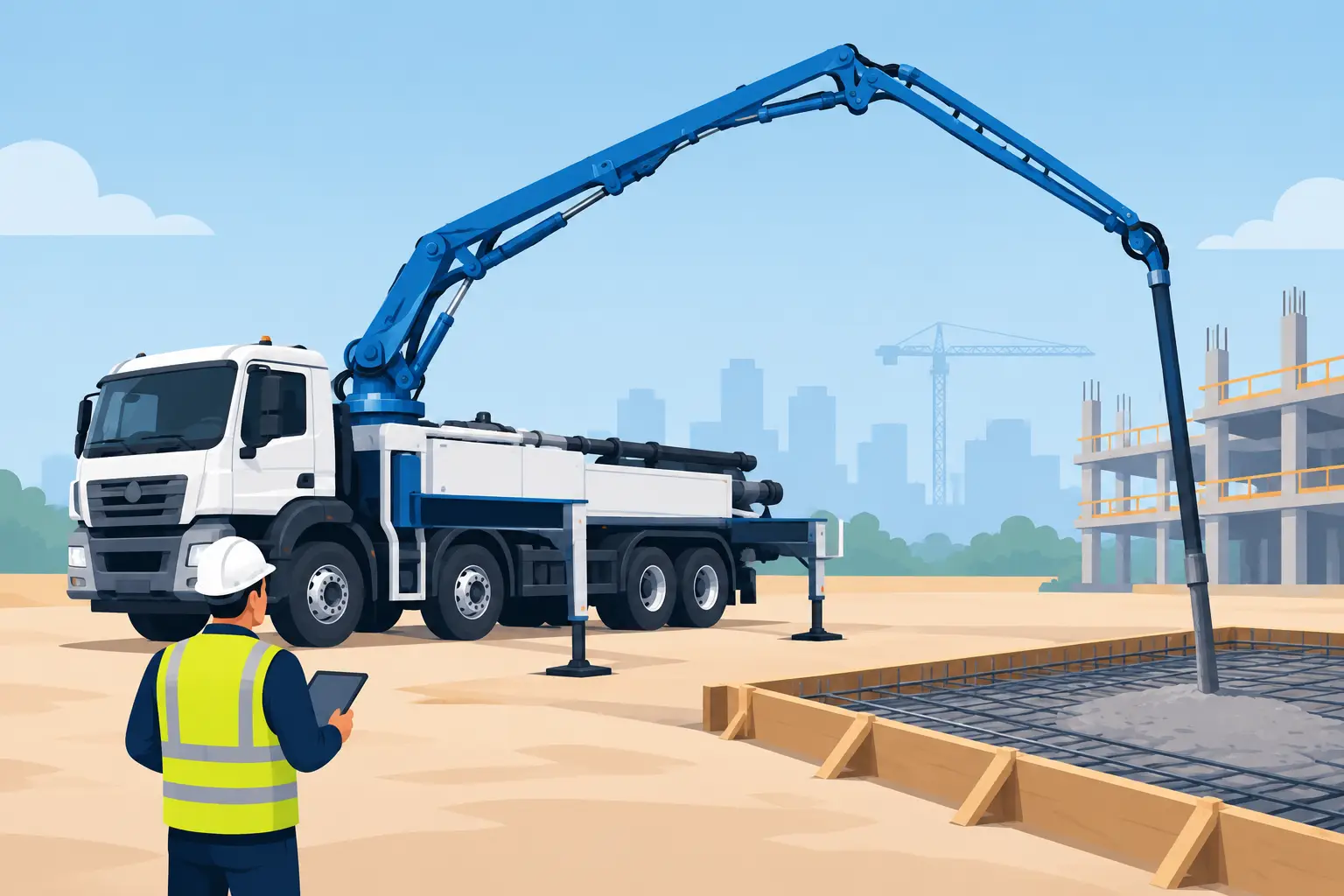
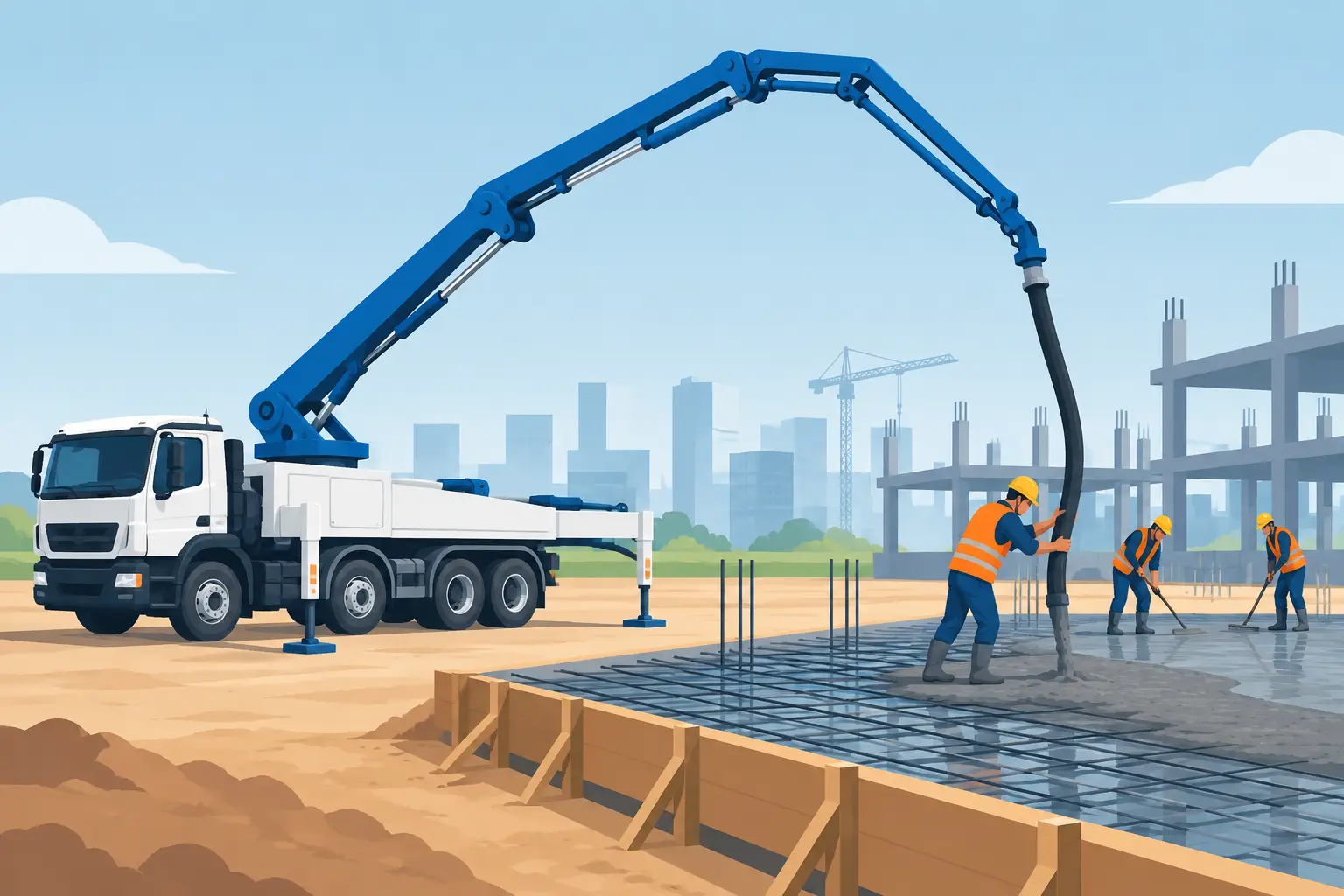
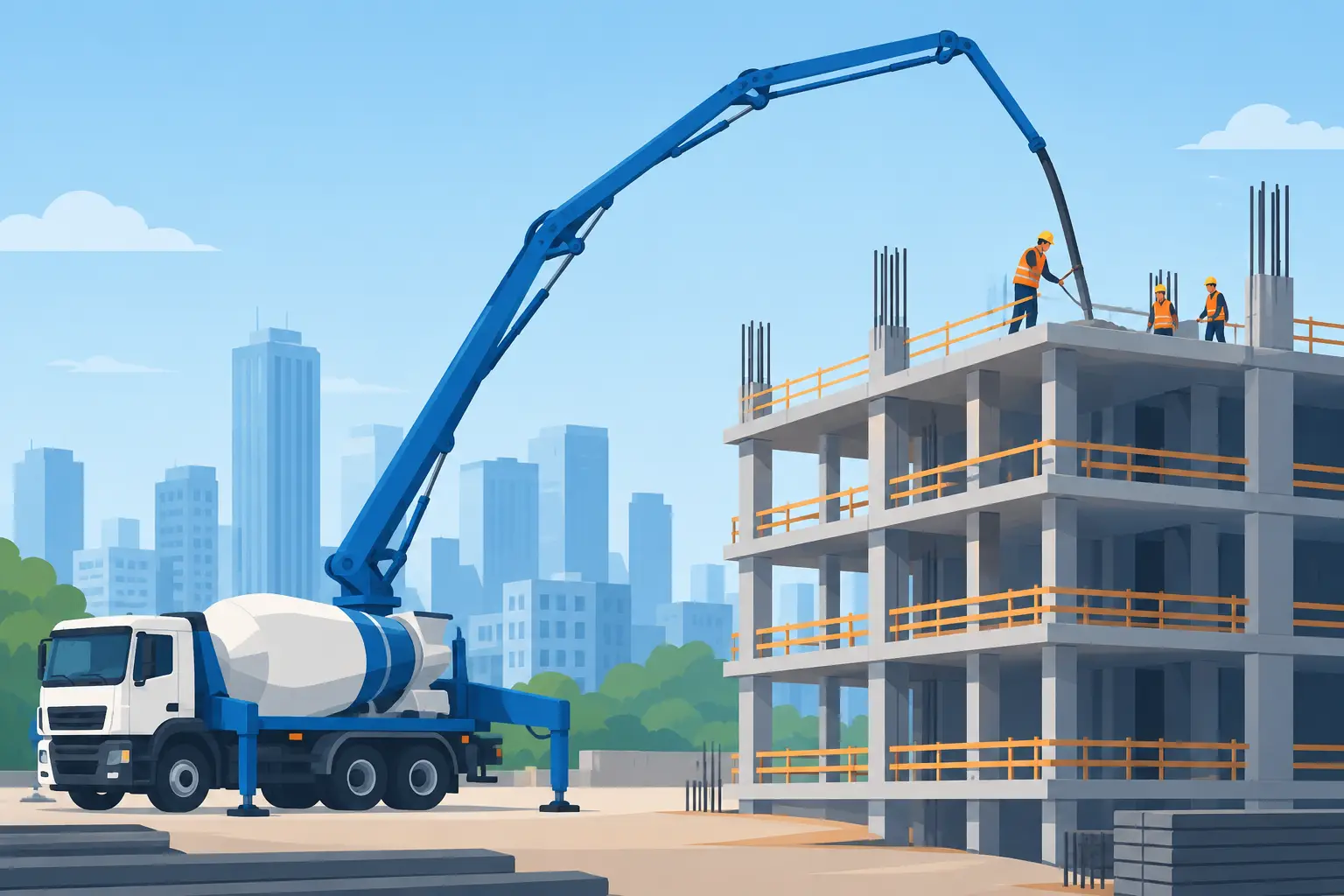
A boom pump can extend over obstacles and reach broad sections of a site from a single setup position. That means ready-mix trucks can remain in an organized truck lane while concrete is moved directly to the deck or formwork. Fewer workers are tied up moving material, and the placing crew can focus on consolidation, screeding, finishing, and maintaining the pour line.
This is not only about speed. Controlled delivery helps crews avoid overloading one area of a form, reduces unnecessary handling, and makes it easier to maintain a steady pace across the slab. On a commercial or residential multi-storey project, that consistency can protect finish quality and help prevent costly interruptions.
Concrete pumping for multi storey buildings starts with a real plan
The right pump setup depends on more than the building height. A project may need vertical reach, but it may also have restricted street access, overhead power lines, neighbouring structures, soft ground, a narrow laydown area, or limited space for ready-mix trucks to queue.
Planning should begin before the concrete order is placed. The pumping contractor needs to understand the pour location, volume, mix design, requested placement rate, hose route, site access, and expected truck cycle times. A good pre-pour discussion identifies problems while there is still time to solve them.
Reach is only one part of pump selection
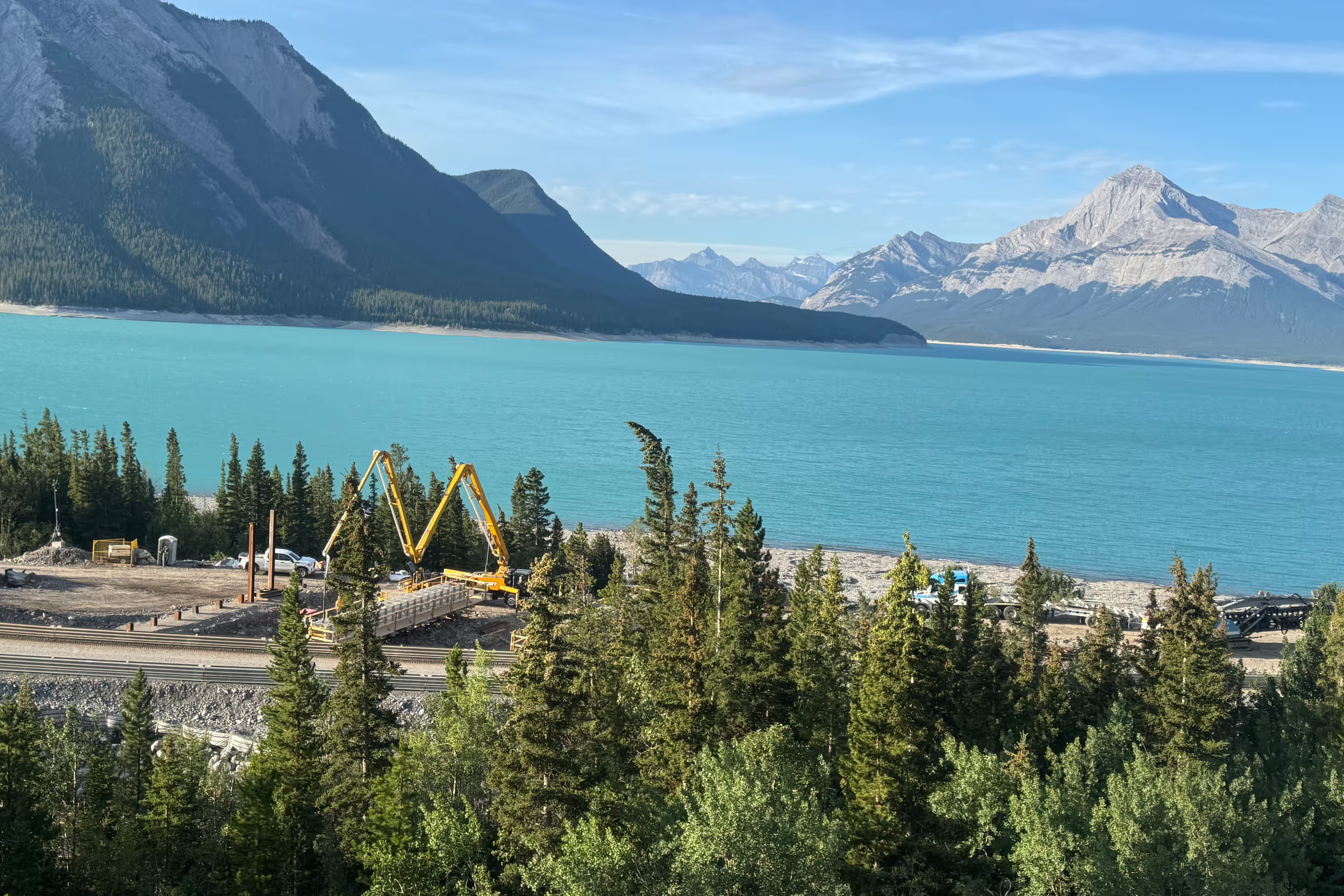
A high-reach boom truck is often the practical choice for elevated slabs and broad multi-storey footprints. It can cover a large working area while reducing the need to relocate equipment during the pour. Where access is tight, compact roll-and-fold boom equipment may be the better fit. Its smaller setup footprint can make a major difference on infill projects, residential builds, or sites with limited room between buildings.
Some work calls for a line pump instead. A truck-mounted line pump can move concrete through a routed line to difficult-to-reach placement areas where a boom cannot safely or efficiently set up. It is especially useful when the route must travel around a structure, through a restricted access point, or into a location with limited overhead clearance.
The best choice is not always the biggest pump. It is the machine that can safely set up, reach the work, support the required output, and keep the rest of the site functioning.
The mix and the pump must work together
Pumping performance depends on a pumpable concrete mix. Aggregate size, slump, supplementary materials, admixtures, fibre content, temperature, and batch consistency all affect how concrete moves through the pipeline. A mix designed for the structure but not discussed with the pump operator can create avoidable delays, pressure issues, or blockages.
For multi-storey work, coordinate early with the ready-mix supplier, concrete contractor, and pump provider. Confirm the specified mix is appropriate for pumping and that truck deliveries can maintain the planned pace. If the project uses special mixes, including high-strength concrete, self-consolidating concrete, fibre-reinforced material, or low-temperature mixes, share that information before pour day.
What a well-run elevated pour looks like
Reliable pours are usually won before the first truck arrives. The site should have a defined pump setup area with suitable ground conditions, clear access, and enough room for outriggers. The truck route needs to be planned so ready-mix units can enter, discharge, and exit without backing up the site or blocking public traffic.
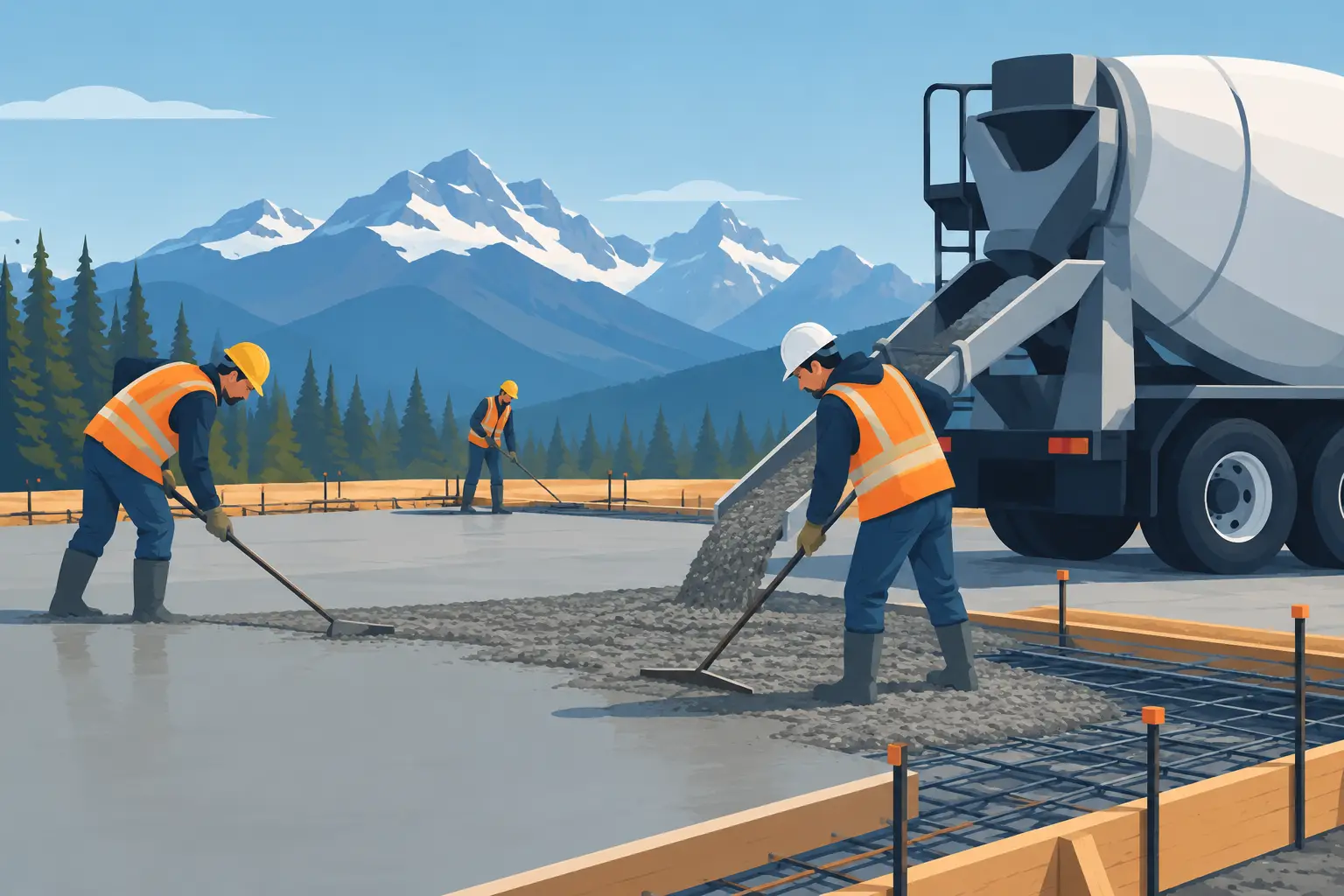
The placing crew should know the pour sequence, finishing plan, communication process, and who has authority to adjust the pace if conditions change. On larger decks, staging the work into manageable sections helps keep concrete moving at a rate the crew can properly consolidate and finish.
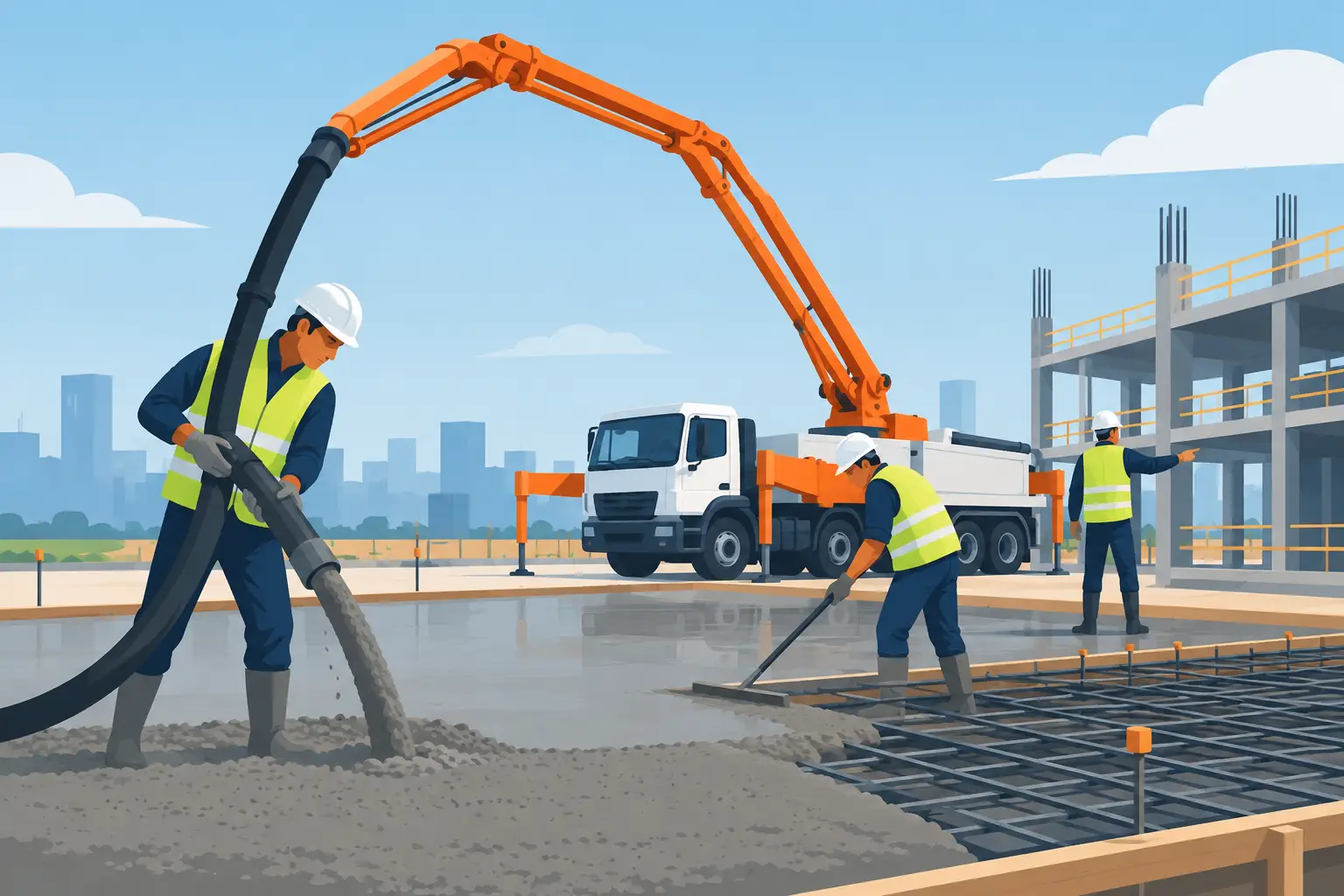
The pump operator plays a central role throughout the placement. An experienced operator watches line pressure, truck supply, boom movement, hose handling, and conditions around the setup. They work with the concrete crew rather than simply moving material. That coordination is what keeps placement accurate when the work is several storeys above grade.
Safety stays ahead of production
Fast placement is valuable only when it is controlled. Boom pumps require stable setup, safe clearance from power lines, organized truck traffic, and a crew that understands the hazards around the end hose and pipeline. No one should stand in a pinch point, under an unsupported boom section, or in the path of uncontrolled hose movement.
Site supervision should also consider wind, freezing temperatures, rain, and ground conditions. Alberta weather can shift quickly, especially on exposed elevated decks. A concrete pump can help maintain efficiency, but it cannot make unsafe conditions acceptable. If wind affects boom operation, if outriggers cannot be properly supported, or if finishing conditions are deteriorating, the plan needs to change.
Clear communication is equally important. Radio contact or agreed hand signals between the operator, hose crew, finishers, and site lead reduces guesswork when visibility is limited by height, forms, or active equipment.
Cost control is about the whole pour, not just the pump rate
A pump has a direct cost, but comparing that cost only to chute placement misses the larger picture. On a multi-storey job, manual movement of concrete requires more labour, takes longer, increases fatigue, and can create inconsistent placement. It also raises the chance of material being spilled, overworked, or left sitting too long while crews try to move it.
Pumping can reduce those pressure points by putting concrete close to its final position. It allows the placing crew to work with a predictable supply instead of waiting for material to be moved across a deck. That can mean fewer labour hours, less site cleanup, improved schedule control, and a better chance of completing the planned pour before weather or daylight becomes an issue.
Still, pumping is not a substitute for proper staffing. A large elevated slab needs enough people to manage the hose, vibrate concrete, strike off, check elevations, finish edges, and maintain curing procedures. If the pump outpaces the crew, quality can suffer. The goal is a placement rate that matches the site team's ability to do the work correctly.
Common problems that can be avoided before pour day
Most pumping delays come from details that were assumed rather than confirmed. Poor truck access, an undersized setup area, unprepared ground, missing line supports, a mix that is difficult to pump, or insufficient crew coverage can all turn a planned pour into a long day.
Avoidable issues include:
- Booking a pump before confirming reach, setup space, and obstacles.
- Ordering a mix without confirming its pumpability and aggregate requirements.
- Underestimating ready-mix truck turnaround times or site traffic restrictions.
- Failing to prepare safe outrigger support and a clear equipment access route.
- Starting an elevated pour without a defined communication and finishing plan.
These are straightforward items, but they have a major effect on the result. A short site review and an honest conversation about constraints often prevent the expensive kind of surprise.
A practical partner for Central Alberta projects
Multi-storey construction needs equipment that fits the job, not a one-size-fits-all answer. Bandit Concrete Pumping supports Central Alberta contractors with boom pumps for broad coverage, compact configurations for restricted sites, and line pumping capability for precise placement where access is difficult. Just as important, the operator arrives ready to assess the work, communicate with the crew, and keep the placement moving cleanly.
Before scheduling your next elevated pour, walk the route from the street to the placement area. Check the ground, the truck flow, the overhead clearance, the building reach, and the crew plan. That preparation gives the pump team what they need to place concrete accurately, and gives your crew the time and control to finish it right.