(587) 703-6048

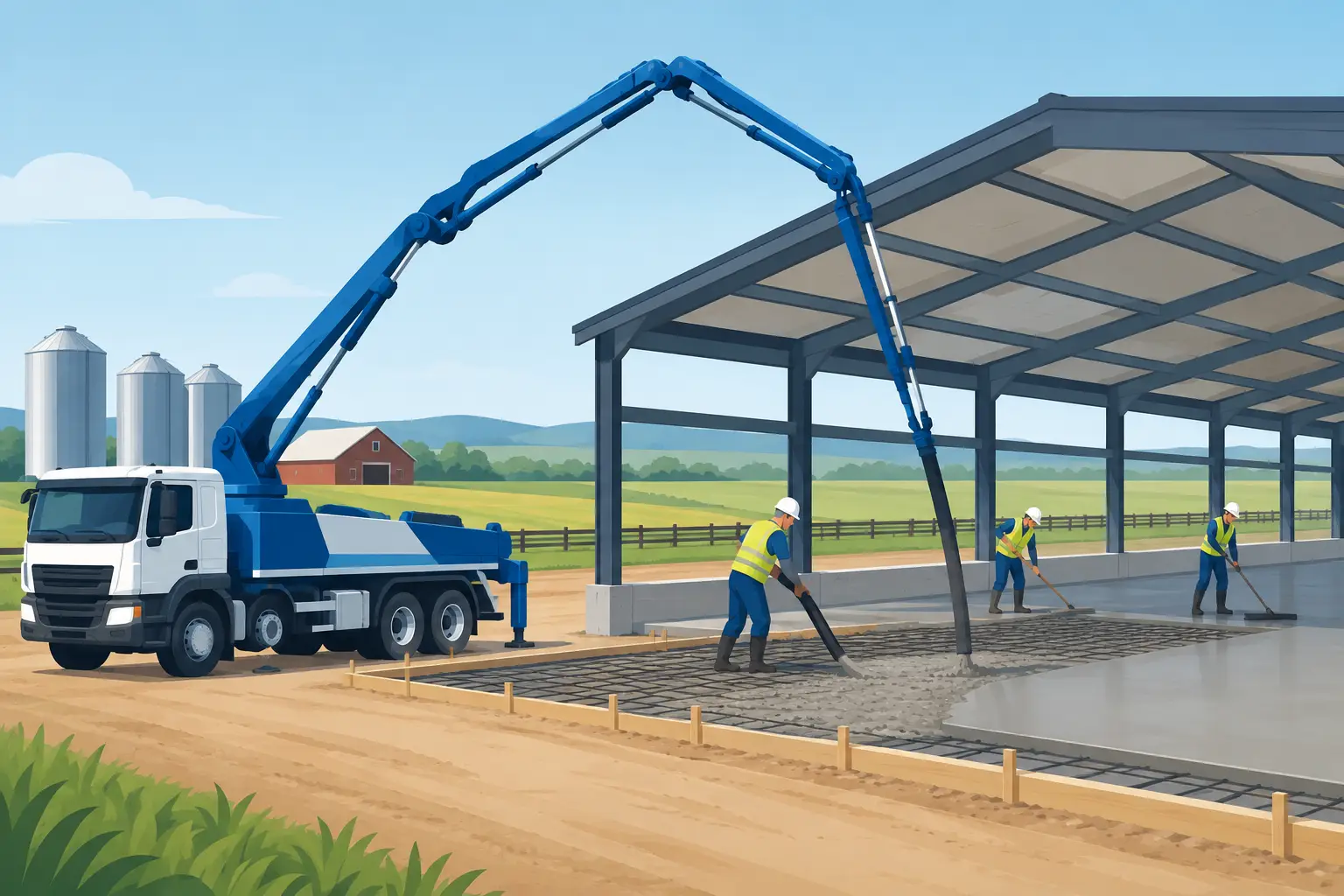
Concrete Pumping for Agricultural Buildings

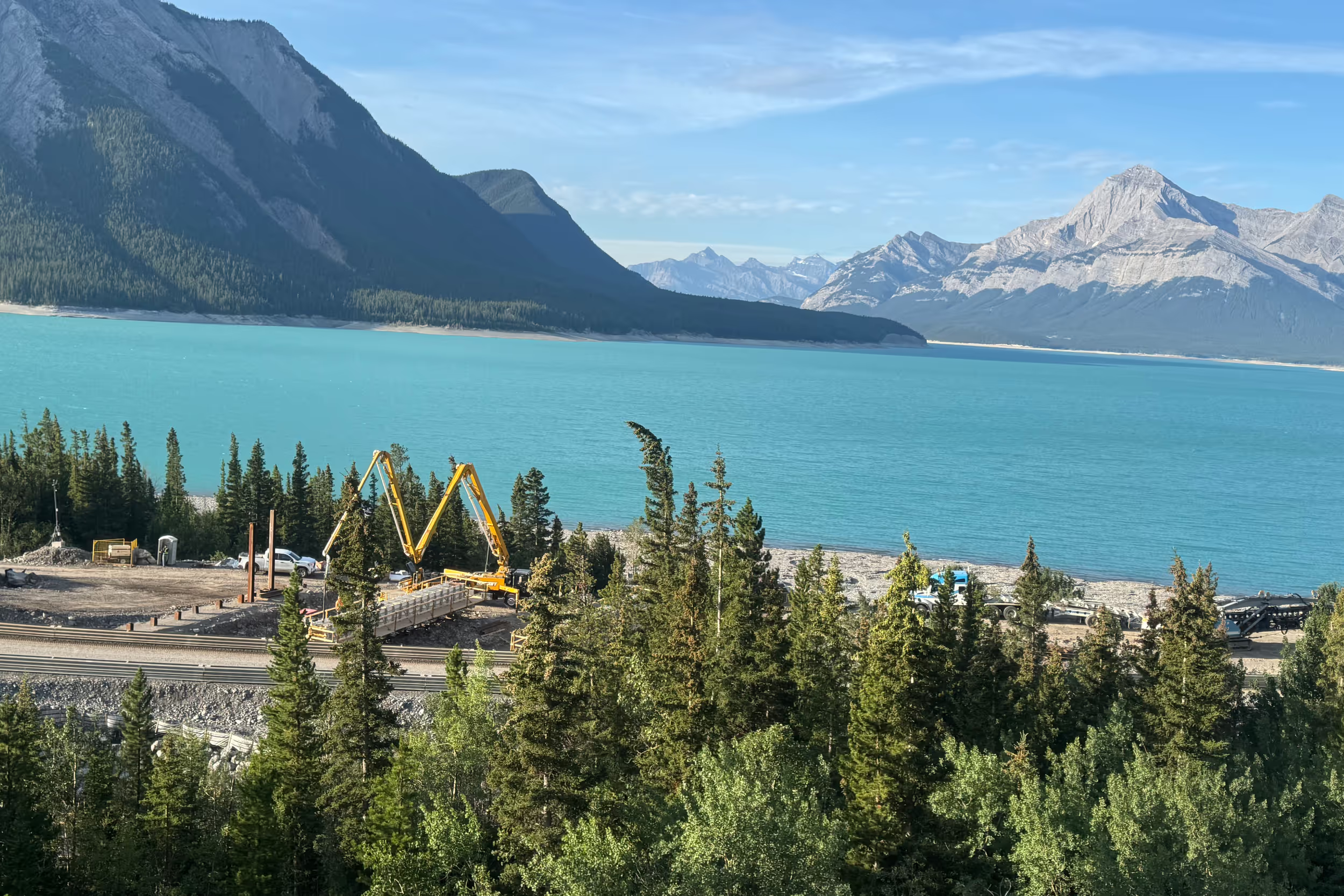
A livestock barn slab does not wait for extra wheelbarrows. Once the trucks are on site, the crew needs concrete moving steadily to the far wall, around posts, through door openings, and into every edge form before the mix starts to set. Concrete pumping for agricultural buildings gives Alberta contractors and farm operators a practical way to place large volumes accurately without turning the pour into a labour bottleneck.
Agricultural construction has its own set of demands. Buildings are often wide, access can be soft or limited, and the concrete work may include long slabs, thickened edges, grade beams, footings, equipment pads, manure pits, and exterior aprons. A properly selected pump puts concrete where the finishers need it, keeps truck traffic under control, and helps the entire pour stay on schedule.
Why agricultural pours need a better placement plan
A shop floor, calving barn, riding arena, grain-handling pad, or machinery shed slab may look straightforward on a drawing. On site, the placement plan is rarely simple. Reinforcing steel, anchor bolts, interior columns, frost walls, drainage slopes, and multiple door openings all affect how concrete can move across the job.
Using a ready-mix truck chute works well when the placement area is close, open, and easy to reach. It becomes inefficient when the crew must move concrete long distances by wheelbarrow or skid steer. That adds handling time, requires more labour, increases the chance of segregation, and puts pressure on finishers trying to maintain a consistent pace.
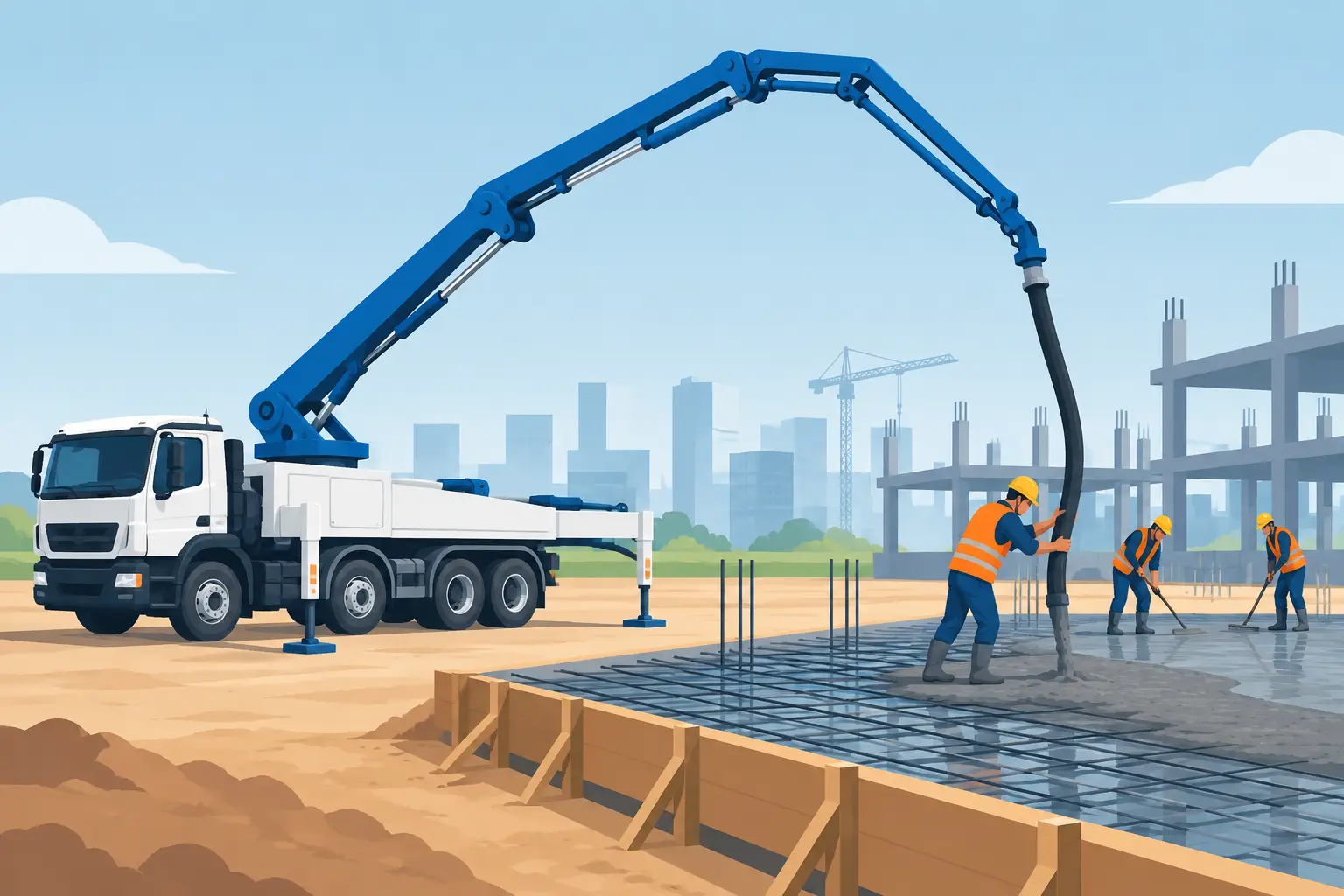
A concrete pump allows the truck to remain at a suitable staging point while the operator directs concrete through the boom or line to the placement area. For large agricultural slabs, that reach matters. Concrete can be placed in controlled passes rather than dumped in one area and moved repeatedly across the base.
Concrete pumping for agricultural buildings: where it pays off
The biggest benefit is not simply speed. It is controlled placement. When concrete arrives consistently where it is needed, the placing and finishing crews can work with the slab rather than chase it.
For barns and livestock facilities, pumping helps crews place concrete around pens, alleys, curbs, feed areas, and drainage channels with less disruption. On shop and equipment-building projects, it makes it easier to reach wide interior slabs, thickened perimeter edges, and door aprons without repeatedly repositioning trucks.
It is also a strong fit for foundations. Agricultural buildings frequently use frost walls, strip footings, pile caps, retaining sections, and grade beams. A boom pump can reach across an excavation or building footprint, while a truck-mounted line pump can be the better option when access is tight or the discharge point needs careful control.
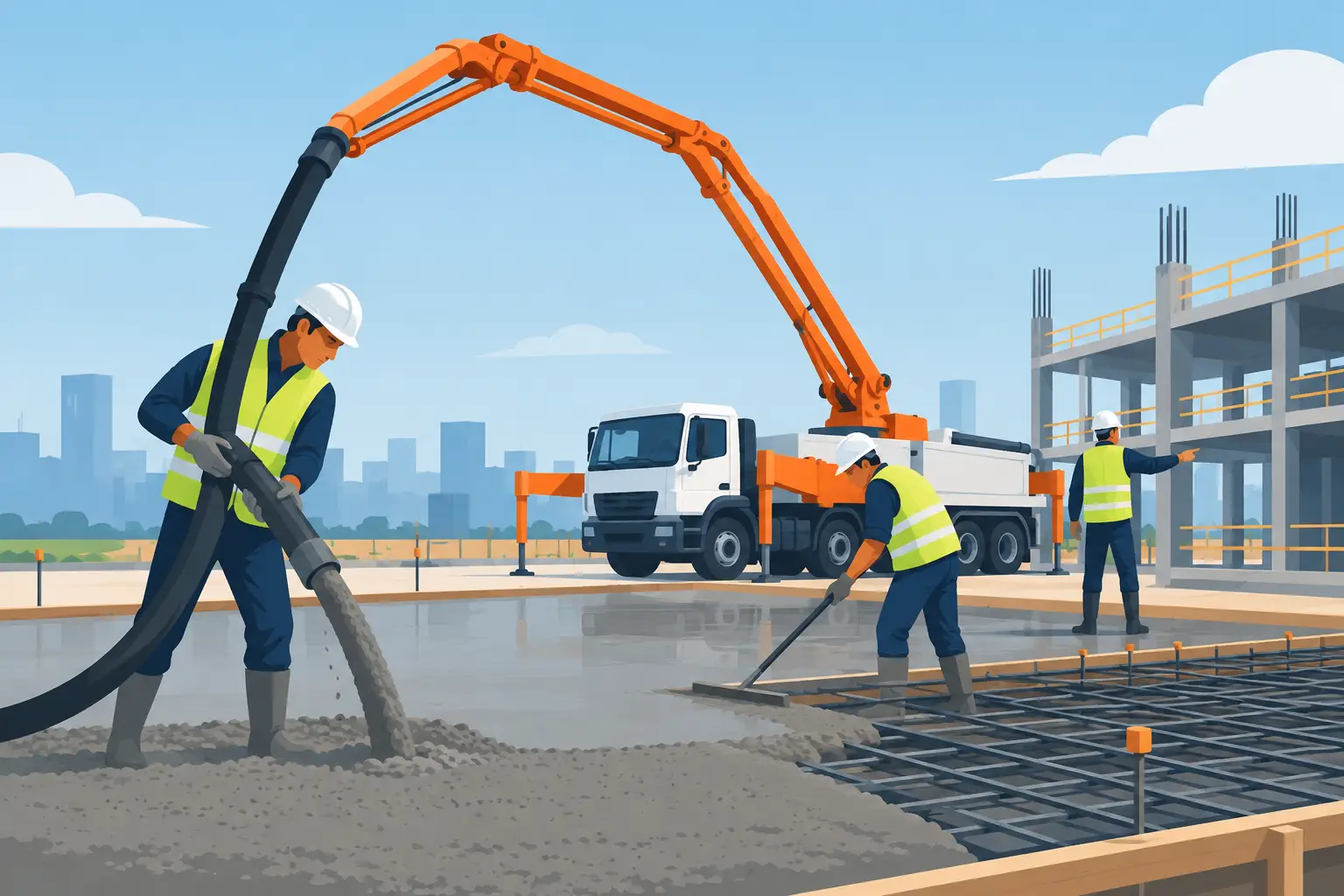
Pumping can reduce the labour needed for moving concrete, but it does not replace a prepared placing crew. Finishers, rakers, vibrator operators, and formwork personnel still need to be ready before the first truck arrives. The pump improves the flow of the pour. The job still depends on good preparation and communication.
Match the pump to the building and the site
There is no single pump configuration that suits every farm project. The right equipment depends on the size of the pour, the distance from the truck setup area, the ground conditions, overhead clearance, and the locations that need concrete.
Boom pumps for broad coverage
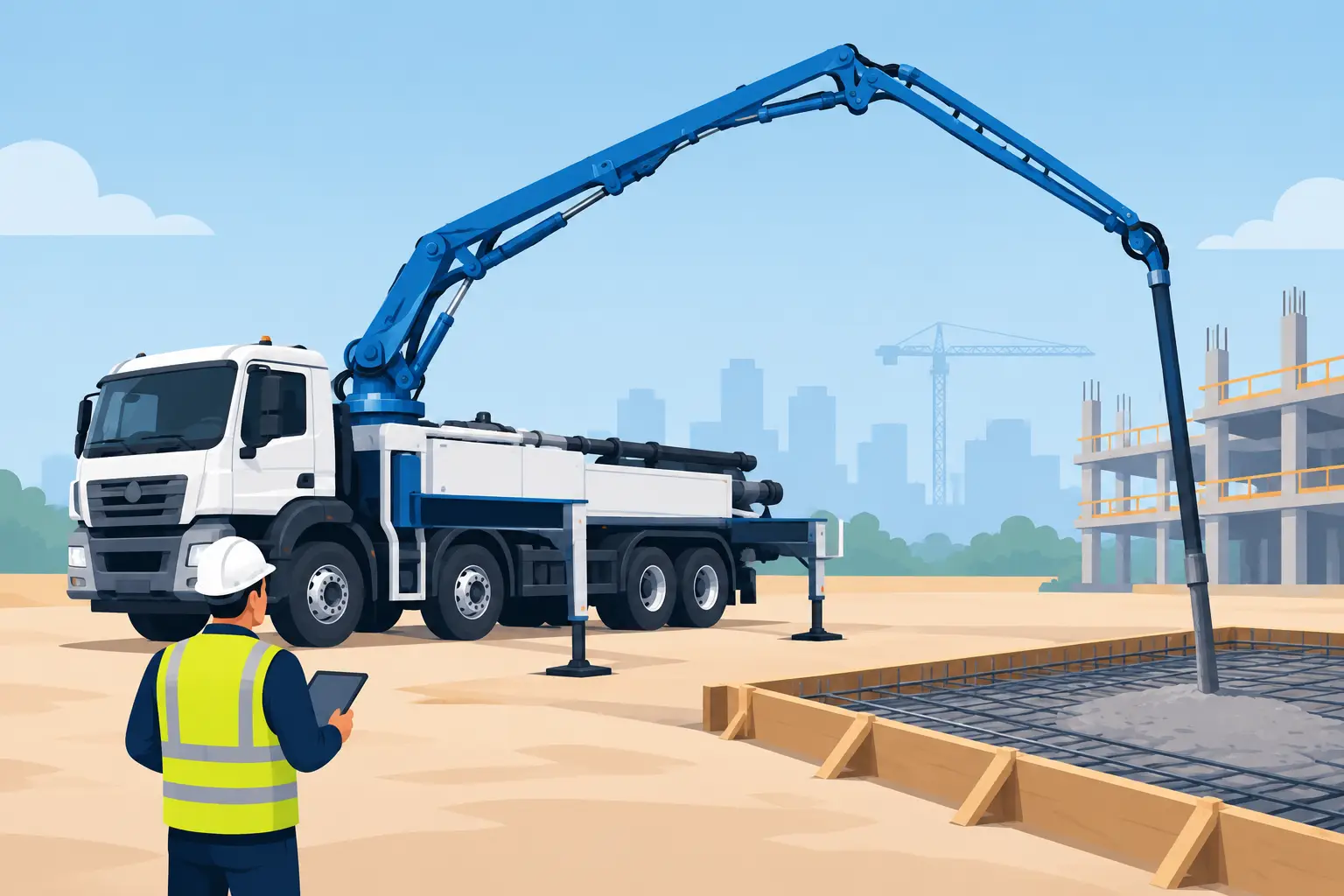
Boom pumps are often the efficient choice for larger barns, shops, riding arenas, and wide slab pours. The boom can extend over forms, walls, and obstacles to cover a large working area from one setup position. That means fewer interruptions and less need to drag hose across fresh concrete or finished grade.
On a large shop slab, broad boom coverage can help maintain an orderly placement sequence from one end of the building to the other. For exterior aprons and commodity-storage pads, it can keep ready-mix trucks off sensitive areas while giving the crew room to work.
Boom setup does require space, stable ground, and attention to overhead hazards. Power lines, trees, roof edges, and nearby structures must be identified before the pump arrives. Soft spring ground or recently disturbed fill may require a different setup plan. A site walk or clear jobsite details before booking prevents surprises on pour day.
Line pumps for restricted access and precision work
A truck-mounted line pump is well suited to smaller placements and difficult-to-reach areas. It can move concrete through hose where a boom cannot safely set up or where a tighter discharge point is needed.
This can be useful for interior footings, small additions, curbs, repair work, pads behind existing buildings, or pours reached through a narrow approach. In agricultural settings, existing corrals, fencing, bins, and operating buildings can make access complicated. A line pump provides flexibility without forcing a crew to hand-move every load.
Line pumping does involve planning for the hose route. The route needs to be clear, protected from sharp turns and pinch points, and coordinated with the crew. The hose also needs room to be handled safely at the discharge end. It is a precise tool, not a shortcut around poor site preparation.
Plan the mix, access, and crew before the truck arrives
A good pump pour begins well before concrete is ordered. The pump operator needs a clear, stable place to set up, with enough room for outriggers or equipment positioning. Ready-mix trucks need an approach and exit route that will not trap them in mud, snow, or congested traffic.
The concrete mix must also be suitable for pumping. Aggregate size, slump, admixtures, air content, fibre, and the required strength all matter. A mix designed for the building’s exposure conditions and finishing requirements must still move reliably through the pump system. Confirm the mix details with the concrete supplier and pumping contractor ahead of time, especially when using fibre reinforcement, specialized blends, or cold-weather additives.
For agricultural slabs, the crew should confirm slab elevations, slopes, joint layout, embedded items, and finish requirements before placement starts. Dairy and livestock floors may need slopes toward drains. Equipment shops may need a flatter finish for lifts, jacks, and rolling tools. Grain and feed areas can require durable surfaces that stand up to repeated loading and abrasion. Concrete placement should support those requirements, not work against them.
Weather deserves equal attention in Central Alberta. Hot, dry conditions can accelerate finishing demands. Cold temperatures create curing and protection requirements. Wind can pull moisture from the surface quickly, particularly on broad exterior pads and open-sided structures. Pumping helps the crew place concrete efficiently, but it does not remove the need for a realistic weather plan, curing materials, and enough labour to finish the work properly.
Cleaner placement helps protect the jobsite
Farm projects often involve active yards, existing buildings, gravel lanes, and areas that need to stay usable. Keeping concrete placement contained matters. A pump reduces the need for trucks to crowd the forms or drive through areas where traffic would damage the base, create ruts, or complicate cleanup.
It can also reduce waste. When the discharge is directed accurately, there is less concrete dropped short of the pour area and less material handled multiple times. That is especially useful around formed walls, service penetrations, post bases, and tight interior layouts.
Clean placement is not automatic. Washout needs a planned location, and the crew needs to protect finished surfaces, access routes, and nearby structures. The best pours are organized from truck arrival through final cleanup, not just during the first hour of placement.
When pumping may not be the best choice
Concrete pumping is not required for every agricultural project. A small pad located directly beside a clear truck approach may be placed efficiently by chute. If the volume is low and the site is open, adding a pump may not provide enough value to justify the mobilization.
The decision changes quickly when reach, labour, access, or placement speed becomes a problem. A wide building footprint, a long run from truck to forms, limited truck access, or a large crew waiting on concrete can make pumping the more economical choice. The right question is not whether pumping costs more than a chute. It is whether the full placement plan costs less when time, labour, quality, access, and cleanup are considered together.
Bandit Concrete Pumping works with contractors and property owners across Central Alberta to select equipment that fits the pour, whether the job calls for broad boom coverage or controlled line-pump placement. Clear site information before scheduling helps ensure the right pump, setup, and operator arrive ready to work.
Before committing to a pour date, walk the truck route and pump setup area with the same care you give the forms and reinforcing. That simple check can prevent the kind of delays that are hardest to fix once the concrete is on the road.