(587) 703-6048

Concrete Pump Rental With Operator for Better Pours

A concrete truck parked at the curb does not solve an access problem. When forms are behind a house, across a soft lot, above grade, or spread across a large commercial footprint, a concrete pump rental with operator keeps the pour moving where the truck chute cannot. It replaces wheelbarrow runs, reduces handling, and gives the placing crew steady concrete where it is needed.
For Alberta contractors, builders, and property owners, the right pump is not simply a piece of equipment. It is a way to control a time-sensitive part of the job. Concrete is on the clock from the moment it leaves the batch plant. A capable pump and experienced operator help the crew place it efficiently, maintain a workable pace, and finish the surface without fighting poor access.
Why Concrete Pump Rental With Operator Makes Sense
Concrete placement can become the bottleneck on an otherwise well-prepared job. A crew may have forms complete, reinforcing in place, and finishers ready, but limited truck access can slow everything down. Chute placement only reaches so far. Wheelbarrows add labour, create traffic through the site, and make it harder to maintain a consistent placing rate.
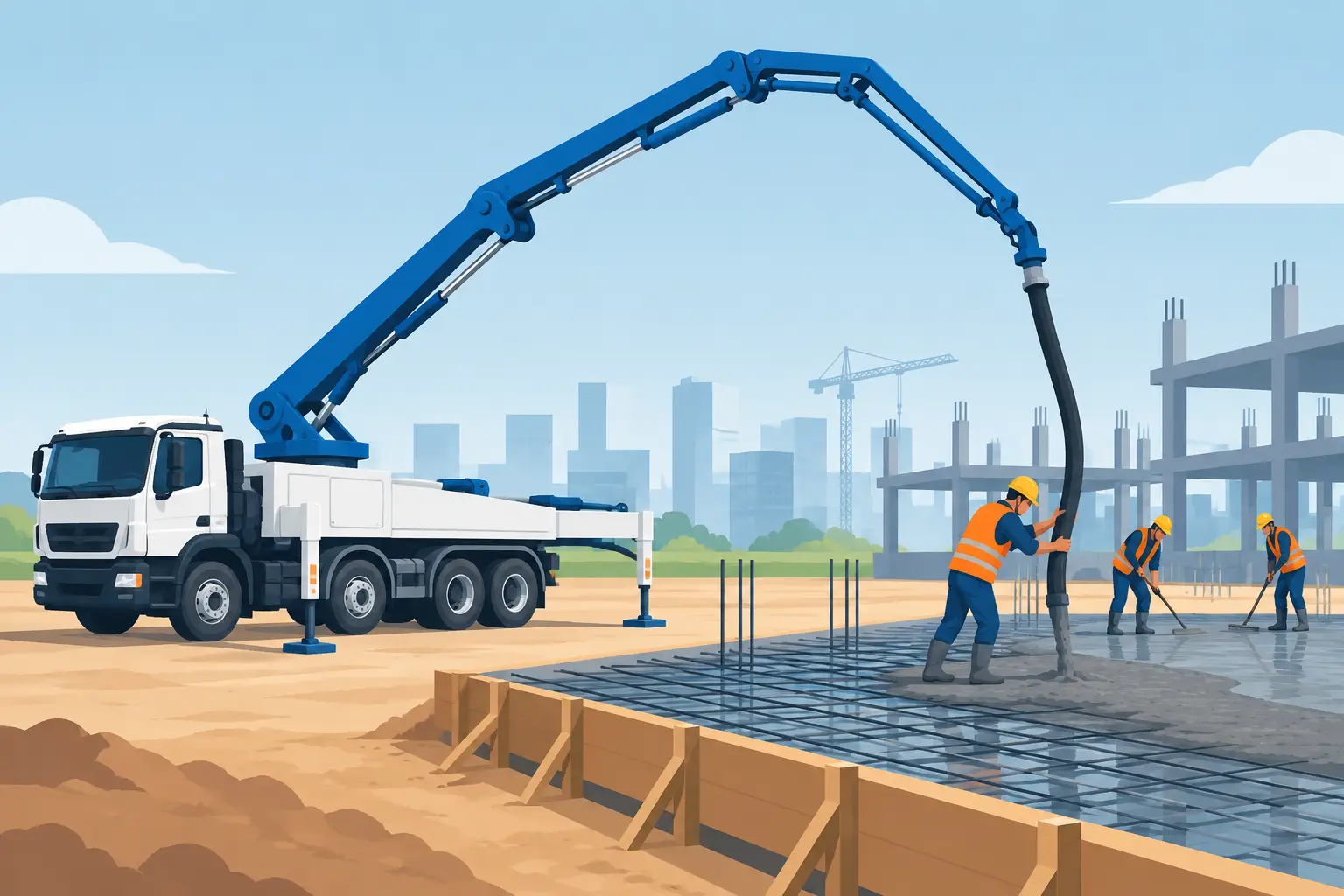
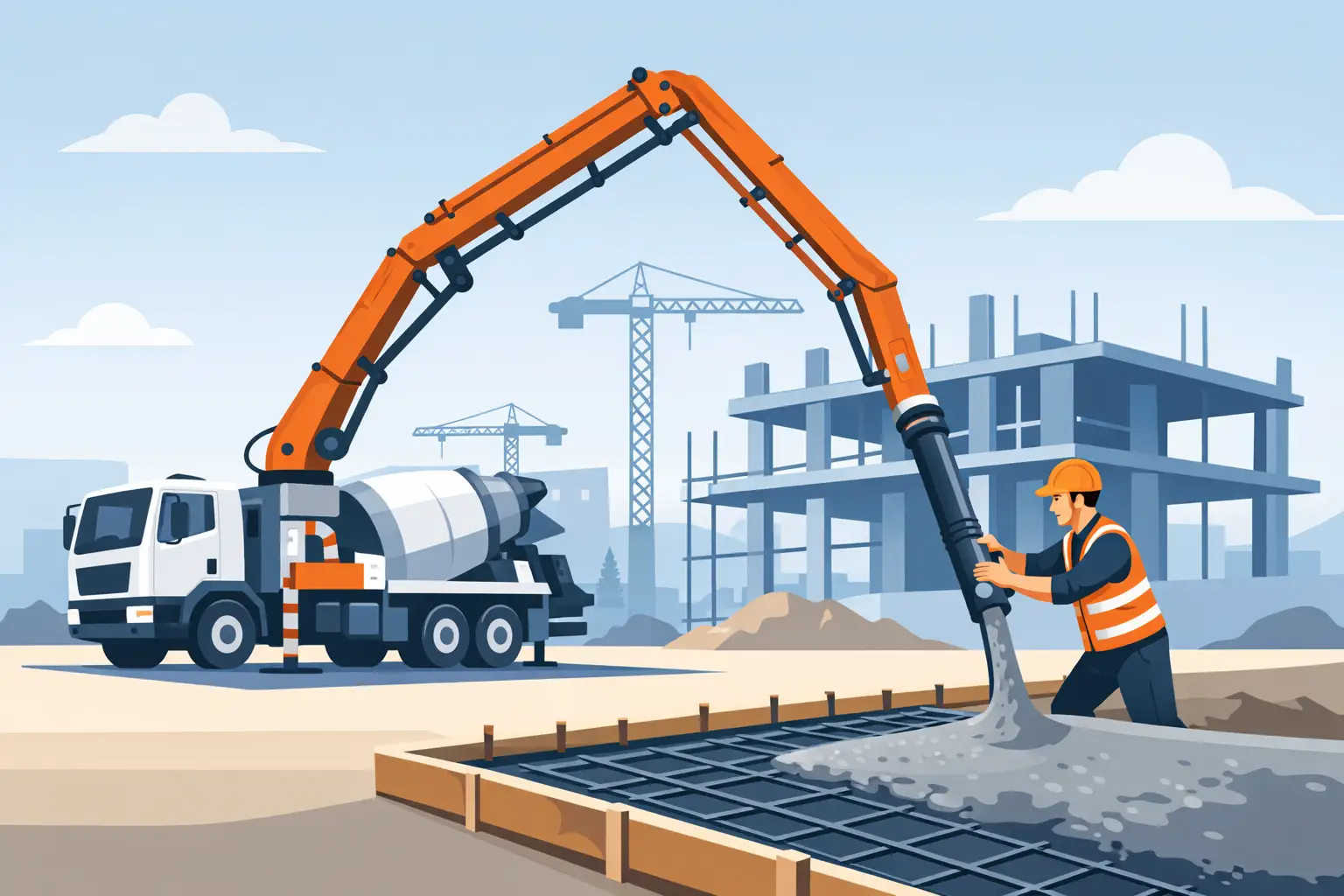
A pump puts concrete directly into the forms, slab area, footing, wall, or elevated deck. That means less carrying, less rehandling, and fewer people tied up moving material. On a residential foundation, this can keep concrete out of landscaped areas and away from tight side yards. On commercial and industrial work, it can help a crew cover a broad pour area without constantly repositioning trucks or moving material by hand.
The benefit is not just speed. Accurate placement helps prevent segregation, reduces the chance of overfilling forms, and gives finishers better control over the pour. The result can be a cleaner site, a more consistent finished surface, and fewer delays caused by access limitations.
Match the Pump to the Jobsite
The best pump is the one that suits the pour, the access, and the site conditions. Bigger is not automatically better. A high-reach boom may be the right answer for a wide commercial slab, while a compact boom or line pump may be the smarter choice for a backyard garage pad or a rural shop addition.
Boom Pumps for Reach and Coverage
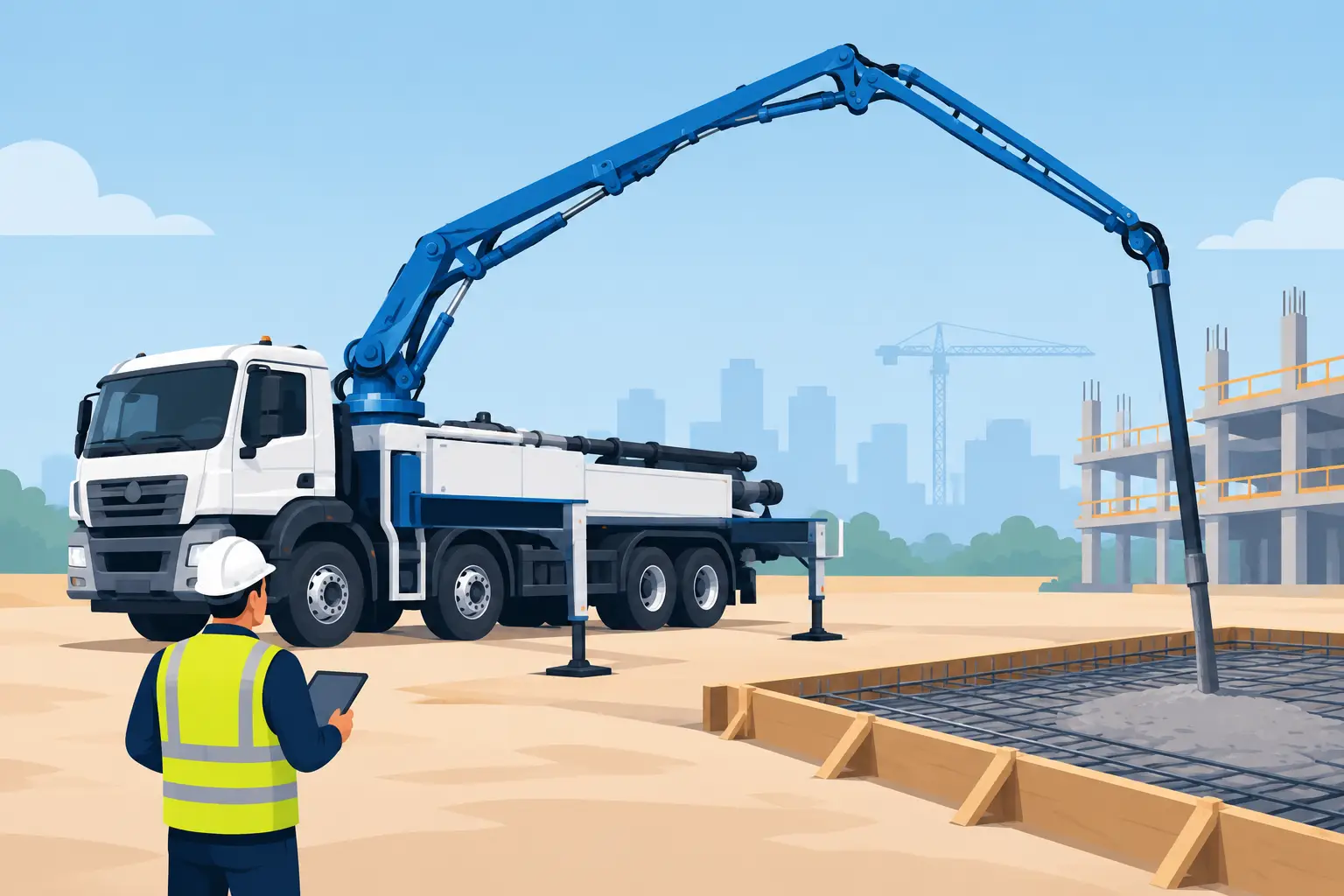
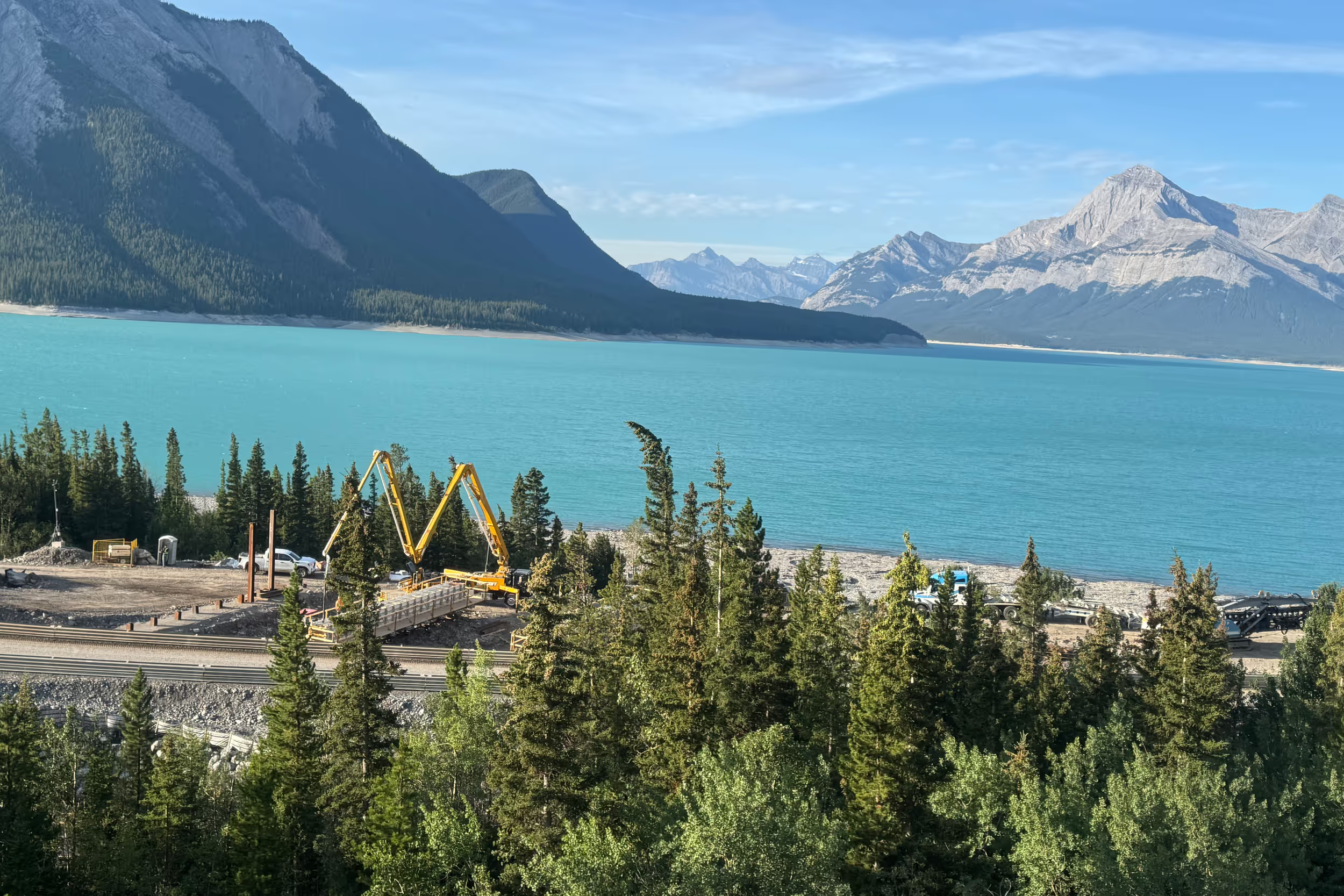
Boom pumps are built for jobs where concrete must travel over obstacles or cover a large area. The articulating boom can reach across a structure, over a house, around stockpiled material, or into a section of a site that is difficult for ready-mix trucks to access.
For foundations, suspended slabs, retaining walls, commercial floors, and larger agricultural work, boom placement can keep the pour progressing with less truck movement. The operator controls the boom from the placing area, allowing concrete to be directed accurately as the crew works through the forms.
Boom pumps do need room for setup. Outrigger placement, truck access, overhead lines, soft ground, neighbouring structures, and traffic control all need to be considered before the pour. A good site review identifies those issues early rather than discovering them after concrete trucks arrive.
Compact Boom Pumps for Restricted Access
A compact roll-and-fold boom pump is often the practical choice when access is tight. These units are useful on infill lots, residential streets, small commercial sites, and projects with limited room to manoeuvre.
The goal is still the same: get concrete into the work area without turning the site into a wheelbarrow route. Compact equipment can provide useful reach while fitting sites where a larger truck may be difficult to position. It is especially valuable when the pour is behind an existing building or when the placing area is close to property lines, fencing, or finished landscaping.
Line Pumps for Difficult-to-Reach Placement
A truck-mounted line pump is designed for precise placement through pipe and hose. It is a strong option for locations where a boom cannot set up or where the concrete must travel along the ground, through a structure, or around obstructions.
Line pumping works well for garage slabs, basements, walkways, patios, shop floors, footings, and remote areas of a property. A 4x4 line pump can also be useful on rural and industrial sites where ground conditions are less forgiving. The exact hose route matters, so the crew needs a clear path and a plan to protect finished surfaces, doorways, and corners.
The Operator Is Part of the Service
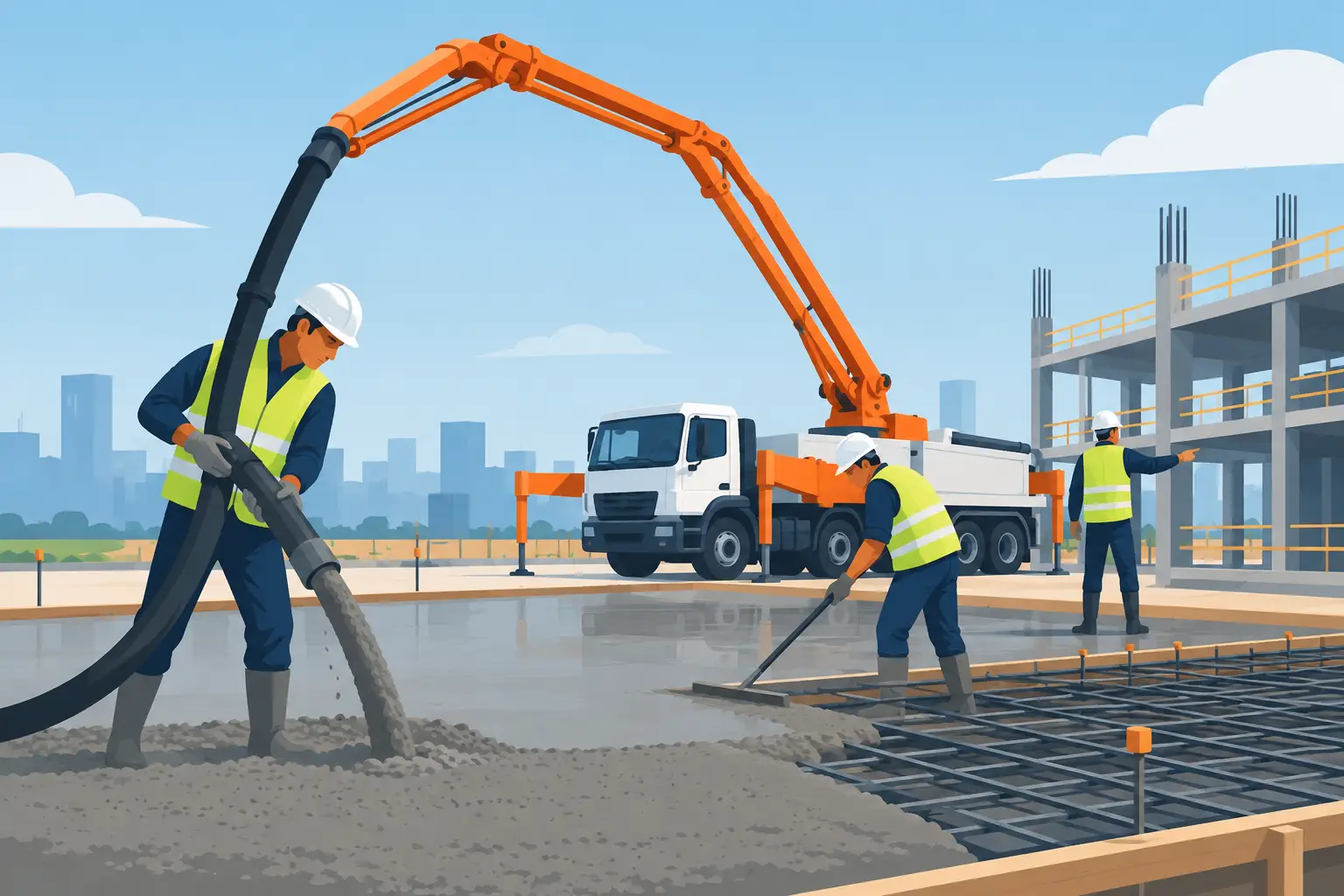
Renting a pump without experienced operation is not the same as hiring a concrete-placement service. The operator manages the pump, monitors the material flow, positions the boom or hose, communicates with the placing crew, and responds to changing conditions during the pour.
That experience matters when the first truck arrives early, when the mix behaves differently than expected, or when a form section needs extra attention. An operator who understands concrete placement can help maintain a controlled pace instead of forcing the crew to rush or wait.
The operator also helps protect the equipment and the site. Boom movement must be controlled around buildings, power lines, scaffolding, workers, and other equipment. Line systems need secure connections and careful hose handling. Cleanout needs to be planned so leftover material does not become a problem at the end of a long day.
Bandit Concrete Pumping provides the pump and the skilled operator together, giving crews one accountable concrete-placement partner rather than an unfamiliar machine to manage during a critical pour.
Plan the Pump Before You Book It
A productive pump day starts before the truck reaches the site. The pump provider needs enough information to select the proper equipment and schedule the job around the concrete supplier, crew availability, and site readiness.
Start with the concrete quantity and type of work. A small footing repair, a house foundation, and a large slab have different production needs. Share the total cubic metres, the planned placing sequence, the mix design if known, and whether the pour includes walls, footings, stairs, or other sections that require controlled placement.
Access details are equally important. Confirm where the pump can park, where ready-mix trucks will approach and discharge, and whether there is room to set outriggers. Identify narrow lanes, sharp turns, overhead utilities, soft ground, septic fields, trees, gates, and public-road restrictions. Photos and a clear site description can prevent wrong equipment or last-minute changes.
The placing crew should also be ready before pumping begins. Forms need final inspection, reinforcing must be secured, tools should be staged, and the washout area should be established. If hose will cross a driveway or finished area, protect it beforehand. If weather is changing, have a plan for rain, wind, heat, or cold-weather concrete procedures.
Cost Control Comes From Fewer Problems
Pump rental costs are only one part of the placement decision. The better question is what manual placement, added labour, slower production, extra cleanup, or a delayed finish will cost the project.
On a straightforward driveway with direct truck access, a chute may be enough. On a tight backyard slab or a foundation where concrete must travel around an existing structure, pumping can quickly become the more efficient option. It reduces the labour needed to move concrete and lets skilled workers focus on placing, screeding, vibrating, and finishing instead of hauling loads.
Avoid guessing on the booking window. Pump time can be affected by total volume, truck spacing, the complexity of the forms, hose movement, mix consistency, and how prepared the crew is. A realistic schedule protects the pour from rushed decisions and helps keep costs predictable.
Keep the Pour Moving, Not Just the Pump
A pump works best when the entire site is ready to support it. Ready-mix trucks need a clear arrival plan. The crew needs enough finishers and labourers for the volume being placed. Forms, reinforcement, access routes, washout, and safety controls all need to be handled before the first load starts flowing.
That preparation pays off most on challenging jobs. A well-selected pump can reach over a home, place concrete across a large footprint, work through restricted access, or deliver material to a hard-to-reach area with far less disruption than manual methods. The right operator makes those capabilities useful in real conditions, not just on paper.
Before setting a pour date, walk the route from the street to the forms and look for the obstacle that will slow the crew down. Solve that one issue early, and the rest of the pour is far more likely to run the way it should.