(587) 703-6048

How Concrete Placement Automation Improves Pours

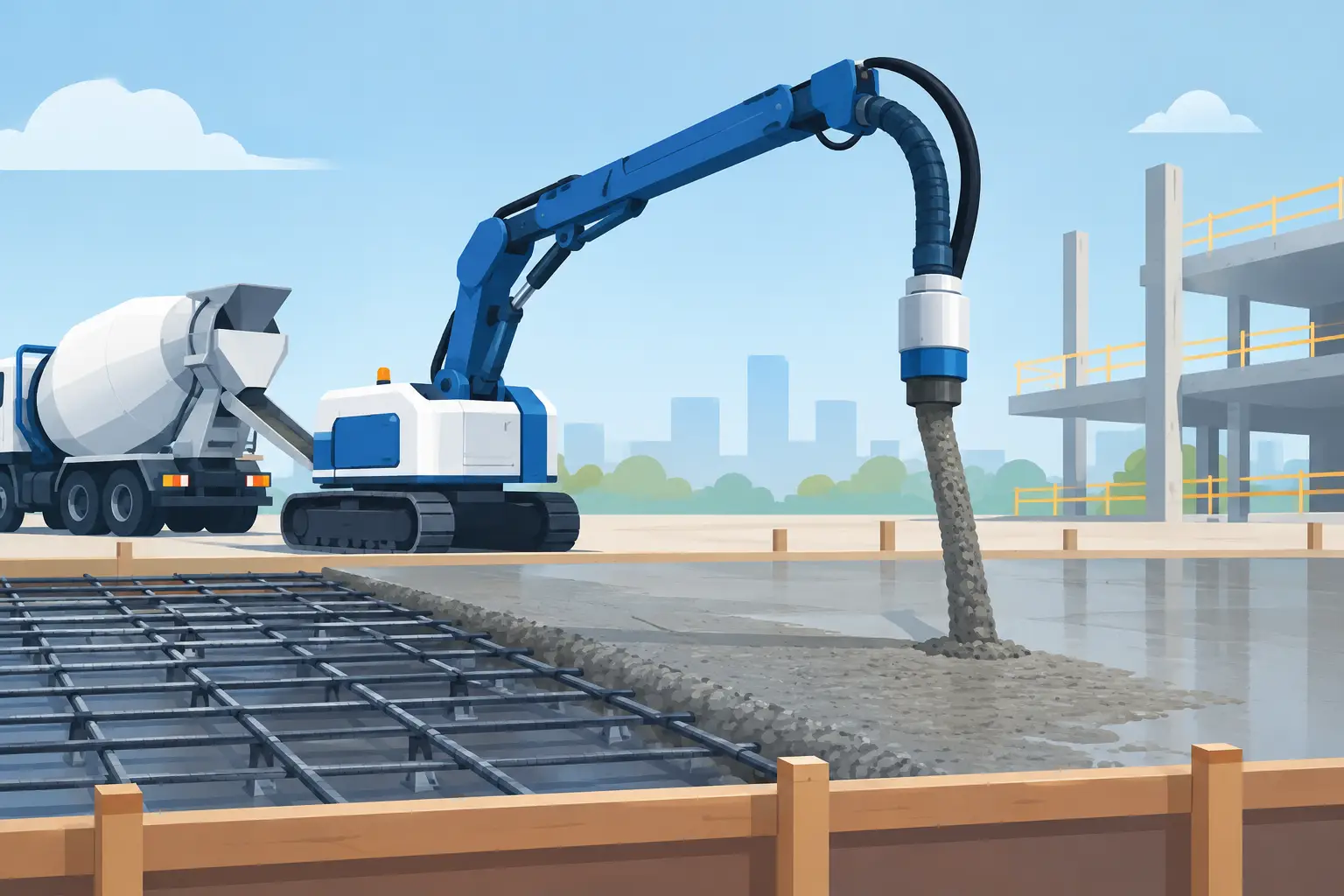
A concrete truck backed up to the forms is not always the fastest way to get concrete in place. On a tight residential lot, behind an existing building, across a large commercial slab, or around active trades, chute placement can turn into a labour-heavy bottleneck. Concrete placement automation changes that equation by combining pump equipment, controlled boom movement, and experienced operator input to move concrete where the pour needs it - without making the crew fight for access.
For Alberta contractors and property owners, the practical benefit is simple: concrete reaches the forms faster, with less handling, less site disruption, and better control over where it lands. The technology matters, but so does the person running it. A pump is only productive when the equipment, mix, site setup, and placing plan all work together.
What Concrete Placement Automation Actually Means
Concrete placement automation does not mean a pump truck arrives and runs a pour without people. Concrete placement remains a skilled operation. The pump operator controls the boom or line, monitors pressure and material flow, communicates with the ready-mix driver and placing crew, and adjusts to changing conditions through the pour.
Automation in this context refers to the systems that make placement more controlled and repeatable. Modern boom pumps use hydraulic controls, remote operation, stabilizer systems, boom geometry, and engineered pump output to deliver concrete accurately over distance. A truck-mounted line pump uses controlled pressure to move material through hose to locations a ready-mix truck cannot directly reach.
That level of control reduces the manual work involved in transporting concrete from a chute to the forms. Instead of relying on wheelbarrows, skid steers, long chutes, or repeated truck repositioning, the crew can keep concrete moving from the truck to the point of placement.
Where Automated Pump Placement Makes the Biggest Difference
The strongest case for pump-based placement is usually an access problem. It may be a backyard foundation with narrow side-yard clearance, a shop slab beyond soft ground, a commercial pour with limited truck staging, or an industrial site where existing structures restrict movement.
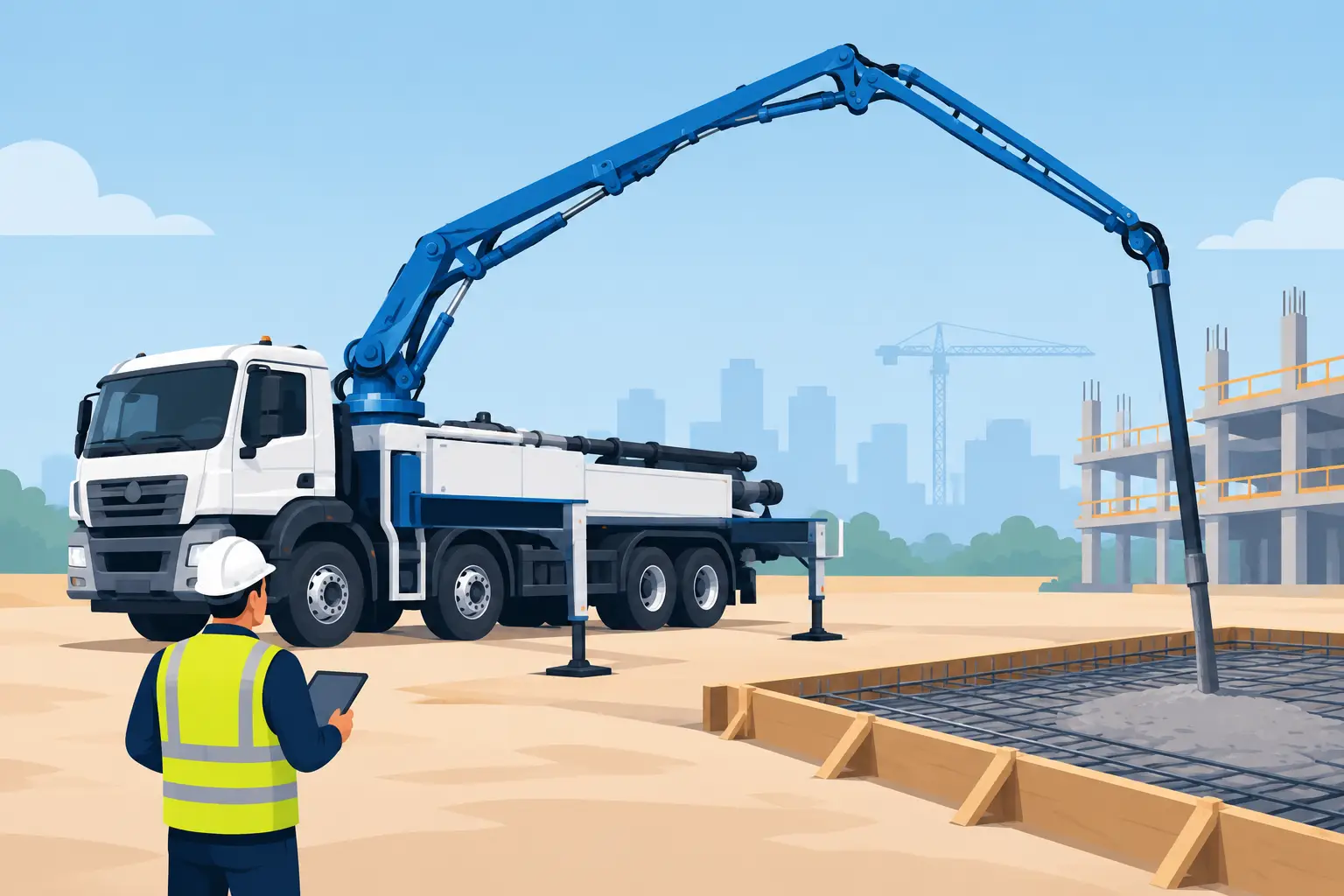
A boom pump can place concrete over a house, around obstacles, and across broad slab areas while the ready-mix truck stays in an accessible staging position. This is particularly useful when several trucks are feeding a continuous pour. The boom can keep up with the planned placement sequence instead of waiting for each truck to get into the perfect chute position.
For smaller or more confined work, a line pump can be the better tool. It can send concrete through hose into basements, additions, garages, retaining walls, agricultural buildings, and other difficult-to-reach areas. It does not need the reach of a large boom truck to solve the problem. It needs a clear hose route, suitable mix design, and a crew prepared to manage the hose at the discharge point.
The right approach depends on the site. Bigger equipment is not automatically better. A compact roll-and-fold boom may be the practical choice when setup room is limited, while a high-reach boom brings value when coverage and reach are the main concerns.
Faster Placement Without Rushing the Finish
Speed is one of the most visible benefits of concrete placement automation, but speed should not be confused with rushing. A faster delivery path gives the placing and finishing crews a steadier supply of concrete. That helps crews maintain their planned pour sequence, manage joints properly, and avoid the stop-start rhythm that can create unnecessary pressure late in the day.
When concrete is moved by wheelbarrow, every trip adds labour and time. Workers must travel, unload, return, and repeat while the concrete continues to age in the truck. On a large pour, the effort compounds quickly. A pump replaces much of that travel with a controlled delivery system, allowing the crew to focus on placing, vibrating, screeding, and finishing.
There is a trade-off. Pumping requires coordination before the truck arrives. The pump needs appropriate setup space, the mix must be pumpable, and the contractor needs a clear plan for where trucks enter, stage, and leave. A poor traffic plan can delay even the best pump setup. Good scheduling and communication are what turn pumping capacity into real production.
Better Control at the Point of Placement
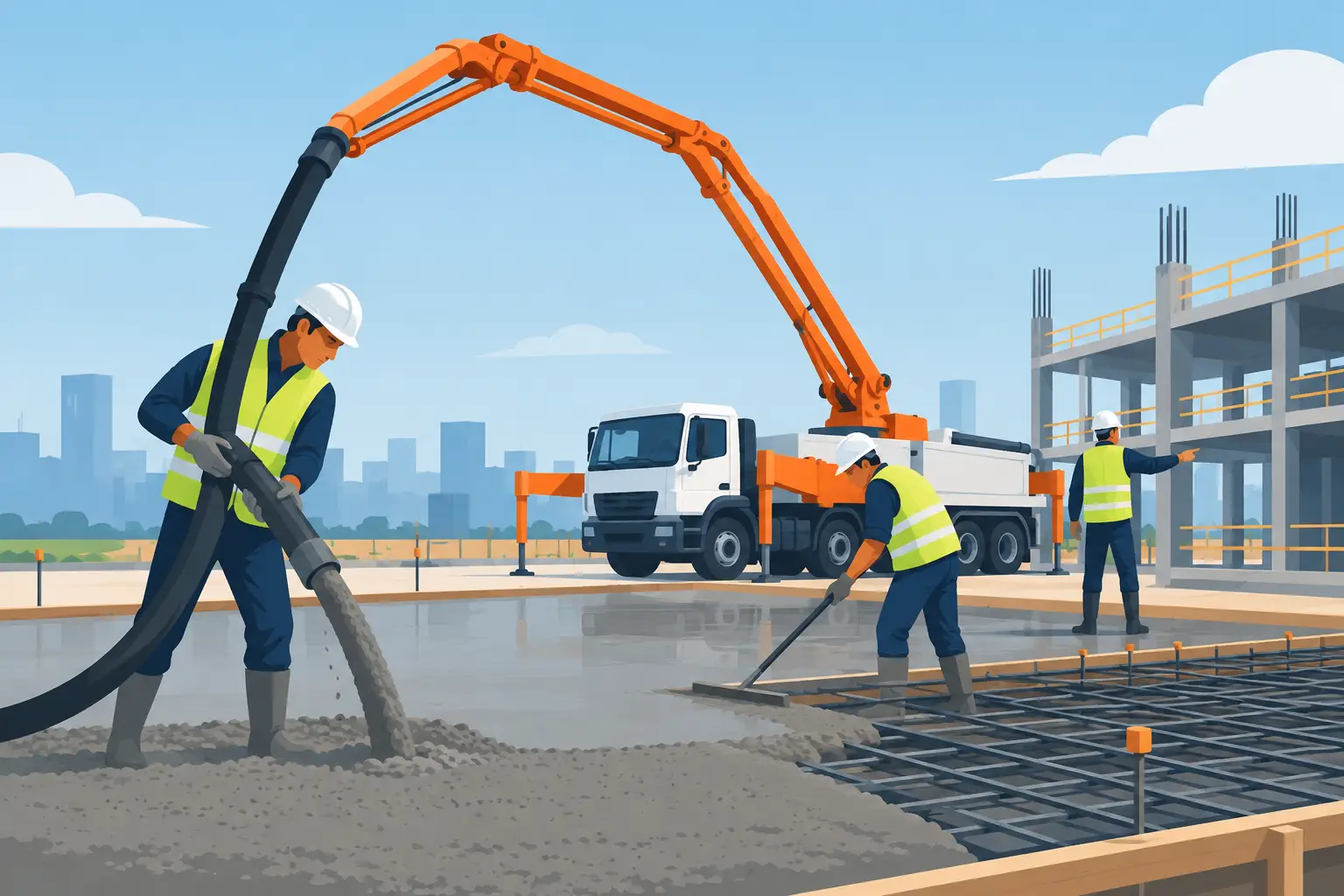
Accuracy is where automated placement has a direct effect on waste and cleanup. The pump operator can position the end hose close to the point of discharge, allowing concrete to be placed in a controlled manner rather than dropped from a distance and pulled into place by hand.
That matters for footings, walls, grade beams, suspended slabs, pile caps, and slab edges where overfilling creates extra work. It also matters around reinforcing steel, embeds, and forms that need to stay clean and visible. Less excess concrete outside the intended placement area means less shovelling, less rehandling, and fewer avoidable cleanup costs.
Control does not eliminate the need for a capable placing crew. The crew still needs to spread the concrete correctly, consolidate it where required, and protect the final elevation and finish. The pump gives them a more consistent starting point. It does not replace sound concrete practice.
Safety and Labour Benefits on Active Jobsites
Moving fresh concrete by hand puts people in motion around trucks, forms, uneven ground, and other trades. Wheelbarrow routes become slippery, congested, and physically demanding. Chutes can require frequent repositioning and may not reach far enough without creating awkward working conditions.
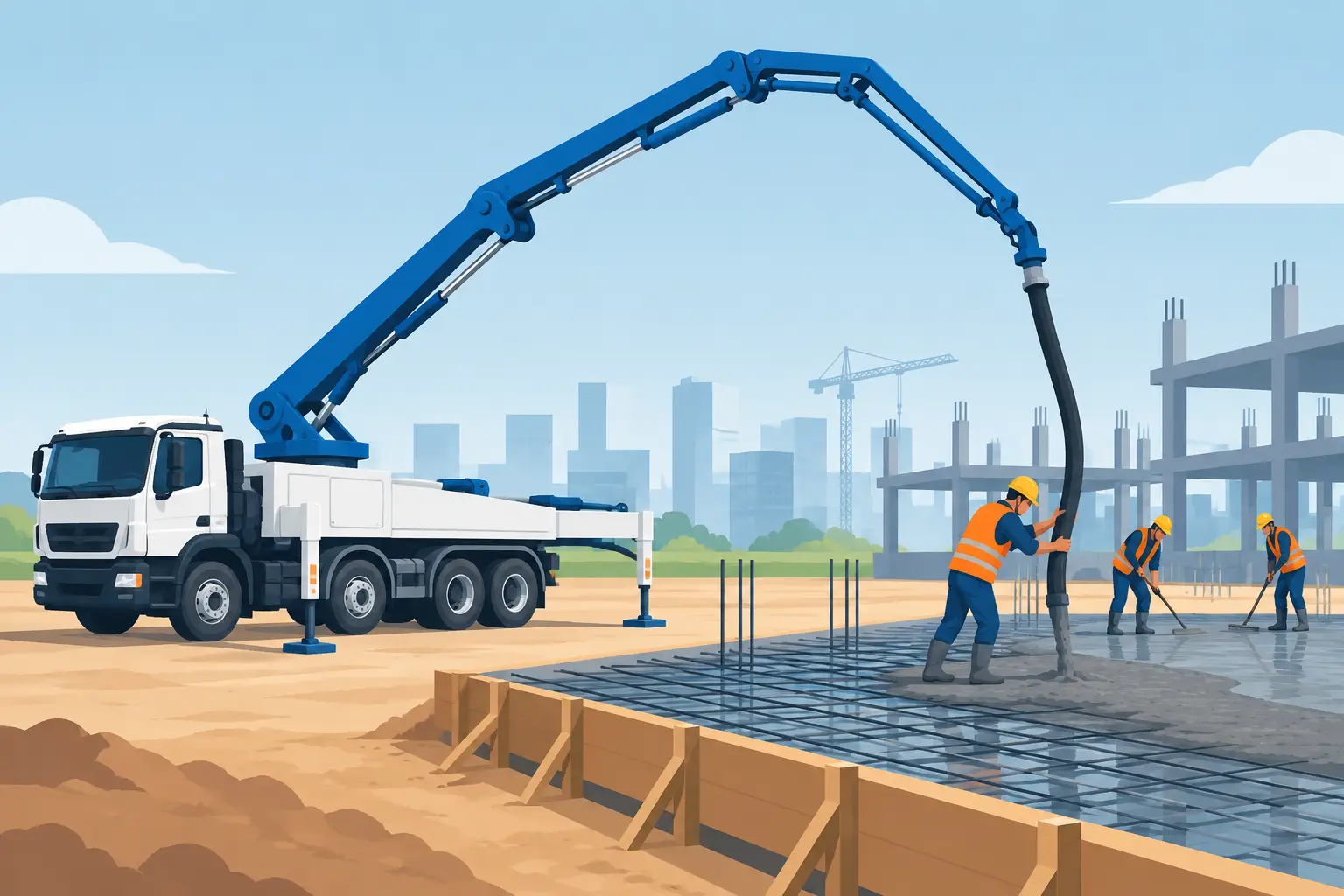
A properly planned pump setup can reduce that exposure. The ready-mix truck can stay in a designated area while the pump delivers concrete over or around the work zone. Fewer workers need to transport material, which can reduce fatigue during long pours and free up labour for the tasks that affect concrete quality.
That does not make a pumping operation risk-free. Boom setup requires stable ground and sufficient clearance. Operators must watch for overhead power lines, structures, traffic, and people working below the boom. Hose handling also needs attention because pressurized concrete lines carry real force. The safest pour is one where the operator, contractor, and crew review the site before pumping begins and keep communication clear throughout the job.
Planning a Pour Around Pump Technology
Concrete placement automation works best when it is considered before the day of the pour. The pump provider needs the address, scope, estimated volume, placement area, access details, and any site restrictions. Photos can help identify gates, overhead lines, soft ground, narrow approaches, or obstructions that may affect equipment selection.
The contractor should also confirm the concrete mix with the supplier. Aggregate size, slump, fibre content, additives, and specified strength can all affect pumpability. A mix that works for direct chute placement may require adjustment for a long hose run or a high-reach boom pour. This is not a reason to avoid pumping. It is a reason to make the plan early, before trucks are loaded.
On pour day, keep the pump setup area clear and establish a truck flow plan. Make sure the placing crew knows the sequence, who is directing the hose, and how the operator will be signalled if conditions change. These simple details prevent wasted time when the first ready-mix truck arrives.
The Value Is in the Whole Operation
The real value of concrete placement automation is not the machine alone. It is the combination of a properly matched pump, a skilled operator, reliable ready-mix scheduling, and a crew that knows what needs to happen next. When those pieces line up, the job moves with less manual handling and more control.
Bandit Concrete Pumping provides boom and line-pump options for the access challenges common across Central Alberta, from residential foundations and garages to commercial slabs and industrial work. The goal is not to bring the largest pump to every site. It is to bring equipment that fits the pour and an operator who can keep it moving safely.
Before committing to wheelbarrows, extra labour, or a complicated chute plan, look at the route the concrete has to travel. A well-planned pump pour can make that route shorter, cleaner, and far more manageable for everyone on site.