(587) 703-6048

Commercial Concrete Pumping for Alberta Jobsites

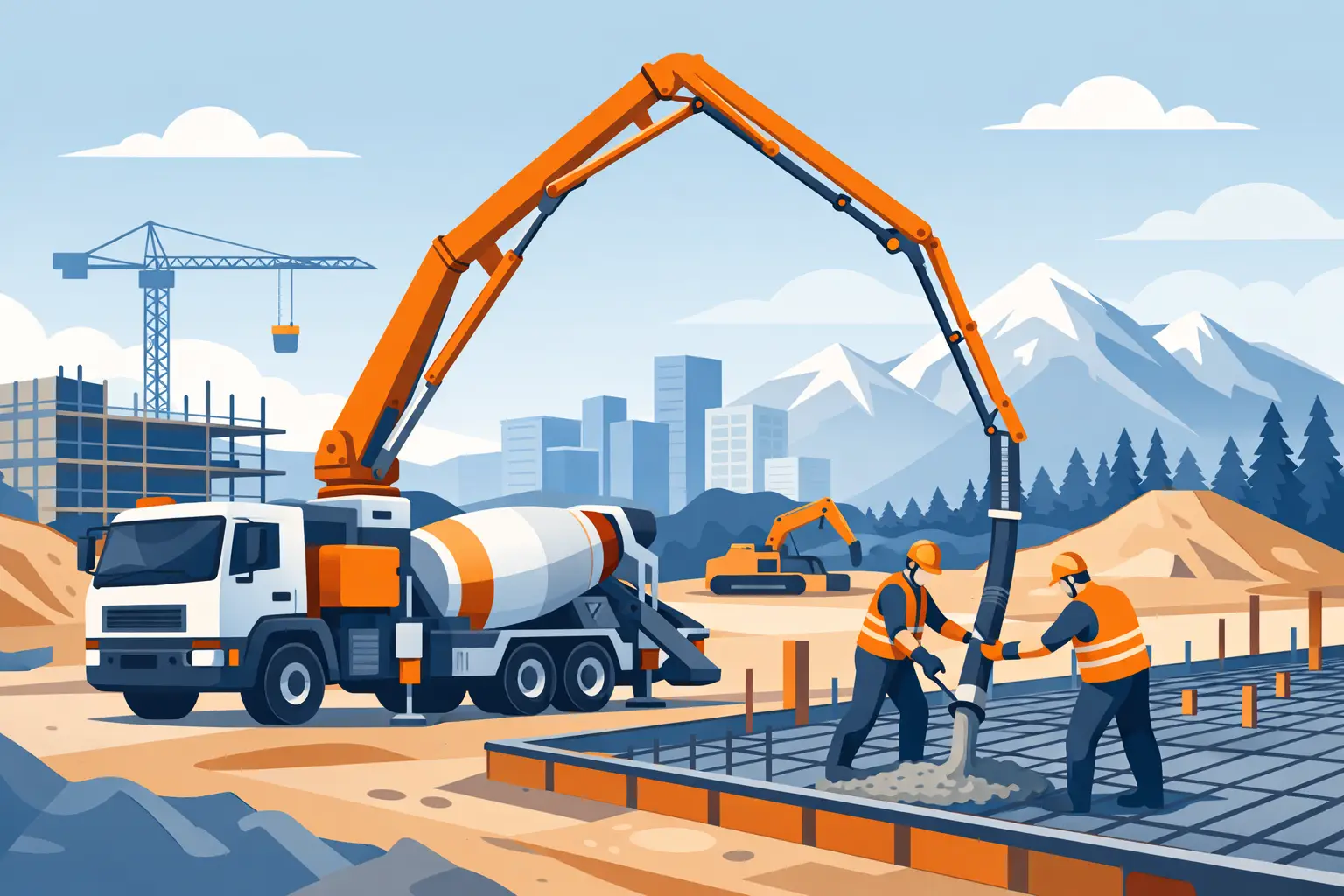
A commercial pour can fall behind before the first truck arrives. Poor access, a crowded site, too few hands on the hose or wheelbarrows, and a tight finishing window all put pressure on the crew. Commercial concrete pumping changes that equation by moving concrete quickly from the truck to the point of placement, whether that point is across a large slab, behind an existing structure, or several floors above grade.
For Alberta contractors, developers, and project managers, the goal is not simply to get concrete on site. It is to place the right volume where it is needed, keep the mix moving, protect the schedule, and give the finishing crew a workable surface. The right pump and operator make that possible.
Why Commercial Concrete Pumping Pays Off
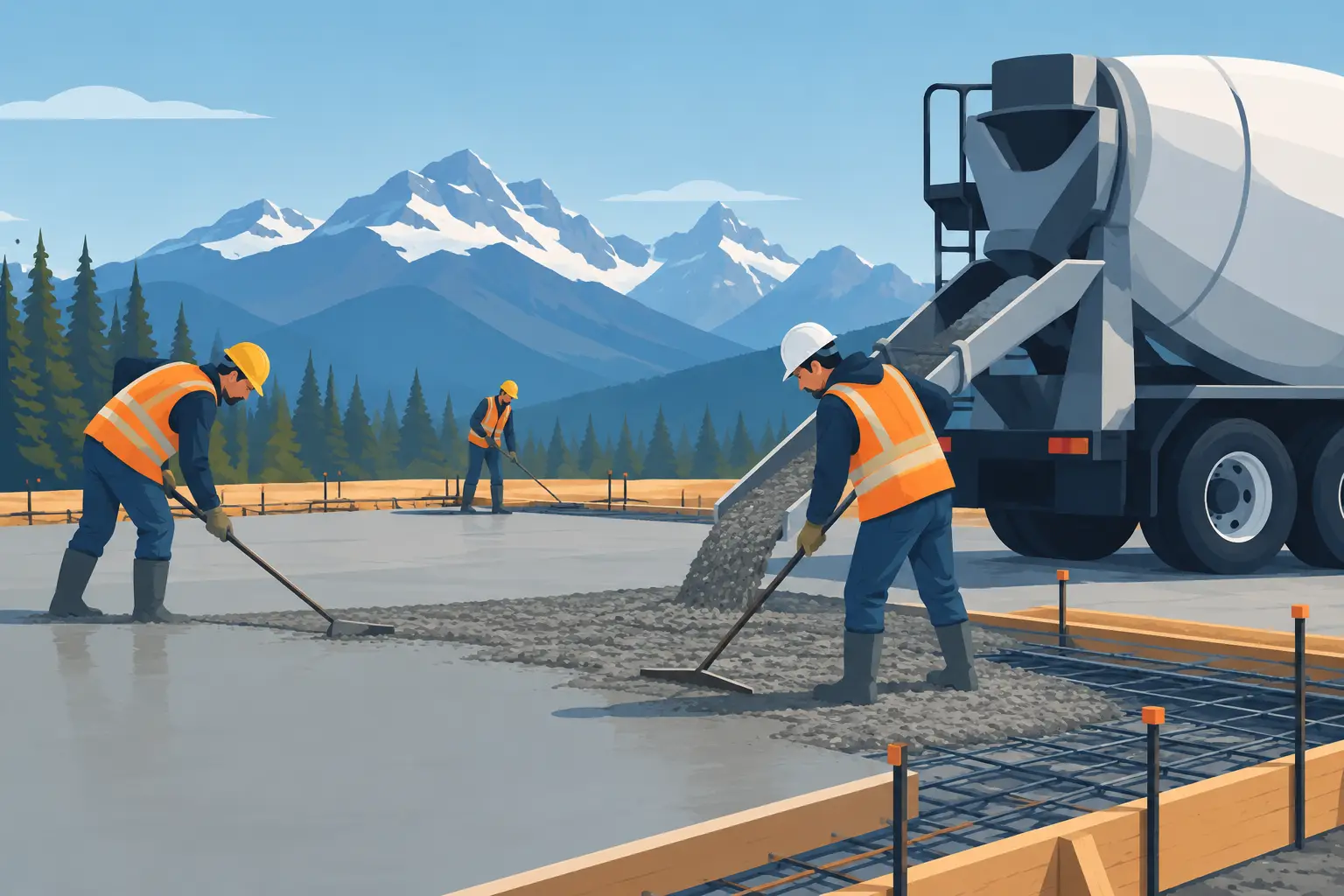
Concrete is time-sensitive. Once a load arrives, the placement crew needs a controlled, steady pace that matches the work being done. Chute placement can work on a simple, accessible pour, but it quickly becomes inefficient when the pour area extends beyond truck reach or site conditions limit where ready-mix trucks can park.
A concrete pump puts the delivery point where the work is. That reduces the distance concrete must be moved by hand, skid steer, buggy, or wheelbarrow. Fewer handling steps mean less labour tied up in transport, fewer interruptions to the pour, and less chance of segregation caused by excessive rehandling.
The biggest gains are often practical rather than dramatic. A crew can maintain a more consistent pour sequence. Finishers are not waiting for concrete at one end of the slab while labourers struggle to move it to the other. Forms, rebar, embeds, and surrounding work are less likely to be damaged by repeated equipment traffic. Cleanup is generally more contained because concrete is directed through a boom or line rather than carried across the site.
Pumping is not automatically the best choice for every small, open-access pour. A short garage pad with direct truck access may be handled efficiently by chute. But once access, reach, volume, elevation, or labour availability becomes a concern, pumping deserves to be part of the plan.
Choosing Equipment for the Jobsite
Commercial work is rarely one-size-fits-all. The pump that works best for a wide-open warehouse slab may not be the right machine for an infill development, agricultural expansion, or a project with narrow access between existing buildings.
Boom Pumps for Reach and Coverage
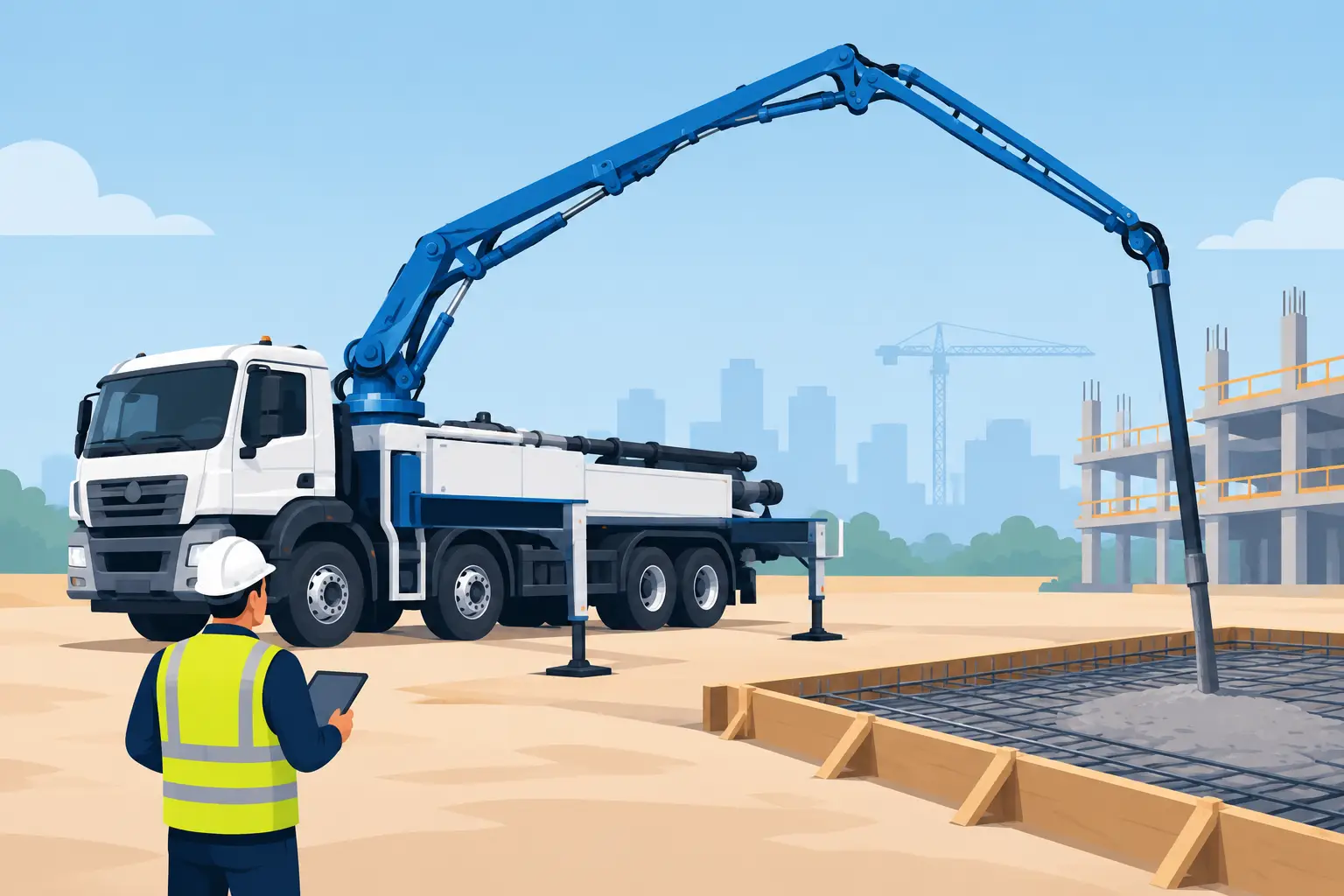
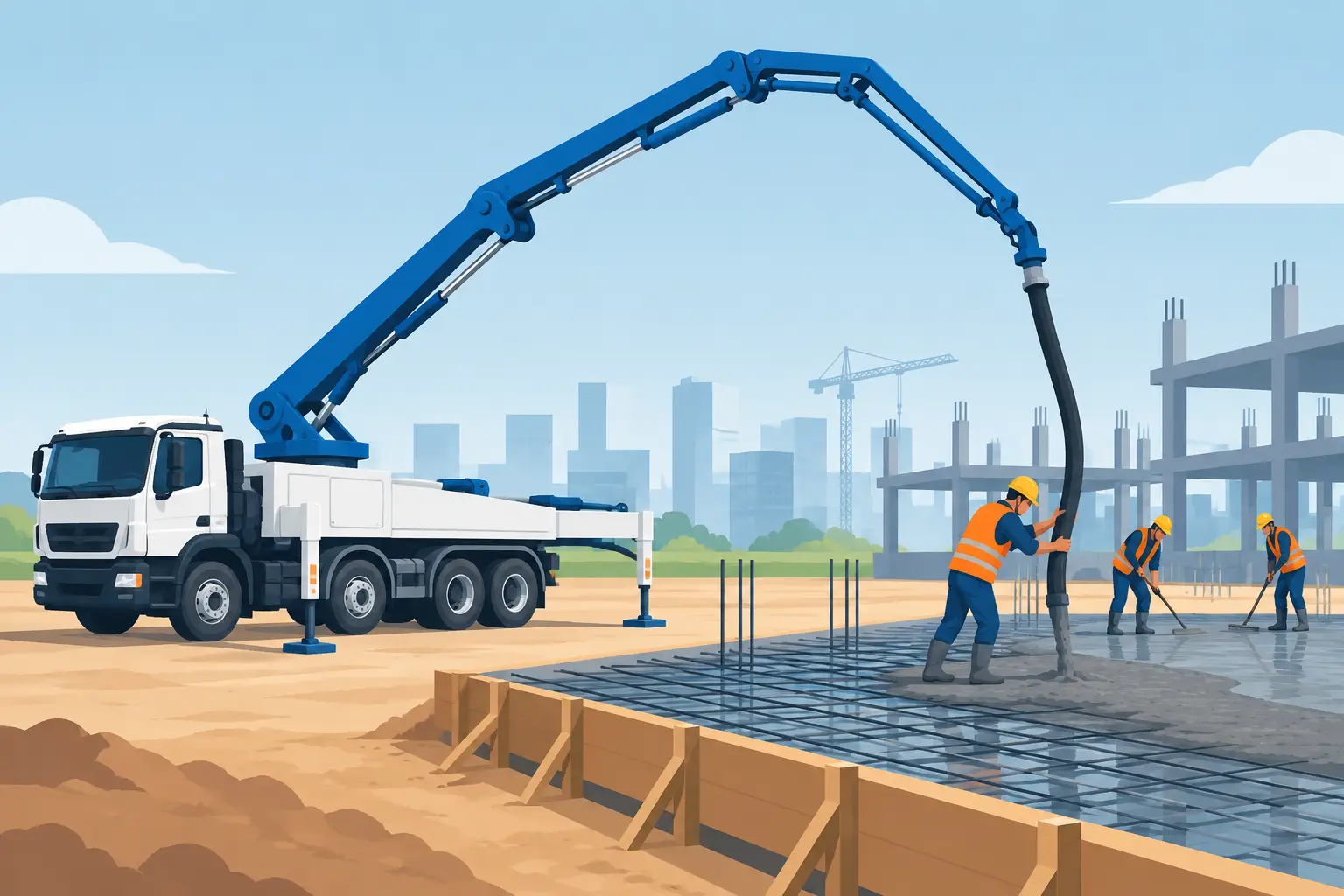
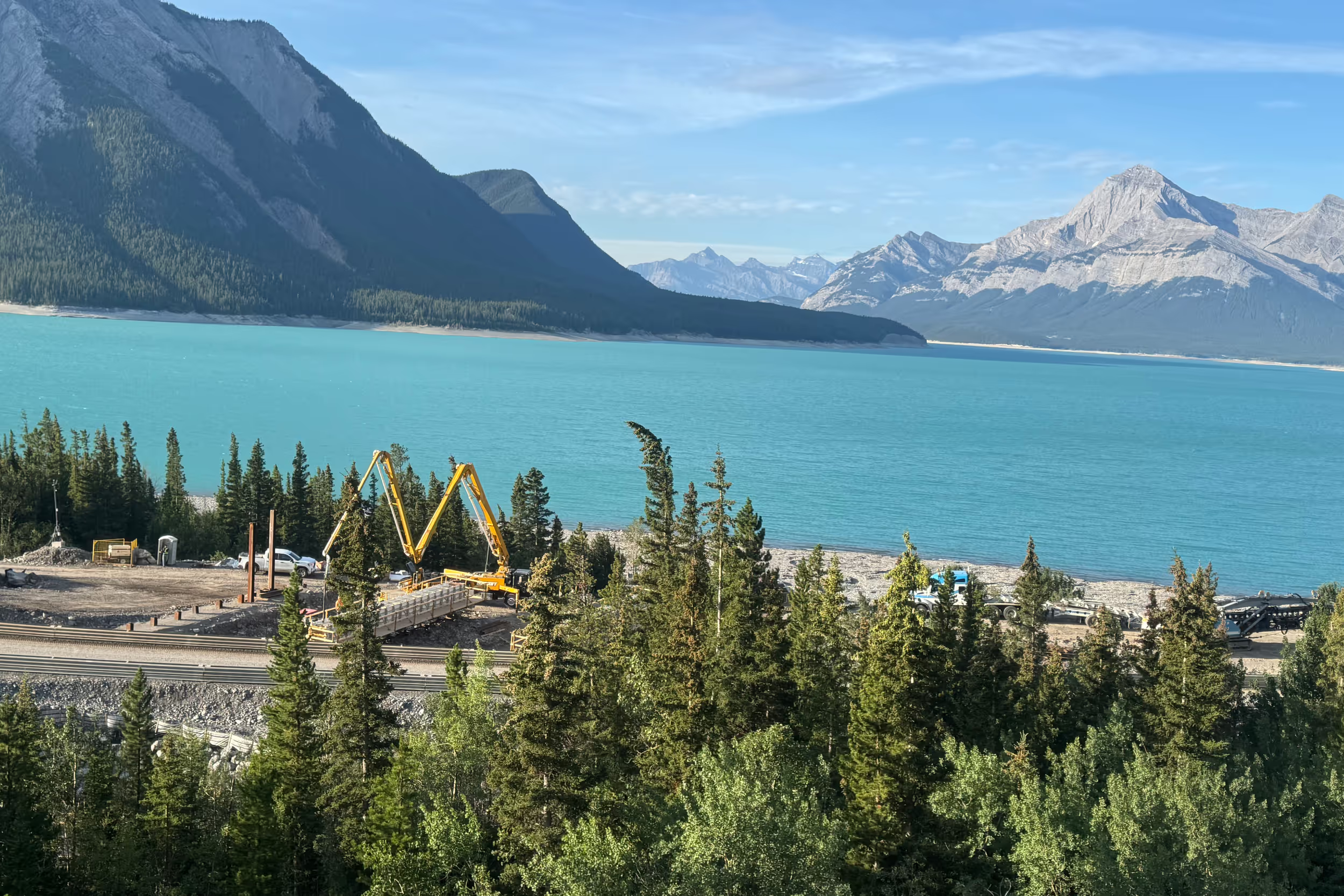
Boom pumps use a multi-section placing boom to move concrete over obstacles and across a broad work area. They are well suited to foundations, large slabs, retaining walls, commercial pads, parkades, elevated decks, and other pours where coverage matters.
On a larger placement, boom reach helps the crew work through the pour without constantly repositioning the truck or running long ground lines. That can save time and reduce congestion around the forms. A high-reach boom can also place concrete over a building, excavation, or restricted work zone when direct access is not available.
The trade-off is setup space. Boom pumps need stable ground, adequate room for outriggers, and a placement plan that accounts for overhead power lines, structures, excavation edges, and other site hazards. A capable operator will review those conditions before the truck arrives, not while concrete is waiting at the gate.
Compact Boom Pumps for Tight Access
Restricted sites still need efficient placement. Compact roll-and-fold boom pumps are designed for situations where a larger boom truck may have trouble setting up or moving into position. They can be a strong fit for urban commercial work, additions, enclosed developments, and sites where existing buildings, trees, fencing, or neighbouring properties limit access.
Compact equipment does not mean compromising on placement control. It means matching the pump to the available space. The best option depends on the required reach, the volume being placed, truck positioning, and how the crew intends to sequence the work.
Line Pumps for Hard-to-Reach Placement
A truck-mounted line pump is often the practical choice when the concrete needs to travel through a route a boom cannot easily serve. Ground lines can be run around a structure, through a building, into a backyard, down a slope, or into other difficult-to-reach areas.
Line pumping requires planning. The route needs to be clear, protected from damage, and suited to the concrete mix being supplied. Pipe length, elevation changes, bends, aggregate size, and required output all affect performance. When planned properly, a line pump provides accurate placement where conventional truck access simply cannot.
Plan the Pour Before Booking the Pump
Good pumping starts well before pour day. The pump contractor needs clear information to send the right equipment and prepare the operator for the work ahead. A quick conversation about access is helpful, but commercial projects benefit from a detailed placement plan.
Provide the pour date and expected start time, the estimated concrete volume, placement location, site address, and the type of work being poured. Include drawings or photos when the site has unusual access, significant elevation changes, narrow entrances, overhead restrictions, or active work around the placement area.
The ready-mix supplier should also know the project is being pumped. Pumpable concrete needs an appropriate mix design, including aggregate sizing and slump suited to the equipment, weather conditions, and finish requirements. A mix that is difficult to pump can slow production, increase pressure in the line, and create unnecessary risk for the pour crew.
Site preparation matters just as much. The pump needs a safe setup area with firm ground, truck access, and room for ready-mix trucks to feed the hopper. The travel route should be checked for low branches, soft shoulders, sharp turns, parked vehicles, and gates that do not provide enough clearance. If the site is muddy or thawing, address it before heavy equipment arrives.
Keep Safety and Quality Moving Together
Fast placement only helps when the work remains controlled. Commercial concrete pumping is a coordinated operation involving the pump operator, ready-mix drivers, placing crew, finishers, and site supervision. Everyone needs to understand the pour sequence and communicate clearly.
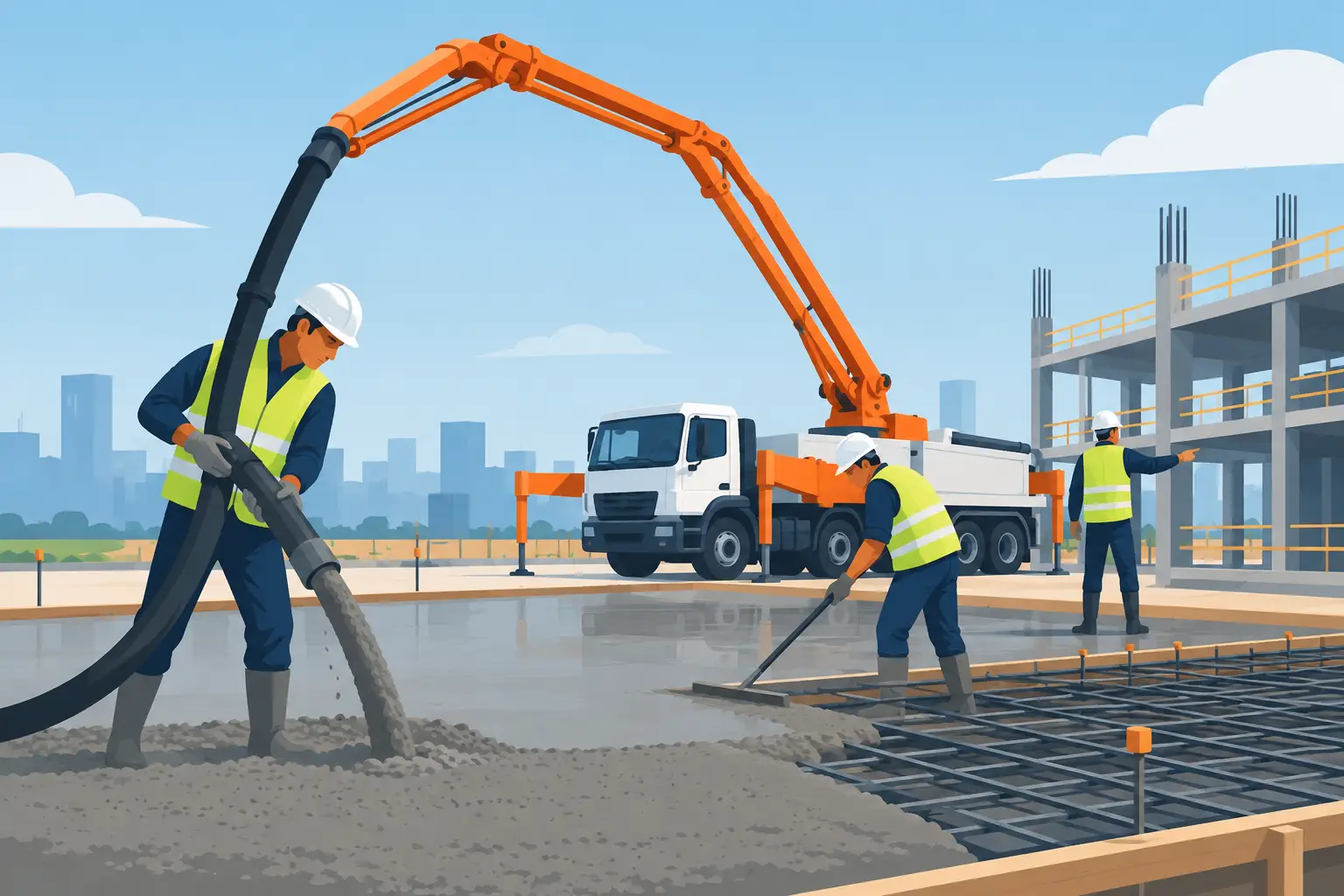
The hose end is an active work area. Only trained crew members should handle it, and they need room to move without tripping over rebar, formwork, debris, or unsecured materials. The operator must have clear signals or direct communication with the hose crew, especially when visibility is limited.
Overhead power lines require particular attention. Boom movement, truck setup, and hose routing must maintain safe clearances. Excavation edges, unstable ground, suspended loads, and public traffic also need to be accounted for before pumping begins.
Quality control continues throughout the pour. The crew should monitor slump, air content, temperature, delivery timing, and placement rate according to the project requirements. Pumping moves concrete efficiently, but it does not replace proper consolidation, screeding, finishing, curing, or cold-weather protection. Those steps determine how the finished slab, wall, or foundation performs long after the pump leaves the site.
Control Labour, Waste, and Schedule Pressure
The cost of pumping should be viewed against the full placement operation, not just the pump invoice. If a pump reduces the number of labourers required to move concrete, shortens the placement window, limits material loss, and allows finishers to stay productive, it can improve the overall cost of the pour.
It also helps protect schedules. On commercial sites, concrete work often sits on the critical path. A delayed slab can affect framing, steel, mechanical work, exterior enclosure, and follow-on trades. Reliable pumping gives the crew a better chance of completing the placement within the planned window, particularly when weather and delivery timing leave little room for delays.
Bandit Concrete Pumping supports commercial projects across Central Alberta with boom pumps, compact placement options, and a truck-mounted line pump selected to suit real site conditions. The value is not just the equipment. It is having an experienced operator who can help turn a difficult placement plan into an orderly pour.
For the next commercial pour, start with the access plan, the concrete mix, and the sequence of work. When those details are settled early, the pump becomes more than a delivery tool - it gives the entire crew a cleaner, more controlled way to keep the job moving.