(587) 703-6048

How to Choose the Proper Boom Pump for Your Pour

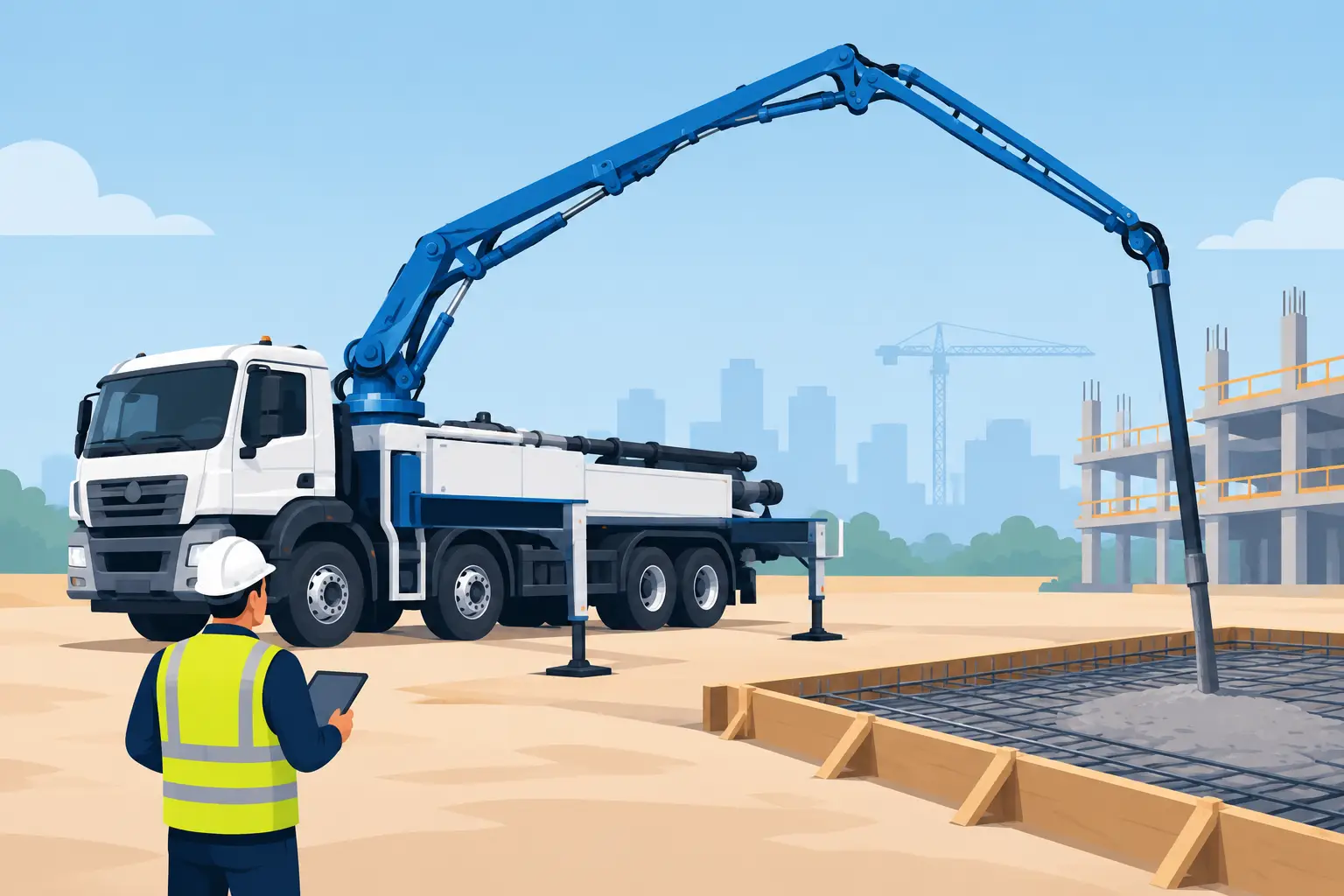
A boom pump that cannot reach the farthest form, set up safely, or keep pace with the batch schedule is not the right pump, no matter how impressive it looks on the road. To choose the proper boom pump, start with the actual placement plan: where concrete must land, where the truck can set up, how much concrete is being placed, and what the site will look like on pour day.
For Alberta contractors, builders, and property owners, this decision affects more than pump cost. The right equipment keeps the crew placing concrete instead of fighting hose, moving wheelbarrows, waiting on trucks, or cleaning up spills. The wrong fit can create delays before the first load is discharged.
Choose the Proper Boom Pump From the Placement Point Back
The first question is not, “How big is the pour?” It is, “What is the hardest point to reach?” Measure from the proposed pump setup location to the farthest area of the forms, including the distance across the site and the vertical height required. Then consider the boom’s working reach, not just the number printed in its model name.
A boom has to clear obstacles, unfold within the available space, and still position the end hose where the crew needs it. A garage slab behind a house may require a longer reach than a larger open commercial slab. A foundation beside an existing building may need a boom configuration that can work around rooflines, trees, power lines, fencing, or temporary site structures.
Give the pump provider a site sketch, dimensions, photos, and the planned truck access route whenever possible. Details such as a narrow side yard, a steep driveway, a soft shoulder, or a utility pedestal can change the equipment choice quickly. Good planning before dispatch is cheaper than trying to reposition a pump halfway through a pour.
Reach Is More Than Horizontal Distance
Horizontal reach matters, but it is only one part of the setup. The boom must also have enough vertical clearance to unfold and enough articulation to place concrete along the full length of a wall, footing, slab, or elevated deck.
A long-reach boom is often the practical choice when one setup position must cover a broad area. It can reduce the need to move the pump truck, which keeps the pour moving and avoids interruptions to forming and finishing crews. This is particularly useful for larger foundations, multi-bay shops, commercial pads, agricultural buildings, and sites where access is limited to one side.
That said, more reach is not automatically better. A larger boom may need more setup room and wider outrigger support than a compact unit. On a tight residential lot or a constrained infill project, a compact roll-and-fold boom can be the better tool because it can work effectively where a larger truck cannot set up safely.
Check the Setup Area Before Booking
Every boom pump needs stable ground, working room for outriggers, and safe access for both the pump truck and ready-mix trucks. This is where many jobs are won or lost.
Walk the expected setup area and look for overhead hazards, buried services, soft ground, fresh backfill, slopes, culverts, retaining walls, and traffic conflicts. Outriggers spread the truck load across a wider footprint, but they still need suitable bearing conditions. A pump cannot safely set up with one side hanging over an excavation, on unstable fill, or in a location that blocks emergency access.
Overhead power lines deserve special attention. The boom, end hose, crew, and concrete line all need appropriate clearance. If the planned setup puts the work near electrical lines, raise the issue early so the placement plan can be adjusted before concrete trucks are scheduled.
Access also includes the route into and out of the property. Confirm gate widths, road conditions, turning radius, low branches, parked vehicles, and whether ready-mix trucks can approach the hopper without backing through an unsafe or congested area. A pump that arrives on time still cannot help if the site is not ready to receive it.
Match Pump Output to the Pour Schedule
Output is not simply about pumping as much concrete as possible. It is about matching delivery rate to the pace your crew can place, vibrate, screed, and finish the concrete properly.
For a small residential slab, pushing concrete too quickly can overwhelm the finishers and create rushed work. For a large footing, retaining wall, or commercial placement, low output can leave crews waiting, increase the risk of cold joints, and make it harder to maintain a consistent placement sequence.
Discuss the total volume, mix design, planned pour duration, number of finishers, and ready-mix truck spacing with the pump provider. High-slump mixes and straightforward slab placements may move differently than stiff mixes, fibre-reinforced concrete, pea gravel mixes, or placements involving significant vertical lift. The right pump setup accounts for the concrete being supplied, not just the number of cubic metres on the ticket.
A capable operator also helps manage the flow at the hopper. Consistent truck spacing matters. If the pump runs out of concrete between loads, the crew loses momentum. If trucks stack up faster than the job can accept them, the site becomes crowded and the concrete schedule gets harder to control.
Consider the End Hose and Placement Control
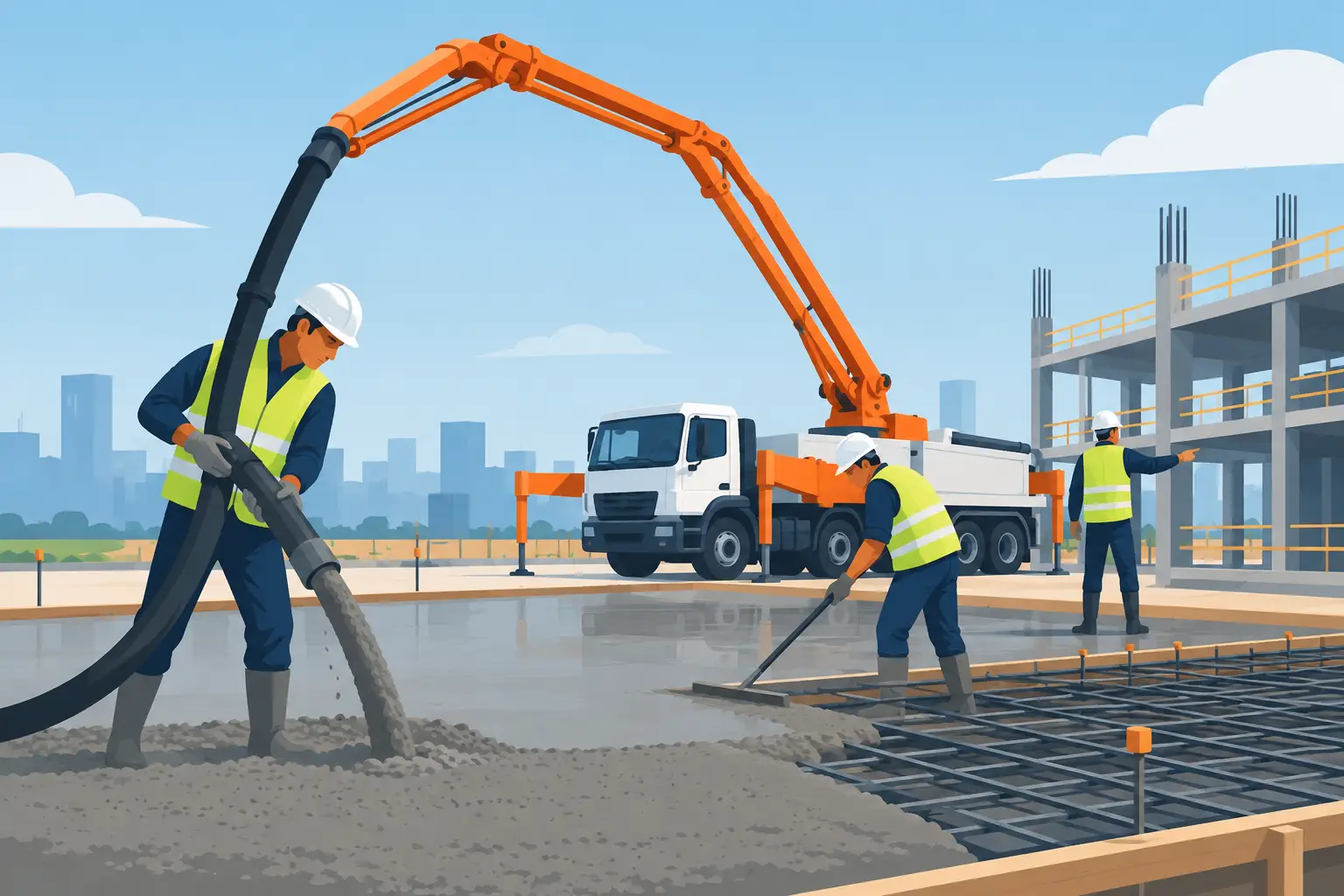
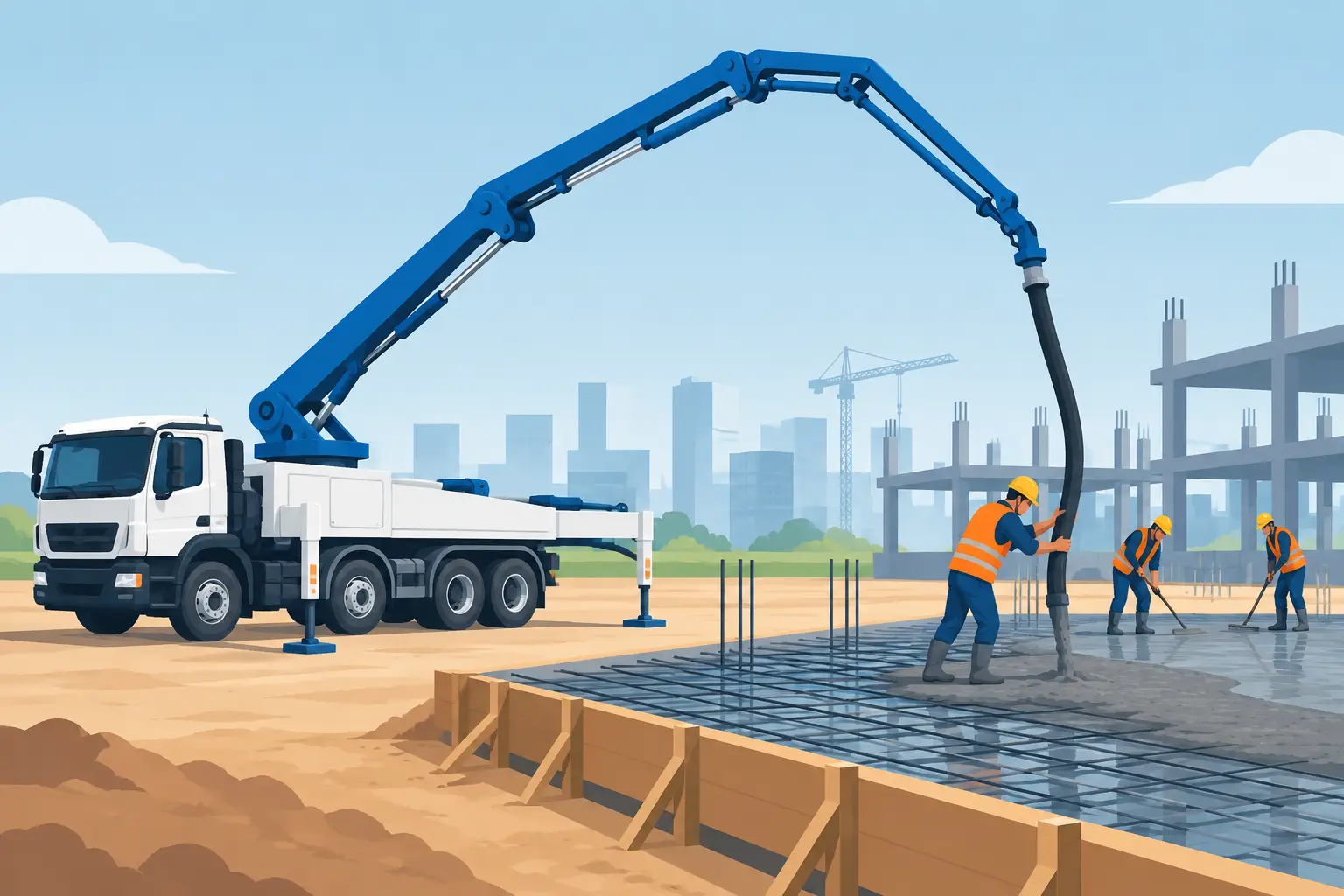
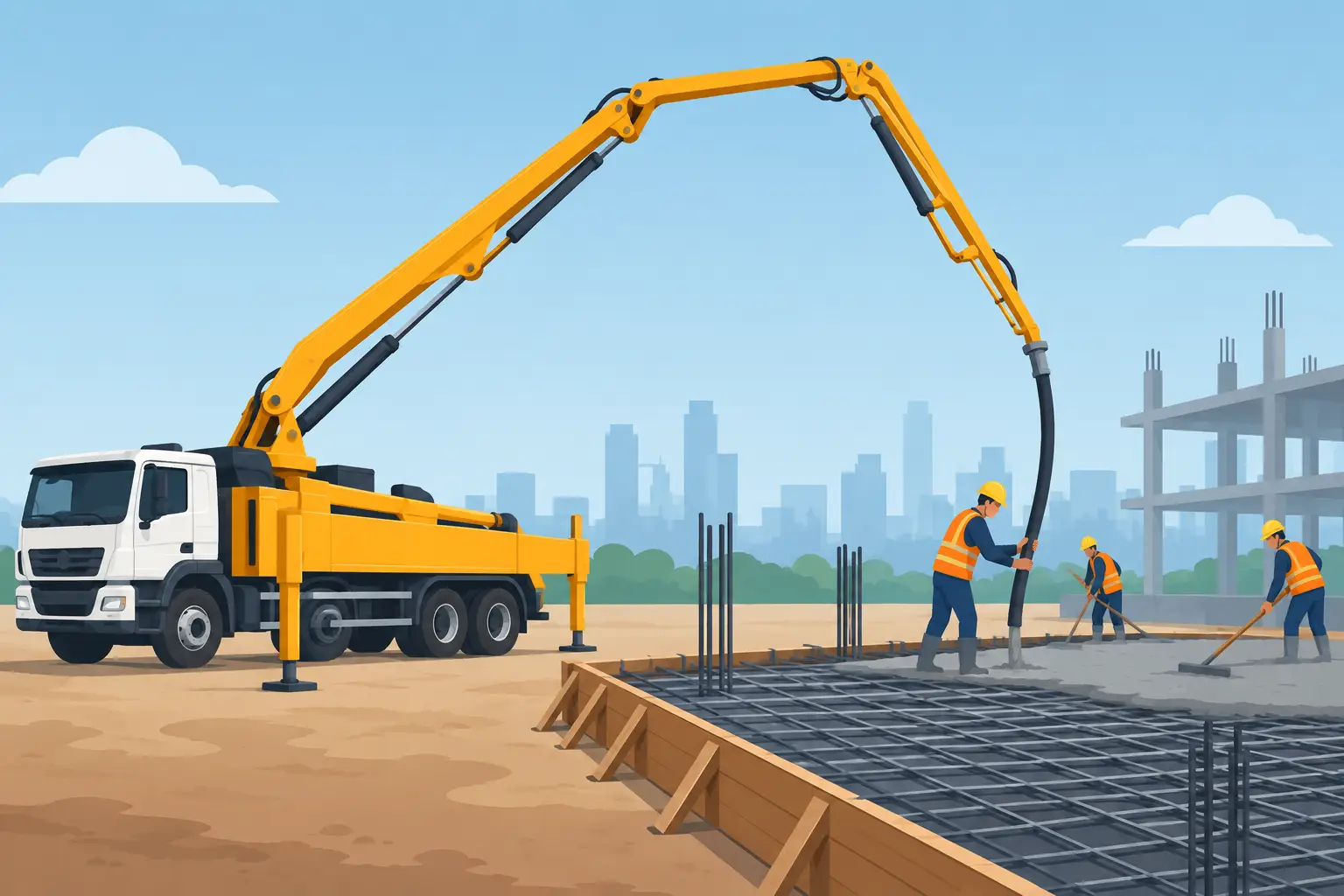
The final metres of placement matter as much as the boom reach. An end hose gives the crew control at the forms, allowing concrete to be placed accurately instead of dropped from a distance and pushed into place by hand.
That accuracy reduces unnecessary handling, helps protect forms and reinforcing steel, and makes it easier to maintain proper placement around corners, thickened edges, grade beams, and tight wall sections. It also limits the tendency to overwork concrete just to move it where it needs to go.
For certain restricted-access jobs, a truck-mounted line pump may be the more practical choice. When the placement point is behind a building, through a narrow route, below grade, or in an area where a boom cannot safely unfold, a line pump can deliver concrete through a planned hose run. It takes more preparation and hose management, but it can solve access problems a boom pump cannot.
Factor in Jobsite Labour and Cleanup
A concrete pump should reduce work, not shift it somewhere else. When the boom reaches the forms and the operator can place concrete precisely, crews spend less time hauling material by wheelbarrow, dragging heavy hose across the site, or moving concrete with rakes over long distances.
That labour saving can be significant on foundations, backyards, garages, shops, and projects with restricted access. It can also improve finished quality because concrete gets to its intended location faster, with less rehandling and less chance of segregation.
Plan for washout before the trucks arrive. Identify an approved area for managing residual concrete and water, keep the route clear, and protect finished landscaping, sidewalks, paving, and sensitive surfaces. Clean work is not an afterthought. It is part of a professional pour and avoids a preventable dispute once the concrete has set.
Give the Pump Company Complete Job Information
The best equipment recommendation comes from clear information. Before booking, provide the pour date and time, address, concrete volume, mix type, placement areas, site access details, and photos from the expected pump setup location. Mention any overhead lines, excavations, confined spaces, traffic restrictions, or unusual access conditions.
It also helps to explain the crew plan. Are you pouring a simple slab with a full finishing crew, or placing structural concrete in stages around heavy reinforcing? Is the site open all day, or does the pump need to work within a short street-use window? These details determine whether a long-reach boom, compact boom, or line pump is the sensible option.
Bandit Concrete Pumping works with contractors and property owners across Central Alberta to match pump configuration to the job rather than forcing every pour into the same setup. Experienced operators bring practical input, but the best results come when the placement plan is discussed before dispatch.
A well-chosen boom pump gives the crew room to work, keeps concrete moving at the right pace, and puts material exactly where it belongs. Send accurate site details early, leave room for a safe setup, and let the equipment fit the pour instead of asking the pour to fit the equipment.