 (587) 703-6048

Best Pump for Elevated Slabs on Your Jobsite

An elevated slab pour has no patience for the wrong setup. Once concrete starts moving, the crew needs steady delivery, enough reach to cover the deck, and hose control that lets finishers keep pace. The best pump for elevated slabs is usually the one that matches the slab layout, site access, concrete mix, and required placement rate - not simply the biggest truck available.
For suspended slabs, second-storey floors, parkades, podium decks, mezzanines, and elevated shop or commercial work, a boom pump is generally the most efficient choice. But there are jobs where a truck-mounted line pump is the smarter call. Good pump selection starts with the actual pour plan, not a guess based on square footage.
Why elevated slabs need the right pump
An elevated slab creates challenges that do not exist on a ground-level pour. Ready-mix trucks may have limited access to the placement area. Chute placement cannot reach across the deck. Moving concrete by buggy or wheelbarrow adds labour, slows the pour, and can overload a crew before finishing even begins.
A properly selected concrete pump brings the concrete to the work face. That reduces handling, helps maintain a consistent pour sequence, and gives the placing crew better control over where material lands. On a large deck, this matters just as much at the far end of the pour as it does at the first truck.
The pump also needs to work safely around reinforcing steel, formwork, guardrails, cranes, power lines, other trades, and the staging area below. Reach without a workable setup is not useful. A pump that can physically extend to the slab but cannot be safely positioned, stabilized, or operated around site obstacles is the wrong machine for the day.
Best pump for elevated slabs: boom pump or line pump?
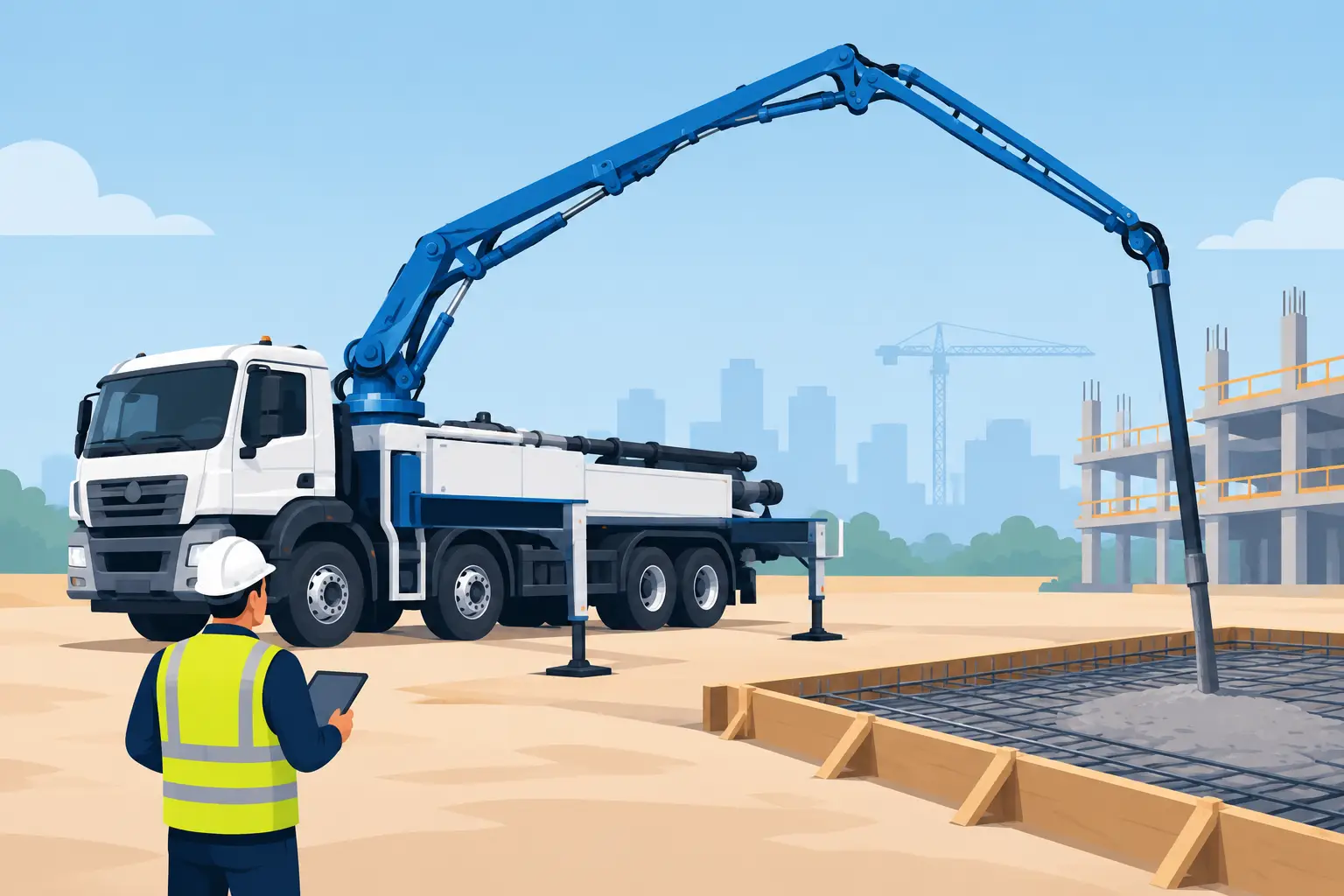
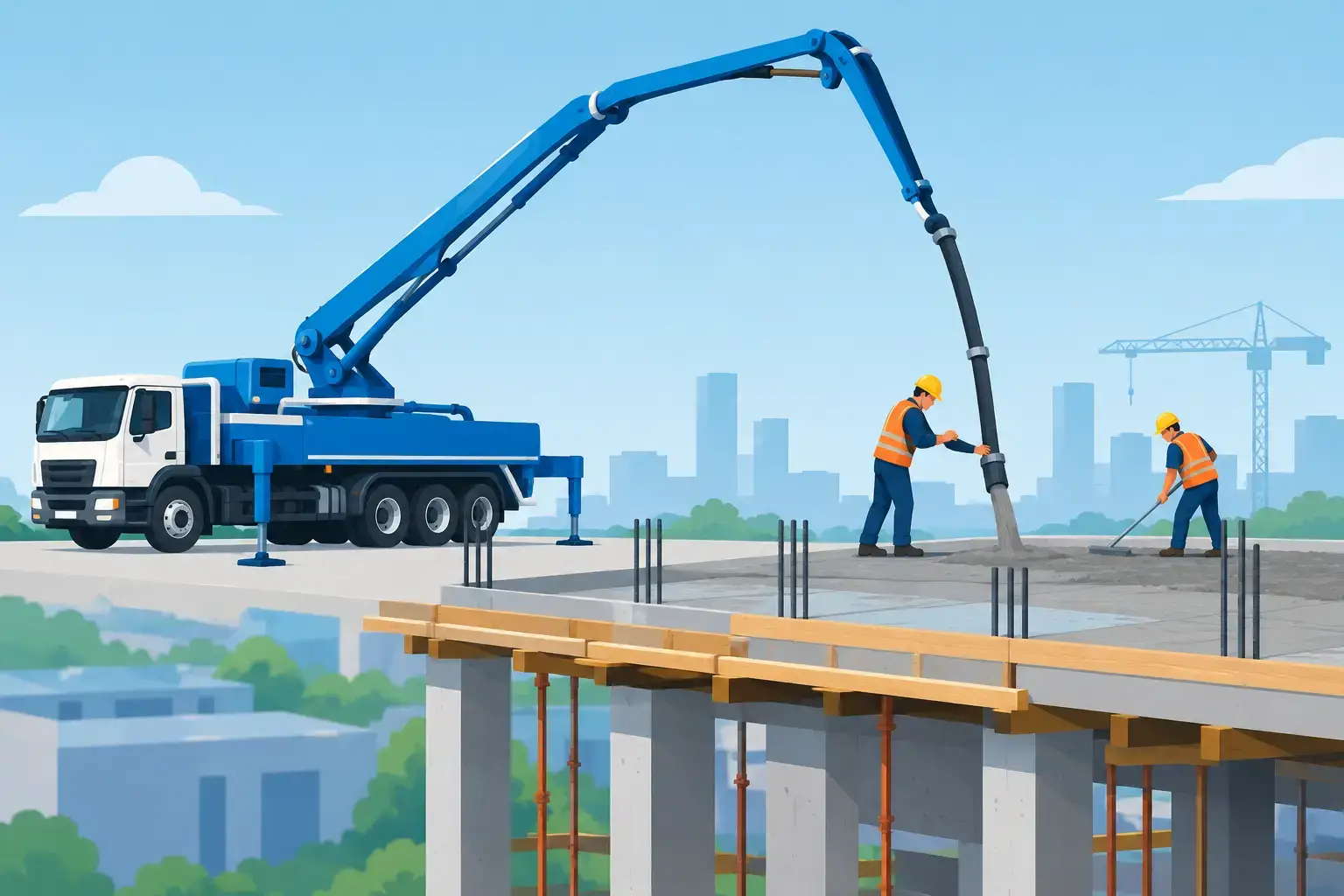
For most elevated slabs, a boom pump is the first choice. Its articulated boom can place concrete over buildings, around obstacles, and across wide areas of slab without crews dragging large amounts of hose. The operator can reposition the boom progressively as the pour advances, keeping the end hose where the finishers need it.
A boom pump is particularly effective when the slab has broad coverage requirements, such as multi-bay commercial floors, parkade levels, large home additions, or elevated decks with difficult access from the street. It is also the practical option when concrete must travel over an existing structure, excavation, landscaping, or an area that cannot support truck traffic.
A truck-mounted line pump can be the better fit where the elevated placement area is smaller, the route is narrow, or site access prevents a boom truck from setting up. Line can be run through a building, up a stair tower, along a scaffolded edge, or through restricted spaces where boom sections cannot operate. It offers precise placement, but it requires more advance planning for line routing, support, cleanout, and crew movement.
Neither option is automatically better. A boom pump saves time and labour on many open elevated slabs. A line pump can solve access problems that make a boom setup impractical. The right decision comes down to placement geometry and site conditions.
Start with reach, not truck size
Pump reach is more than the advertised length of a boom. The operator needs to account for where the truck can park, where outriggers can be deployed, the height of the pour, horizontal distance to the farthest placement point, and any obstructions between the truck and slab.
A boom that reaches the nearest edge but cannot cover the full placement area will require a truck move during the pour or excessive end-hose handling. Either can disrupt production. On a large elevated slab, that interruption can affect timing, finishing, and cold-joint risk.
Before booking, identify the farthest point of the slab from the proposed pump position. Include the vertical rise, not just distance across the deck. Then consider whether the boom has a clear path to work over the structure without contacting formwork, protruding steel, temporary railings, or nearby buildings.
The largest boom is not always the best answer. Bigger equipment needs more room for setup and may be unable to access a tight urban lot, narrow rural driveway, or congested commercial site. Compact roll-and-fold boom equipment can be a strong solution where restricted access is the main issue, provided it has sufficient reach and coverage for the pour.
Check setup space and ground conditions
A concrete pump is only as useful as the ground it sets up on. Boom trucks require stable footing for outriggers. Soft shoulders, fresh backfill, steep grades, buried services, poor drainage, and limited street width all need to be addressed before pour day.
Outrigger pads may be required to spread the load and protect pavement or landscaping. The pump operator needs a safe, level setup area with room to swing and deploy the boom. If the truck must set up on a road, traffic control and municipal requirements may also affect the plan.
Do not leave these details until the first ready-mix truck arrives. A few photos, dimensions, and a clear site sketch provided in advance can prevent an avoidable delay. If access is questionable, an experienced pumping contractor can assess the job and recommend a workable equipment configuration.
Match the pump to the concrete mix and pour rate
Elevated slabs often need a specific concrete design for strength, finishability, exposure, or placement conditions. That mix must be pumpable. Aggregate size, slump, air content, fibre, supplementary cementing materials, and admixtures can all affect how concrete moves through a boom or line.
This does not mean every elevated slab needs a special mix. It means the pump provider, concrete supplier, and placing contractor need to be working from the same information. A mix that is difficult to pump can cause slow output, line pressure issues, or interruptions that put the finishing crew behind.
Pour rate matters as well. A small crew may not be able to properly place, vibrate, screed, and finish concrete arriving at maximum pump output. Conversely, a large slab with multiple finishers can lose momentum if the pump cannot maintain the required volume.
The target is a controlled, consistent rate. The operator should be able to work with the crew's pour sequence, keeping concrete available without flooding an area ahead of consolidation and finishing. This is where experienced operation pays off. Good placing is not about moving the most concrete per hour. It is about moving it at the pace the slab needs.
Plan hose handling and crew communication
The end hose gives the crew placement control, but it also needs to be handled safely. Concrete-filled hose is heavy, and pressure changes can cause movement at the hose end. The placing crew should know who is directing the hose, where the next placement zone is, and how communication with the operator will work.
For an elevated deck, make sure the hose route does not create trip hazards around reinforcing steel, block access to stairs, or interfere with finishing equipment. Keep workers away from unprotected slab edges, and maintain clear communication whenever the boom is moved or the pour sequence changes.
A clean, organized deck makes a better pour. Set up washout and cleanout locations in advance, keep unnecessary material off the slab, and make sure the operator has a clear view or reliable direction from the placing crew. Small site details have a direct impact on speed and finished quality.
Questions to answer before booking a pump
Give the pumping contractor enough information to select equipment properly. The slab dimensions, elevation, thickness, concrete volume, pour date, required start time, mix details, and available setup area are the basics. Photos from the street, driveway, and proposed truck location are equally useful.
Also identify overhead hazards, restricted roads, underground services, tight turns, deck-edge conditions, and whether the pump will need to reach over a house, excavation, or existing building. If other trades will be active, confirm how the pump truck and ready-mix trucks will enter, stage, and exit without blocking the site.
Bandit Concrete Pumping works with contractors and property owners across Central Alberta to match the pump setup to the actual job conditions. That practical planning is what keeps elevated pours moving when access is tight and the schedule has no room for rework.
The best elevated slab pours look controlled from the start: the pump is positioned properly, concrete arrives where it is needed, the crew stays ahead of the work, and the deck is left ready for a clean finish. Bring the pump plan into the conversation early, and the equipment can do what it is supposed to do - make a difficult placement job straightforward.